Artwork
Bag Palazzo Barberinis have i Rom; gaden med pinien
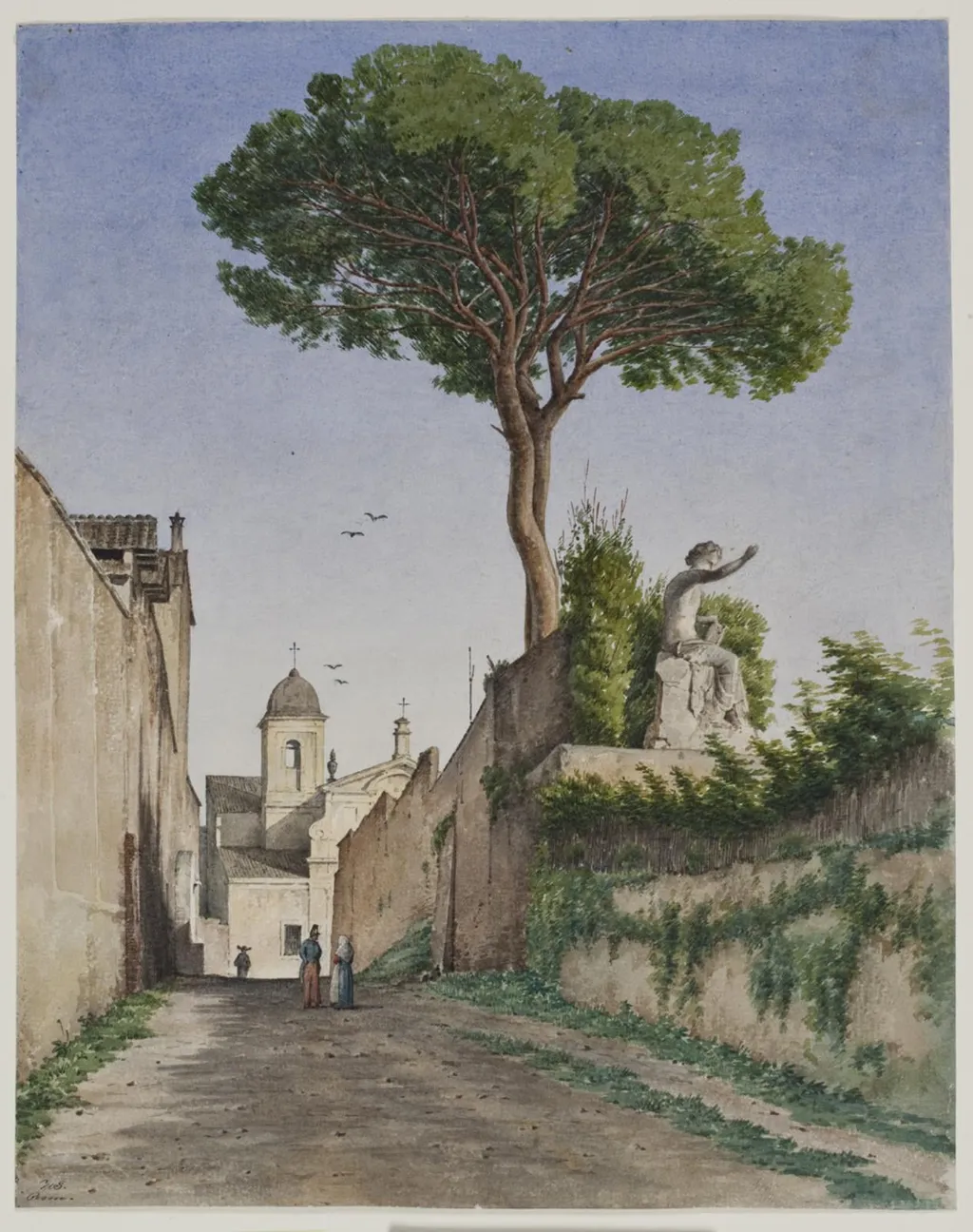
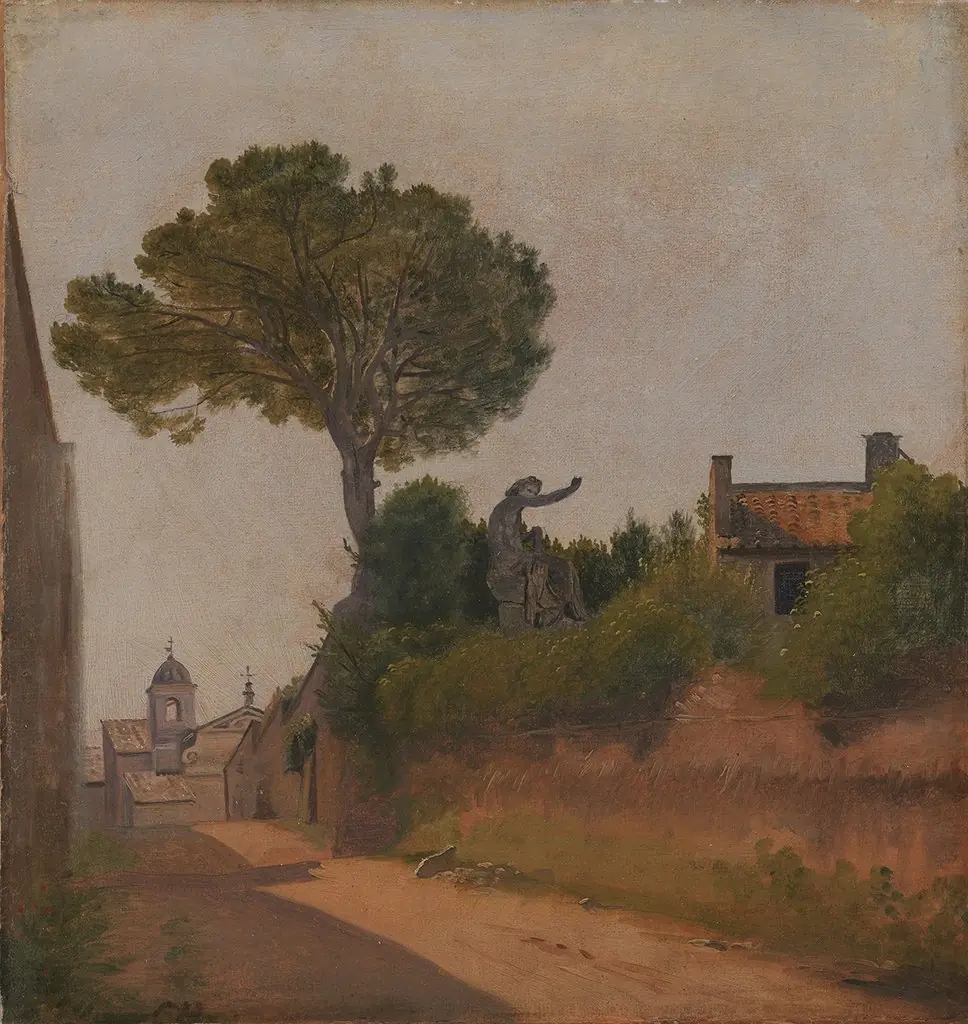
Bag Palazzo Barberinis have i Rom; gaden med pinien is an unspecified painting by Unknown. It dates from 1850 and is held in the collection of the Statens Museum for Kunst. This landscape painting, dated around 1850, depicts a quiet Roman street near the Palazzo Barberini.
About this work
Overview
The scene is rendered with subtle attention to texture and light, emphasizing stillness and the quiet integration of architecture with the natural environment.
This landscape painting, dated around 1850, depicts a quiet Roman street near the Palazzo Barberini. It captures a winding dirt path flanked by aged stone structures, a distant church with a rounded dome, and a solitary statue on a rocky outcrop. The scene is rendered with subtle attention to texture and light, emphasizing stillness and the quiet integration of architecture with the natural environment. The work is held in the collection of the Museum of Ethnography.
Subject & Meaning
The painting presents an unidealized view of Rome’s outskirts, where ancient ruins and modest buildings coexist with sparse vegetation. The statue, positioned on a hill and gesturing toward the path, appears neither monumental nor religiously symbolic, but rather integrated into daily life. Its ambiguous gesture invites contemplation rather than narrative, suggesting a quiet dialogue between human presence and inherited structures.
Technique & Style
The artist employs muted tones and soft contrasts to convey the texture of weathered stone, dry earth, and sparse foliage. Brushwork is restrained, avoiding dramatic flourishes in favor of quiet observation. Light falls evenly, without strong chiaroscuro, enhancing the scene’s tranquility. The composition leads the eye along the path toward the church and statue, creating a sense of depth without theatricality.
History & Provenance
The painting was created circa 1850 by an artist associated with the 19th-century European tradition of topographical observation. It entered the Museum of Ethnography’s collection in the late 19th or early 20th century, likely as part of a broader effort to document vernacular European landscapes. Its attribution to '10827_person' reflects archival uncertainty, common for lesser-known regional artists of the period.
Context
In mid-19th century Italy, artists increasingly turned away from grand historical themes to depict everyday surroundings. This work aligns with a growing interest in the rural and semi-urban edges of Rome, where ancient remnants persisted amid modest modern life. Such scenes reflected broader cultural shifts toward authenticity and the quiet beauty of the ordinary.
Legacy
Though not widely exhibited, the painting contributes to a quiet archive of 19th-century European landscape studies that valued observation over spectacle. Its inclusion in an ethnographic museum underscores its role as a record of place and atmosphere rather than artistic innovation. It remains a modest but deliberate witness to Rome’s layered, lived-in character.
Artist & collection

 Domestic Scene
 Giacomo and Cardinal Marco, investing Andrea, Abbot of San Zeno, with his Benefice
 The Nymph of Fontainebleau
 Portrait of a Woman
 Madonna and Child with Saints in the Enclosed Garden
 Venus and Minerva
 Family Group of Four on Sofa
 Wall painting from Room H of the Villa of P. Fannius Synistor at Boscoreale
 Raffaels atelier i Villa Borgheses have. Rom
 Gade i Subiaco
 Strada Pempflinger
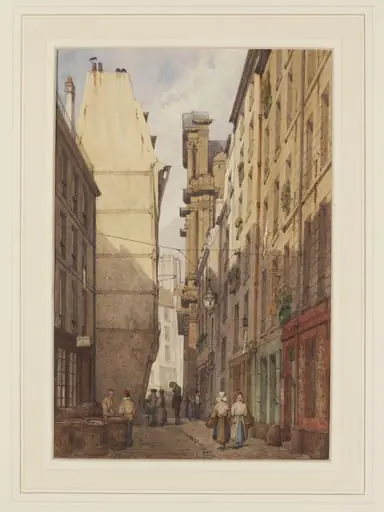 The Church of St Gervais, Paris
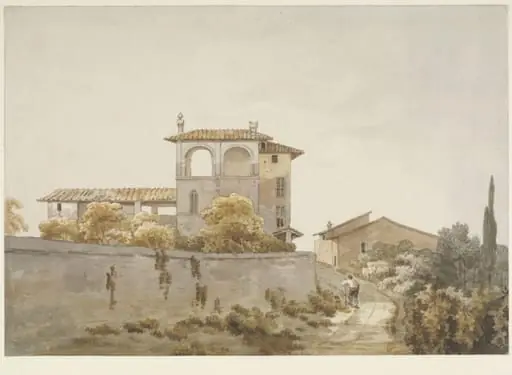 Italian villa
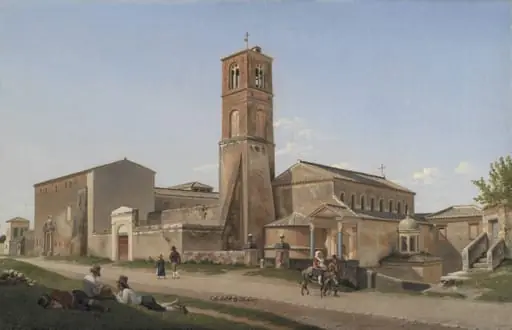 Sant'Agnese fuori le mura, Rome
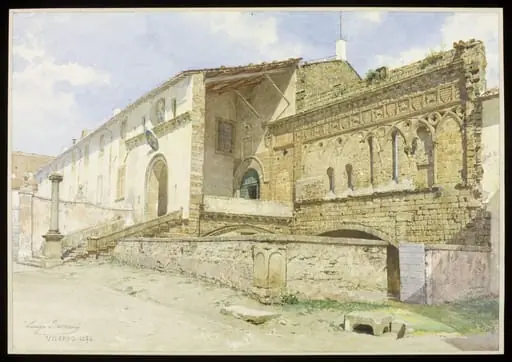 The Episcopal Palace at Viterbo, Italy
 Torvet i Anticoli Corrado, Italien
 Sta. Giustina at Padua
 Castellammare
 Torvet i Anticoli Corrado, Italien
 A Street in Rome. Vicolo Sterrato