Artwork
A Duet
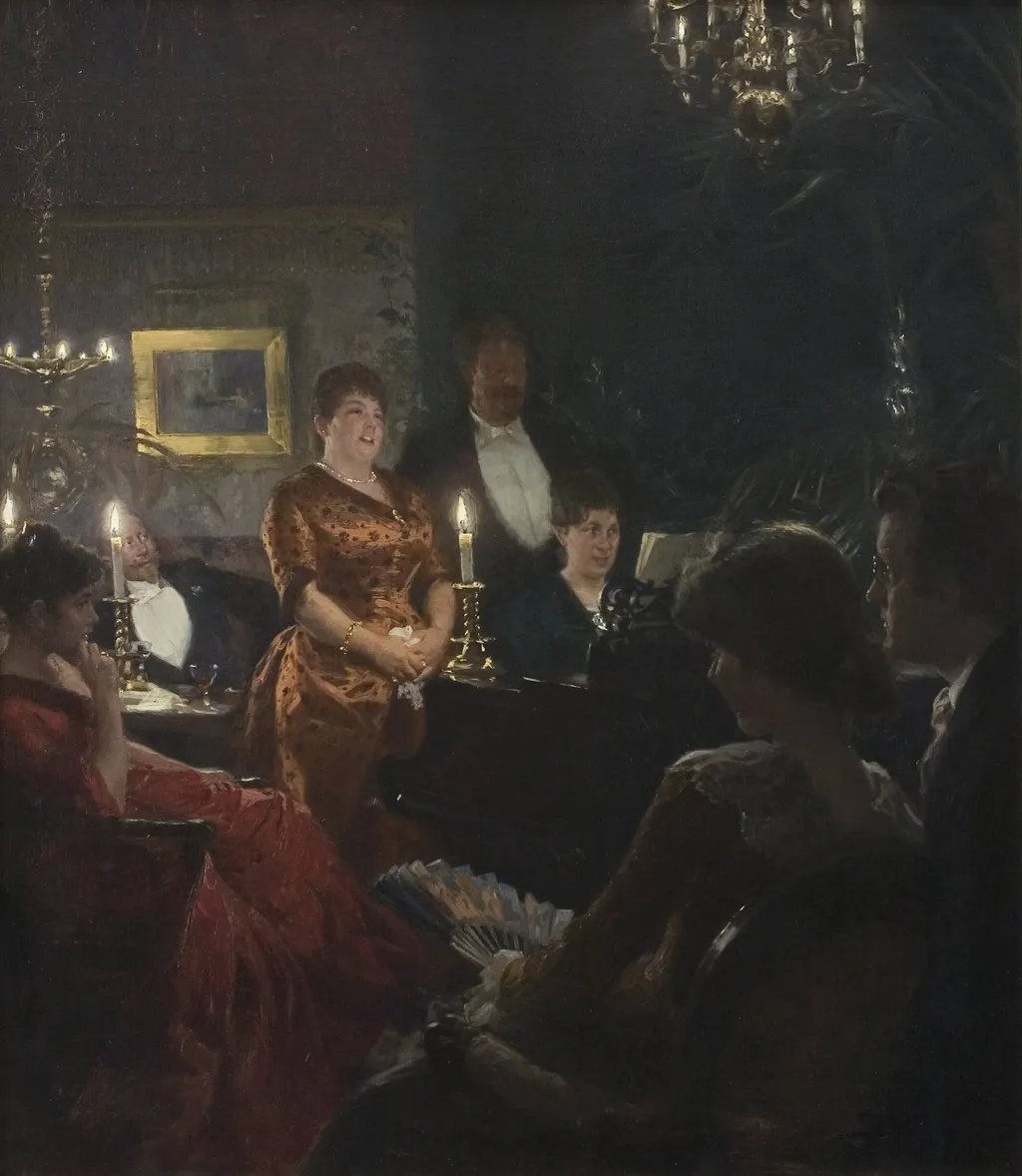
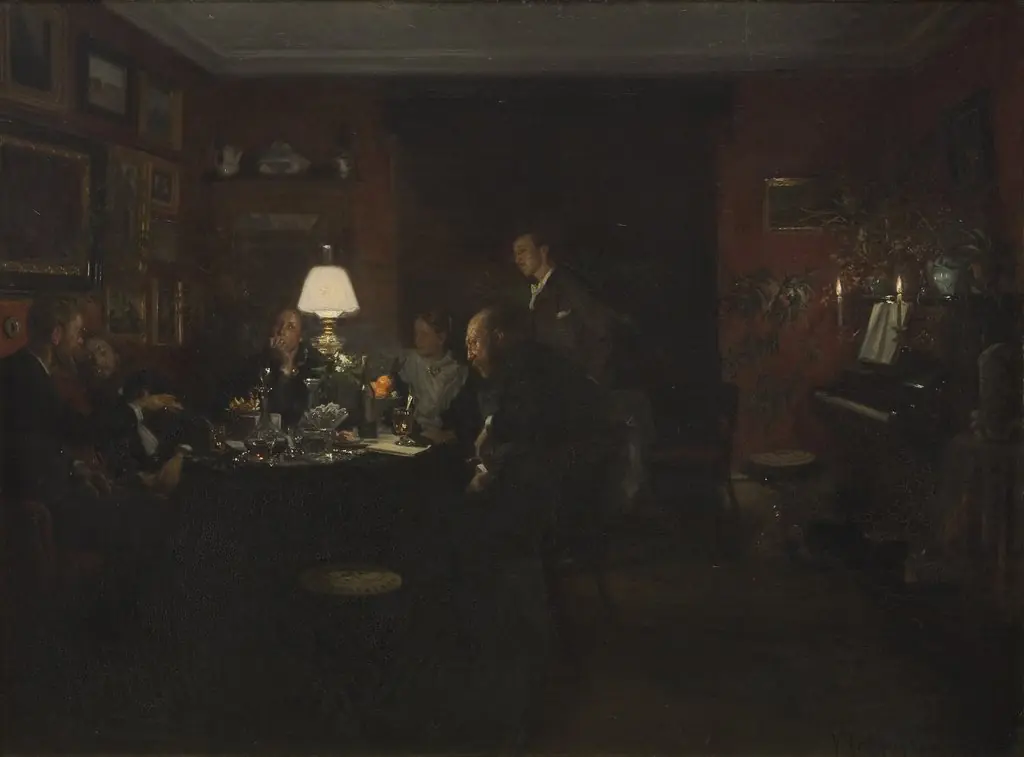
A Duet is a photography by the Impressionist artist Unknown. It dates from 1887 and is held in the collection of the Statens Museum for Kunst. Created in 1887 by 1113_person, this image captures an intimate domestic scene in low light.
About this work
Overview
It is part of the collection at the Museum of Ethnography, where it is preserved as a record of everyday life in its time.
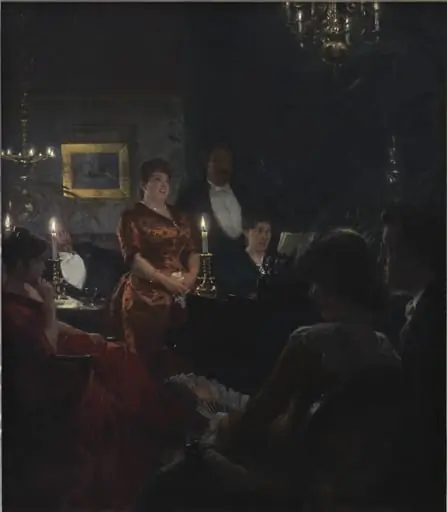
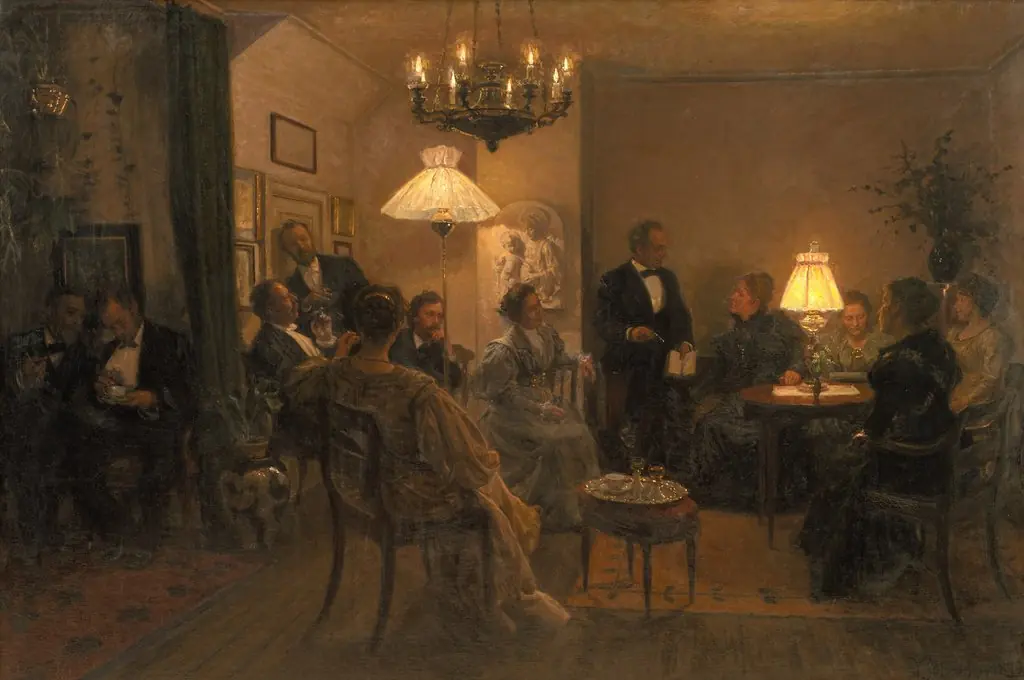
Created in 1887 by 1113_person, this image captures an intimate domestic scene in low light. It is part of the collection at the Museum of Ethnography, where it is preserved as a record of everyday life in its time. The composition centers on a woman illuminated by candlelight, surrounded by others in a shared, quiet space. The atmosphere is subdued, emphasizing stillness and subtle human presence over dramatic action.
Subject & Meaning
The scene depicts a quiet moment of domestic ritual, possibly a musical gathering or evening conversation. The woman, holding a candle and a fan, appears central yet unobtrusive, suggesting a role of quiet stewardship. Others in the room, partially obscured, engage in their own stillness, reinforcing themes of shared solitude. The absence of clear facial features invites contemplation rather than narrative identification.
Technique & Style
The artist employs chiaroscuro to model forms through subtle gradations of light and shadow. Candlelight casts soft, uneven glows, leaving faces and details in ambiguity. The dark dress of the central figure contrasts with the warm glow of nearby flames, while the fabric’s pattern is suggested rather than rendered in detail. The composition avoids sharp outlines, favoring atmospheric depth and tactile texture over precision.
History & Provenance
The work entered the Museum of Ethnography’s collection shortly after its creation, likely acquired as part of a broader effort to document domestic customs. Its origin as a personal or commissioned piece remains undocumented. No exhibition history or public record of its early reception exists, suggesting it was valued more for its ethnographic quality than its artistic merit at the time.
Context
In late 19th-century Europe, domestic interiors were increasingly studied as cultural artifacts. Artists and anthropologists alike turned to quiet, unposed scenes to capture the rhythms of everyday life. This image aligns with that trend, reflecting a shift away from grand narratives toward intimate, unidealized moments—particularly those involving women in private, non-public roles.
Legacy
Though not widely reproduced or discussed in mainstream art history, the image endures as a quiet example of ethnographic realism. Its value lies in its unembellished portrayal of light, space, and social nuance. It continues to serve as a reference for scholars studying domestic rituals and the visual representation of intimacy in the pre-photographic era.
Artist & collection

 Domestic Scene
 Giacomo and Cardinal Marco, investing Andrea, Abbot of San Zeno, with his Benefice
 The Nymph of Fontainebleau
 Portrait of a Woman
 Madonna and Child with Saints in the Enclosed Garden
 Venus and Minerva
 Family Group of Four on Sofa
 Wall painting from Room H of the Villa of P. Fannius Synistor at Boscoreale