Artwork
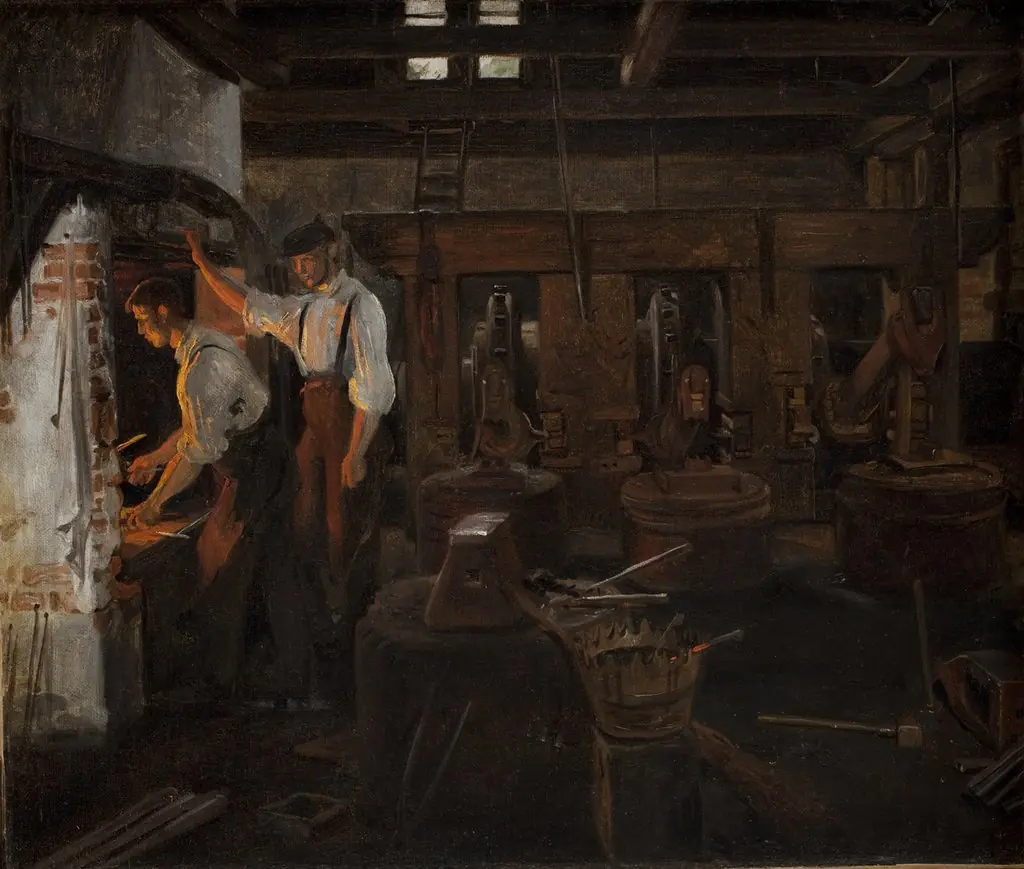
A Smithy in Hornbæk
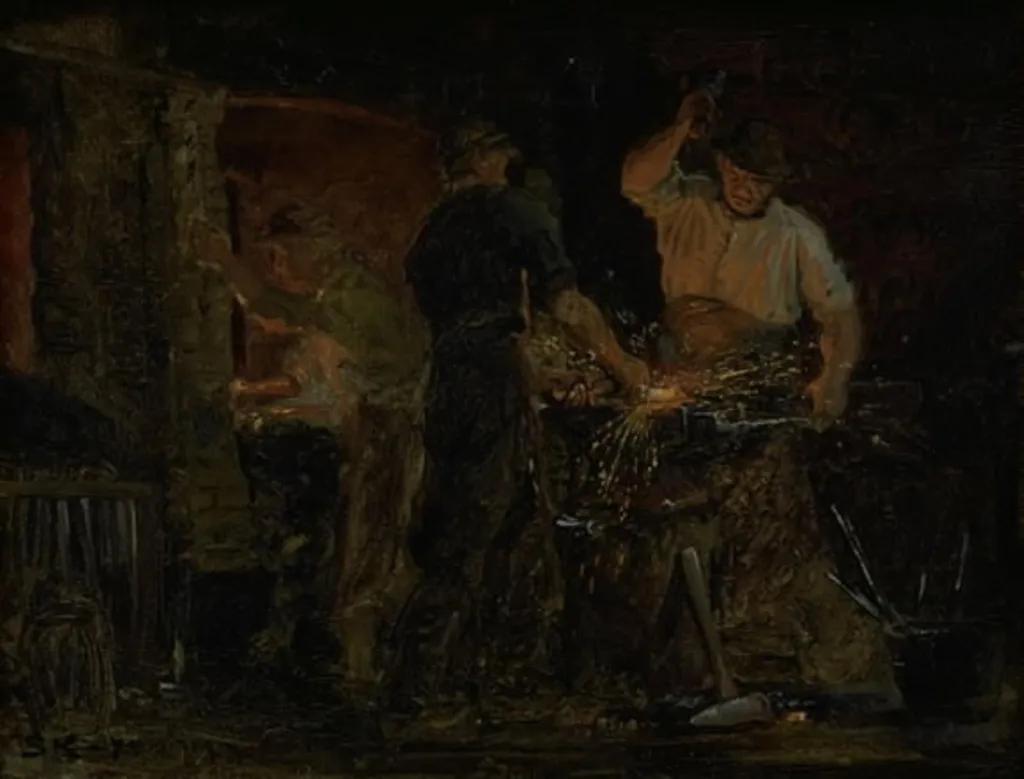
A Smithy in Hornbæk is a photography by the Impressionist artist Unknown. It dates from 1873 and is held in the collection of the Statens Museum for Kunst.
About this work
Overview
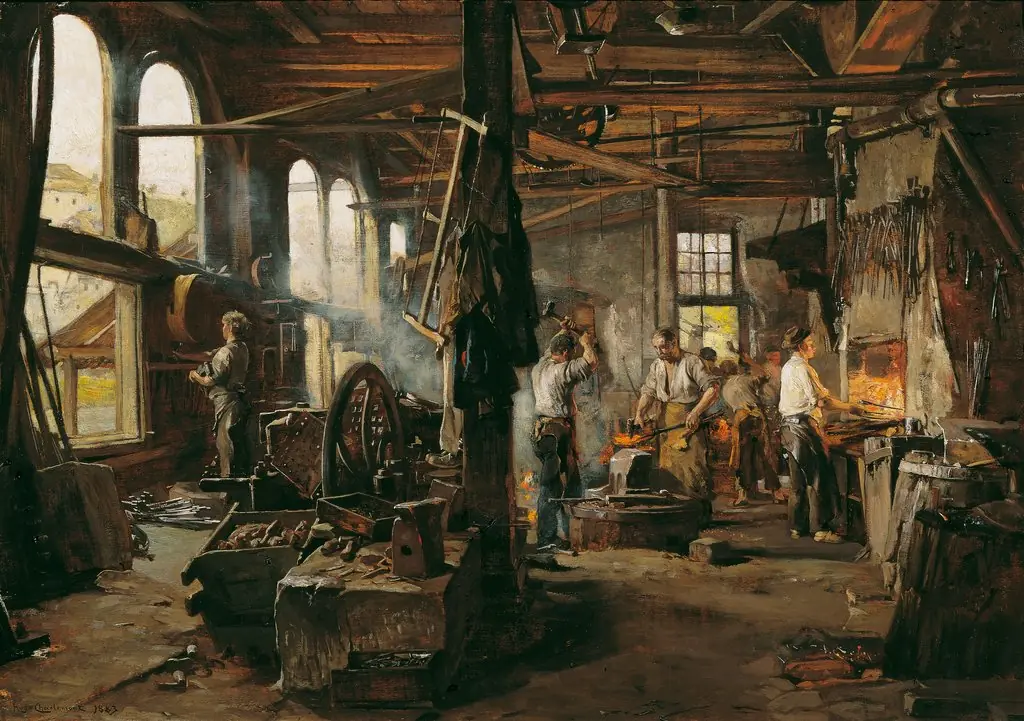
Painted in 1873 by 1113_person, A Smithy in Hornbæk depicts an interior scene of blacksmiths at work in a small Danish workshop. The painting is held in the collection of the Museum of Ethnography. Rendered in oil, it captures a moment of labor under low light, emphasizing physical exertion and the harsh conditions of artisanal trade in late 19th-century rural Denmark.
Subject & Meaning
The central figure, hammering at the anvil, is illuminated by the glow of hot metal, while the others observe or assist.
The painting portrays three laborers engaged in forging metal, their postures and focus suggesting coordinated effort. The central figure, hammering at the anvil, is illuminated by the glow of hot metal, while the others observe or assist. The absence of clear narrative or symbolic elements grounds the scene in everyday reality, presenting work as a quiet, unromanticized act of endurance rather than heroism.
Technique & Style
The artist employs a muted palette dominated by browns, blacks, and smoky grays, with only the glowing sparks offering contrast. Brushwork is precise, capturing textures of soot-stained skin, worn fabric, and forged iron. Lighting is carefully controlled to draw attention to the anvil’s glow, enhancing the sense of heat and motion within the confined, shadowed space.
History & Provenance
Created during a period of growing interest in rural labor among Scandinavian artists, the painting was acquired by the Museum of Ethnography shortly after its completion. Its journey into institutional collection reflects early efforts to document working-class life as part of cultural heritage, rather than as subject for idealized genre painting.
Context
In 1870s Denmark, industrialization was slowly altering traditional crafts, yet many smithies remained small, family-run operations. This painting aligns with a regional trend of naturalist art that sought to record vanishing modes of labor. Unlike urban-focused realism, it highlights the isolation and physicality of rural craftsmanship in coastal communities like Hornbæk.
Legacy
Though not widely exhibited beyond Scandinavian institutions, the work contributes to a documented record of pre-industrial labor in Denmark. It remains a quiet example of how regional artists used realism to preserve the dignity of manual work, influencing later ethnographic and social documentation in Nordic art.
Artist & collection

 Domestic Scene
 Giacomo and Cardinal Marco, investing Andrea, Abbot of San Zeno, with his Benefice
 The Nymph of Fontainebleau
 Portrait of a Woman
 Madonna and Child with Saints in the Enclosed Garden
 Venus and Minerva
 Family Group of Four on Sofa
 Wall painting from Room H of the Villa of P. Fannius Synistor at Boscoreale