Artwork
Interieur einer Hammerschmiede
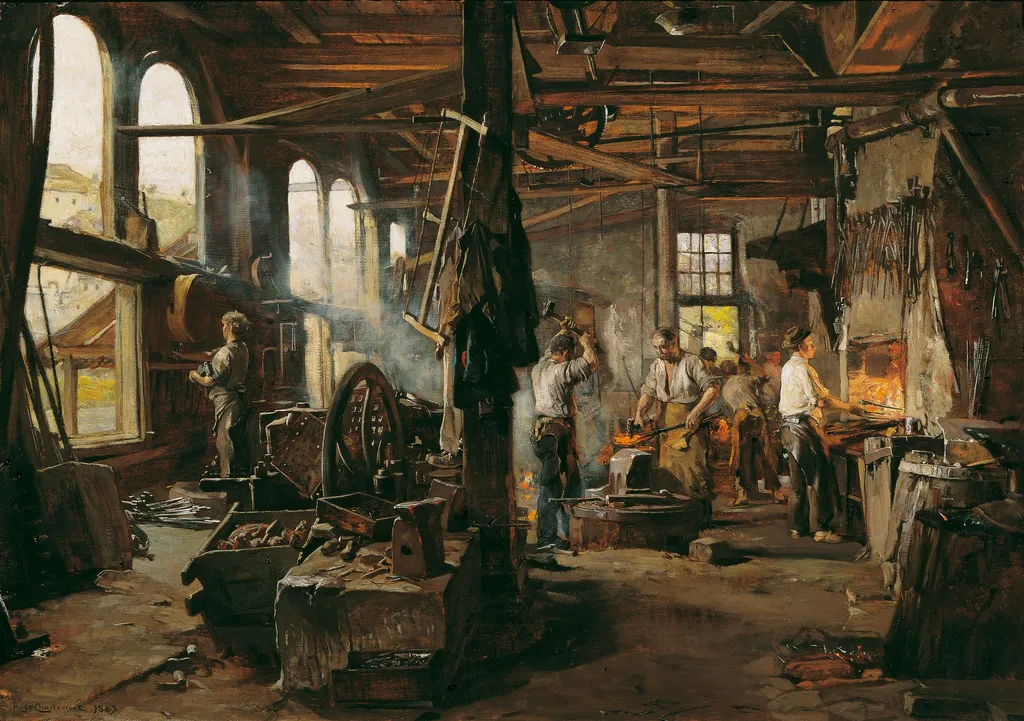
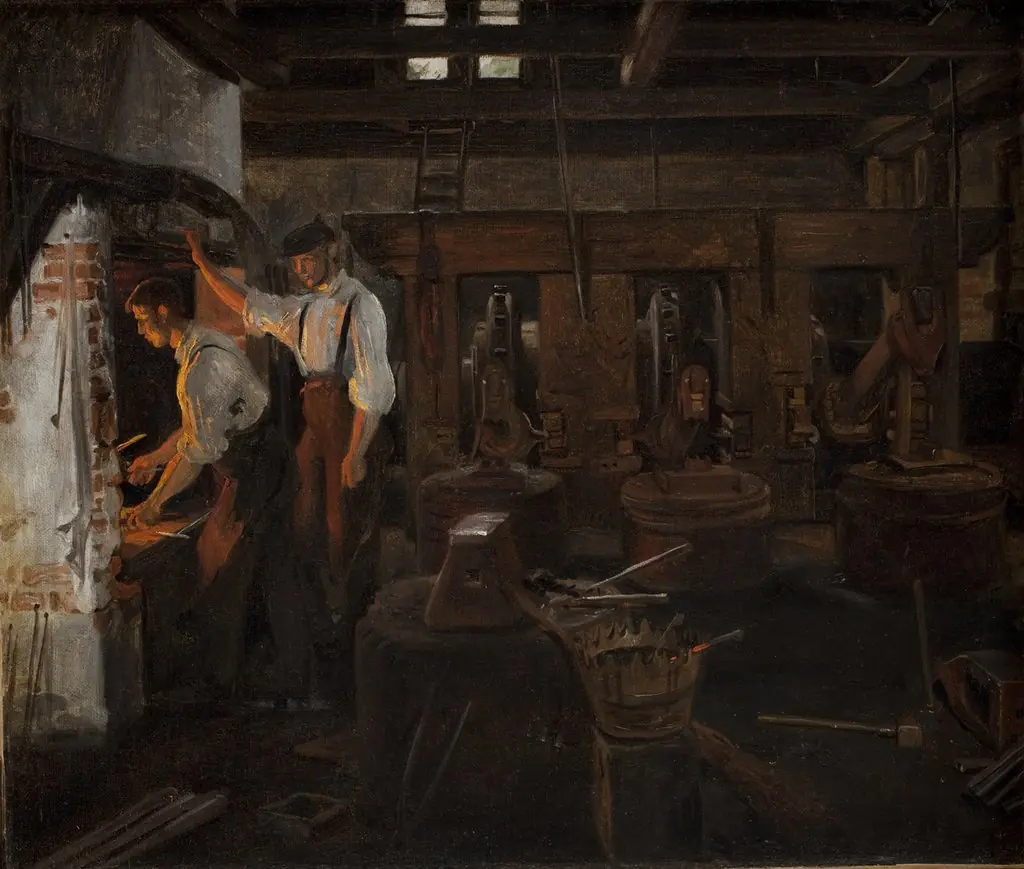
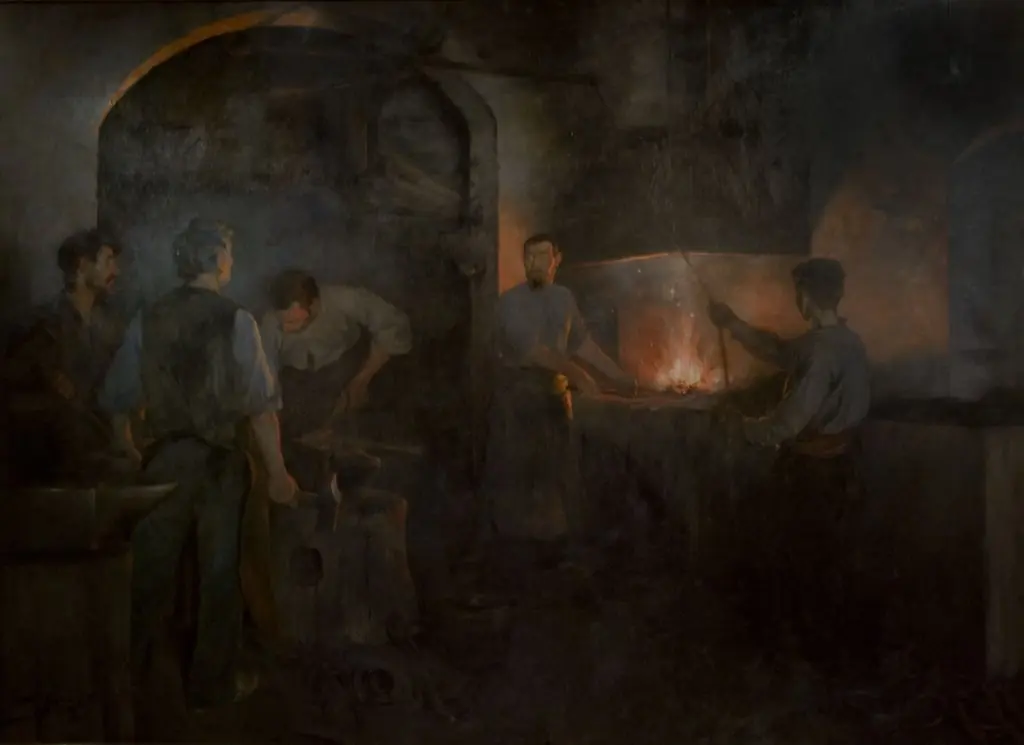
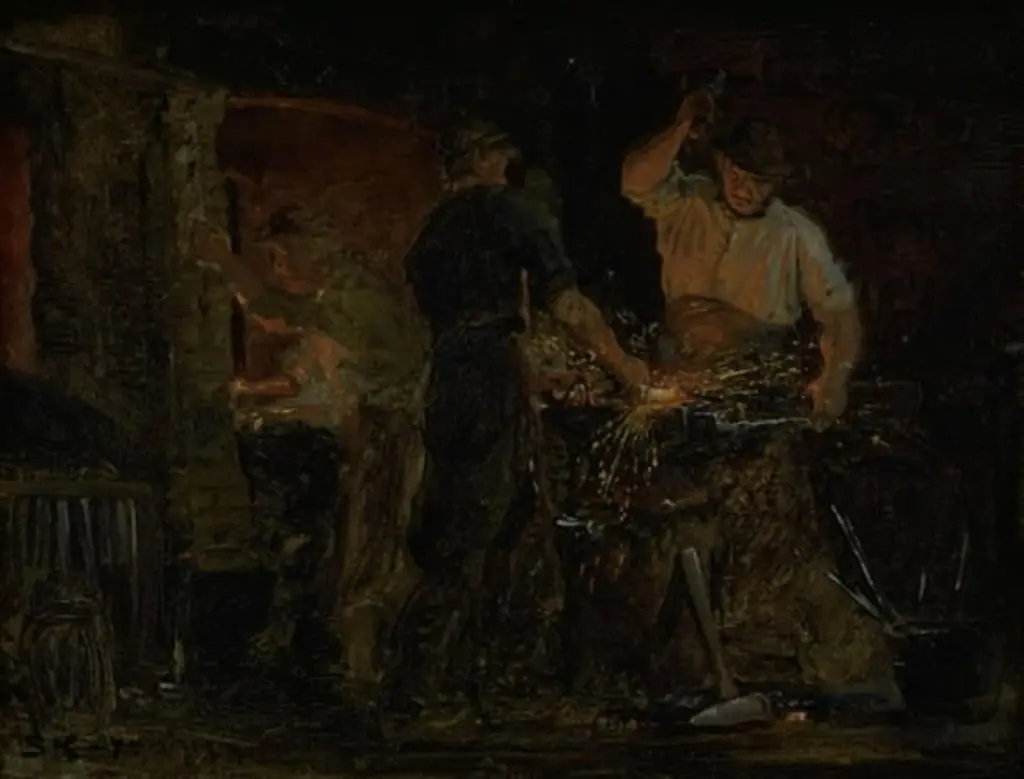
Interieur einer Hammerschmiede is an oil painting by the Post-Impressionist artist Hugo Charlemont. It dates from 1892 and is held in the collection of the Kunsthistorisches Museum.
About this work
Overview
Hugo Charlemont, an Austrian artist trained at the Academy of Fine Arts in Vienna, painted *Interieur einer Hammerschmiede* in 1892 using oil on canvas.
Hugo Charlemont, an Austrian artist trained at the Academy of Fine Arts in Vienna, painted *Interieur einer Hammerschmiede* in 1892 using oil on canvas. The work captures the interior of a blacksmith’s workshop, emphasizing labor and environment over narrative. It resides in the Kunsthistorisches Museum’s collection, reflecting the artist’s sustained engagement with scenes of manual industry during the late 19th century.
Subject & Meaning
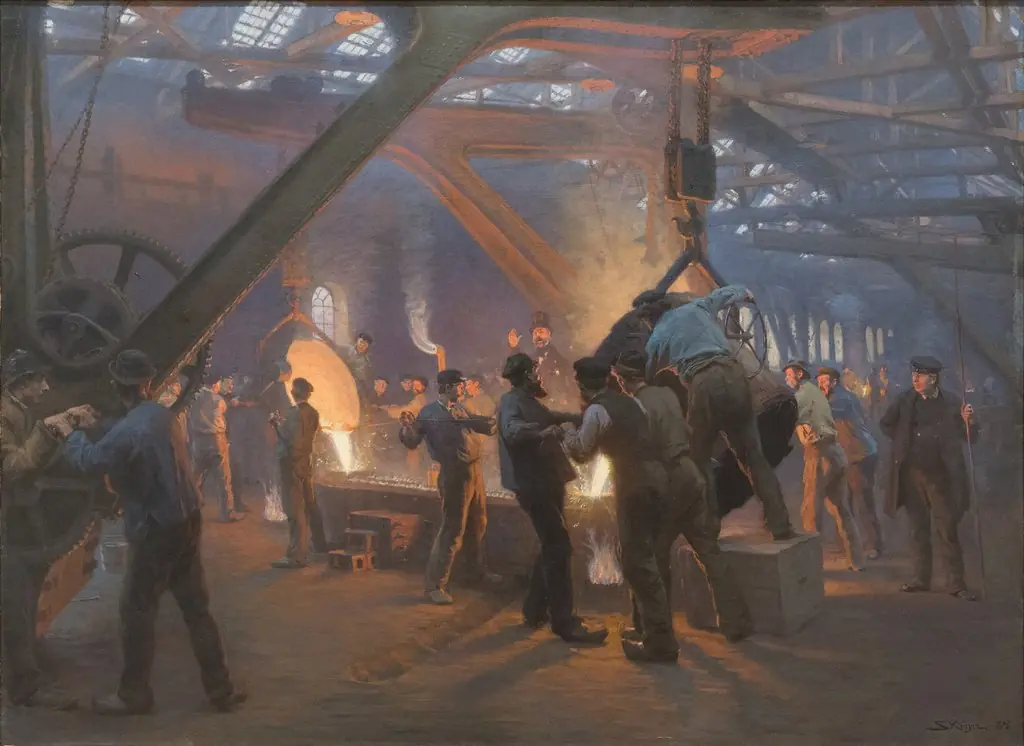
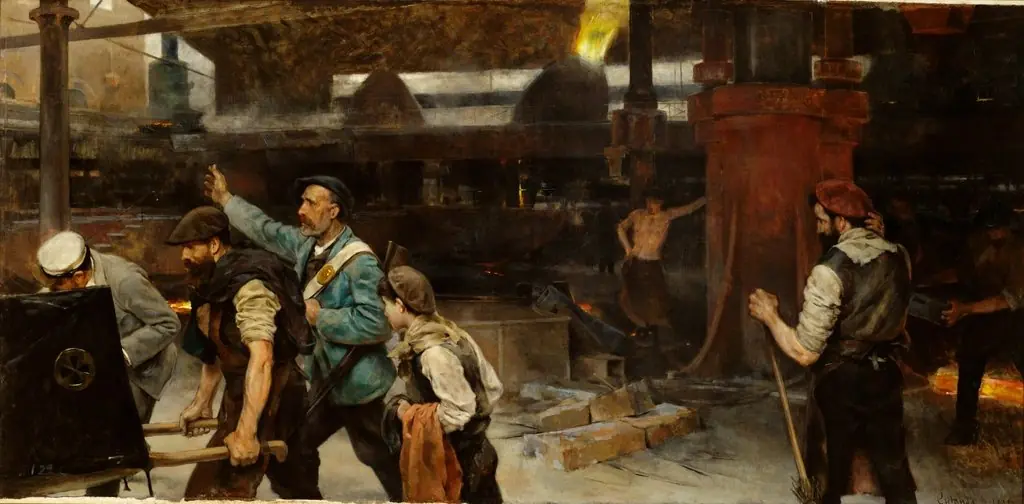
The painting portrays a bustling forge where multiple workers engage in distinct tasks—forging, hammering, and tending fire. No single figure dominates; instead, the composition conveys collective effort. The absence of idealization suggests a documentary intent, honoring the rhythm and physicality of industrial craft in a pre-modern setting, without romanticizing hardship.
Technique & Style
Charlemont employed chiaroscuro to define spatial depth, using strong contrasts between the glow of the forge and the shadowed corners of the workshop. Warm, muted tones—ochres, browns, and smoky grays—dominate, enhancing the sense of heat and soot. Brushwork is detailed yet restrained, focusing on the textures of metal, wood, and fabric to ground the scene in tactile reality.
History & Provenance
Completed in 1892, the painting entered the Kunsthistorisches Museum’s collection shortly after its creation. Charlemont, active in Vienna throughout his career, maintained ties to academic traditions while incorporating observational realism. The work remained in institutional hands, avoiding private circulation, and has been consistently exhibited as part of Austria’s 19th-century genre painting heritage.
Context
In late 19th-century Austria, industrialization was transforming traditional crafts, yet many artists continued to depict artisanal labor as a cultural anchor. Charlemont’s scene aligns with a broader European trend of documenting working-class environments, distinct from urban modernism or rural nostalgia. The forge, though fading in economic relevance, retained symbolic weight as a site of enduring skill.
Legacy
Though not widely known beyond Austrian art circles, the painting endures as a quiet record of pre-industrial labor. Its preservation in a major museum underscores its role as a visual archive of craftsmanship. Charlemont’s approach—observational, unembellished—offers a counterpoint to more dramatic or sentimental portrayals of labor in his era.
Own this work as a print
Artist & collection
Artist
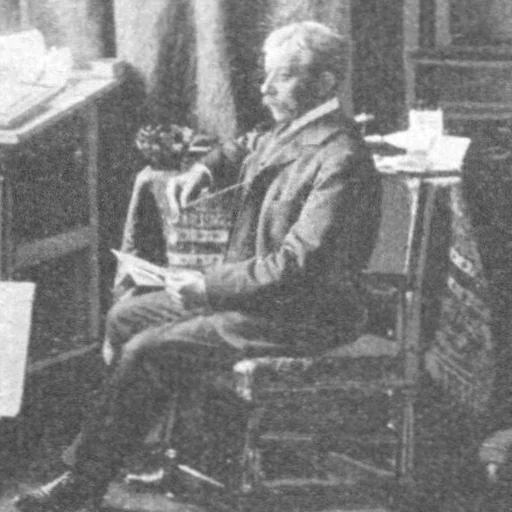
Hugo Charlemont (18 March 1850 – 18 March 1939) was an Austrian painter. Born in Jemnice, Moriva he was the son of Matthais Adolf Charlemont. He studied art at the Academy of Fine Arts. He died in Vienna.