Artwork
Interiør
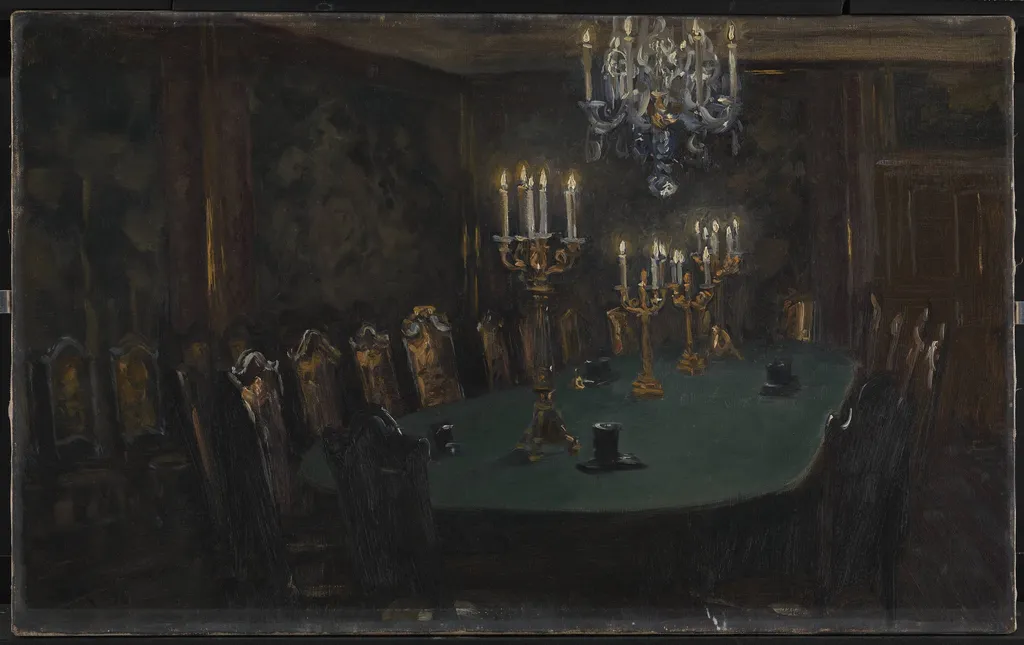
Interiør is a photography by the Impressionist artist Unknown. It dates from 1896 and is held in the collection of the Statens Museum for Kunst.
About this work
Overview
Created in 1896, Interiør is a photographic work by 1113_person, currently held in the collection of the Museum of Ethnography.
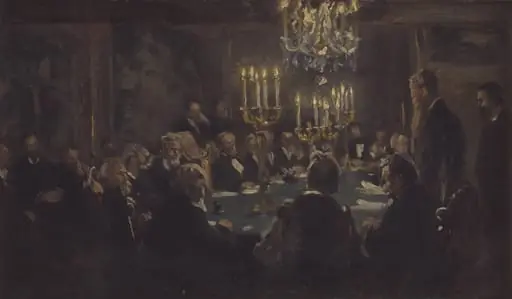
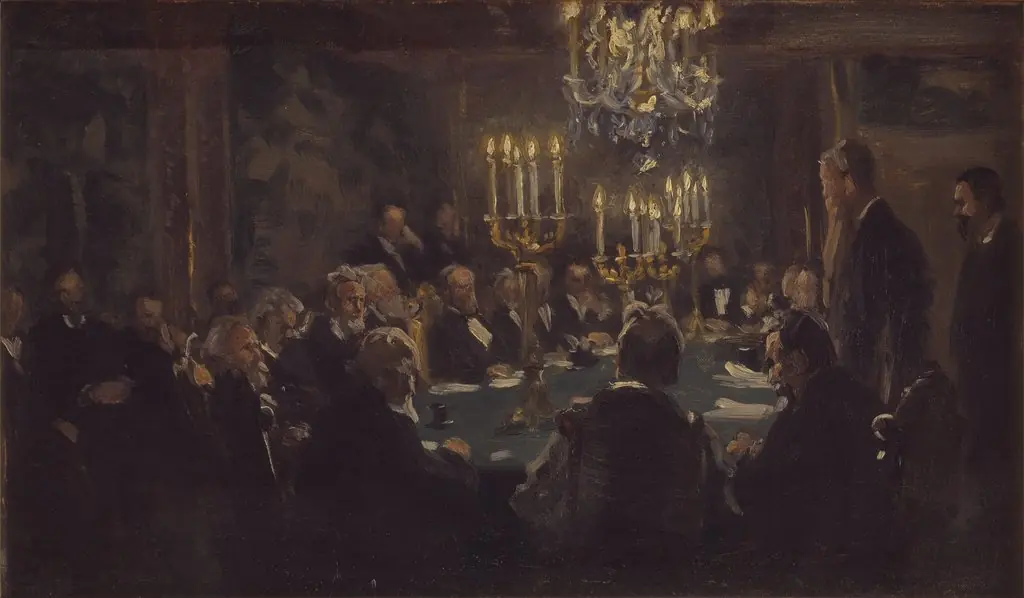
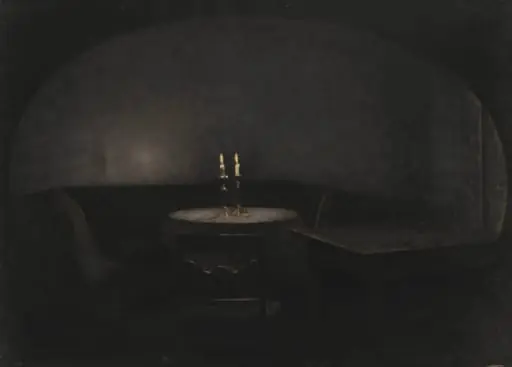
Created in 1896, Interiør is a photographic work by 1113_person, currently held in the collection of the Museum of Ethnography. The image captures an interior space with quiet precision, emphasizing domestic stillness over narrative action. Its composition centers on a long table illuminated by candlelight, surrounded by empty wooden chairs and a suspended chandelier, all rendered in muted tones that suggest the passage of time and absence.
Subject & Meaning
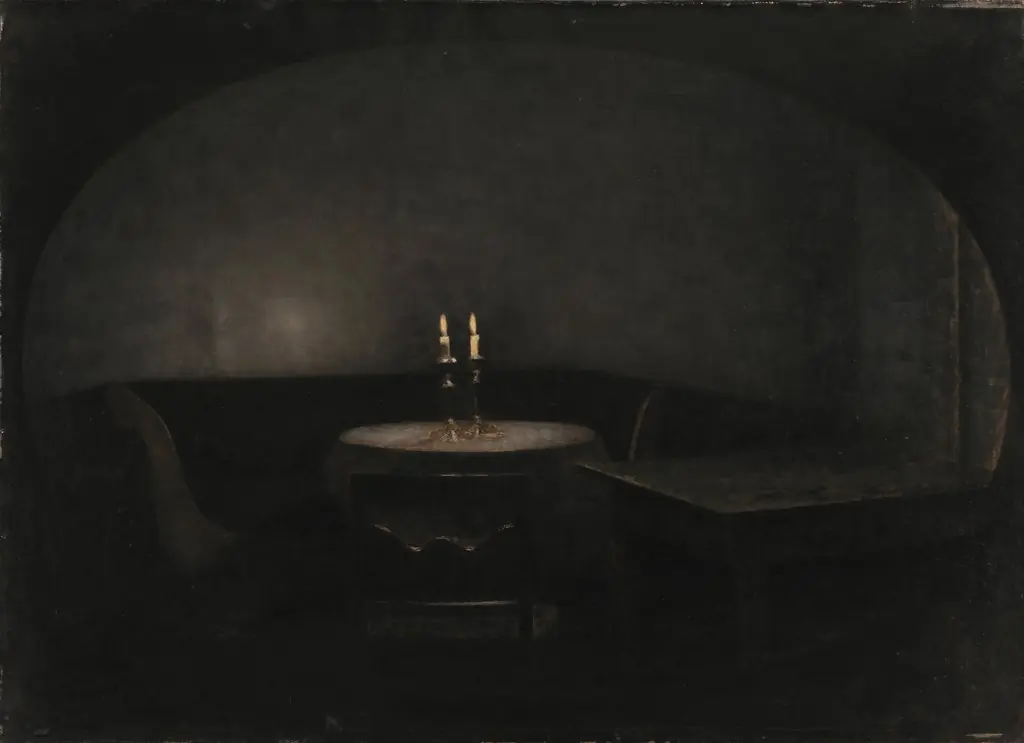
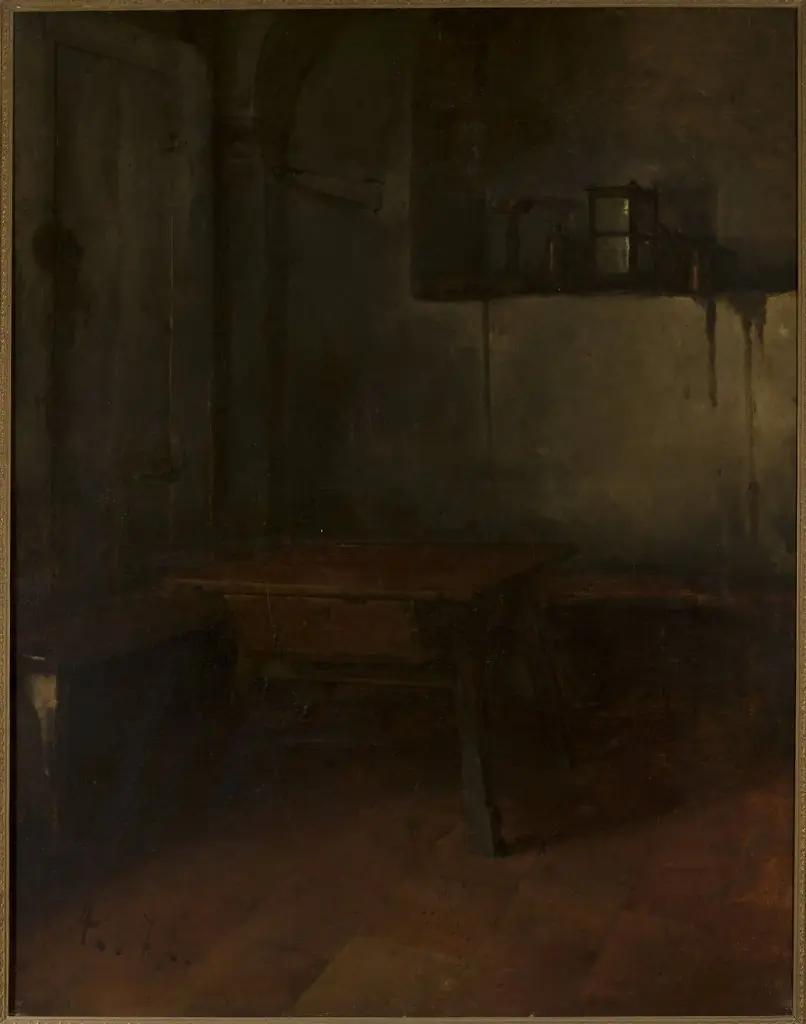
The scene depicts a formal dining room, vacant but meticulously arranged, as if awaiting occupants. The candles and chandelier provide the only illumination, drawing attention to the table’s still life of objects—glasses, cutlery, perhaps cloth—left untouched. The emptiness evokes a sense of suspended ritual, hinting at the routines of daily life without depicting its actors, inviting reflection on domestic solitude and quiet ceremony.
Technique & Style
The photograph employs naturalistic lighting and a shallow depth of field to emphasize texture and shadow. The dim interior is rendered with careful tonal gradation, avoiding artificial contrast. The camera’s position, slightly elevated and centered, frames the space symmetrically, reinforcing order and stillness. This approach aligns with late 19th-century photographic realism, prioritizing unembellished observation over dramatic effect.
History & Provenance
The work entered the Museum of Ethnography’s collection shortly after its creation, likely as part of a broader effort to document domestic environments across cultures. Its origin as a photographic study suggests it was made for ethnographic or anthropological purposes, capturing a specific social setting rather than as fine art. No record of prior ownership or exhibition beyond the museum is documented.
Context
In the 1890s, photography increasingly served as a tool for recording everyday life, especially in European households. Interiør reflects this trend, aligning with movements that valued authenticity over idealization. The emphasis on interior space and ordinary objects mirrors contemporaneous realist painting and early ethnographic documentation, where the home became a site of cultural study.
Legacy
Interiør remains a quiet example of how early photography contributed to the ethnographic record. It does not seek to impress but to preserve, offering a restrained view of domestic life that influenced later documentary practices. Its endurance in the museum’s collection underscores its value as a neutral, observational record rather than a celebrated artistic statement.
Artist & collection

 Domestic Scene
 Giacomo and Cardinal Marco, investing Andrea, Abbot of San Zeno, with his Benefice
 The Nymph of Fontainebleau
 Portrait of a Woman
 Madonna and Child with Saints in the Enclosed Garden
 Venus and Minerva
 Family Group of Four on Sofa
 Wall painting from Room H of the Villa of P. Fannius Synistor at Boscoreale