Artwork
Interior roșu
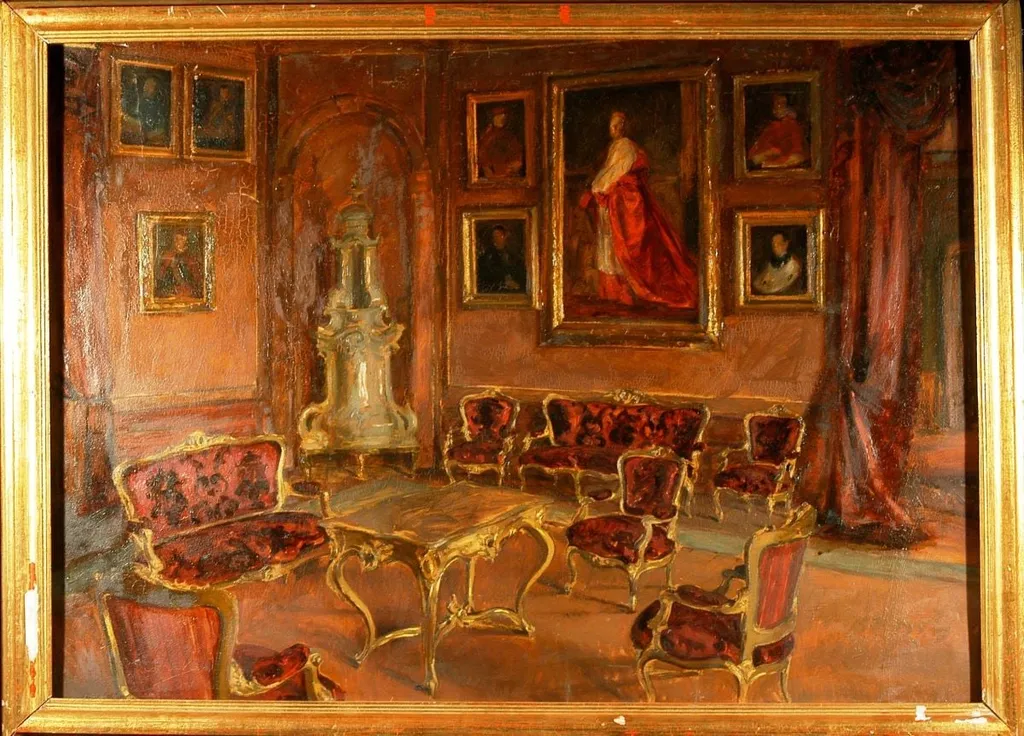
Interior roșu is an unspecified painting by Alfred Macalik. It dates from 1946 and is held in the collection of the Țării Crișurilor Museum.
About this work
Overview
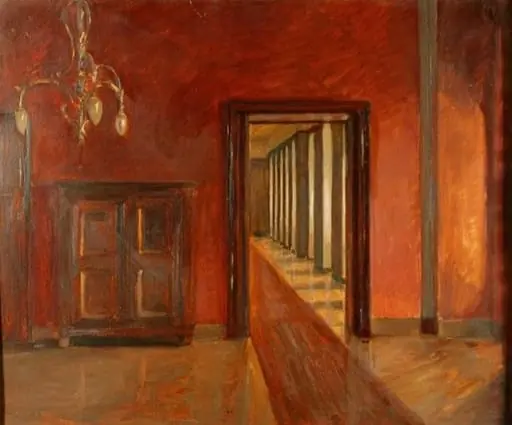
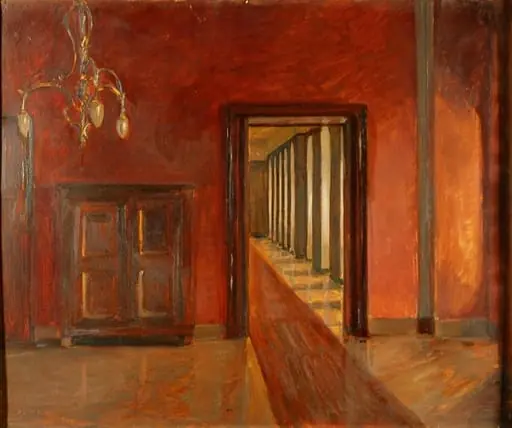
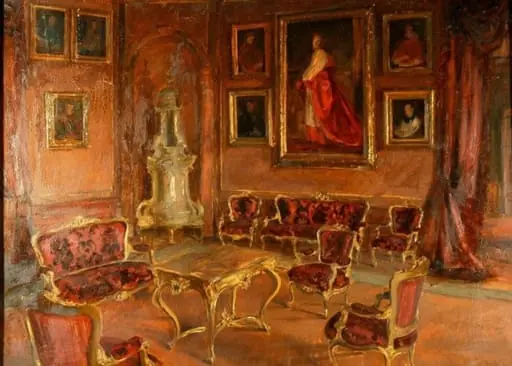
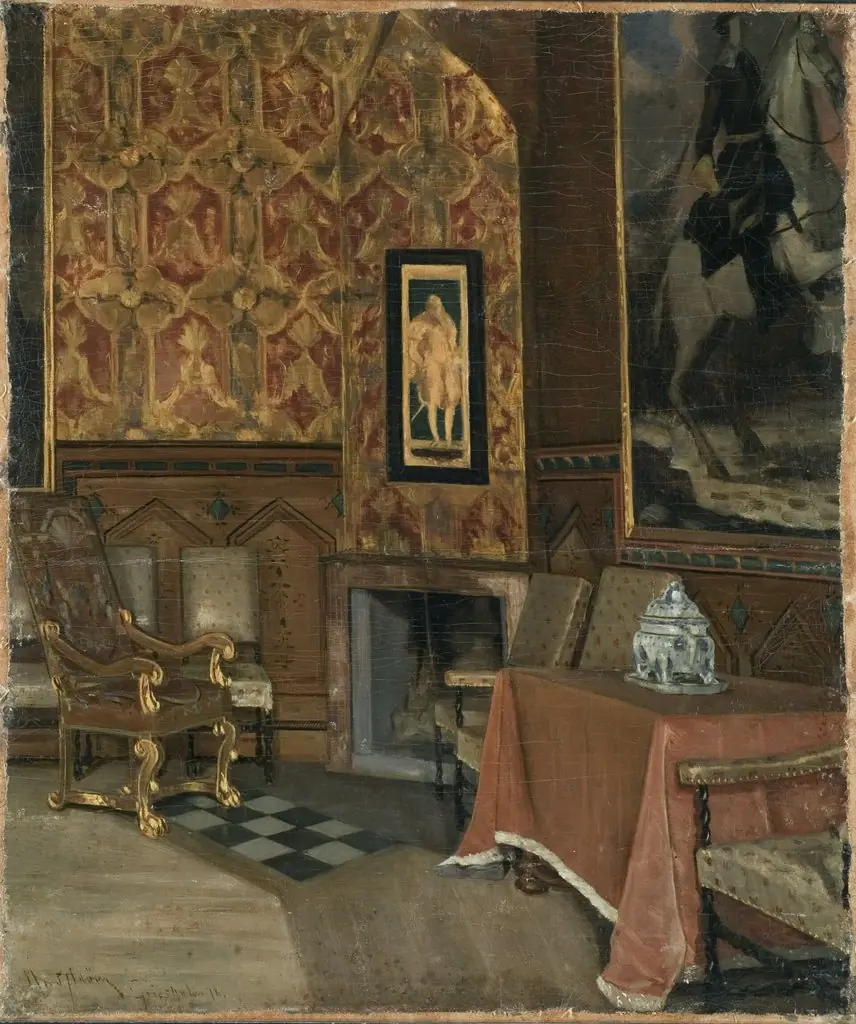
Interior roșu, painted by Alfred Macalik in 1946, depicts an intimate interior space rendered with heavy, tactile brushwork. The work is part of the collection at the Museum of Ethnography. Its dense application of paint and rich color palette convey a sense of domestic presence, capturing a room not as a sterile setting but as a space shaped by time and use.
Subject & Meaning
The arrangement of chairs and fireplace implies habitual use, evoking quiet continuity rather than ceremonial display.
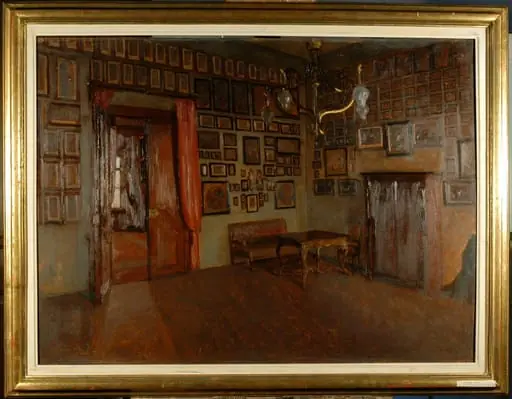
The scene portrays a formal parlor, its walls lined with framed portraits and ornate furnishings. A prominent portrait of a woman in red draws the eye, suggesting a personal or familial presence. The arrangement of chairs and fireplace implies habitual use, evoking quiet continuity rather than ceremonial display. The red tones and gilded details hint at a preserved, perhaps inherited, domestic tradition.
Technique & Style
Macalik employed impasto to build the surface of the painting, layering paint thickly to create texture and depth. The brushwork is deliberate and physical, with ridges and scrapes visible across walls and furniture. This method amplifies the materiality of the space, transforming ordinary objects into tactile presences. The technique rejects smooth realism, favoring a sensory immediacy that echoes the weight of lived experience.
History & Provenance
Created shortly after the end of World War II, Interior roșu emerged during a period of cultural reevaluation in Eastern Europe. The painting entered the Museum of Ethnography’s collection in the mid-20th century, where it was preserved as an example of domestic visual culture. Its acquisition reflects an interest in everyday environments as cultural artifacts, rather than solely as artistic statements.
Context
In postwar Romania, representations of interior life often carried subtle political weight, signaling continuity amid upheaval. Macalik’s focus on a well-appointed parlor—rich in detail but devoid of people—may reflect a longing for stability or a quiet resistance to erasure. The work aligns with regional tendencies to document private spaces as repositories of identity when public narratives were unstable.
Legacy
Interior roșu remains a quiet reference in studies of Romanian interwar and postwar painting, valued for its unembellished portrayal of domestic space. Its emphasis on texture and atmosphere influenced later artists exploring the emotional resonance of interiors. Though not widely exhibited, it endures as a testament to the significance of ordinary environments in shaping personal and collective memory.
Artist & collection
Artist
Alfred Macalik painted quiet, warm rooms and soft evening scenes in the 1920s and 1940s.