Artwork
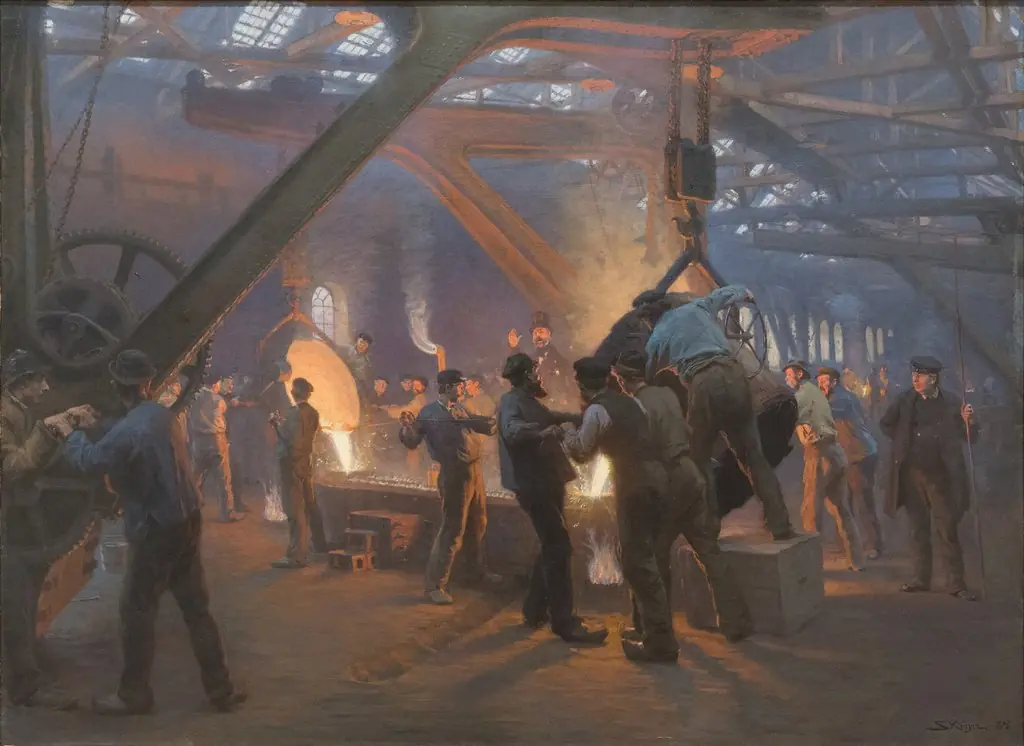
The Iron Foundry, Burmeister and Wain
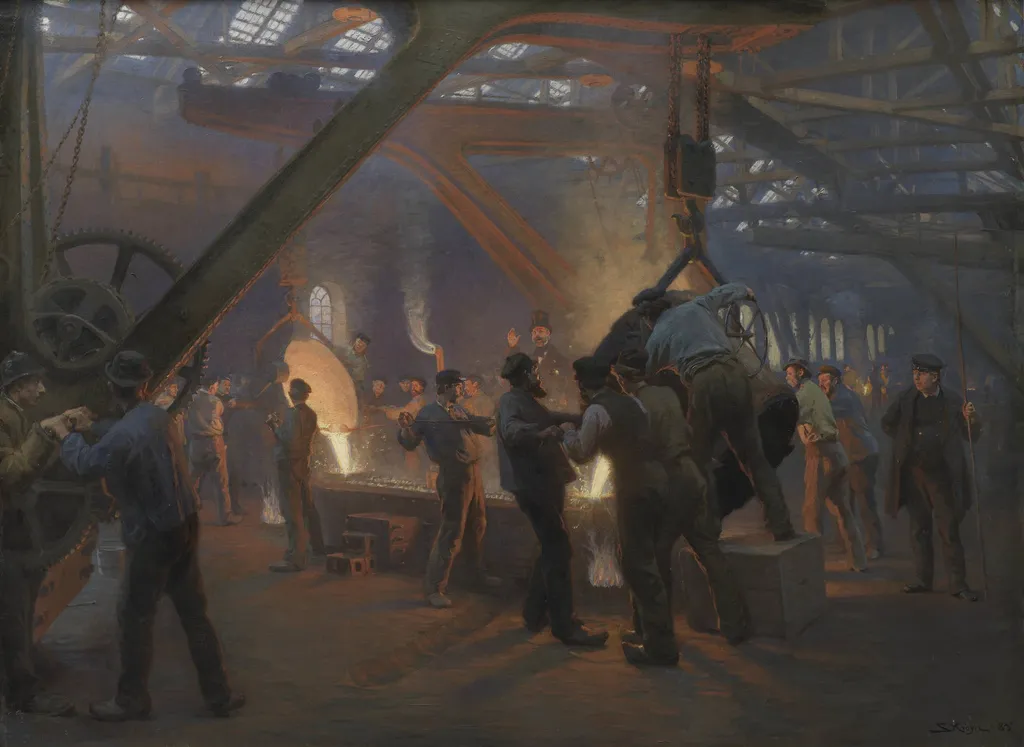
The Iron Foundry, Burmeister and Wain is a photography by the Impressionist artist Unknown. It dates from 1885 and is held in the collection of the Statens Museum for Kunst.
About this work
Overview
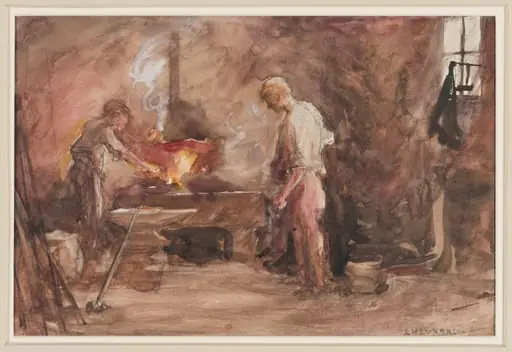
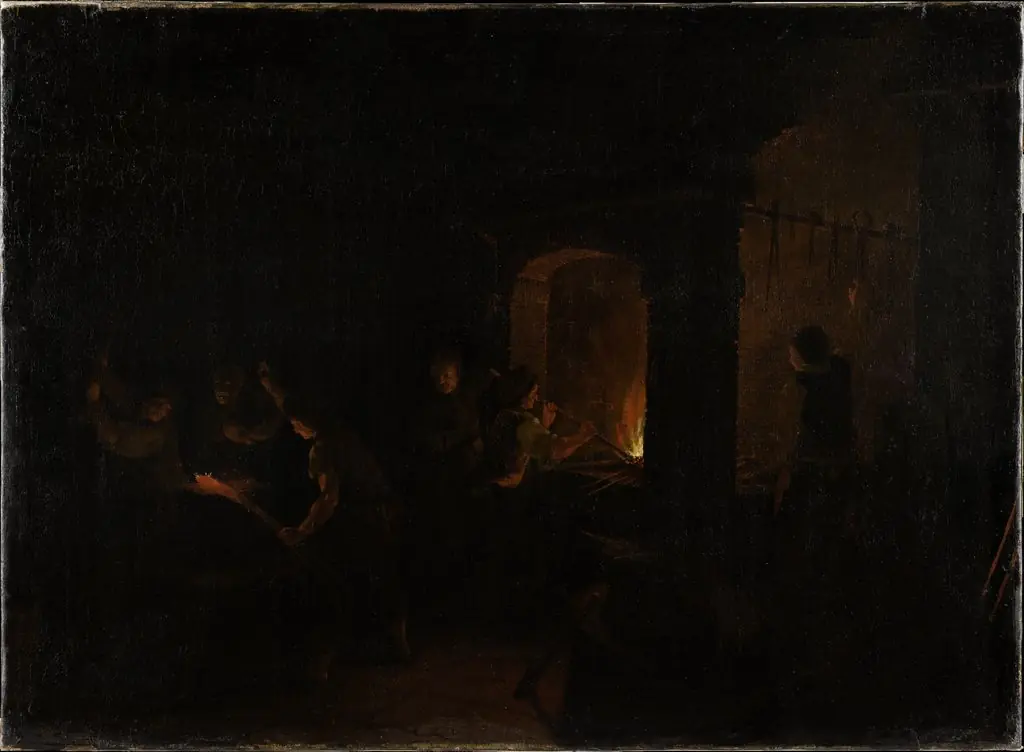
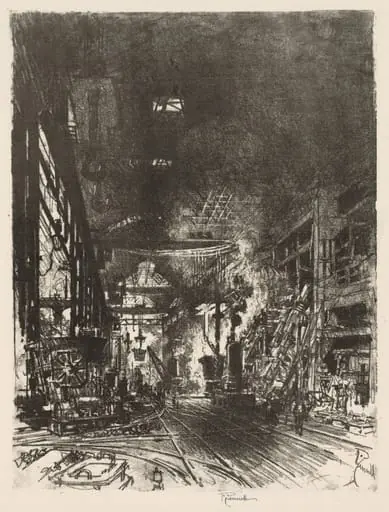
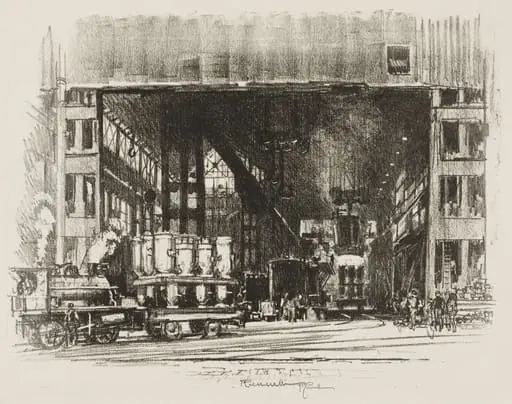
Painted in 1885 by an artist associated with Danish industrial realism, this work depicts the interior of the Burmeister & Wain iron foundry in Copenhagen.
Painted in 1885 by an artist associated with Danish industrial realism, this work depicts the interior of the Burmeister & Wain iron foundry in Copenhagen. The scene captures the physical intensity of late-19th-century manufacturing, with workers engaged in manual labor amid heavy machinery and heat. The painting is held in the collection of the Museum of Ethnography, where it serves as a record of industrial life rather than a decorative piece.
Subject & Meaning
The painting portrays laborers in a foundry, their postures and expressions suggesting fatigue and focus. The central furnace, glowing intensely, becomes both a source of heat and a symbolic anchor—representing the energy driving industrial progress. Surrounding figures, some observing, others working, convey a sense of collective endurance. The absence of idealization underscores the unvarnished reality of factory work during the period.
Technique & Style
The artist employs chiaroscuro to heighten the contrast between the furnace’s radiant orange and the surrounding gloom. Deep blues and grays dominate the shadows, while soot-stained surfaces and metallic tools reflect muted highlights. Brushwork is deliberate but unpolished, emphasizing texture over refinement. The composition directs attention to the heat source, using light as both a visual and narrative tool to convey the foundry’s oppressive atmosphere.
History & Provenance
Created in 1885, the painting was likely commissioned or acquired by an institution interested in documenting industrial labor. It entered the Museum of Ethnography’s collection in the early 20th century, where it was preserved as part of a broader effort to catalog working-class life. Its provenance reflects a shift in cultural institutions toward recording social conditions, not just elite or exotic subjects.
Context
In the 1880s, Denmark was undergoing rapid industrialization, with foundries like Burmeister & Wain becoming centers of economic activity. While urban elites celebrated technological advancement, artists and reformers began documenting the human cost. This painting aligns with a growing European trend of realism that turned attention from pastoral idylls to the grit of factory floors, reflecting broader societal awareness of labor conditions.
Legacy
The painting remains a quiet testament to the working conditions of industrial Denmark. It has not entered mainstream art history narratives but continues to be referenced in studies of labor and visual culture. Its value lies in its unembellished record of a vanished workplace, offering insight into the daily rhythms of a workforce that shaped modern industry without fanfare.
Artist & collection

 Domestic Scene
 Giacomo and Cardinal Marco, investing Andrea, Abbot of San Zeno, with his Benefice
 The Nymph of Fontainebleau
 Portrait of a Woman
 Madonna and Child with Saints in the Enclosed Garden
 Venus and Minerva
 Family Group of Four on Sofa
 Wall painting from Room H of the Villa of P. Fannius Synistor at Boscoreale