Artwork
En romersk gadescene
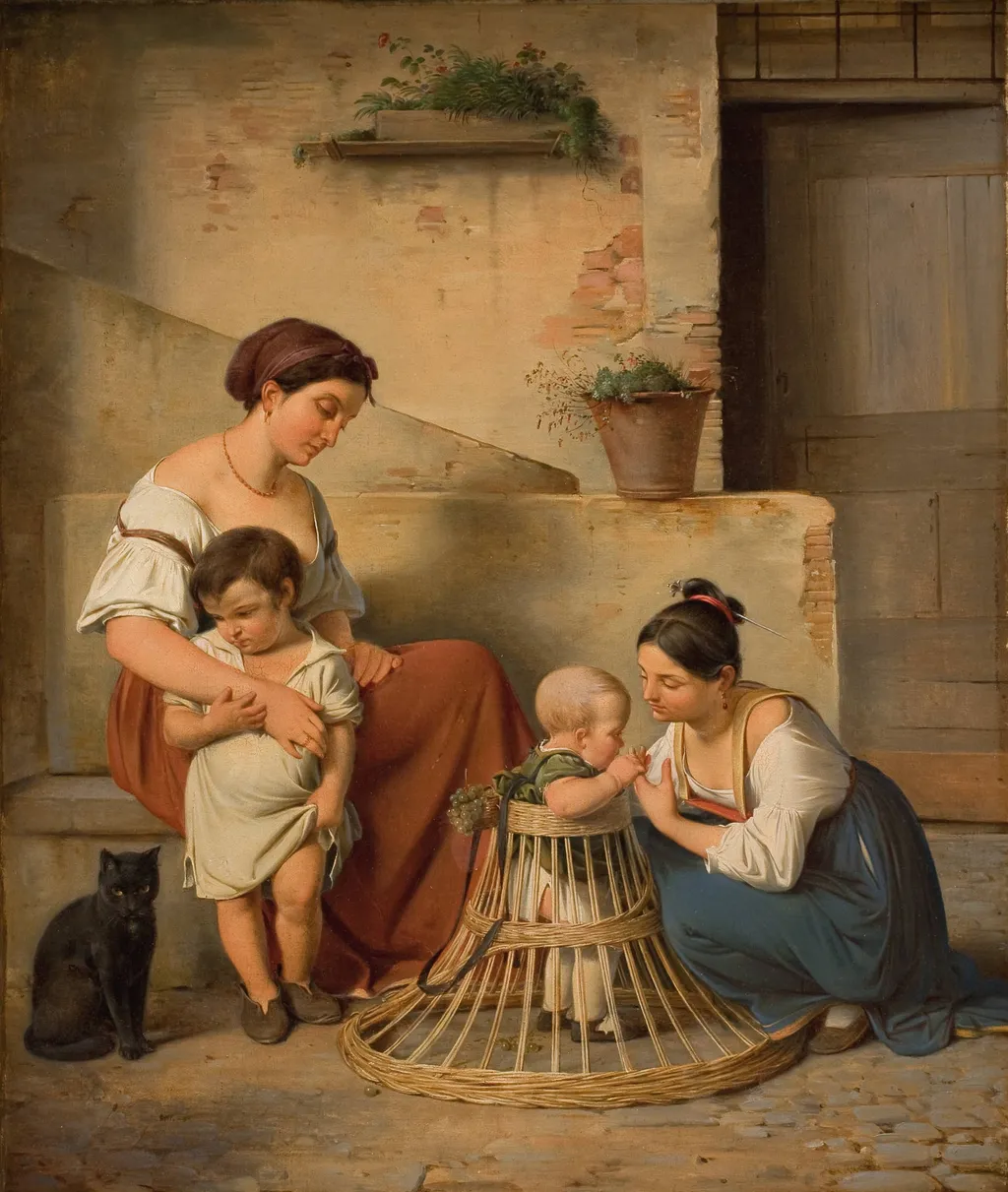
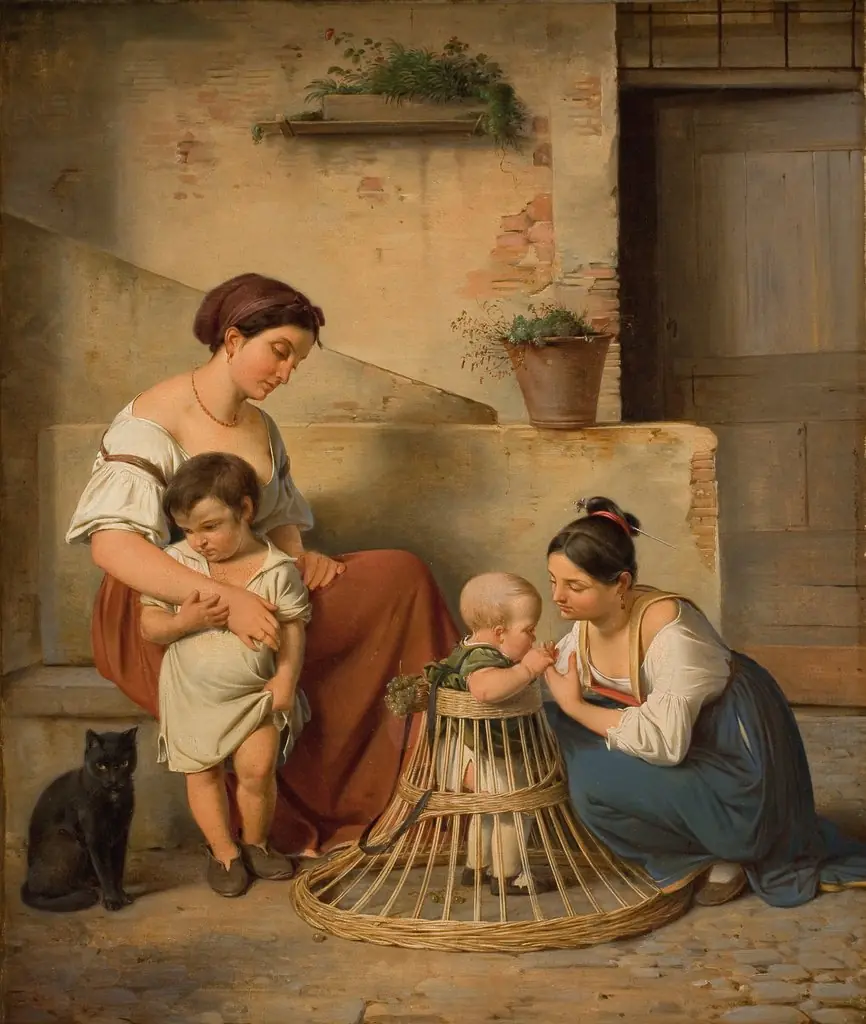
En romersk gadescene is a photography by the Romanticist artist Unknown. It dates from 1833 and is held in the collection of the Statens Museum for Kunst. Created in 1833 by an artist identified as 1114_person, this painting portrays a quiet domestic moment in a Roman courtyard.
About this work
Overview
Created in 1833 by an artist identified as 1114_person, this painting portrays a quiet domestic moment in a Roman courtyard. It is part of the collection at the Museum of Ethnography. The scene centers on two women and three children, rendered with attention to subtle interactions and spatial depth. The composition avoids dramatic action, favoring stillness and intimate observation.
Subject & Meaning
The presence of a cat and potted plants suggests a lived-in, tranquil environment, evoking everyday life rather than narrative drama.
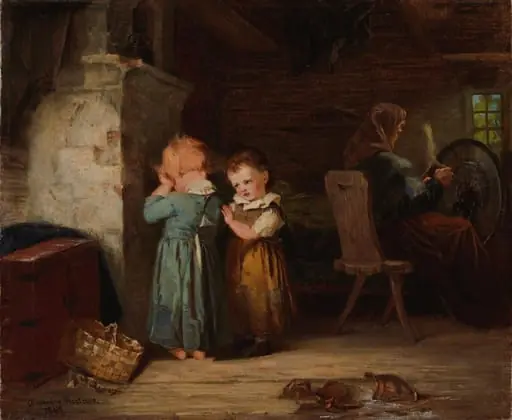
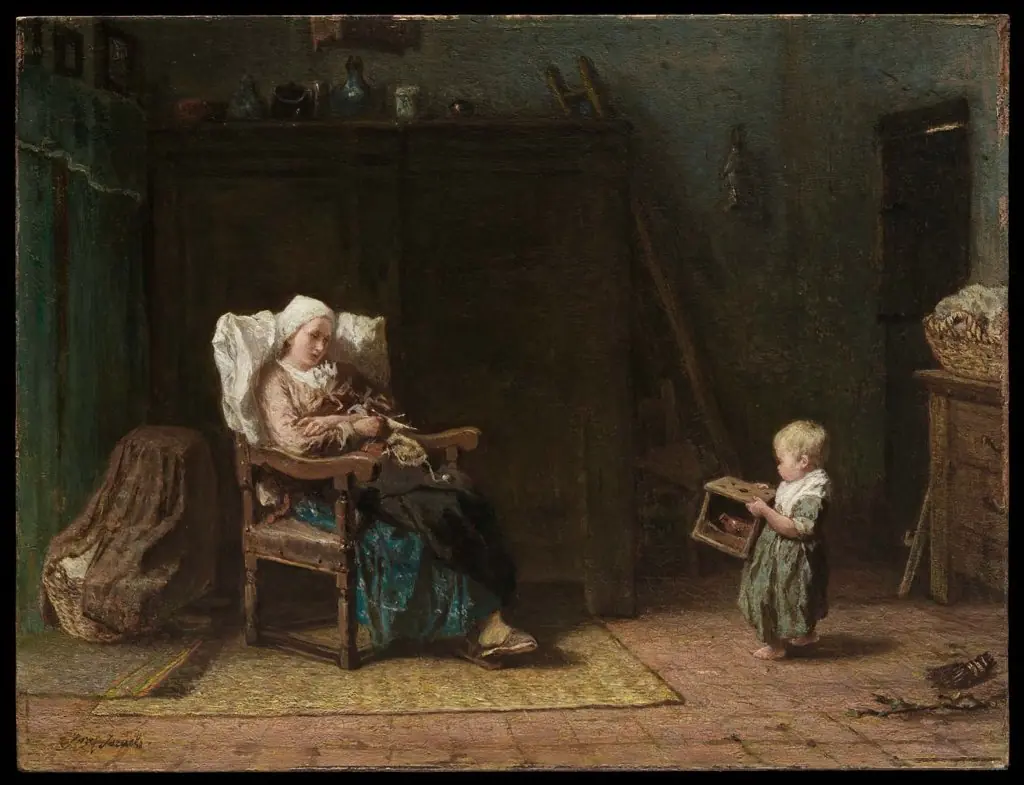
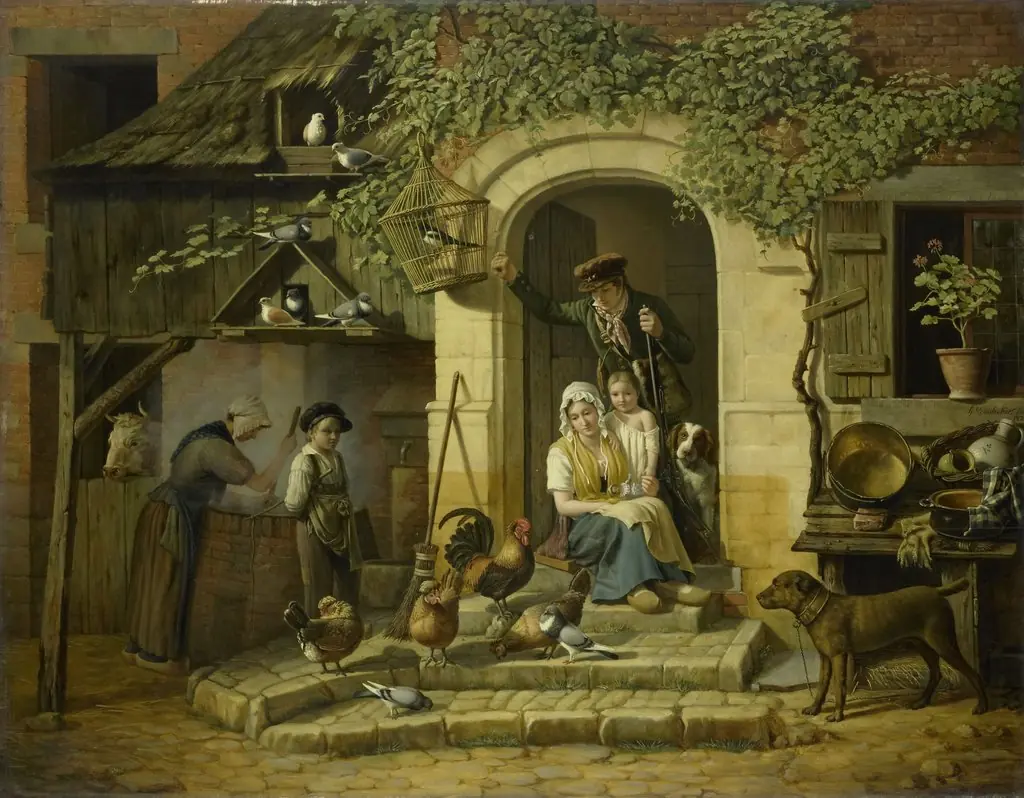
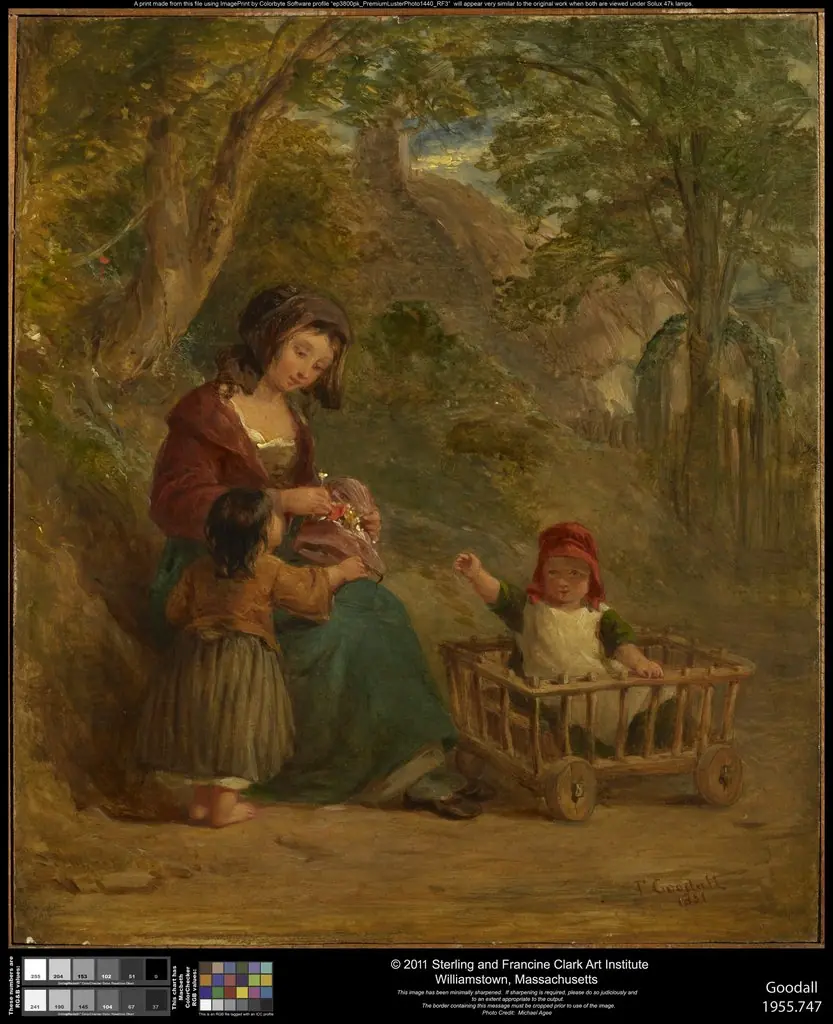
The painting captures an unremarkable yet tender domestic exchange: two women and three children in a shaded courtyard. The children, dressed uniformly in white, appear at ease—one nestled in a wicker basket—while the women, distinguished by contrasting attire, observe or attend to them. The presence of a cat and potted plants suggests a lived-in, tranquil environment, evoking everyday life rather than narrative drama.
Technique & Style
The artist employs chiaroscuro to model forms and create spatial depth, directing attention to the central figures against the stone courtyard. Soft transitions between light and shadow enhance the three-dimensionality of the figures and their clothing. The palette is restrained, with muted tones supporting the calm atmosphere, while details like fabric folds and basket weave are rendered with quiet precision.
History & Provenance
The painting entered the collection of the Museum of Ethnography after its completion in 1833. Its origin as a work by 1114_person remains documented but little contextualized in public records. No significant exhibition history or ownership changes are widely recorded, suggesting it was acquired directly or through a modest private collection.
Context
Produced during the early 19th century, the painting reflects a European interest in depicting everyday life in Mediterranean settings, often idealized as timeless or archetypal. While not part of a major artistic movement, it aligns with contemporary trends in genre painting that valued quiet, observational scenes over grand historical themes.
Legacy
The work remains a quiet example of 19th-century genre painting focused on domesticity and regional detail. Though not widely reproduced or studied, it contributes to the Museum of Ethnography’s collection of visual records of daily life. Its significance lies in its unembellished portrayal of ordinary moments, preserved as a cultural artifact rather than a celebrated artwork.
Artist & collection

 Domestic Scene
 Giacomo and Cardinal Marco, investing Andrea, Abbot of San Zeno, with his Benefice
 The Nymph of Fontainebleau
 Portrait of a Woman
 Madonna and Child with Saints in the Enclosed Garden
 Venus and Minerva
 Family Group of Four on Sofa
 Wall painting from Room H of the Villa of P. Fannius Synistor at Boscoreale