Artwork
Sorgsame Schwester
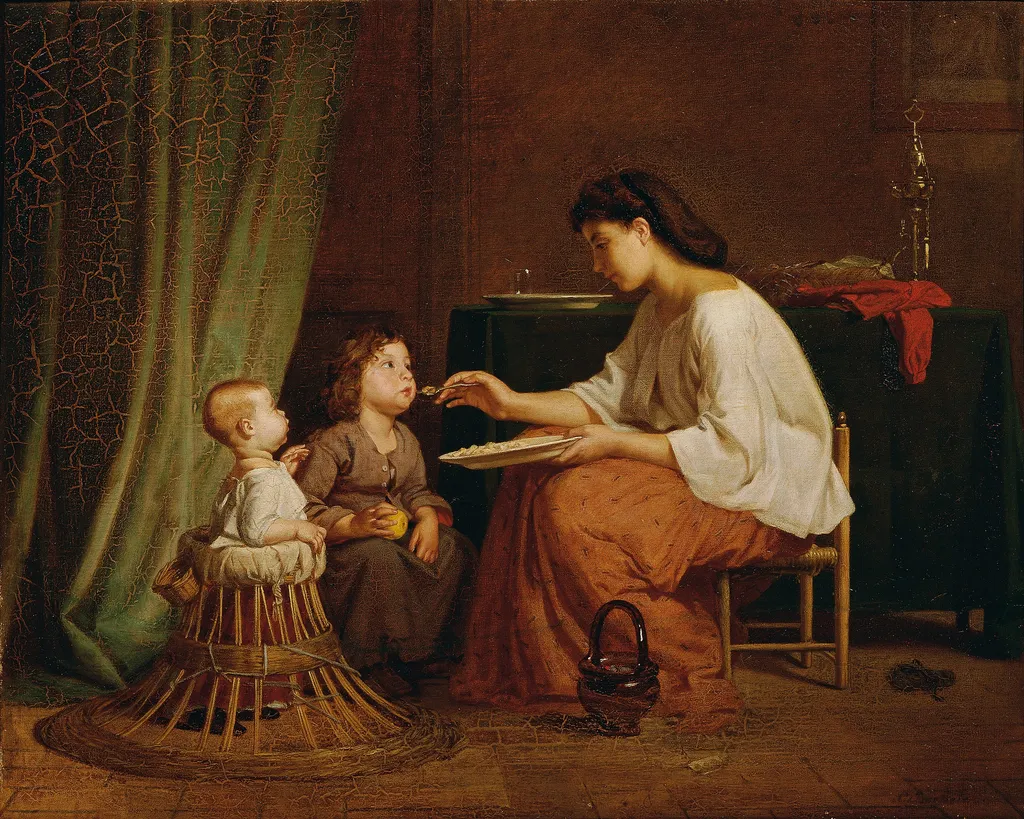
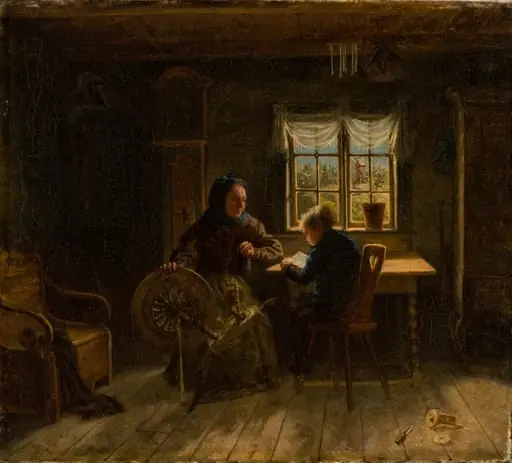
Sorgsame Schwester is an oil painting by the Biedermeier artist Karl Böheim. It dates from 1867 and is held in the collection of the Kunsthistorisches Museum.
About this work
Overview
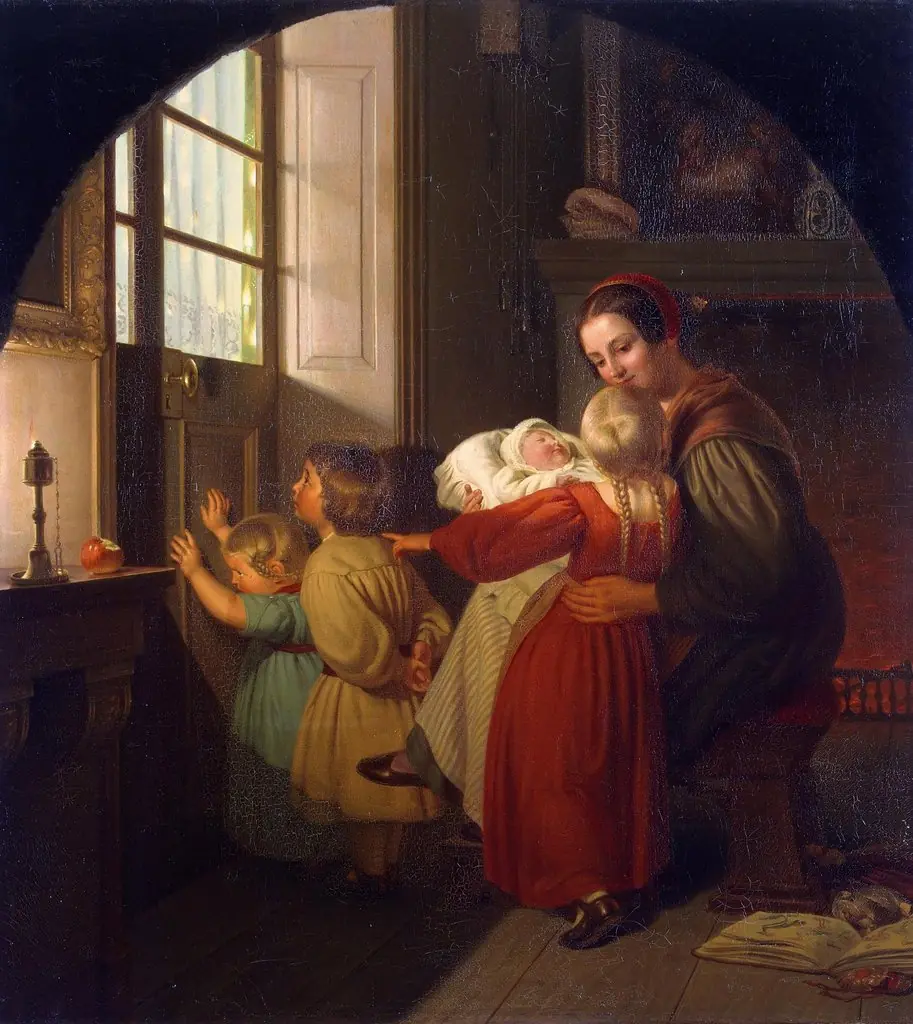
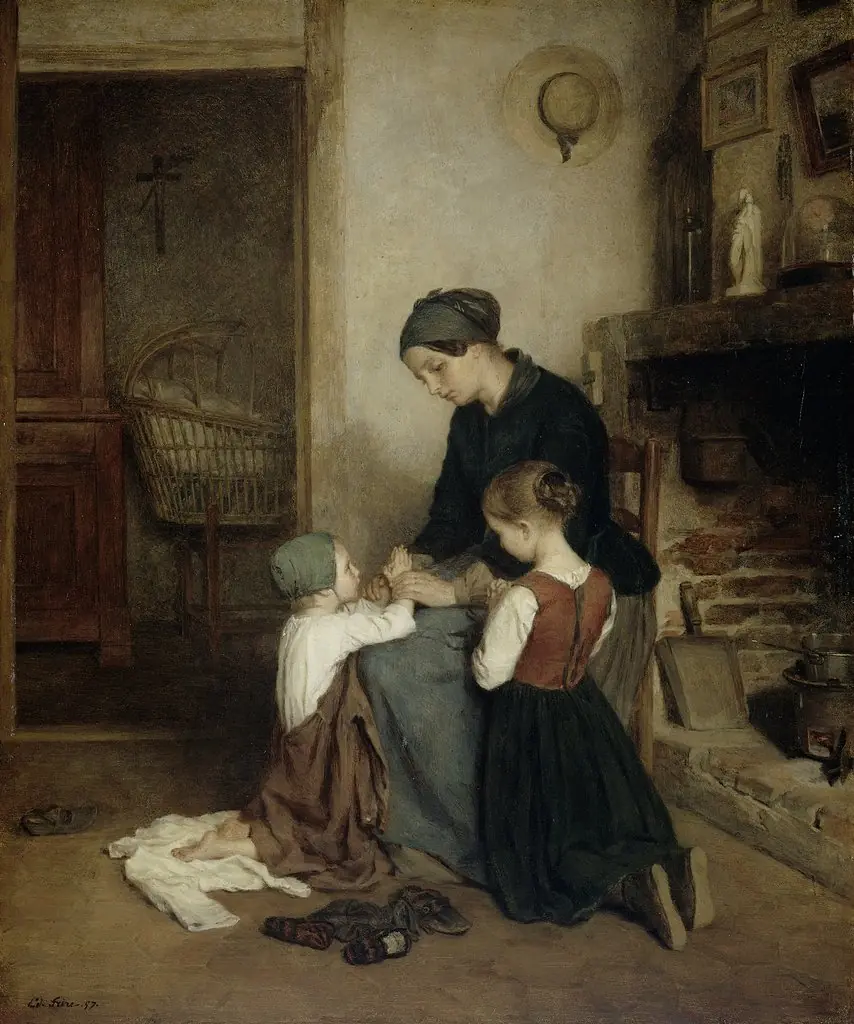
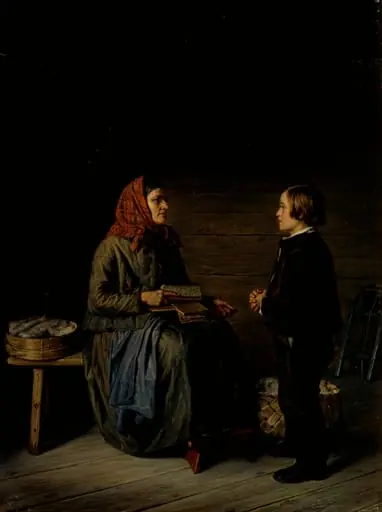
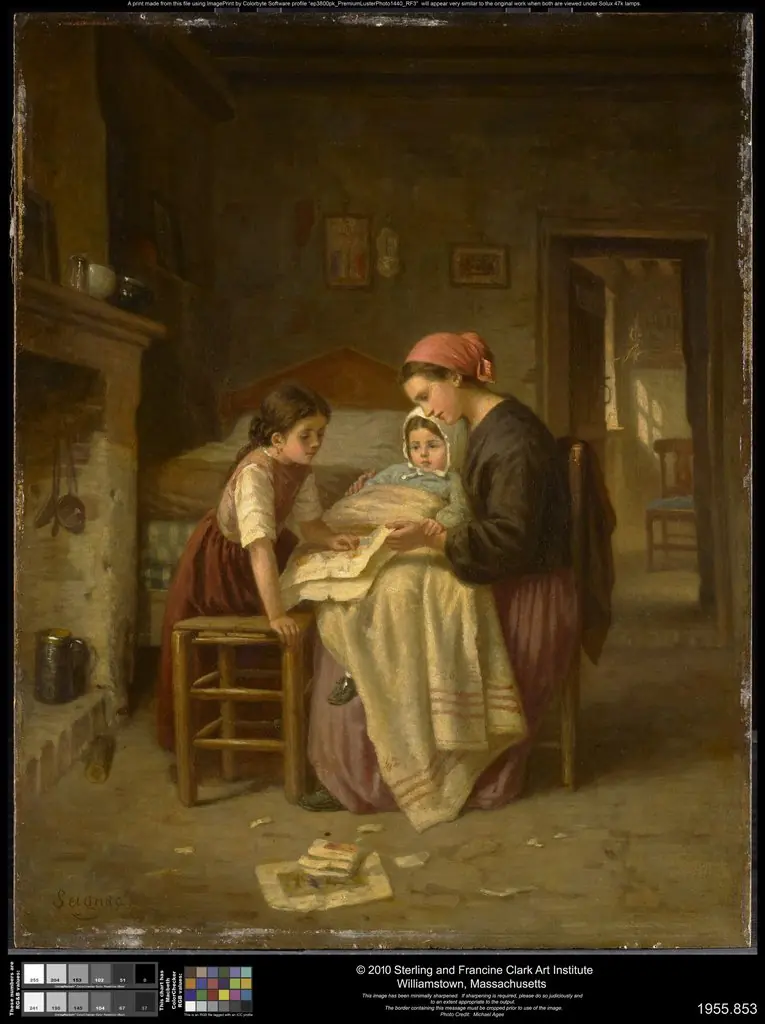
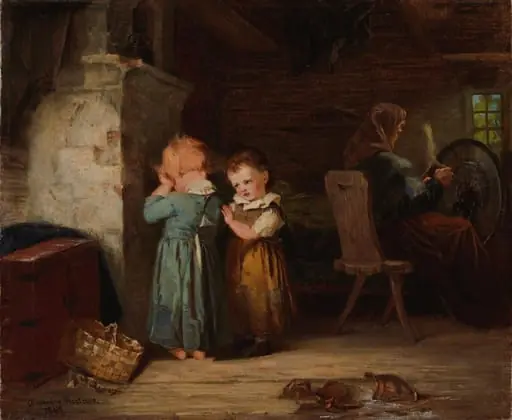
Painted in 1867 by Karl Böheim, this oil-on-canvas work portrays a quiet domestic moment. It is part of the collection at the Kunsthistorisches Museum in Vienna. The composition centers on a woman caring for two young children, rendered with attention to everyday detail and subdued emotional tone. The scene avoids theatricality, focusing instead on the rhythm of routine care.
Subject & Meaning
The children’s postures and expressions convey natural, unposed behavior, emphasizing the ordinary dignity of domestic life in mid-19th-century Austria.
The painting captures a moment of nourishment: a woman feeds one child from a plate while another stands nearby, observing with quiet curiosity. The act of feeding suggests maternal care, but the absence of idealization lends it a grounded realism. The children’s postures and expressions convey natural, unposed behavior, emphasizing the ordinary dignity of domestic life in mid-19th-century Austria.
Technique & Style
Böheim employs soft, warm tonalities—ochres, browns, and muted greens—to create a sense of enclosed intimacy. Brushwork is restrained, favoring smooth transitions over visible texture. Light falls gently from an unseen source, illuminating the figures without harsh contrast. The spatial arrangement, with the table and curtain framing the scene, guides the viewer’s eye toward the central interaction.
History & Provenance
The painting was completed in 1867 and entered the collection of the Kunsthistorisches Museum shortly thereafter. It has remained in public ownership since, with no documented changes in custody. Its inclusion in the museum’s holdings reflects contemporary interest in genre scenes that depicted middle-class family life with sincerity rather than sentimentality.
Context
In the mid-1800s, Austrian art increasingly turned to scenes of domestic life as industrialization reshaped social structures. Böheim’s work aligns with this trend, offering a quiet counterpoint to grand historical or mythological subjects. The setting—a modest interior with tiled floors and simple furnishings—reflects the lived environment of urban middle-class households in Vienna at the time.
Legacy
Though not widely exhibited beyond institutional collections, the painting contributes to a broader understanding of 19th-century Austrian genre painting. It exemplifies a restrained, observational approach to family life that avoids romanticization. Böheim’s focus on unremarkable moments has helped preserve a visual record of everyday routines in Habsburg-era Vienna.
Own this work as a print
Artist & collection