Artwork
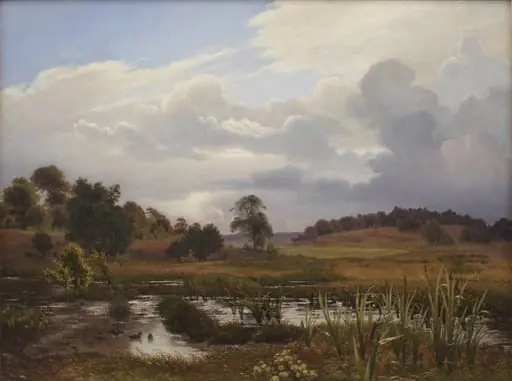
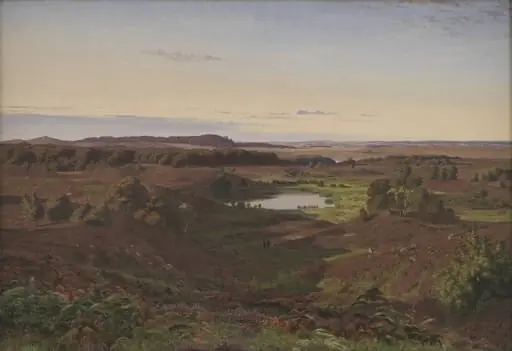
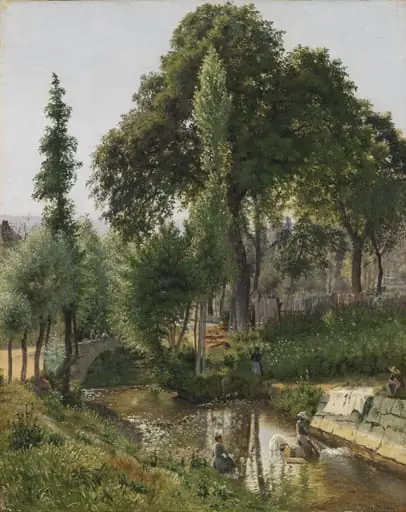
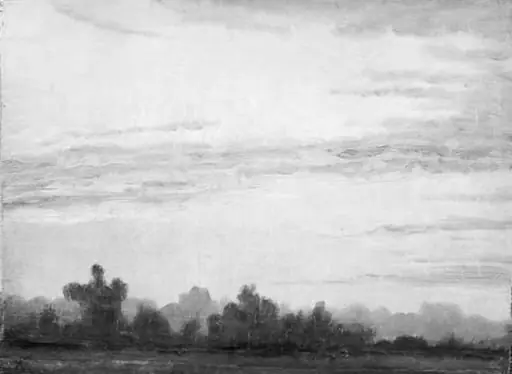
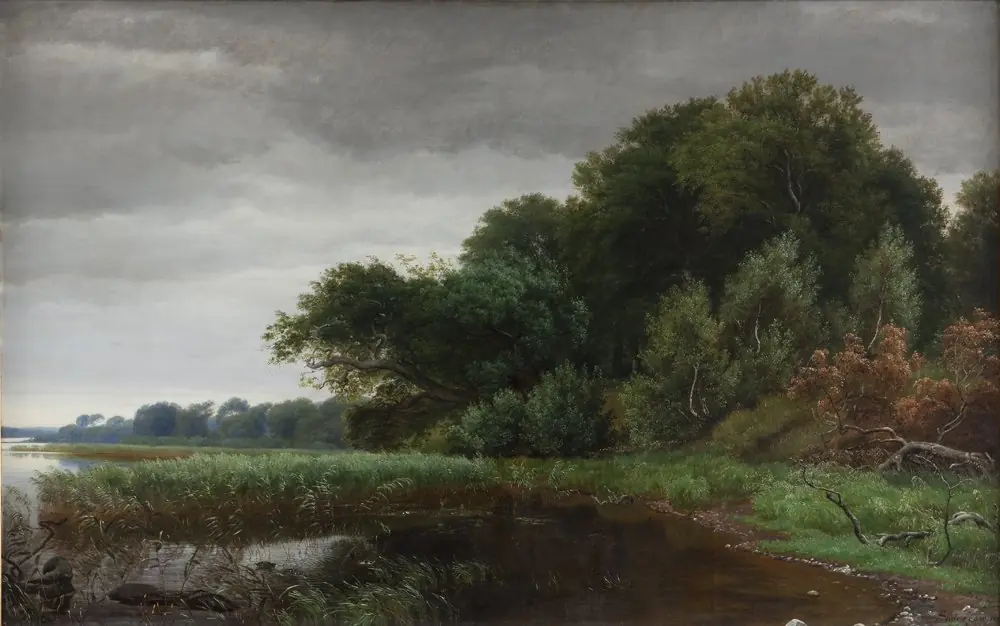
Lakes in Wooded Landscape near Silkeborg
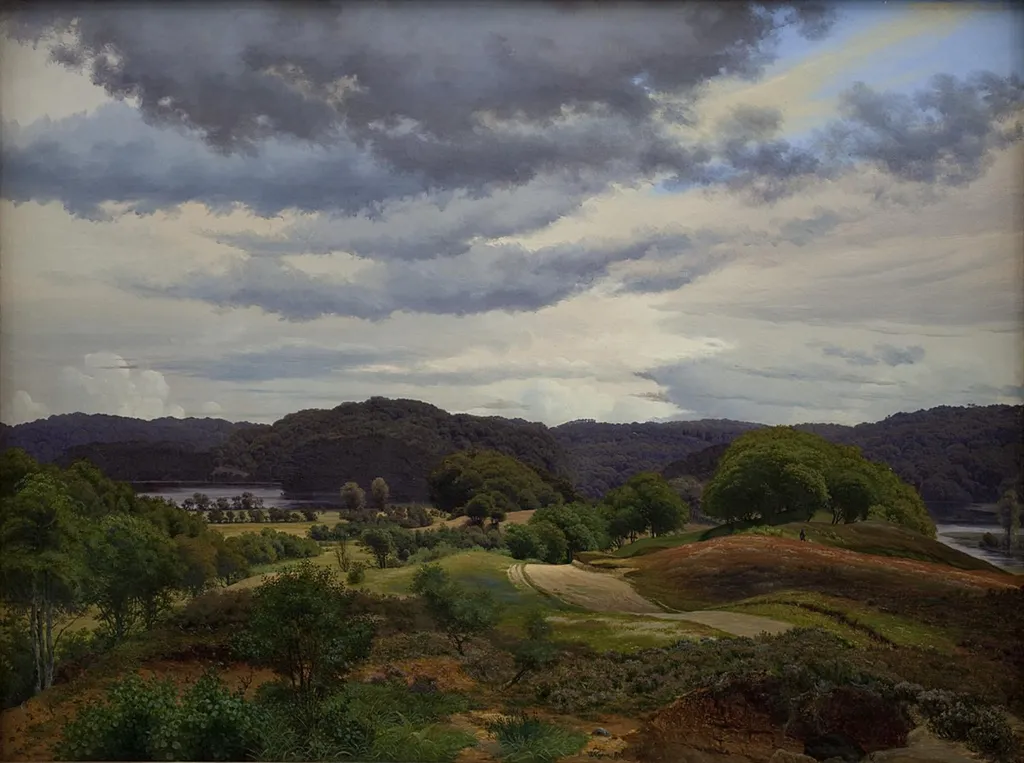
Lakes in Wooded Landscape near Silkeborg is an unspecified painting by the Barbizon school artist Unknown artist. It dates from 1845 and is held in the collection of the Statens Museum for Kunst.
About this work
Overview
Painted in 1845, *Lakes in Wooded Landscape near Silkeborg* is a landscape work by William Ronald Smith, an artist associated with the Barbizon School.
Painted in 1845, *Lakes in Wooded Landscape near Silkeborg* is a landscape work by William Ronald Smith, an artist associated with the Barbizon School. Though later known for his abstract expressionist contributions in Canada, this early piece reflects his engagement with European naturalism. The painting is held in the Museum of Ethnography, where it stands as a rare example of his pre-Canadian period work, capturing a quiet Danish countryside scene with observational precision.
Subject & Meaning
The painting presents a tranquil Danish landscape near Silkeborg, featuring a still lake framed by dense woodland and undulating hills. A narrow dirt path meanders through the foreground, suggesting quiet human presence without disruption. The subdued, overcast sky and muted tones evoke a meditative stillness. Rather than dramatizing nature, the work honors its quiet rhythms, aligning with Barbizon ideals of observing the land with humility and attention to atmospheric nuance.
Technique & Style
Ronald employs a restrained palette of grey, green, and earth tones to render the scene with atmospheric cohesion. Subtle shifts in light and shadow, achieved through careful tonal gradation, create depth without harsh contrasts. Brushwork is soft and blended, avoiding sharp definition to preserve the hazy, enveloping quality of the air. The composition guides the eye from the foreground path toward the distant lake, reinforcing a sense of quiet immersion rather than dramatic spectacle.
History & Provenance
Created during Ronald’s time in Europe, the painting predates his move to Canada and his later association with Painters Eleven. It remained in private collections until entering the Museum of Ethnography’s holdings, where its origins as a European landscape by a Canadian artist have prompted scholarly interest. Its provenance reflects the transnational trajectories of 19th-century artists who trained abroad before returning home to develop distinct artistic identities.
Context
This work emerged during the height of the Barbizon School’s influence, when artists sought to depict rural life and nature without idealization. Ronald’s choice of a Danish setting aligns with the movement’s preference for unembellished,实地观察. While his Canadian peers later embraced abstraction, this early piece reveals his grounding in European traditions of plein air observation and tonal harmony, bridging 19th-century realism with 20th-century modernism.
Legacy
Though overshadowed by Ronald’s later abstract work, *Lakes in Wooded Landscape near Silkeborg* offers insight into the formative influences that shaped his artistic development. It serves as a bridge between European landscape traditions and the evolution of Canadian modernism. The painting’s quiet integrity continues to inform discussions about the cross-cultural roots of 20th-century Canadian art, reminding viewers of the diverse paths that led to abstraction.
Artist & collection
Artist
William Ronald Smith (August 13, 1926 – February 9, 1998), known professionally as William Ronald, was a Canadian painter, best known as the founder of the influential Canadian abstract art group Painters Eleven in 1953…