Artwork
View from a Window in Toldbodvej Looking Towards the Citadel in Copenhagen
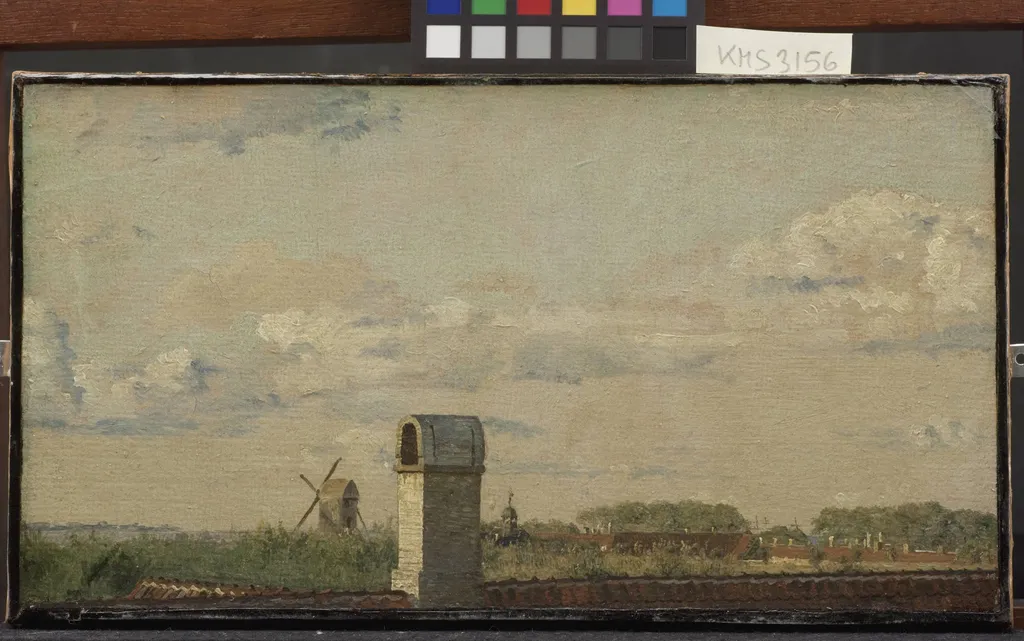
View from a Window in Toldbodvej Looking Towards the Citadel in Copenhagen is a photography by Unknown. It dates from 1850 and is held in the collection of the Statens Museum for Kunst. This landscape painting, dated around 1850, captures a quiet urban vista from a residential window in Toldbodvej, Copenhagen.
About this work
Overview
This landscape painting, dated around 1850, captures a quiet urban vista from a residential window in Toldbodvej, Copenhagen.
This landscape painting, dated around 1850, captures a quiet urban vista from a residential window in Toldbodvej, Copenhagen. It presents a distant view of the Citadel, framed by nearby structures and a solitary windmill. The composition is restrained, emphasizing horizontal lines and subtle shifts in tone rather than dramatic focal points. The work is part of the Museum of Ethnography’s collection, though its subject is topographical rather than ethnographic.
Subject & Meaning
The scene depicts ordinary Copenhagen life at mid-19th century, with no human figures present. The windmill and chimney suggest functional, domestic architecture, hinting at the city’s industrial and agricultural periphery. The absence of activity and the stillness of the sky convey a contemplative mood, reflecting a quiet appreciation for the everyday landscape rather than a narrative or symbolic intent.
Technique & Style
The artist employs loose, visible brushwork to render the sky, buildings, and terrain, avoiding fine detail in favor of atmospheric suggestion. A muted palette of earthy browns and muted greens dominates, with minimal contrast between light and shadow. The handling of texture emphasizes material presence over idealized form, aligning with emerging realist tendencies in Scandinavian painting of the period.
History & Provenance
The painting’s origin is tied to an artist active in Copenhagen during the 1840s–1860s, though their identity remains unconfirmed in public records. It entered the Museum of Ethnography’s holdings in the late 19th century, likely as part of a broader collection of Danish topographical works. Its classification within an ethnographic institution reflects historical curatorial practices that blurred boundaries between cultural and geographic documentation.
Context
Created during a period of urban expansion in Copenhagen, the painting reflects a growing interest in documenting the city’s changing edges. While elite art favored grand historical scenes, this work belongs to a quieter tradition of local observation. Similar views by contemporaries often focused on the interplay between nature and built environments, capturing the rhythm of daily life beyond the city center.
Legacy
Though not widely exhibited or studied, the painting contributes to a body of modest, observational works that document 19th-century Copenhagen’s peripheral landscapes. Its preservation in an ethnographic museum underscores how regional identity was once understood through material and spatial records. It remains a quiet testament to the aesthetic value placed on unremarkable, everyday views during a time of rapid modernization.
Artist & collection

 Domestic Scene
 Giacomo and Cardinal Marco, investing Andrea, Abbot of San Zeno, with his Benefice
 The Nymph of Fontainebleau
 Portrait of a Woman
 Madonna and Child with Saints in the Enclosed Garden
 Venus and Minerva
 Family Group of Four on Sofa
 Wall painting from Room H of the Villa of P. Fannius Synistor at Boscoreale
 A Funen Landscape at Harvest Time with Wedellsborghoved in the Background
 Hiekkasärkkiä
 Et hus på Alheden
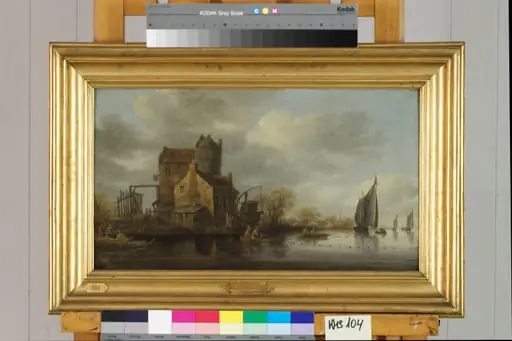 Dutch River View
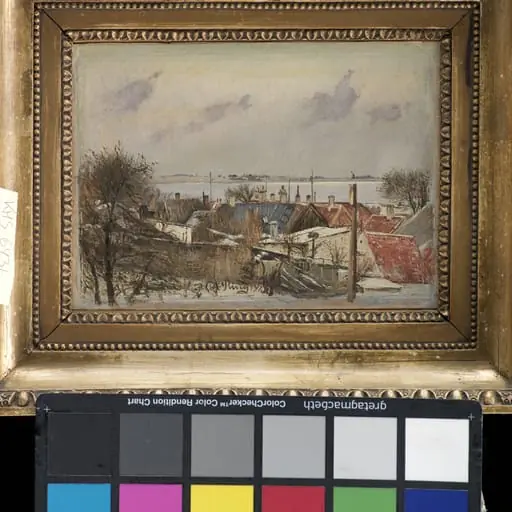 View from Roskilde towards the Fiord
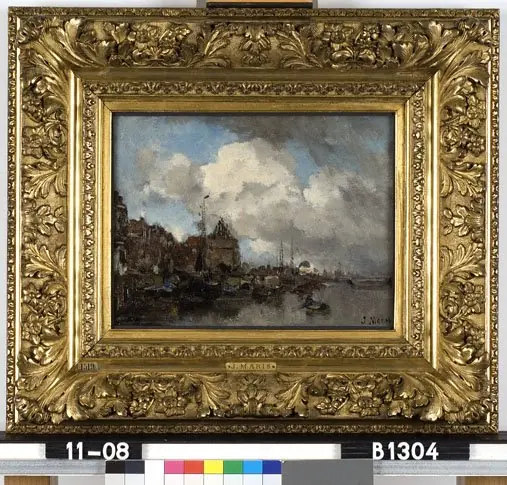 De Schreierstoren te Amsterdam
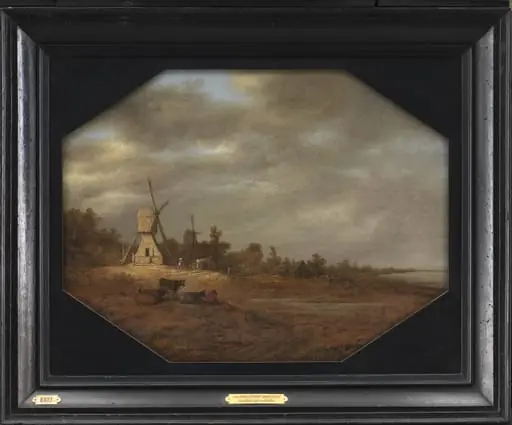 Landscape with Windmills
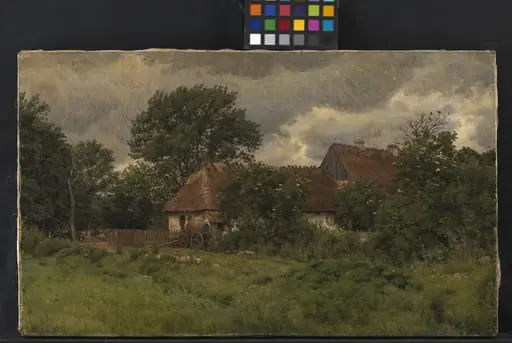 Gamle udbygninger ved en herregård
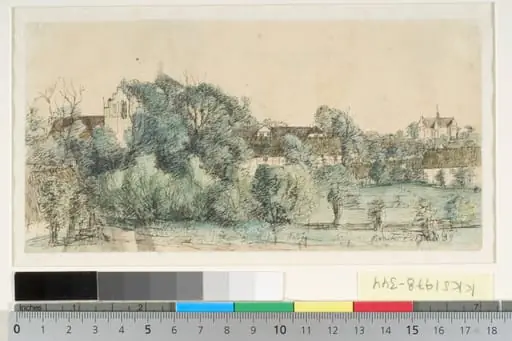 Udsigt mod Ørbæk præstegård og kirke
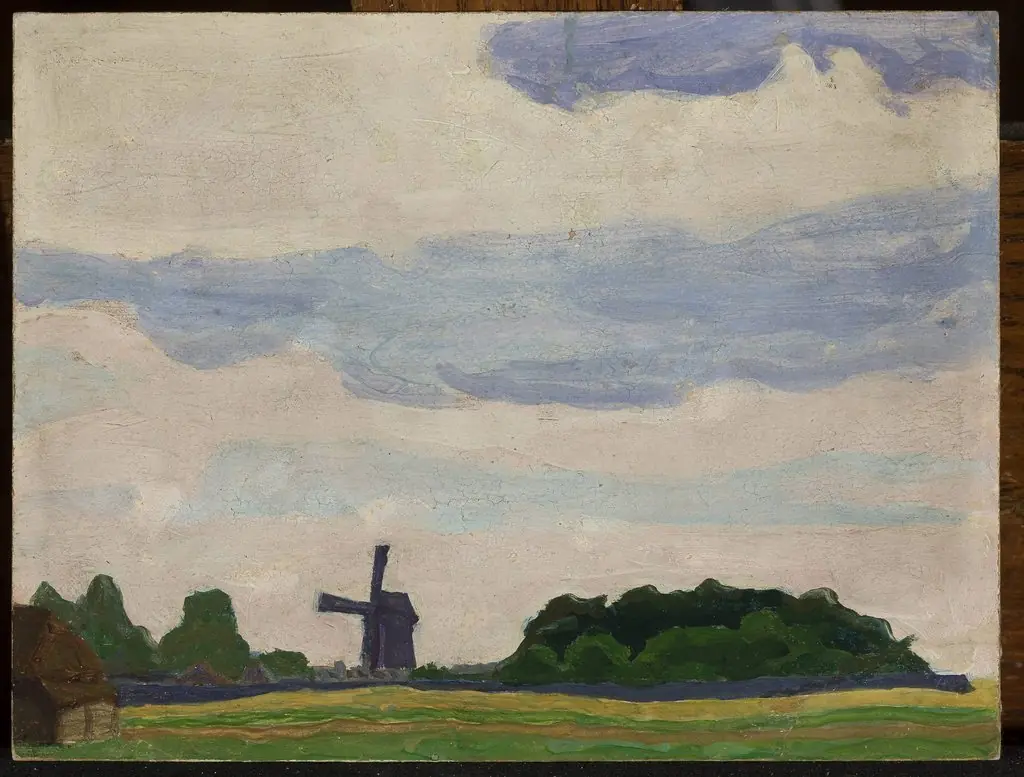 Landscape with a windmill