Artwork
Udsigt mod Ørbæk præstegård og kirke
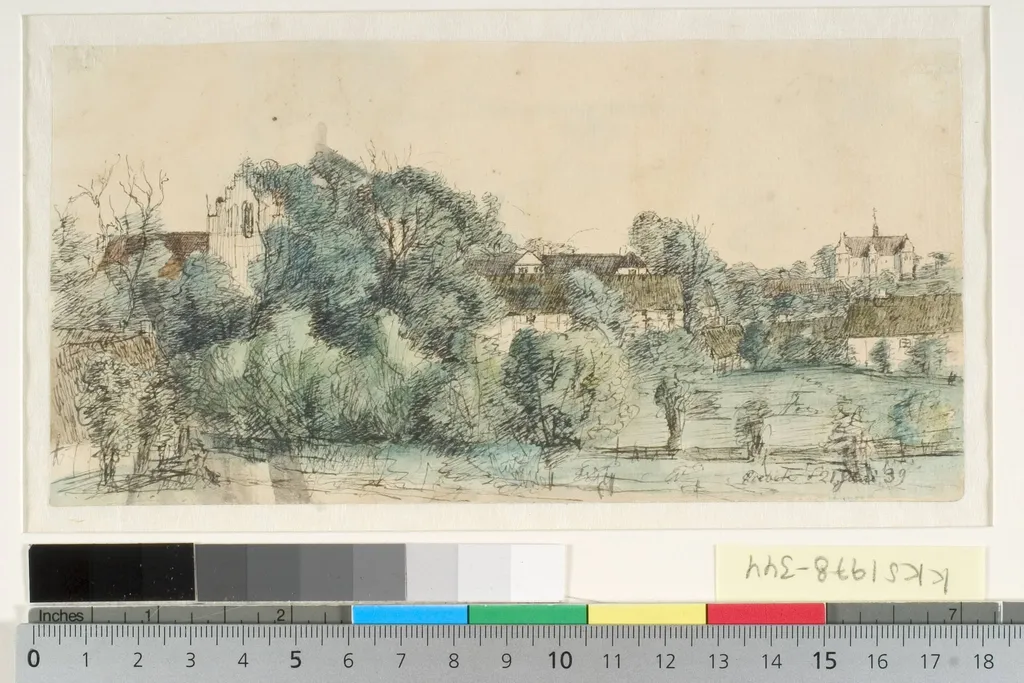
Udsigt mod Ørbæk præstegård og kirke is an unspecified painting by the Romanticist artist Unknown. It dates from 1839 and is held in the collection of the Statens Museum for Kunst. Created in 1839 by an artist associated with the Danish Romantic tradition, this sketch captures a quiet rural scene near Ørbæk.
About this work
Overview
Created in 1839 by an artist associated with the Danish Romantic tradition, this sketch captures a quiet rural scene near Ørbæk. Executed in pencil and watercolor, it reflects a spontaneous, observational approach rather than a polished composition. The work is held in the collection of the Museum of Ethnography, where it serves as a record of everyday Danish landscape in the early 19th century.
Subject & Meaning
The composition emphasizes quietude and the natural order, reflecting a contemplative engagement with rural life rather than narrative or symbolism.
The scene centers on a large, gnarled tree whose dense branches partially obscure the view of a modest church and clustered dwellings. The inclusion of the parish church suggests a connection to community and place, while the unidealized setting avoids romanticized grandeur. The composition emphasizes quietude and the natural order, reflecting a contemplative engagement with rural life rather than narrative or symbolism.
Technique & Style
The artist employed loose, rapid linework and muted washes of green, brown, and gray to suggest form and atmosphere. Brushstrokes remain visible, and contours are left unrefined, conveying immediacy. Watercolor is applied thinly, allowing the paper’s texture to contribute to the effect. This unpolished method prioritizes sensory impression over precision, aligning with Romantic-era tendencies to value emotional resonance over technical finish.
History & Provenance
The sketch entered the Museum of Ethnography’s collection as part of a broader effort to document vernacular Danish life. Its origins are tied to a period of heightened interest in local landscapes and folk culture, though the artist’s identity remains partially obscured. No significant alterations or restorations are recorded, preserving its original, unembellished character.
Context
In the 1830s, Danish artists increasingly turned from grand historical themes to intimate depictions of countryside and domestic architecture. This work aligns with a national movement to record regional identity through direct observation. Similar sketches by contemporaries reveal a shared interest in transient light, natural forms, and the quiet dignity of rural settings.
Legacy
Though not widely exhibited, the sketch contributes to an understanding of how Danish artists engaged with landscape as a subject of personal and cultural reflection. Its unrefined quality has influenced later studies of sketching as a legitimate artistic practice, demonstrating how immediacy could convey authenticity in an era before photography.
Artist & collection

 Domestic Scene
 Giacomo and Cardinal Marco, investing Andrea, Abbot of San Zeno, with his Benefice
 The Nymph of Fontainebleau
 Portrait of a Woman
 Madonna and Child with Saints in the Enclosed Garden
 Venus and Minerva
 Family Group of Four on Sofa
 Wall painting from Room H of the Villa of P. Fannius Synistor at Boscoreale
 Landskab ved Fredensborg
 View from Gore Lane, Kensington, showing Holy Trinity Church, Brompton
 Landsby med kirke. Broager
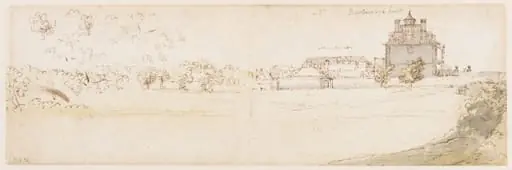 Preparatory study for a drawing of Peterborough House and Westminster Abbey
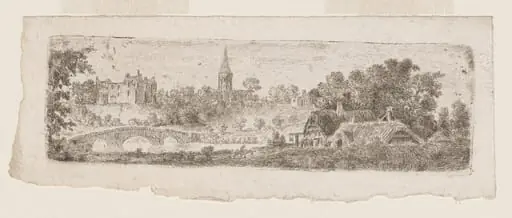 Dairsie II
![Partie ved Udkanten af Winding [Vinding] Skov i Bryrupegnen, by Unknown](https://artifactworldgallery.com/img/unknown--partie-ved-udkanten-af-winding-vinding-skov-i-bryrupegnen--f8a22fcdcb4d2756-w320.webp) Partie ved Udkanten af Winding [Vinding] Skov i Bryrupegnen
Partie ved Udkanten af Winding [Vinding] Skov i Bryrupegnen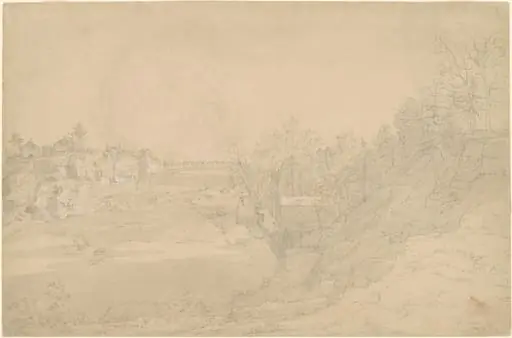 James McCullough's Leadmill
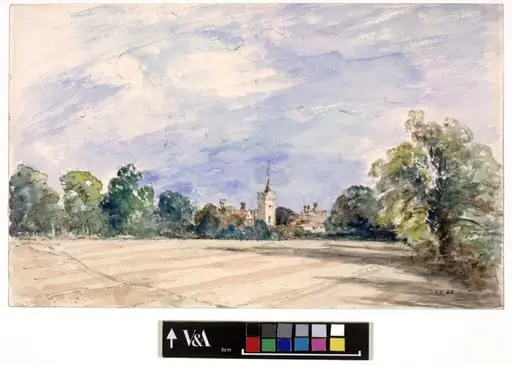 A village seen over a ploughed field
 Church of Cheux, near Caen
 Farmhouse behind Trees
 Terrace by a River with a Villa and Trees Beyond
 Malmesbury