Artwork
A Drove of Oxen in the Roman Campagna
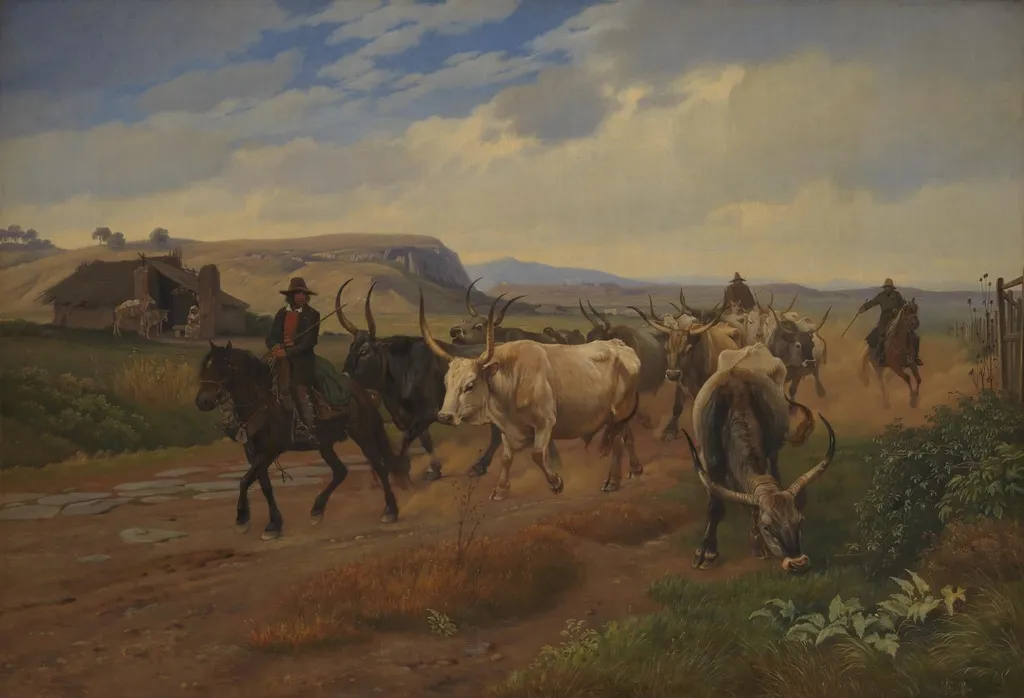
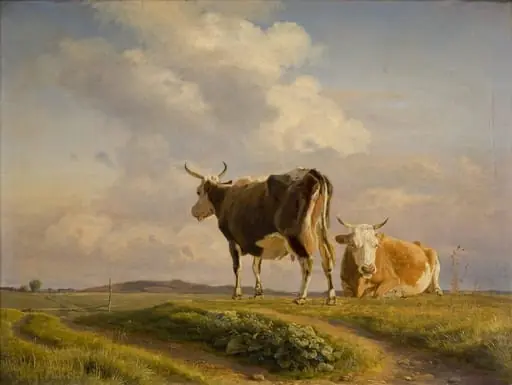
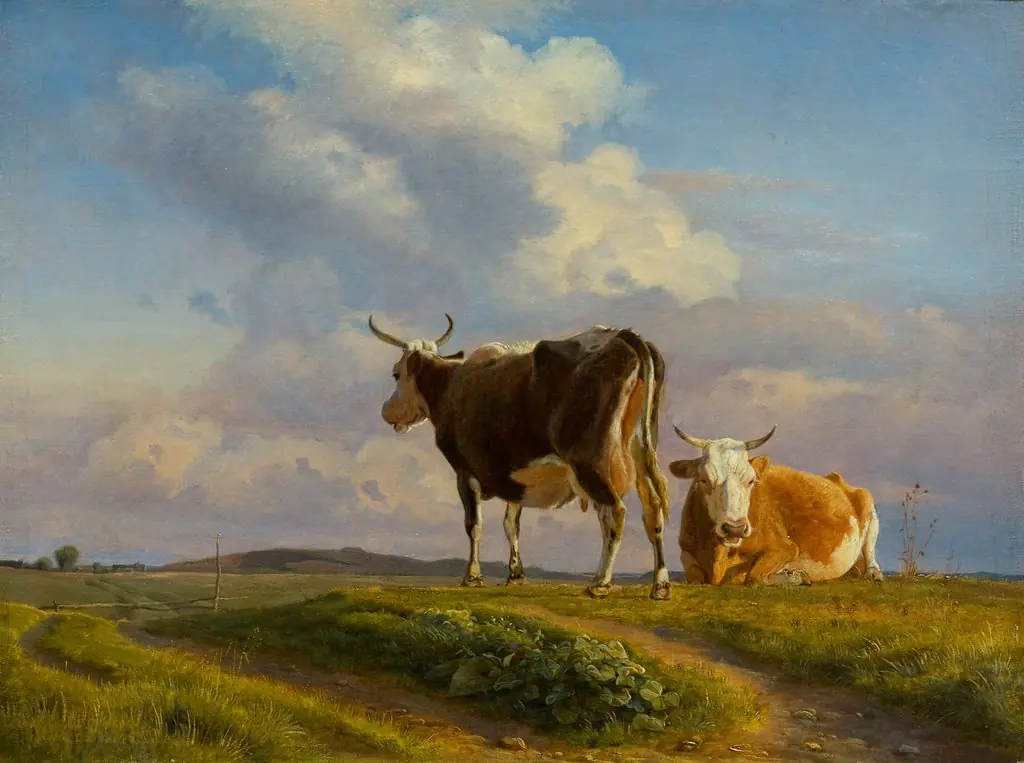
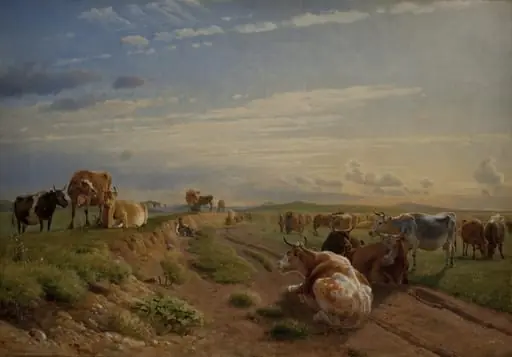
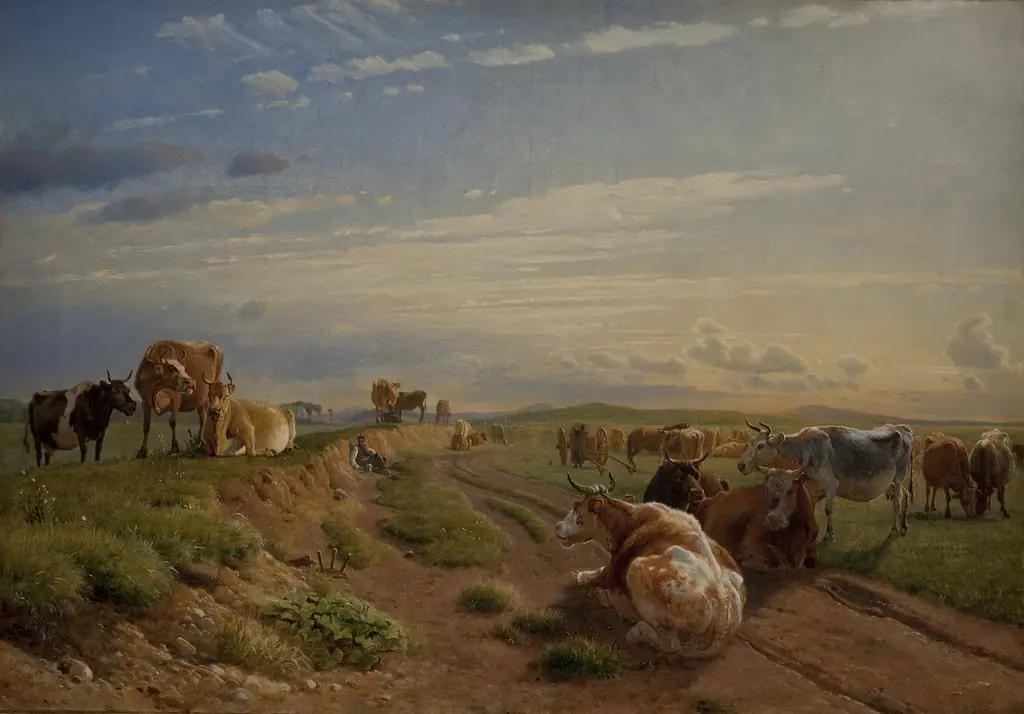
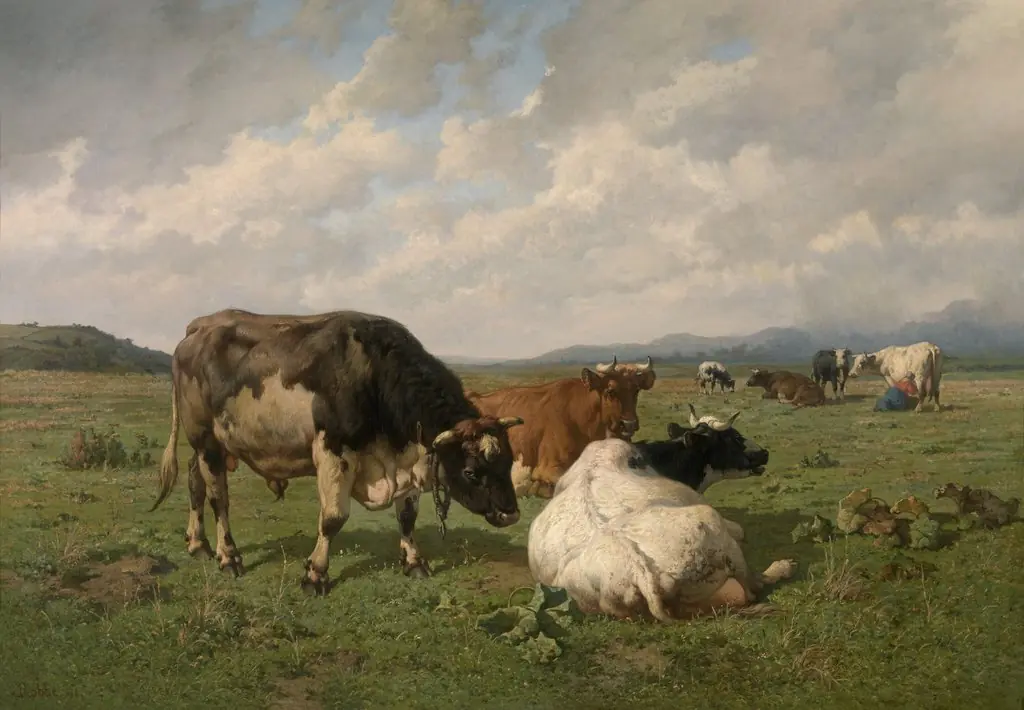
A Drove of Oxen in the Roman Campagna is a photography by the Romanticist artist Unknown. It dates from 1845 and is held in the collection of the Statens Museum for Kunst. Painted in 1845, this work depicts a group of oxen being guided along a rural road in the Roman Campagna.
About this work
Overview
Painted in 1845, this work depicts a group of oxen being guided along a rural road in the Roman Campagna. The artist captures a quiet moment of agricultural labor, with riders on horseback overseeing the slow-moving herd. The composition emphasizes the vastness of the landscape and the rhythm of the animals’ progress, rendered with attention to natural detail rather than idealized grandeur.
Subject & Meaning
The scene portrays a practical, everyday occurrence in the countryside near Rome — the movement of livestock for work or trade. There is no overt narrative or symbolism; instead, the focus lies in the dignity of labor and the relationship between humans, animals, and the land. The quiet persistence of the herd suggests continuity in rural life, untouched by urban change.
Technique & Style
The artist employs loose, expressive brushwork to convey movement in the clouds and the oxen’s motion. Light falls unevenly across the scene, highlighting the animals’ hides and the riders’ garments, creating a sense of depth and atmosphere. The palette is subdued, dominated by earth tones and muted sky hues, reinforcing the painting’s observational realism over dramatic flourish.
History & Provenance
The painting entered the collection of the Museum of Ethnography in the late 19th century, likely acquired as part of a broader interest in documenting rural European life. Its attribution to the artist remains consistent in institutional records, though little documentation exists regarding its early ownership or exhibition history prior to museum acquisition.
Context
Created during a period when European artists increasingly turned to rural subjects, this work reflects a shift away from classical themes toward everyday scenes. The Roman Campagna, long associated with antiquity, was being reimagined by 19th-century painters as a living, working landscape — not merely a ruin-strewn relic of the past.
Legacy
Though not widely reproduced or celebrated in major art histories, the painting contributes to a quieter tradition of 19th-century landscape observation. It stands as a modest but sincere record of agrarian life in central Italy, offering insight into how artists of the time engaged with the natural world beyond romanticized ideals.
Artist & collection

 Domestic Scene
 Giacomo and Cardinal Marco, investing Andrea, Abbot of San Zeno, with his Benefice
 The Nymph of Fontainebleau
 Portrait of a Woman
 Madonna and Child with Saints in the Enclosed Garden
 Venus and Minerva
 Family Group of Four on Sofa
 Wall painting from Room H of the Villa of P. Fannius Synistor at Boscoreale