Artwork
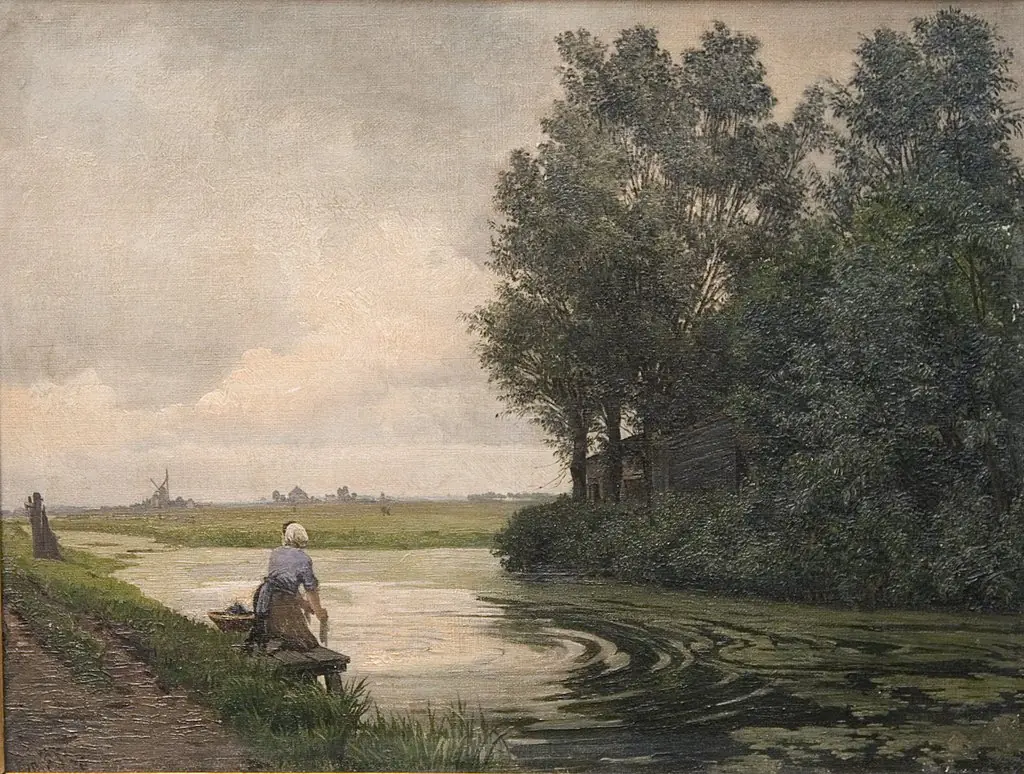
Hollandsk landskab. En pige vasker ved en kanal
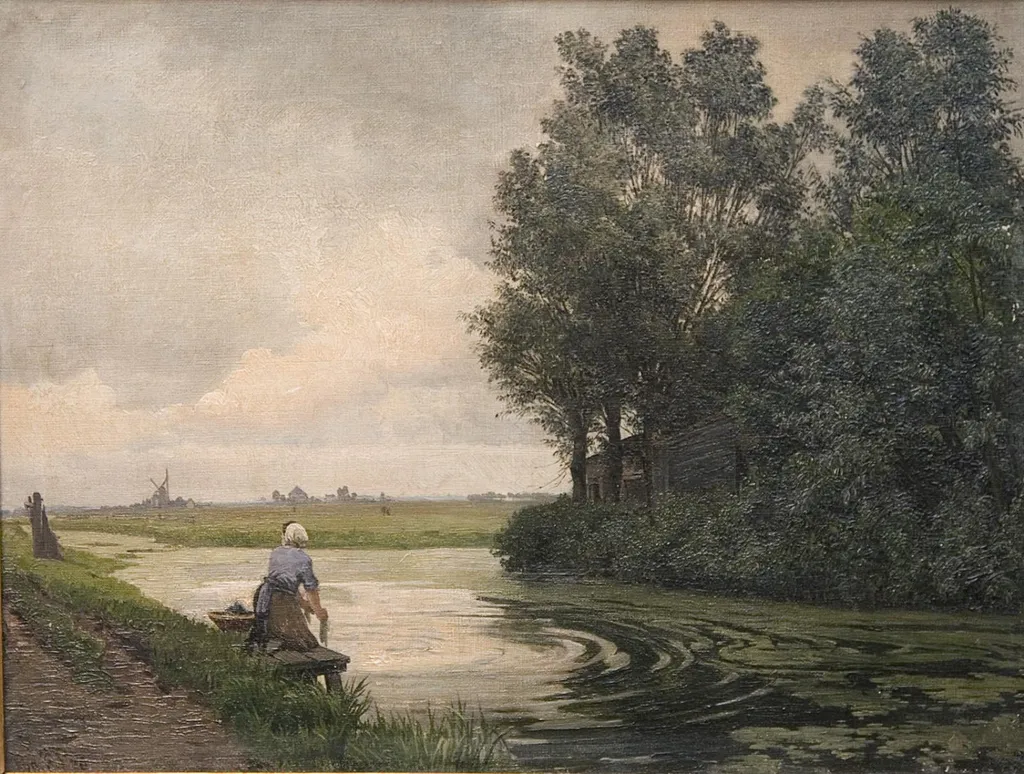
Hollandsk landskab. En pige vasker ved en kanal is a photography by the Impressionist artist Unknown. It dates from 1876 and is held in the collection of the Statens Museum for Kunst. Painted in 1876, this landscape depicts a quiet moment along a Dutch canal.
About this work
Overview
The artist captures a woman engaged in the daily task of washing clothes, her figure modestly scaled within the broader environment.
Painted in 1876, this landscape depicts a quiet moment along a Dutch canal. The artist captures a woman engaged in the daily task of washing clothes, her figure modestly scaled within the broader environment. The composition emphasizes stillness and natural harmony, avoiding dramatic focal points. The work is part of the Museum of Ethnography’s collection, where it is presented as an example of regional life rather than a formal portrait or historical narrative.
Subject & Meaning
The scene centers on an ordinary act of labor—laundry by the water—rendered without idealization. The woman’s presence is unobtrusive, integrated into the landscape rather than dominating it. This reflects a broader interest in documenting everyday rural existence, not as a sentimentalized trope, but as a quiet testament to routine life. The absence of narrative drama invites contemplation of time, labor, and environment as interconnected elements.
Technique & Style
The artist employs a restrained palette of muted greens, browns, and grays, with subtle variations in tone to suggest depth and atmosphere. Brushwork is soft and blended, avoiding sharp outlines, which contributes to the hazy, atmospheric quality. Light filters diffusely through overcast skies, casting no strong shadows. The composition favors horizontal bands—water, bank, foliage, sky—reinforcing the sense of calm and spatial continuity.
History & Provenance
The painting entered the Museum of Ethnography’s holdings in the late 19th century, likely acquired during a period of growing interest in vernacular European life. Its classification within an ethnographic context suggests it was valued for its documentation of regional customs rather than its aesthetic innovation. No record of prior ownership or exhibition history before its museum acquisition is publicly documented.
Context
Created during a time when Dutch rural scenes were being re-examined by artists across Europe, this work aligns with a trend toward observational realism. While contemporaneous Impressionists focused on light and movement, this painter prioritized stillness and subtlety. The subject’s anonymity and the lack of identifiable landmarks place it within a generalized, almost archetypal vision of Dutch countryside labor, common in regional art of the era.
Legacy
The painting remains a quiet example of 19th-century Nordic and Dutch visual culture, valued for its unembellished portrayal of daily life. It has not been widely reproduced or cited in major art historical narratives, but within its institutional context, it continues to serve as a reference for studies of domestic labor and landscape representation in Northern Europe. Its endurance lies in its restraint, not its novelty.
Artist & collection

 Domestic Scene
 Giacomo and Cardinal Marco, investing Andrea, Abbot of San Zeno, with his Benefice
 The Nymph of Fontainebleau
 Portrait of a Woman
 Madonna and Child with Saints in the Enclosed Garden
 Venus and Minerva
 Family Group of Four on Sofa
 Wall painting from Room H of the Villa of P. Fannius Synistor at Boscoreale
 Souvenir of the Zuiderzee
 Landscape near Waasmunster
 Souvenir of Gouda
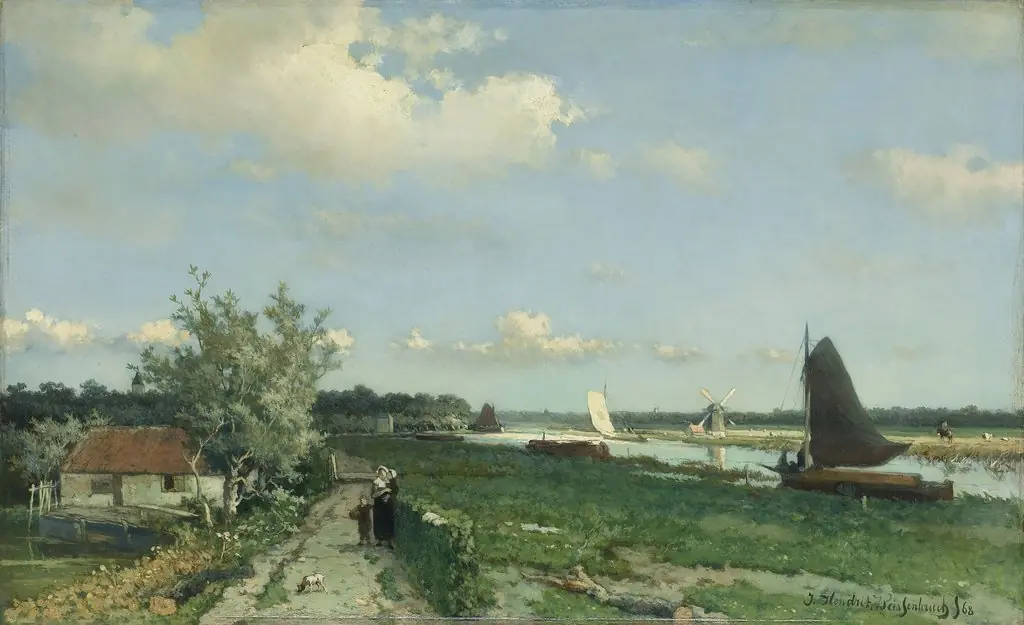 The Trekvliet Shipping Canal near Rijswijk, known as the ‘View near the Geest Bridge’
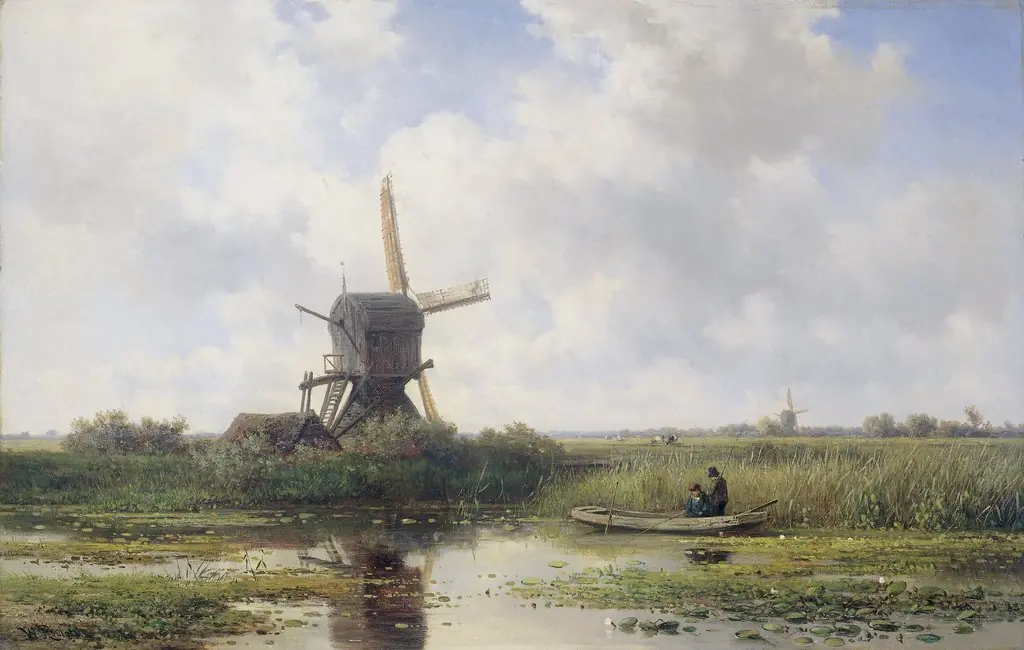 The Gein River, near Abcoude
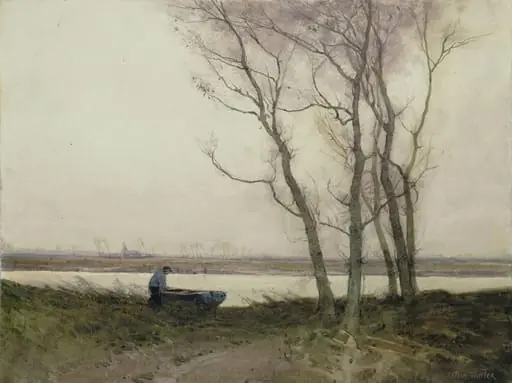 Landscape with Trees, River and Boatman
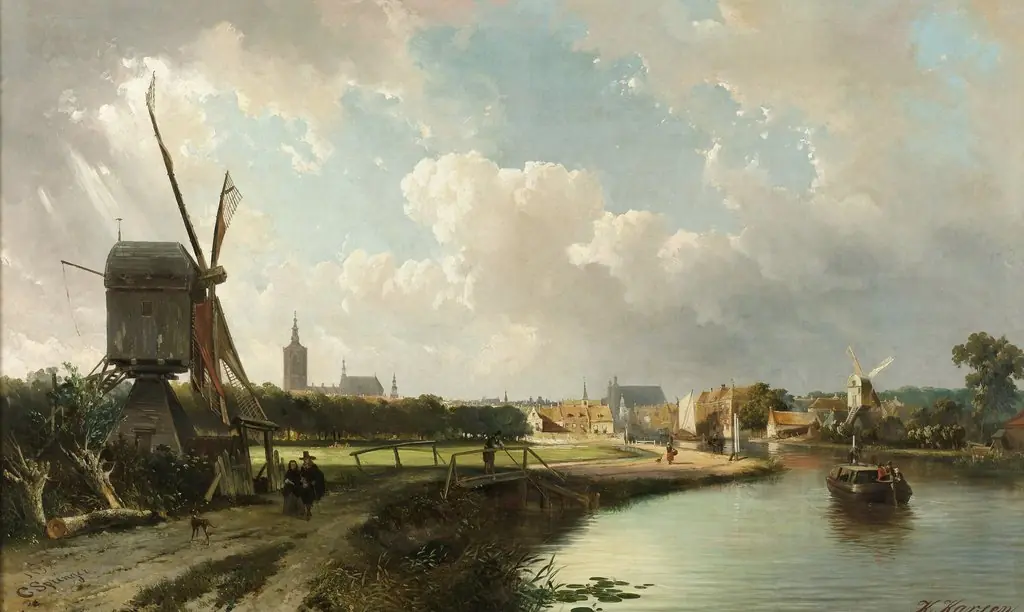 View of The Hague from the Delftse Vaart in the 17th Century
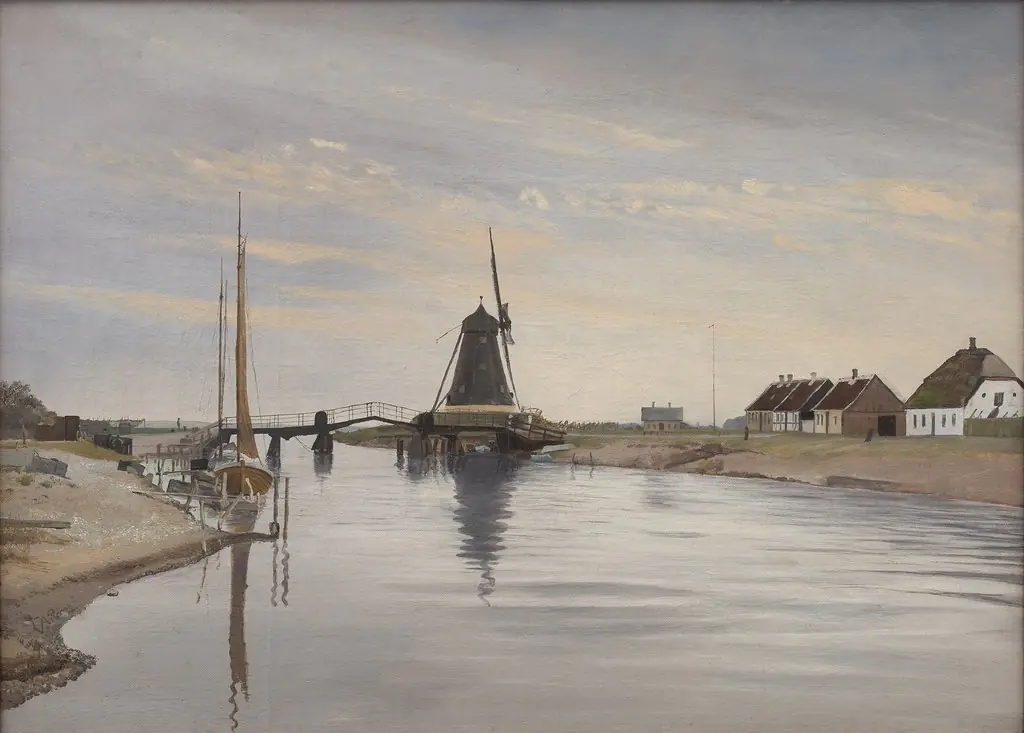 Susåen. The Bridge and the Mill at Karrebæksminde
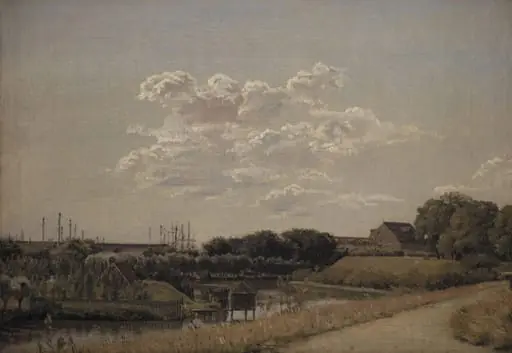 View of the Citadel Ramparts Looking Towards Langelinie and the Naval Harbour
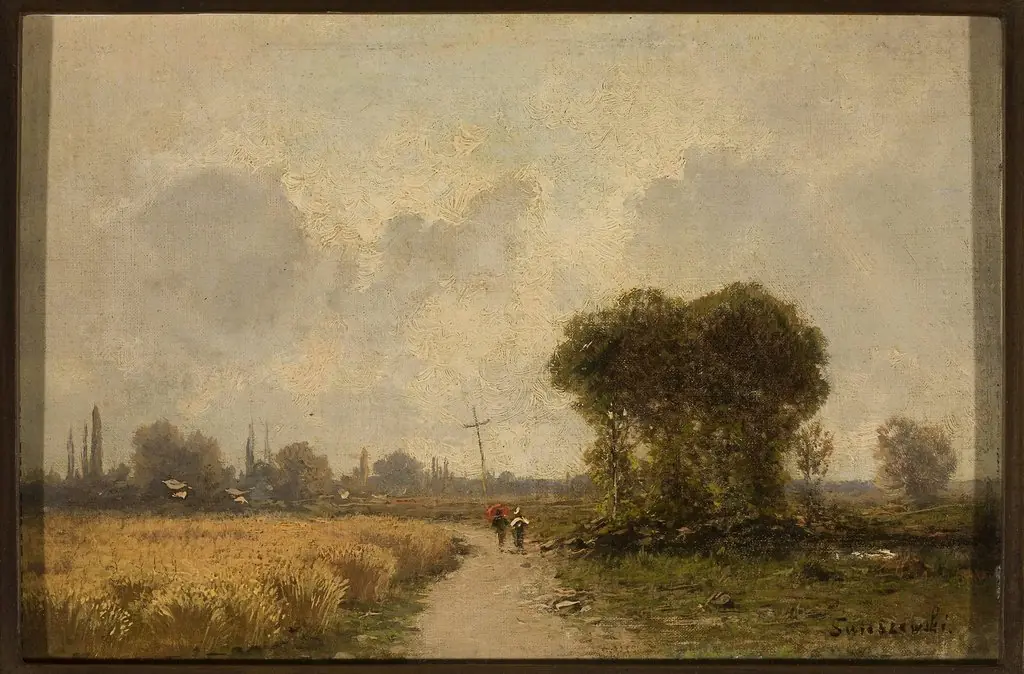 Landscape with a road
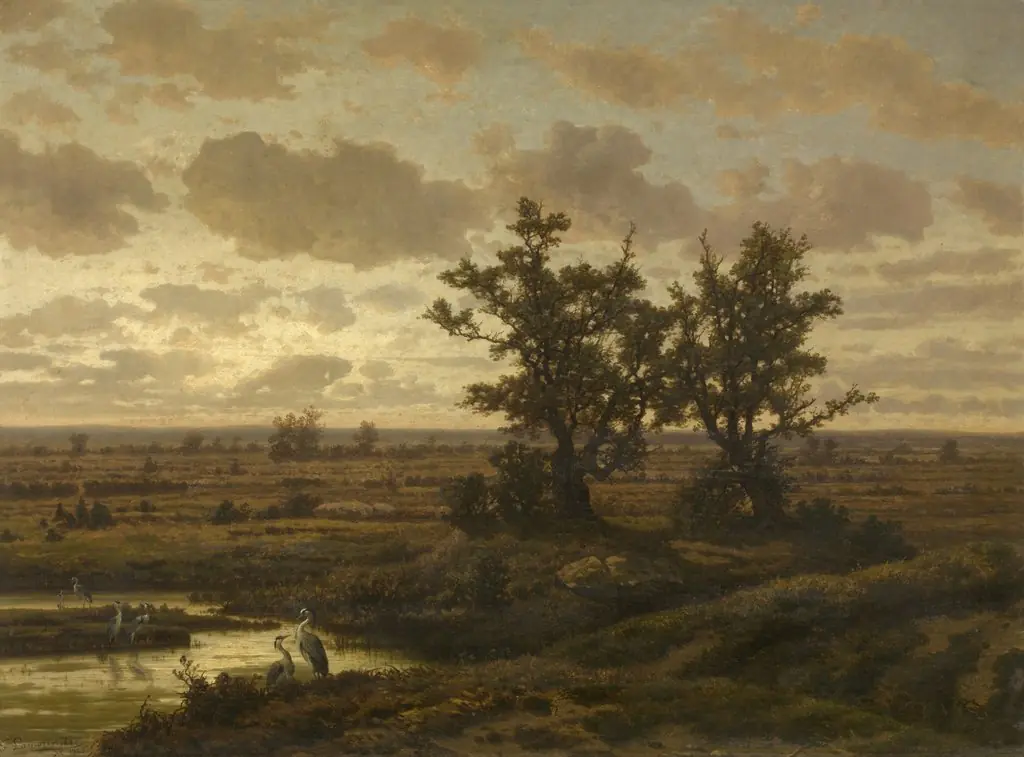 Fen in the Kempen
 Hollandsk landskab. En pige vasker ved en kanal