Artwork
Landscape with a road
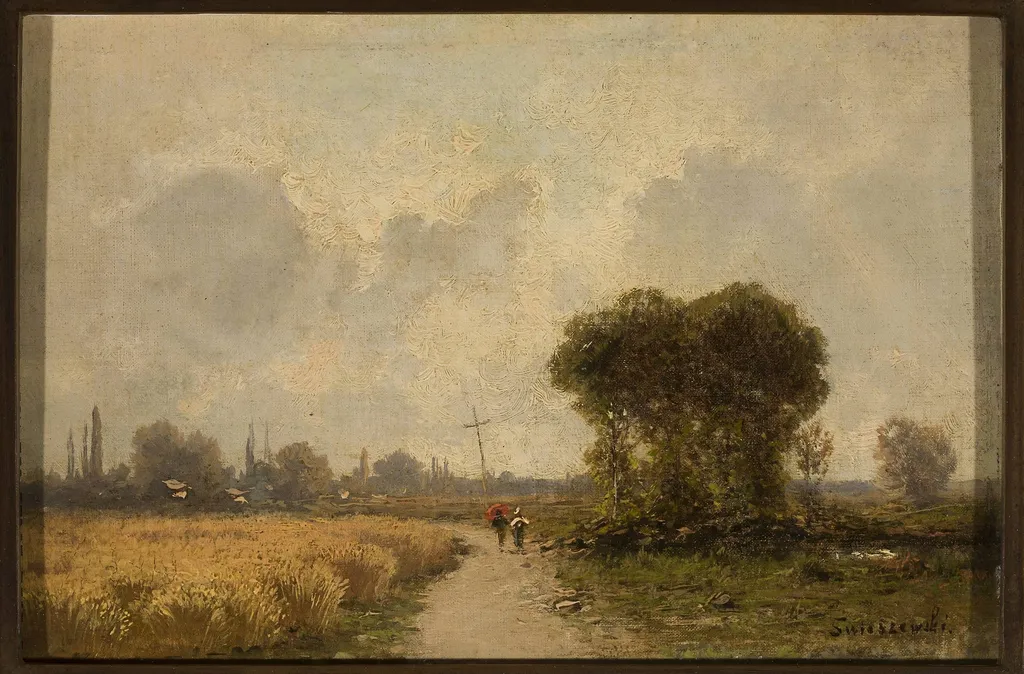
Landscape with a road is an oil painting by Aleksander Świeszewski. It dates from 1877 and is held in the collection of the National Museum in Warsaw.
About this work
Overview
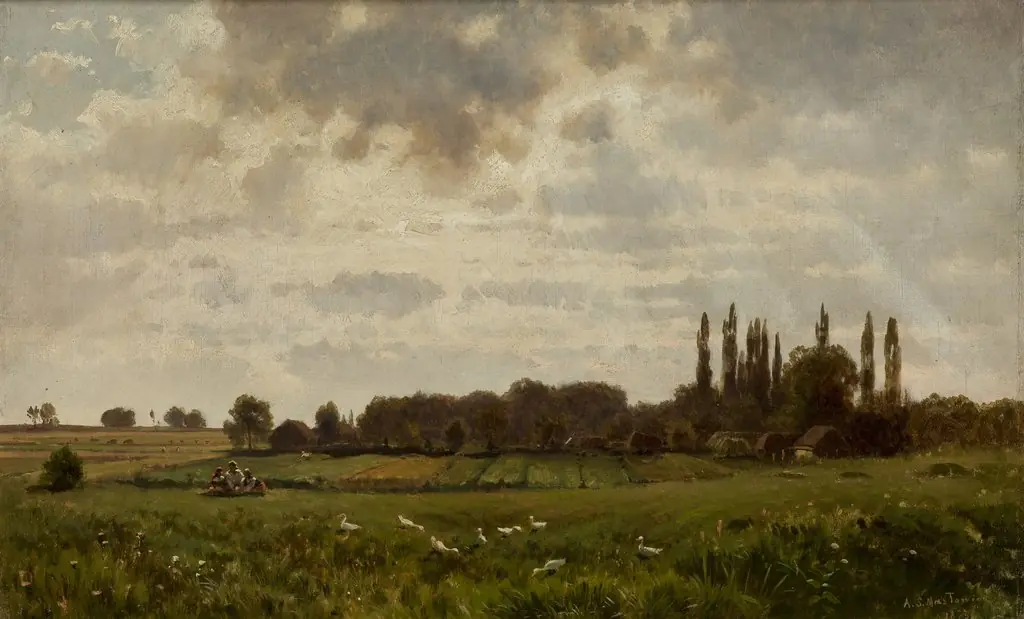
The composition balances open fields and scattered trees, with small human figures in the foreground to anchor the scale.
Landscape with a road is an oil painting attributed to Aleksander Świeszewski, dated around 1877. It depicts a quiet rural scene dominated by a winding path that recedes into the horizon. The composition balances open fields and scattered trees, with small human figures in the foreground to anchor the scale. The work is part of the National Museum in Warsaw’s collection, where it remains accessible to the public.
Subject & Meaning
The painting presents a tranquil, unidealized view of the Polish countryside, emphasizing quiet movement rather than dramatic event. The road, vanishing into the distance, suggests journey or passage without narrative closure. The modest presence of figures implies daily life unfolding within the landscape, reinforcing a sense of ordinary, enduring rhythm rather than grandeur or symbolism.
Technique & Style
Świeszewski employed oil paint with visible, deliberate brushwork that lends texture to foliage, earth, and sky. The surface is not smoothed into illusionism; instead, the strokes convey a tactile quality, enhancing the sense of atmosphere and light. Color transitions are subtle, favoring muted tones that reflect the natural palette of the region, avoiding theatrical contrast in favor of quiet harmony.
History & Provenance
The painting entered the National Museum in Warsaw’s holdings in the late 19th or early 20th century, likely through acquisition or donation. Its attribution to Świeszewski is based on stylistic analysis and archival records, though documentation from the time of its creation is limited. It has remained in the museum’s collection since, with no known public exhibitions beyond institutional displays.
Context
Created during a period of Polish national revival under foreign partitions, the painting reflects a broader cultural interest in depicting native landscapes as expressions of identity. While not overtly political, its focus on unadorned rural scenes aligns with contemporary artistic trends that valued authenticity over romanticized imagery, resonating with emerging realist sensibilities in Central European art.
Legacy
Though Świeszewski is not widely known outside Poland, this work contributes to the understanding of 19th-century Polish landscape painting beyond major figures. It represents a quiet, observational approach that contrasts with more dramatic or nationalist themes of the era. The painting endures as a modest but thoughtful record of regional scenery and artistic practice during a formative period in Polish cultural history.
Artist & collection

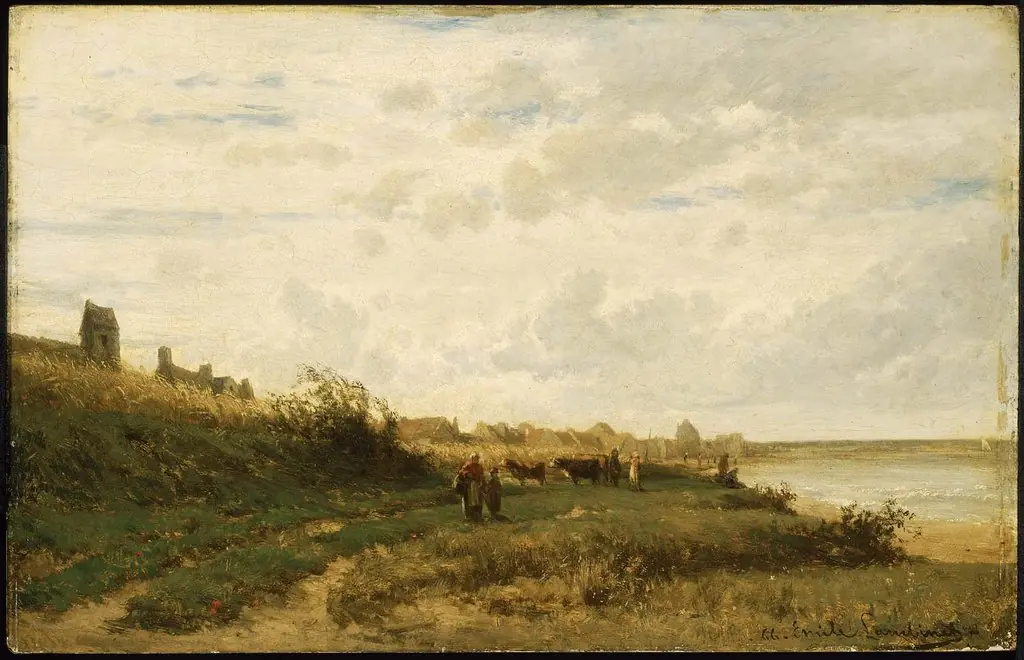 Village on the Sea
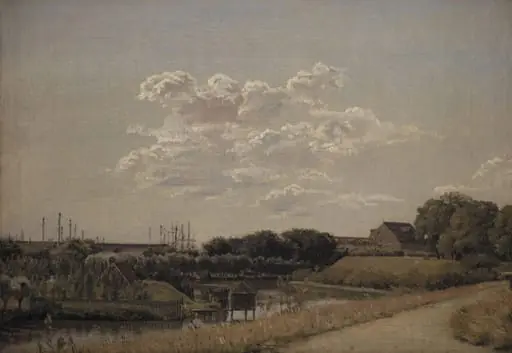 View of the Citadel Ramparts Looking Towards Langelinie and the Naval Harbour
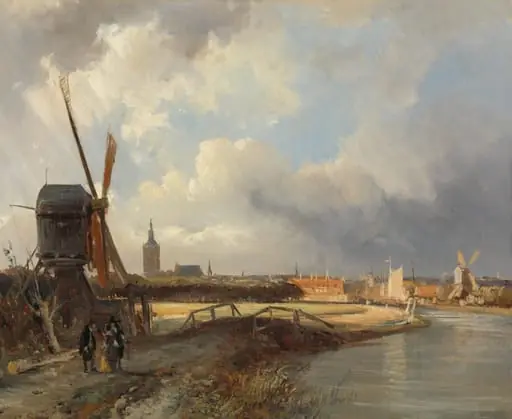 Gezicht op Den Haag
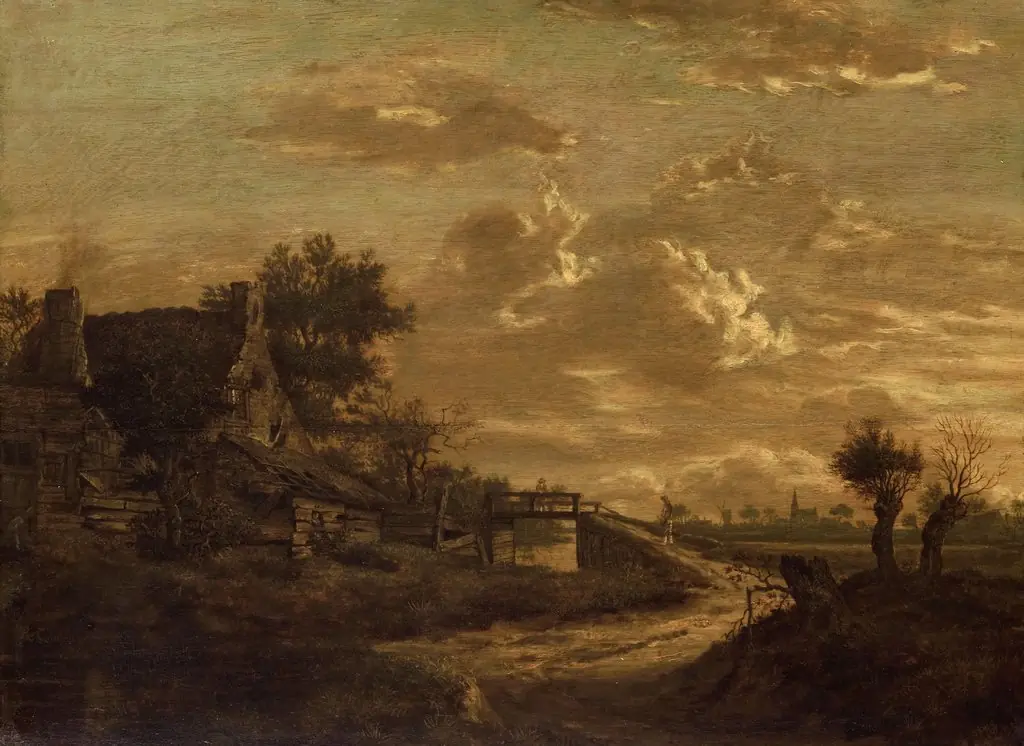 Landscape at sunset
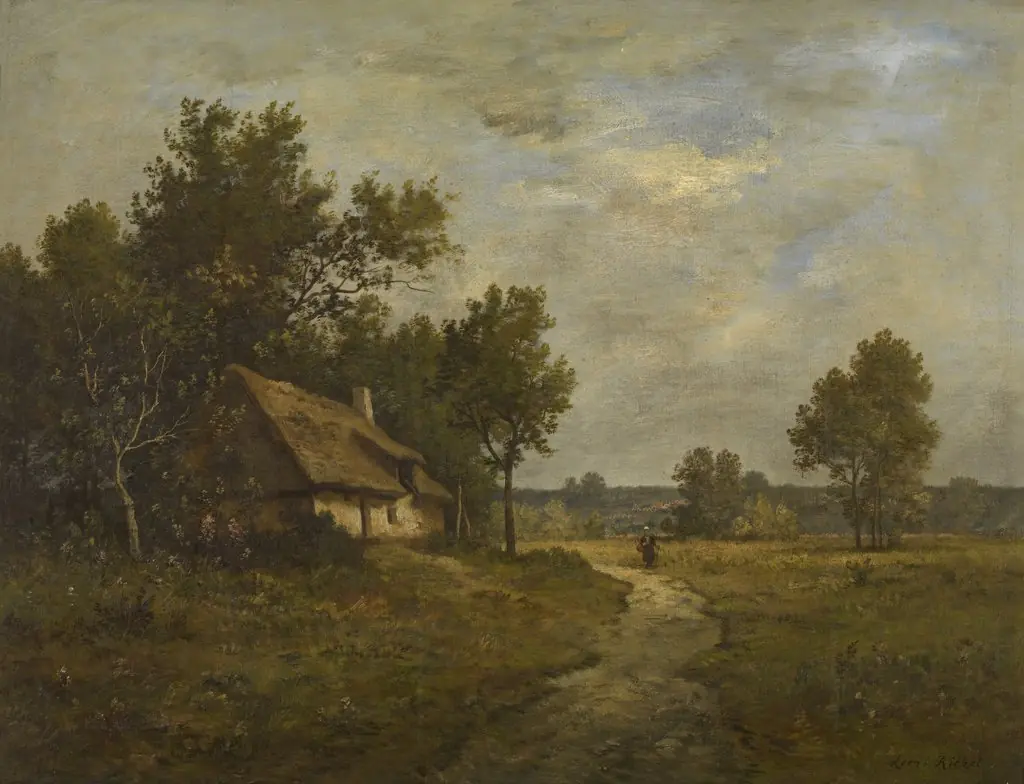 Landscape
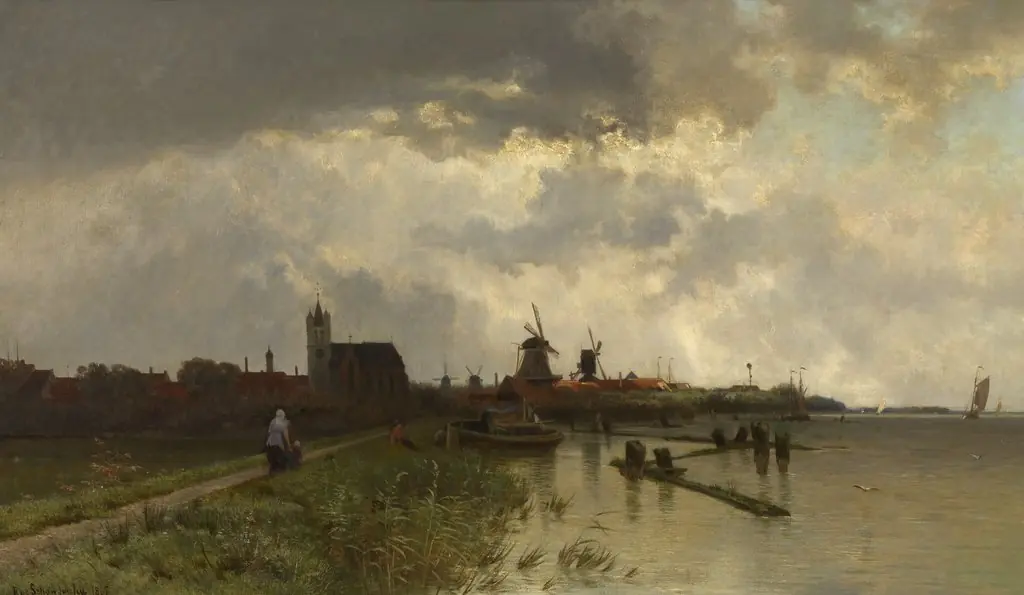 Souvenir of the Zuiderzee
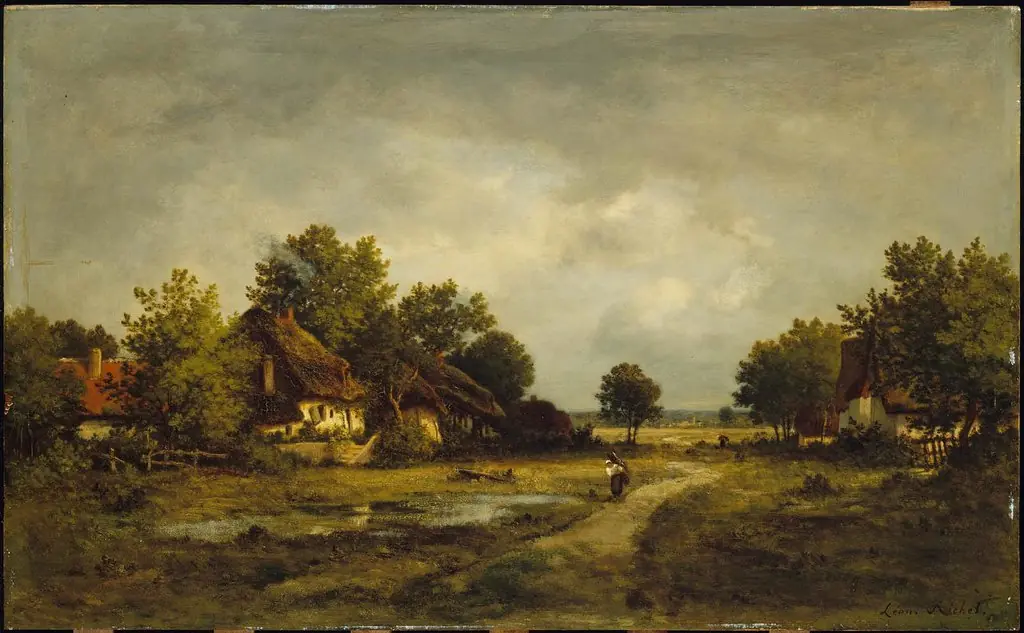 Landscape With Figure Near Pond and Cottages
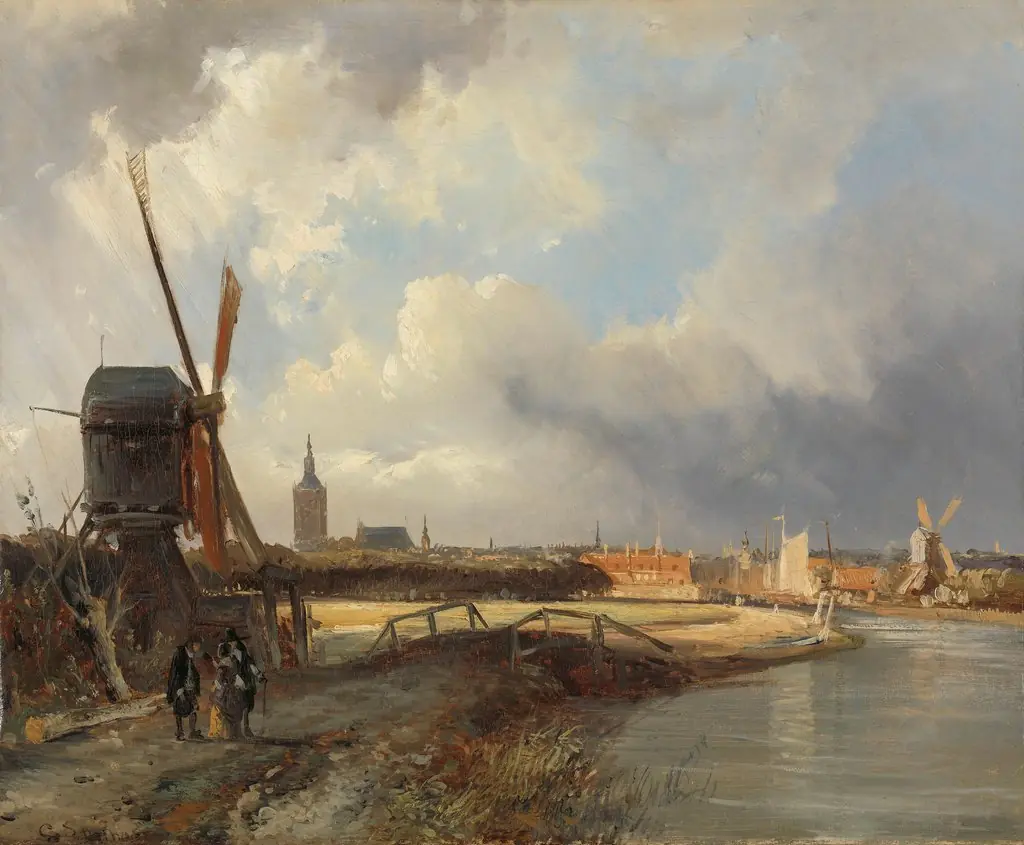 View of The Hague
 Distant View with a Village
 Landscape with a herd at the forest edge
 Landskab ved Gyrstinge
 Road through the Fields