Artwork
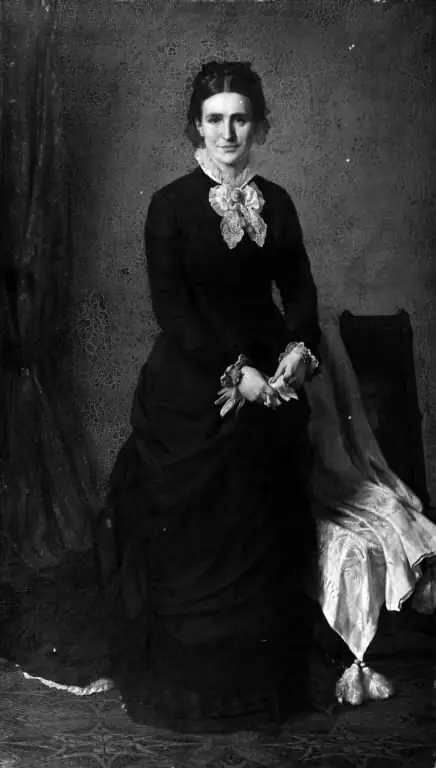
Kammerherreinde Caroline Amalie Meldahl, f. Ræder
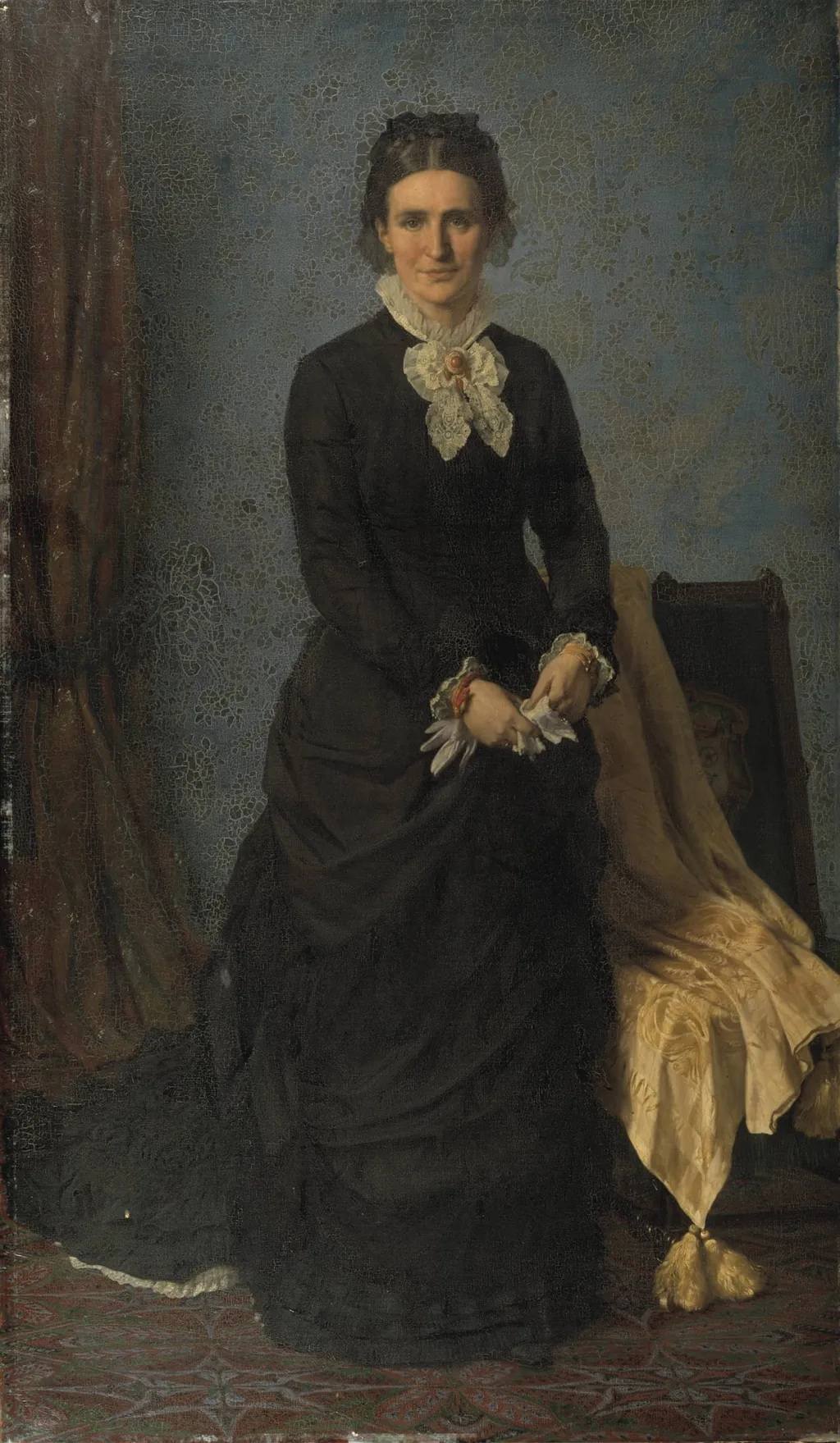
Kammerherreinde Caroline Amalie Meldahl, f. Ræder is a photography by the Impressionist artist Unknown. It dates from 1881 and is held in the collection of the Statens Museum for Kunst. Painted in 1881, this portrait depicts Caroline Amalie Meldahl, wife of a royal chamberlain, in a composed, formal pose.
About this work
Overview
Painted in 1881, this portrait depicts Caroline Amalie Meldahl, wife of a royal chamberlain, in a composed, formal pose.
Painted in 1881, this portrait depicts Caroline Amalie Meldahl, wife of a royal chamberlain, in a composed, formal pose. The work is attributed to an artist associated with the Danish academic tradition, though its stylistic leanings suggest engagement with contemporary European trends. It resides in the collection of the Museum of Ethnography, where its placement reflects broader 19th-century interests in documenting social types and domestic life.
Subject & Meaning
Caroline Amalie Meldahl is portrayed with quiet dignity, her direct gaze and clasped hands conveying stillness and self-possession. Her attire—dark dress, lace collar, and brooch—signals her status within Denmark’s upper class. The absence of overt symbolism or narrative context emphasizes her identity as a person rather than a role, aligning with late 19th-century shifts toward psychological realism in portraiture.
Technique & Style
The painting employs a restrained palette and controlled brushwork, with attention to texture in the lace, wool, and rug. While the lighting and spatial depth show awareness of Impressionist concerns, the composition remains structured and deliberate. The blue wall and patterned floor provide subtle contrast, grounding the figure without distracting from her presence, suggesting a balance between tradition and modernity.
History & Provenance
Commissioned likely by the subject’s family, the portrait entered the Museum of Ethnography’s holdings in the early 20th century, possibly as part of a broader effort to catalog Danish domestic culture. Its classification within an ethnographic institution, rather than a fine arts collection, reflects contemporary attitudes toward portraiture as cultural documentation rather than artistic expression.
Context
In 1881, Denmark was undergoing social and artistic transformation, with increasing interest in individual identity and middle-class life. While academic portraiture still dominated official circles, artists were beginning to explore more intimate, psychologically nuanced depictions. This work sits at that intersection—formal in pose, yet quietly attentive to the inner life of its subject.
Legacy
Though not widely exhibited outside institutional archives, the portrait contributes to understanding how Danish elite women were visually represented in the late 19th century. Its preservation in an ethnographic context underscores shifting museum practices, where personal portraits came to be valued as records of social history rather than merely aesthetic objects.
Artist & collection

 Domestic Scene
 Giacomo and Cardinal Marco, investing Andrea, Abbot of San Zeno, with his Benefice
 The Nymph of Fontainebleau
 Portrait of a Woman
 Madonna and Child with Saints in the Enclosed Garden
 Venus and Minerva
 Family Group of Four on Sofa
 Wall painting from Room H of the Villa of P. Fannius Synistor at Boscoreale
 The Painter Ane Marie Hansen
 (Retrato de María del Carmen Reyna y Roballos de Fernández Blanco), Retrato de María Reyna de Fernández Blanco
 Portret van Beatrix van Herreweghe
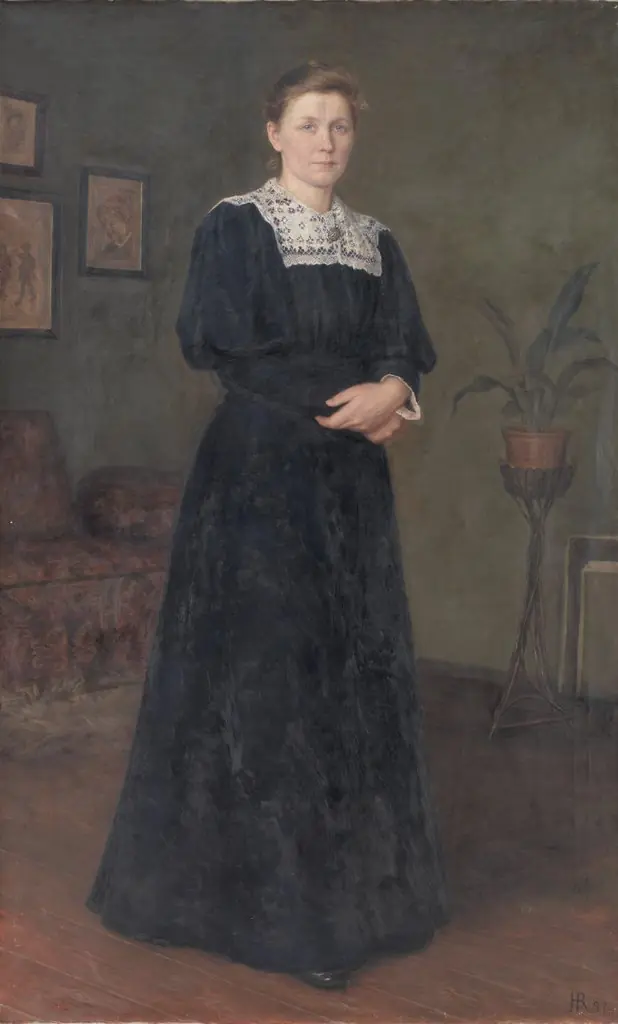 The Painter Ane Marie Hansen
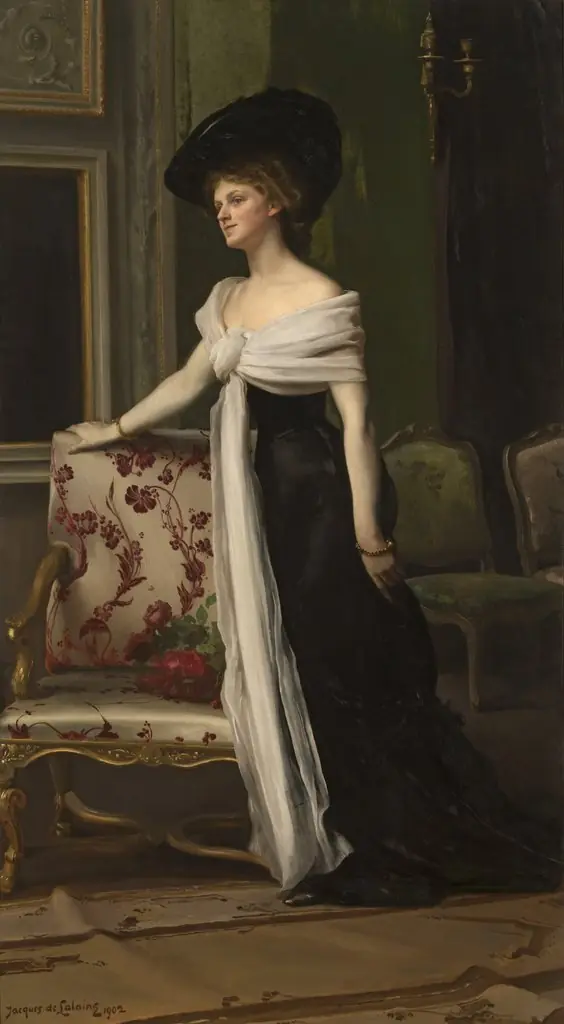 Nanette de Spoelberch, Madame Louis de Baillet-Latour
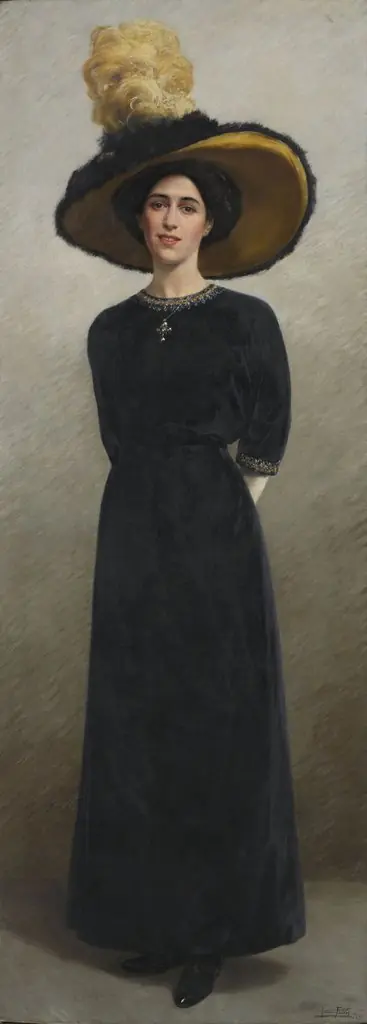 Portrait of Glòria Fabrés
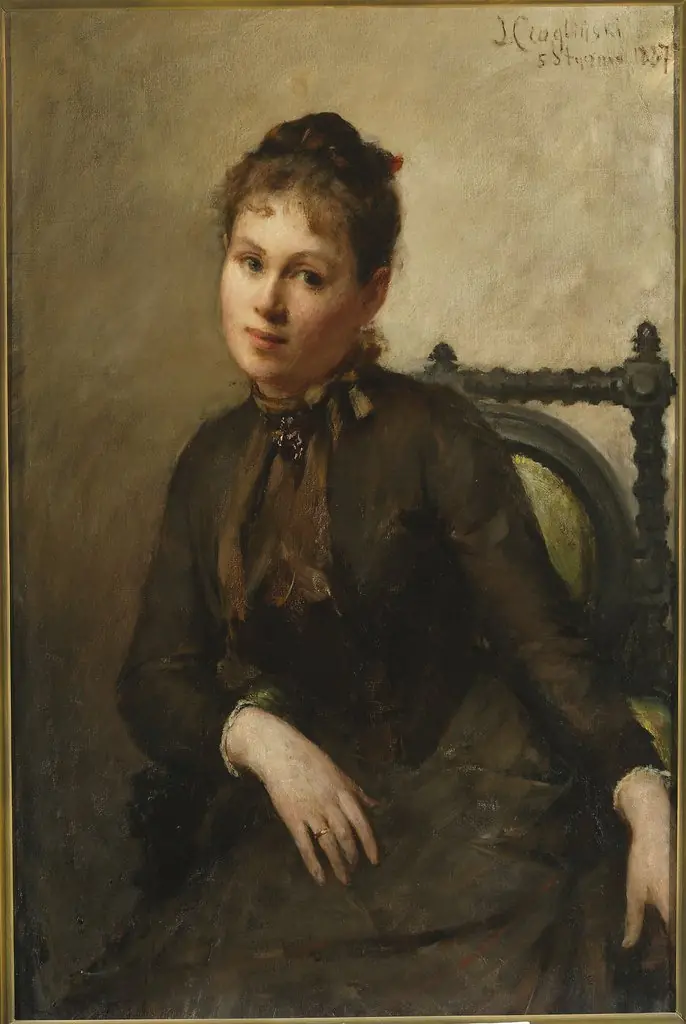 Portrait of Helena Piltz née Rymowicz
 Mrs. Robert C. Winthrop (Frances Pickering Adams)
 Portrait of artist’s sister
 Portrait of Isabel Llorach
 Louise in Mourning
 Kammerherreinde Caroline Amalie Meldahl, f. Ræder