Artwork
Nanette de Spoelberch, Madame Louis de Baillet-Latour
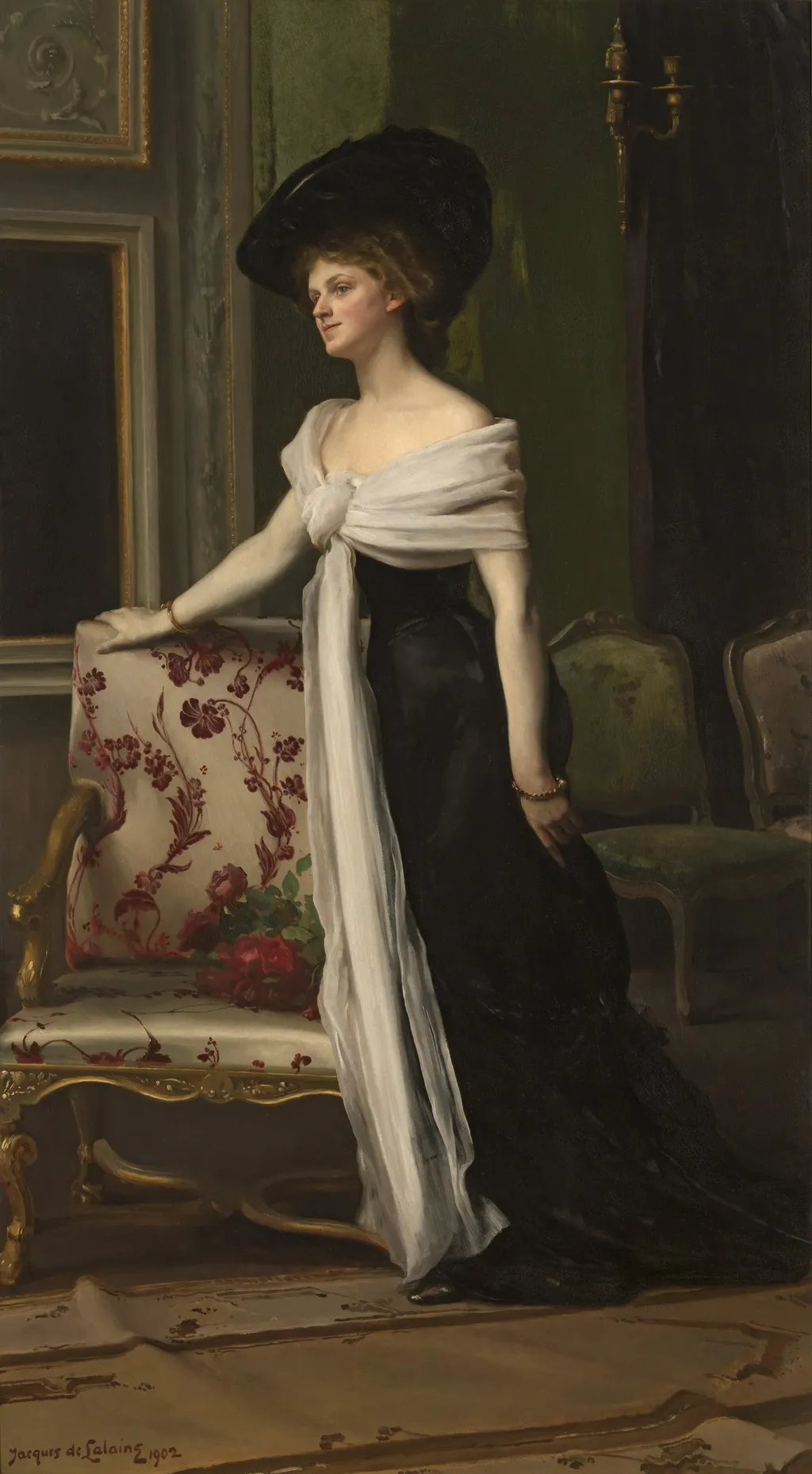
Nanette de Spoelberch, Madame Louis de Baillet-Latour is an oil painting by the Impressionist artist Jacques de Lalaing. It dates from 1902 and is held in the collection of the Royal Museum of Fine Arts Antwerp.
About this work
Overview
It captures the sitter in a quiet, interior setting, emphasizing stillness and poise through restrained composition and subdued lighting.
Painted in 1902 by Jacques de Lalaing, this oil portrait depicts Nanette de Spoelberch, wife of Louis de Baillet-Latour. The work resides in the Royal Museum of Fine Arts Antwerp. It captures the sitter in a quiet, interior setting, emphasizing stillness and poise through restrained composition and subdued lighting. The painting reflects early 20th-century Belgian portraiture’s focus on dignity and atmospheric nuance.
Subject & Meaning
Nanette de Spoelberch is portrayed in formal attire, her black dress and white shawl suggesting mourning or aristocratic reserve. The absence of overt symbolism points to an emphasis on presence rather than narrative. Her poised stance and direct gaze convey quiet authority, while the dimly lit room enhances an aura of introspection. The portrait functions as a record of social standing and personal composure rather than a celebration of wealth.
Technique & Style
Lalaing employs chiaroscuro to model the figure with subtle gradations of light and shadow, lending volume to the drapery and facial features. The green walls recede into darkness, isolating the subject and heightening spatial depth. Brushwork is controlled and precise, particularly in the rendering of the shawl and chair upholstery. The palette remains muted, reinforcing the painting’s somber elegance and avoiding decorative excess.
History & Provenance
Commissioned by the Baillet-Latour family, the portrait entered the Royal Museum of Fine Arts Antwerp’s collection in the early 20th century. Its provenance remains closely tied to the Belgian aristocracy, with no documented public exhibitions prior to its museum acquisition. The work has been consistently attributed to Lalaing without dispute, reflecting its stable historical record within Belgian institutional collections.
Context
Created during a period when Belgian portraiture favored psychological depth over grandeur, the painting aligns with contemporaries like Théo van Rysselberghe and James Ensor in its emphasis on interiority. While not avant-garde, it reflects a broader shift away from Victorian flamboyance toward restrained, intimate representation. The setting and attire suggest adherence to elite social norms, even as the lighting and composition hint at modern sensibilities.
Legacy
Though not widely reproduced, the portrait remains a representative example of early 20th-century Belgian academic portraiture. It is studied for its nuanced use of light and its quiet psychological presence. Within the museum’s collection, it contributes to the understanding of how aristocratic identity was visually sustained in the decades before World War I, without overt theatricality or sentimentality.
Artist & collection

 Portrait of Nadezhda Polovtseva
 Portrait of Madame Paul Poirson
 Portrait of Izabela Tyszkiewicz née Tyszkiewicz (1835–1907)
 Portrait of Lisa Colt Curtis
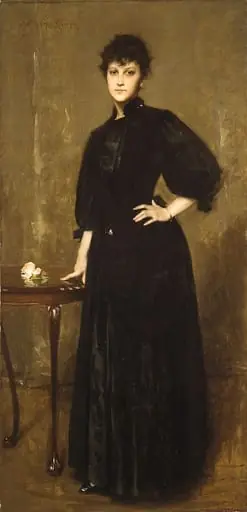 Lady in Black
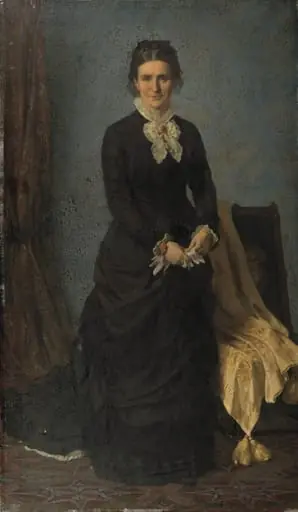 Kammerherreinde Caroline Amalie Meldahl, f. Ræder
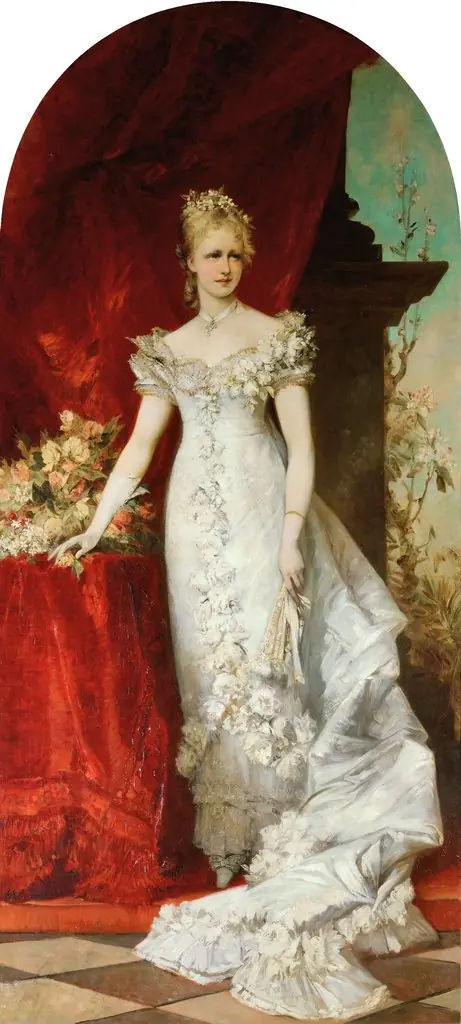 Kronprinzessin Stephanie (1864-1945) in einer Ballrobe aus hellem Satin
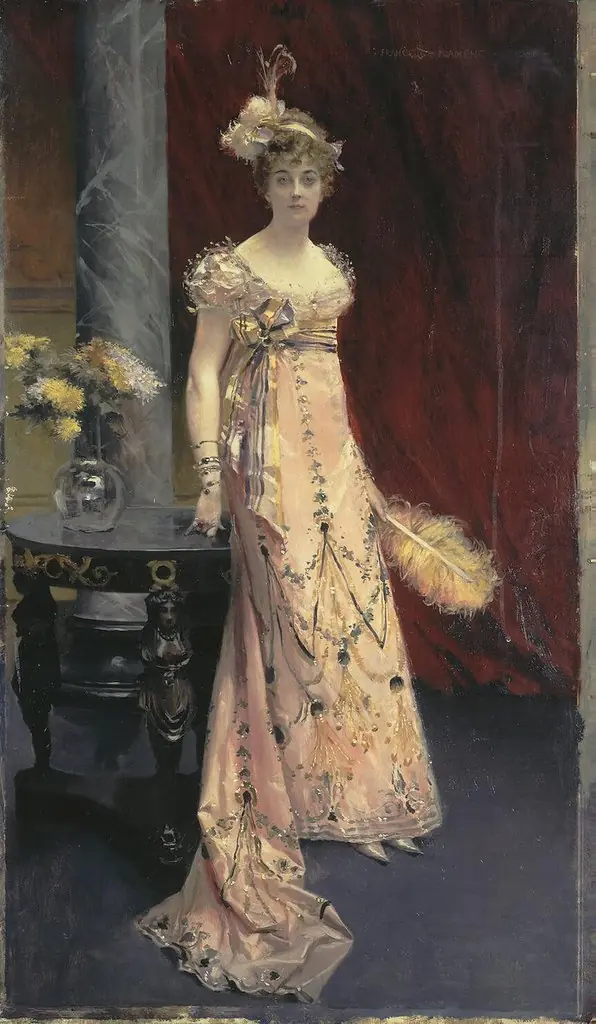 Portrait of Dora of Leuchtenberg
 (Retrato de María del Carmen Reyna y Roballos de Fernández Blanco), Retrato de María Reyna de Fernández Blanco
 Portret van Beatrix van Herreweghe
 Josefa del Águila y Ceballos, later Marchioness of Espeja
 Madame Céline Leclanché