Artwork
Ribe Cathedral
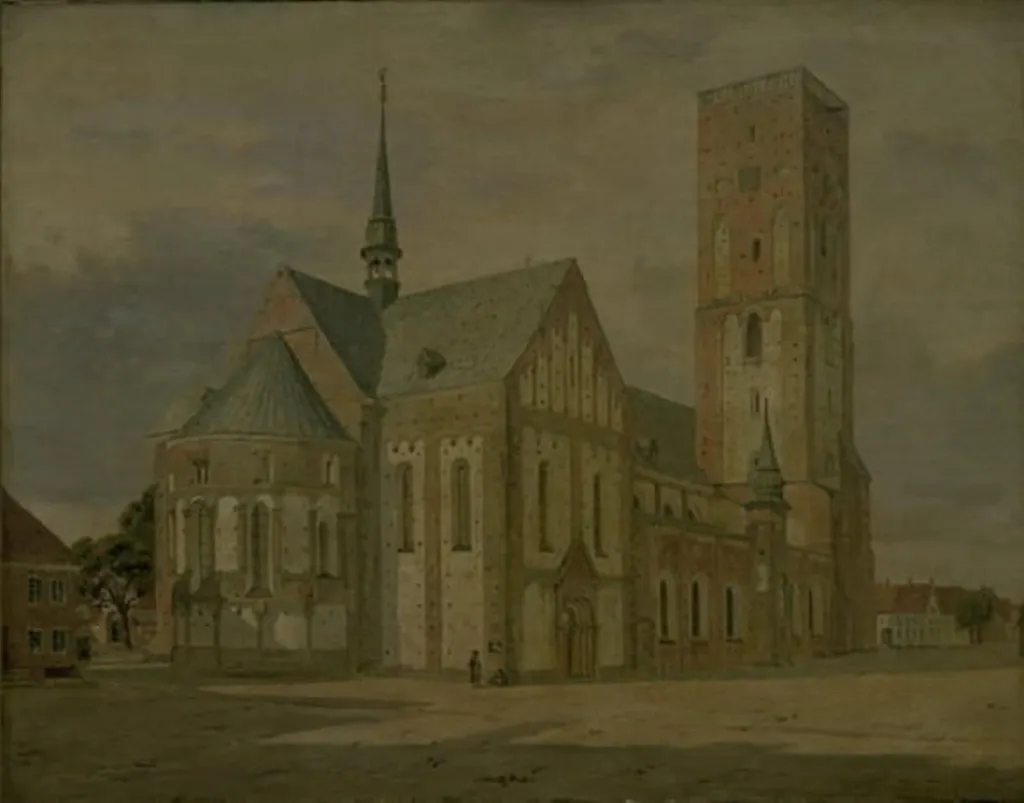
Ribe Cathedral is a photography by the Romanticist artist Unknown. It dates from 1836 and is held in the collection of the Statens Museum for Kunst.
About this work
Overview
The painting is held in the collection of the Museum of Ethnography, though its subject is a religious structure rather than an ethnographic artifact.
Painted in 1836, this work depicts Ribe Cathedral in Denmark, rendered with precise architectural detail. The artist captures the structure in a realistic manner, emphasizing its stone and brick construction, pointed roof, and towering steeple. The composition centers the building against a muted, overcast sky, reinforcing a quiet, contemplative mood. The painting is held in the collection of the Museum of Ethnography, though its subject is a religious structure rather than an ethnographic artifact.
Subject & Meaning
Ribe Cathedral, one of Denmark’s oldest churches, serves as the sole subject, presented without figures or activity. Its isolation invites reflection on permanence and faith. The absence of human presence amplifies the building’s symbolic weight as a witness to centuries of worship and community life. The artist’s focus on structure over narrative suggests an interest in architectural endurance rather than religious ceremony.
Technique & Style
The painting employs a restrained palette of grays and earth tones, with soft, diffused light enhancing the texture of the stonework. Brushwork is precise, particularly in rendering windows, roof tiles, and the steeple’s vertical lines. The realism avoids idealization, favoring observational accuracy. Atmospheric perspective subtly recedes the background, grounding the cathedral in a tangible, weathered world rather than a symbolic realm.
History & Provenance
Created in 1836, the painting emerged during a period of renewed interest in Denmark’s medieval heritage. It entered the Museum of Ethnography’s collection, possibly due to its documentation of a culturally significant site, though its subject is ecclesiastical rather than ethnographic. Its placement there reflects 19th-century institutional practices that sometimes blurred disciplinary boundaries in the name of cultural preservation.
Context
In the early 1830s, Denmark saw a revival of national identity tied to its medieval past. Artists and scholars turned to historic churches as symbols of continuity. This painting aligns with that movement, capturing Ribe Cathedral not as a living place of worship but as a relic of collective memory. Its quiet tone contrasts with the romanticized ruins popular elsewhere in Europe, favoring sober documentation over dramatic sentiment.
Legacy
The painting remains a quiet record of Ribe Cathedral’s 19th-century appearance, valuable for architectural historians. Though not widely exhibited, its presence in the Museum of Ethnography underscores how cultural institutions once categorized visual records of heritage beyond strict thematic boundaries. It endures as a modest but deliberate act of preservation, reflecting a time when art served as a tool for historical memory.
Artist & collection

 Domestic Scene
 Giacomo and Cardinal Marco, investing Andrea, Abbot of San Zeno, with his Benefice
 The Nymph of Fontainebleau
 Portrait of a Woman
 Madonna and Child with Saints in the Enclosed Garden
 Venus and Minerva
 Family Group of Four on Sofa
 Wall painting from Room H of the Villa of P. Fannius Synistor at Boscoreale
 Imaginary Cityscape with Romanesque Church
 Kalundborg Church
 St Denis Church in Liège
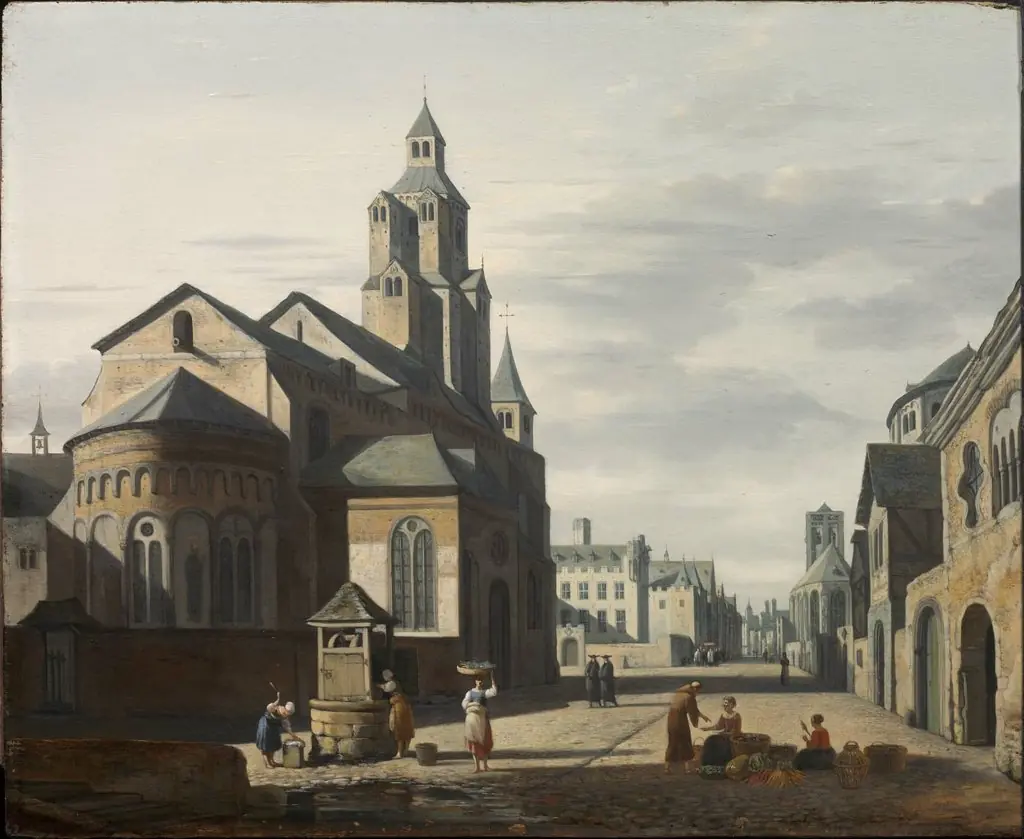 Church of Saint Cecilia, Cologne
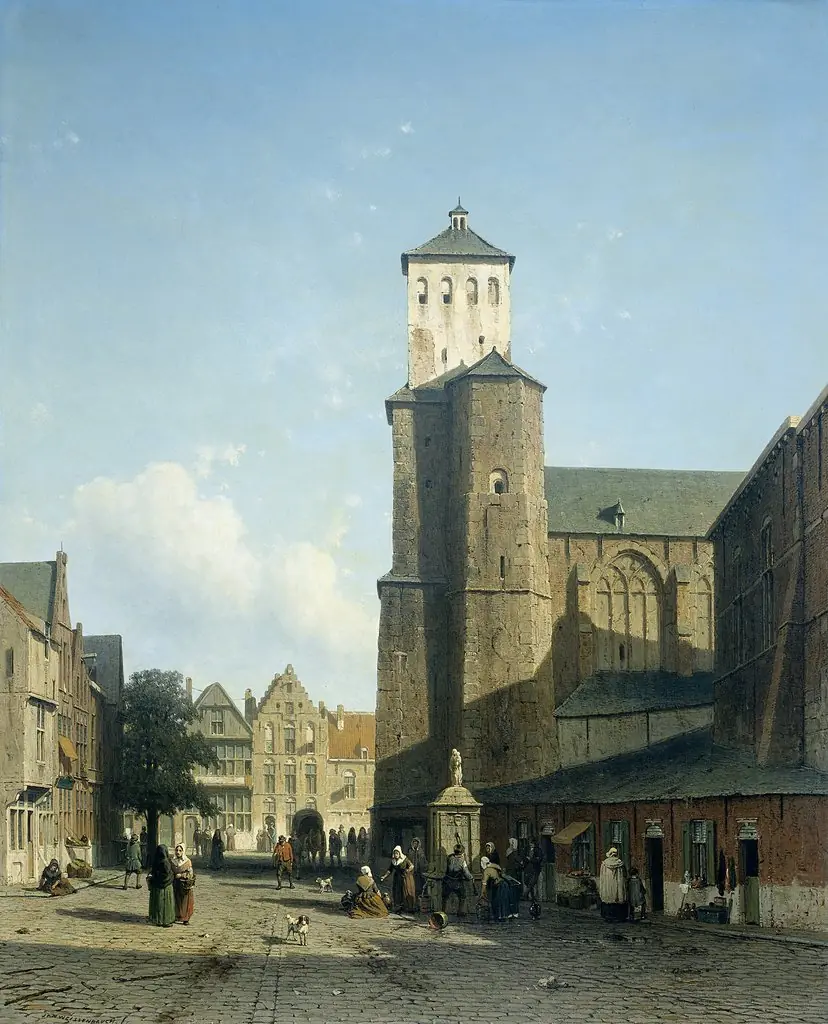 St Denis Church in Liège
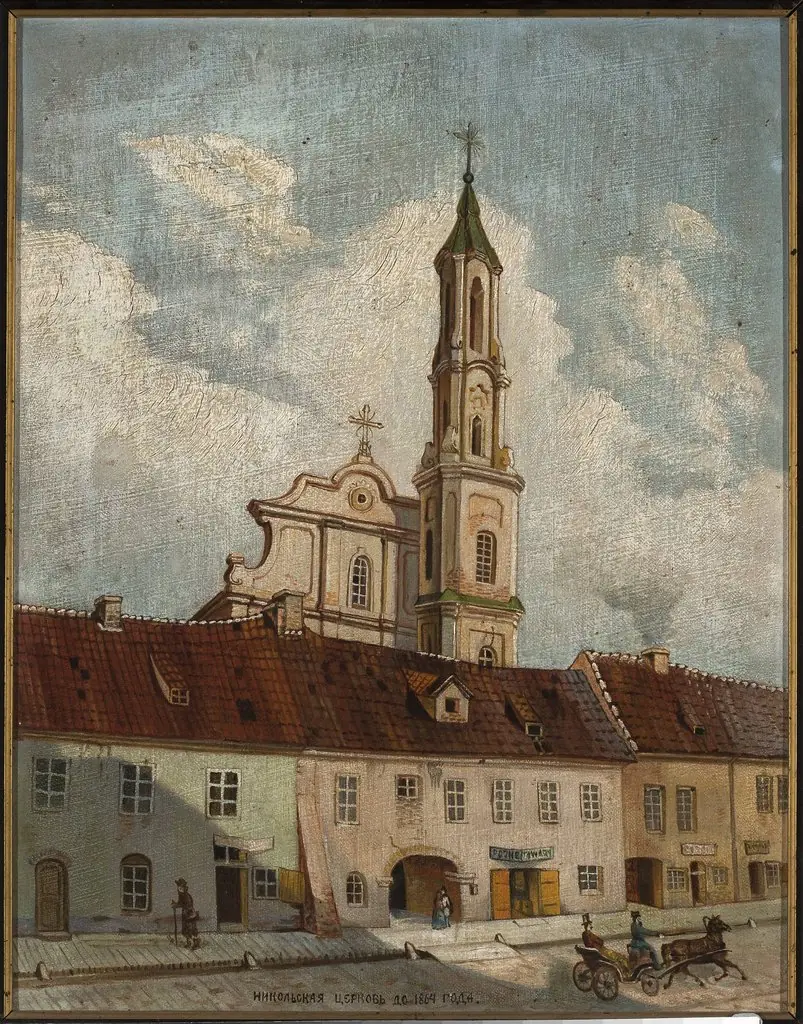 View of the Orthodox Church of St. Nicholas in Vilnius
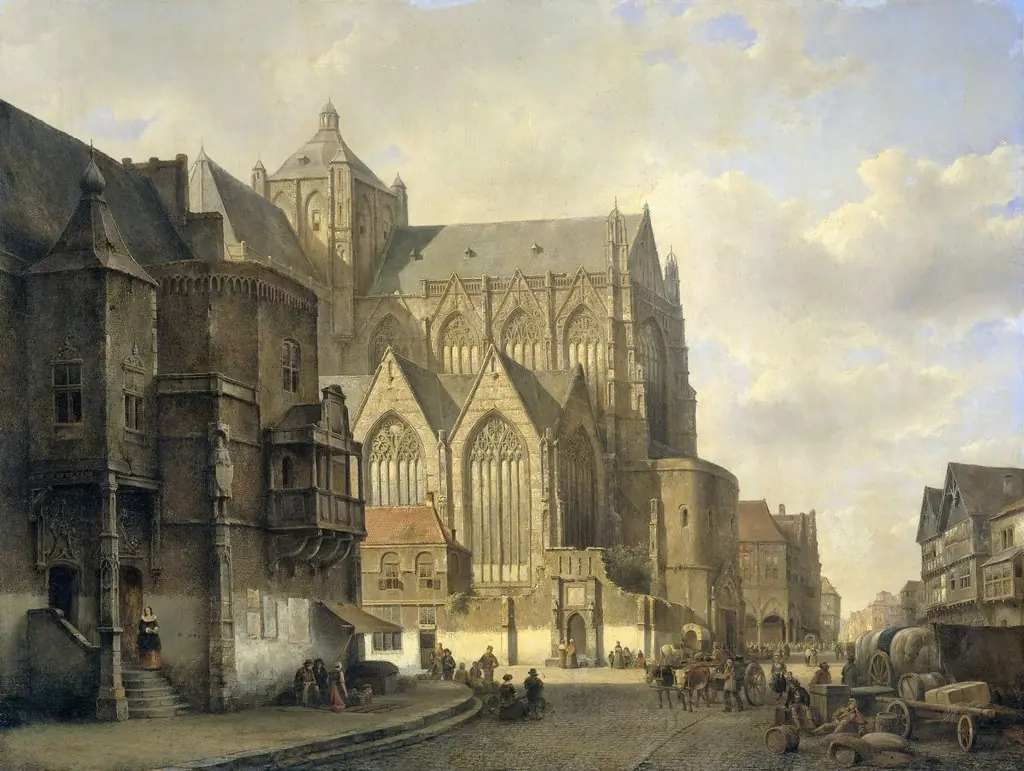 Cityscape, Rijksmuseum
 The Church at Veere
 Biserica Evanghelică din Sibiu
 Market-Place of the Neustadt in Dresden