Artwork
View of the Orthodox Church of St. Nicholas in Vilnius
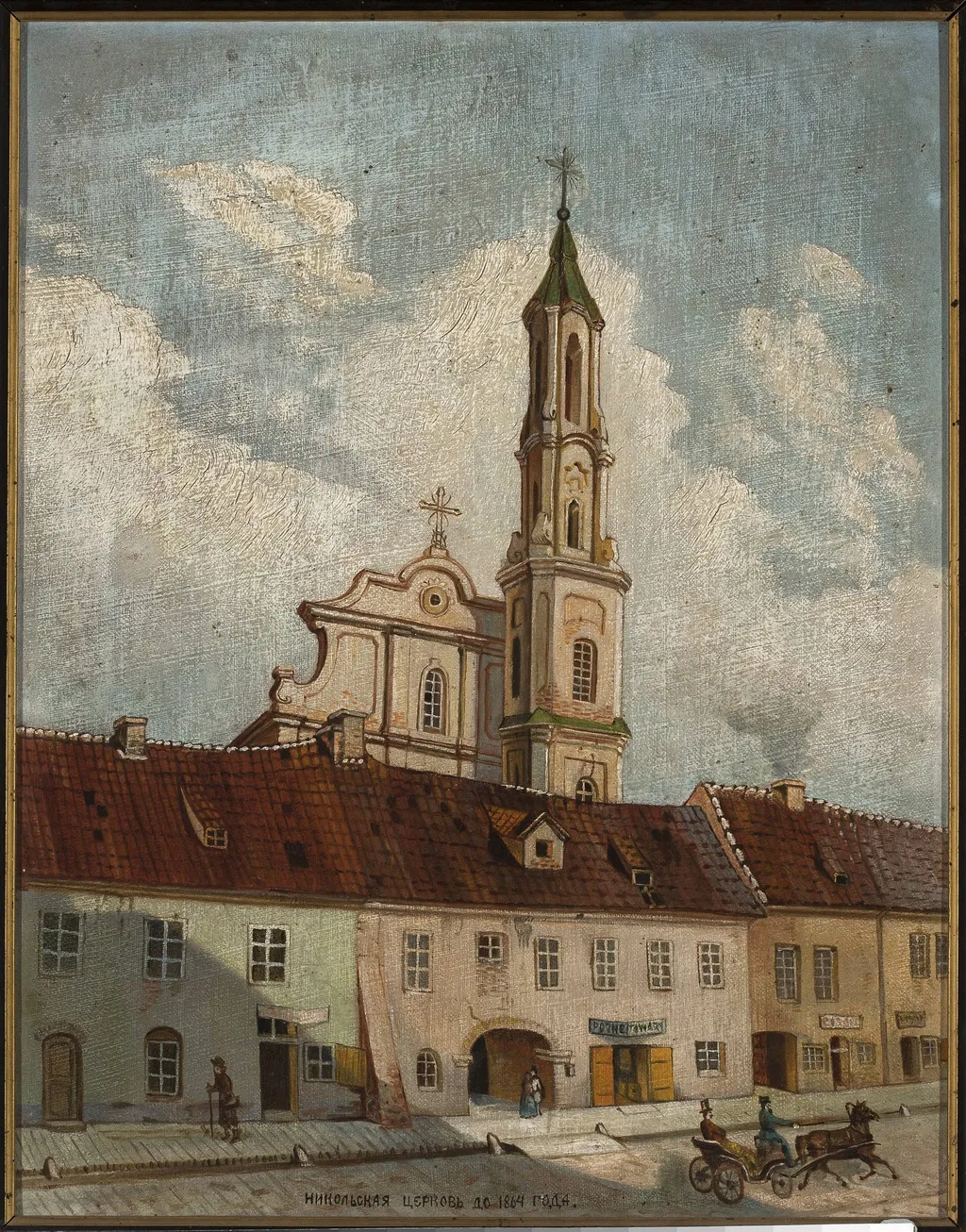
View of the Orthodox Church of St. Nicholas in Vilnius is an oil painting by Unknown. It dates from 1864 and is held in the collection of the National Museum in Warsaw. This 1864 oil painting depicts the Orthodox Church of St.
About this work
This painting shows a church with a tall tower, set against a cloudy sky. The church is white with a brown roof, and the tower has a green roof and a cross on top. In front of the church, there are buildings with brown roofs and people walking around. The artist has used oil paint to create this scene, which is dated 1864. The painting is held at the National Museum in Warsaw.
Overview
This 1864 oil painting depicts the Orthodox Church of St. Nicholas in Vilnius, showcasing its architecture against a dynamic cloudy sky. Prominent features include the church's white walls, brown roof, and the tall tower capped with a green roof and a cross. The scene is populated with people and adjacent buildings, all set within a realistic, observed environment.
Subject & Meaning
The subject is the Orthodox Church of St. Nicholas, highlighting its presence in the Vilnius landscape. The depiction may reflect the church's religious or cultural significance in the region during the mid-19th century, though the painting's primary focus appears to be documentary, capturing the building's appearance and its everyday surroundings.
Technique & Style
Executed in oil paint, the work demonstrates traditional techniques of landscape and architectural painting prevalent in the 19th century. The use of oil allows for detailed rendering of textures, from the cloudy sky to the building materials, suggesting an emphasis on realism and observational accuracy.
History & Provenance
Created in 1864, the painting is now part of the collection at the National Museum in Warsaw, indicating its recognition as a piece of cultural heritage. The artist's name is not provided, suggesting either anonymity in the original context or a lack of recorded information.
Context
Painted in 1864, the work reflects the artistic and cultural climate of Eastern Europe during the mid-19th century, a time when documentary-style landscapes and architectural depictions were common. It may also touch on the religious and ethnic diversity of Vilnius at the time.
Legacy
While specific influence or widespread recognition of this painting is not detailed, its preservation in a national museum underscores its value as a historical record of Vilnius' architectural heritage in the 19th century.
Artist & collection

 Domestic Scene
 Giacomo and Cardinal Marco, investing Andrea, Abbot of San Zeno, with his Benefice
 The Nymph of Fontainebleau
 Portrait of a Woman
 Madonna and Child with Saints in the Enclosed Garden
 Venus and Minerva
 Family Group of Four on Sofa
 Wall painting from Room H of the Villa of P. Fannius Synistor at Boscoreale
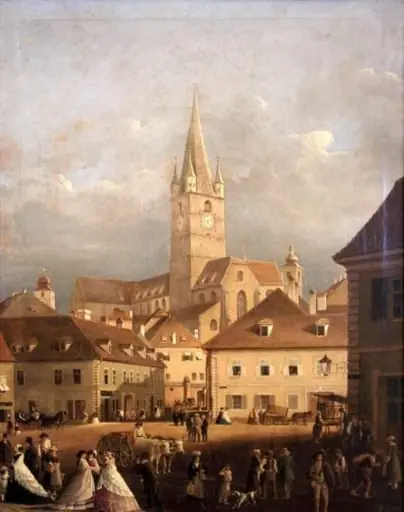 Peisaj din Sibiu (Biserica evanghelică din Sibiu)
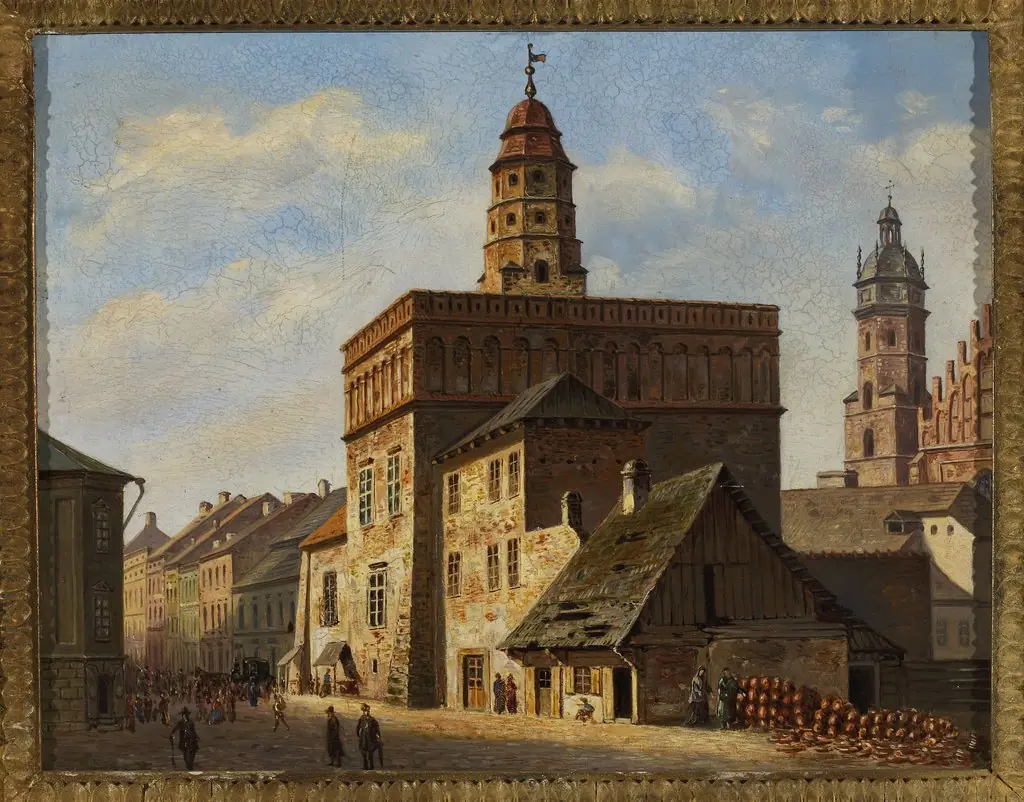 Old town hall at the Wolnica square in Kazimierz, Kraków
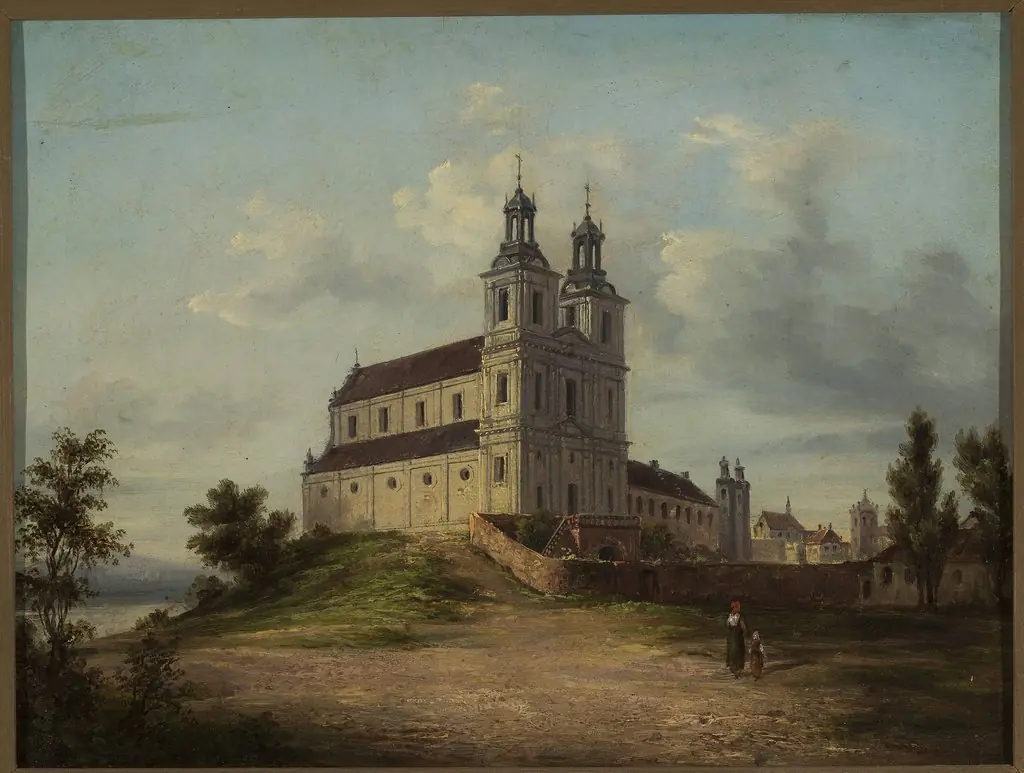 Pauline church and monastery at Skałka, Kraków
 Ribe Cathedral
 Marketplace in Munich
 Krasiński Square and the Piarist church
 View of the castle in Radziejowice
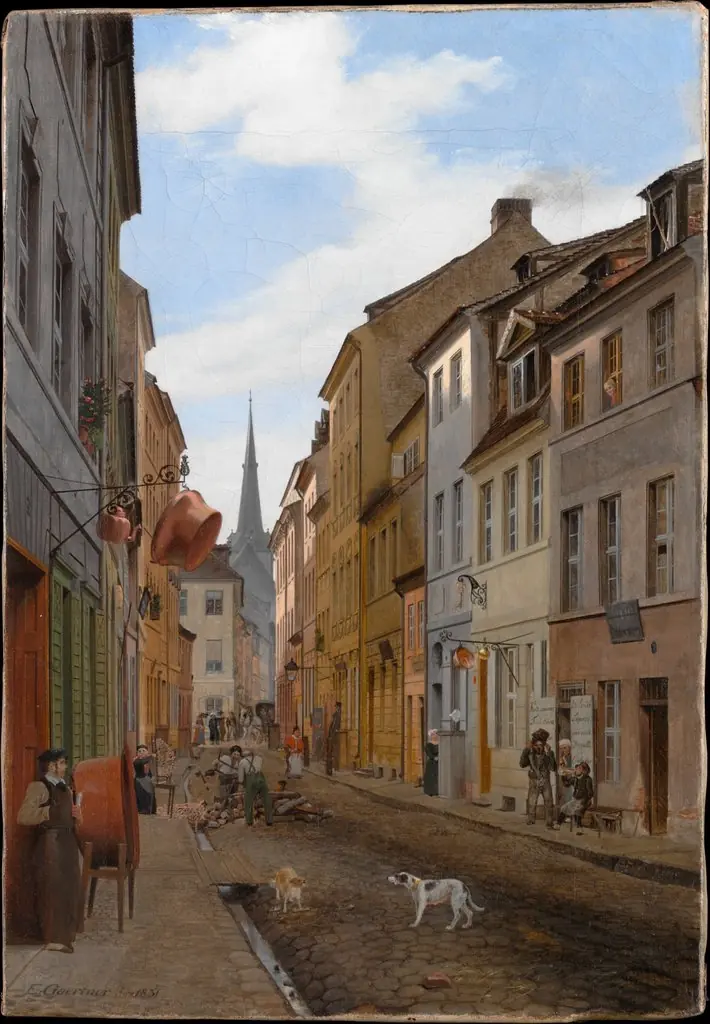 Parochialstrasse in Berlin
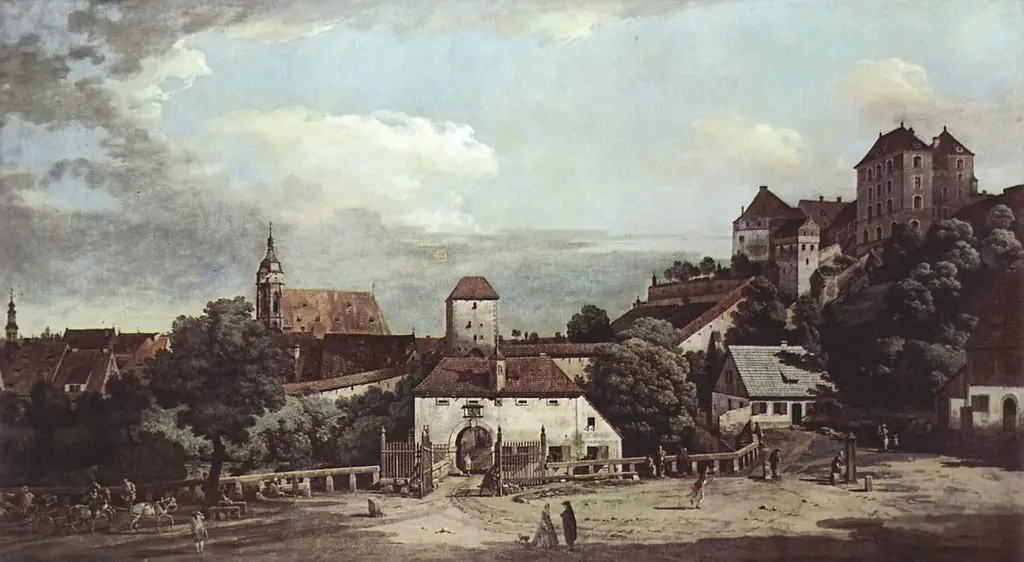 Pirna from the South