Artwork
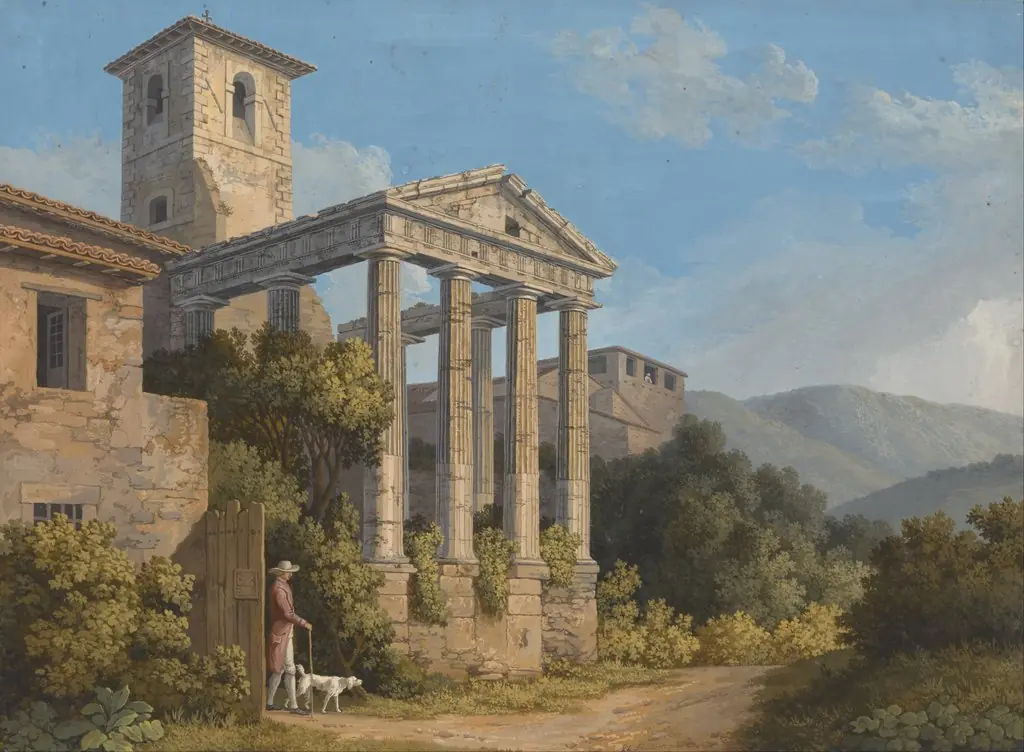
The Temple of Hera at Paestum, Italy
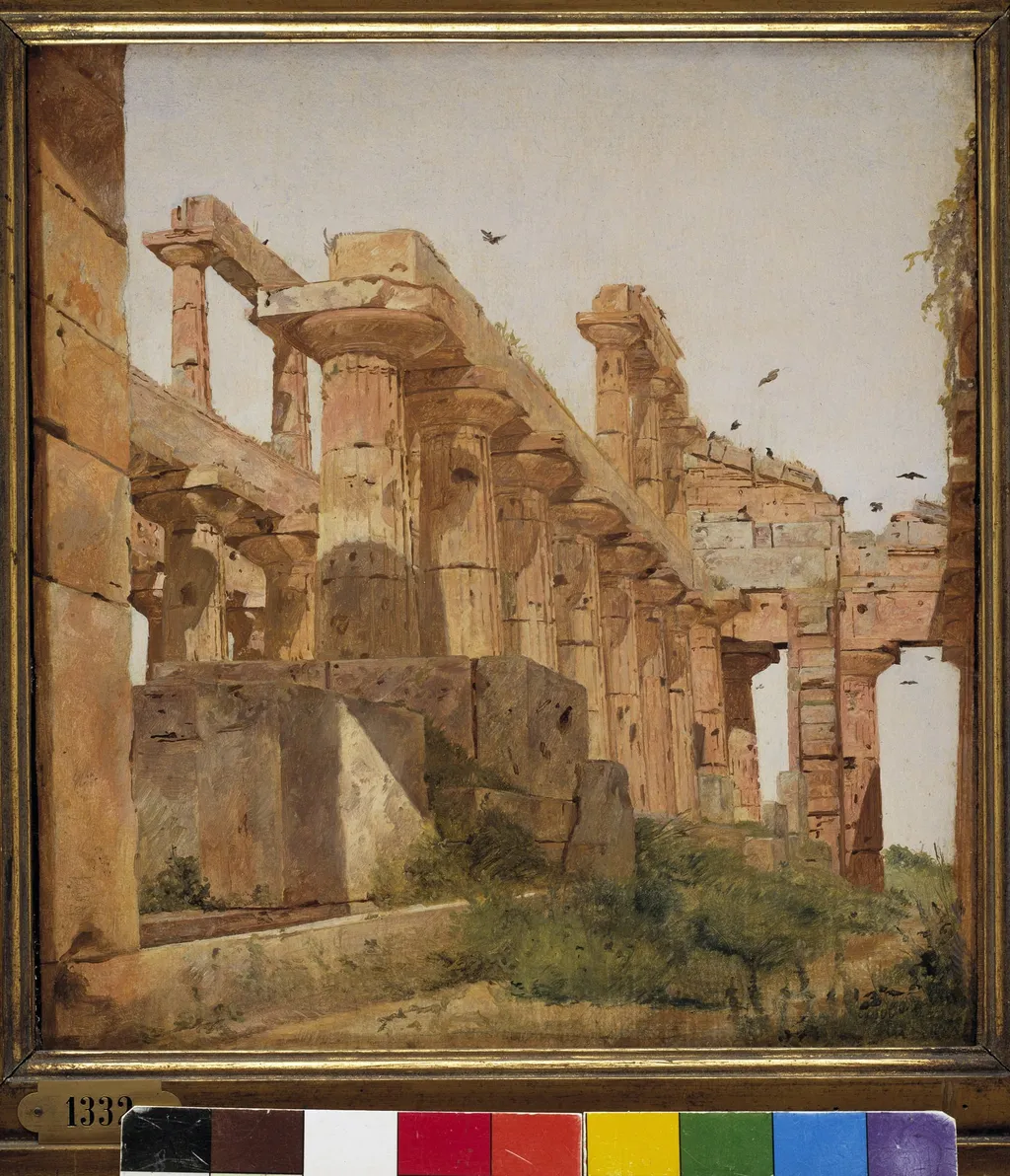
The Temple of Hera at Paestum, Italy is a photography by the Romanticist artist Unknown. It dates from 1838 and is held in the collection of the Statens Museum for Kunst.
About this work
Overview
The artist captures the quiet persistence of nature reclaiming human structures, reflecting a 19th-century fascination with ruins as symbols of time’s passage.
Painted in 1838, this image depicts the ancient Temple of Hera in Paestum, Italy, rendered in a somber palette of browns, grays, and muted greens. The composition emphasizes decay: columns stand fractured, walls erode, and vegetation creeps through the stonework. The artist captures the quiet persistence of nature reclaiming human structures, reflecting a 19th-century fascination with ruins as symbols of time’s passage.
Subject & Meaning
The temple, once a sacred space dedicated to the goddess Hera, is shown not as a monument of glory but as a fragment of memory. Its ruined state invites contemplation of impermanence and the silence left by vanished civilizations. The presence of birds in flight and sparse grass suggests life continuing beyond human endeavor, reinforcing themes of transience and natural cycles.
Technique & Style
The artist employs subtle tonal gradations to convey the texture of weathered stone, using light to highlight cracks and uneven surfaces. Brushwork is restrained, avoiding dramatic flourish in favor of quiet realism. The absence of human figures and the muted color scheme align with Romantic-era tendencies to evoke awe through solitude and decay rather than grandeur.
History & Provenance
The painting was completed in 1838 and is now held by the Museum of Ethnography. Its origin as a work by 1162_person remains undocumented in public records, and no further details about the artist’s background or the circumstances of its creation are known. The piece entered the museum’s collection at an unspecified date, likely during the late 19th or early 20th century.
Context
In the early 1800s, European artists and travelers increasingly visited southern Italy’s ancient sites, drawn by Romantic ideals that valued emotion, nature, and the sublime in ruins. Paestum’s Greek temples, largely untouched and overgrown, became potent symbols of lost antiquity. This painting reflects a broader cultural trend of viewing archaeology not as restoration, but as meditation on time’s erosion.
Legacy
Though the artist remains obscure, the painting contributes to a visual archive of 19th-century ruin aesthetics. It stands as a quiet example of how Romantic sensibilities shaped perceptions of ancient architecture—not as relics to be studied, but as evocative presences that stir reflection on history, memory, and the natural world’s quiet dominance.
Artist & collection

 Domestic Scene
 Giacomo and Cardinal Marco, investing Andrea, Abbot of San Zeno, with his Benefice
 The Nymph of Fontainebleau
 Portrait of a Woman
 Madonna and Child with Saints in the Enclosed Garden
 Venus and Minerva
 Family Group of Four on Sofa
 Wall painting from Room H of the Villa of P. Fannius Synistor at Boscoreale