Artwork
Inside the Colosseum
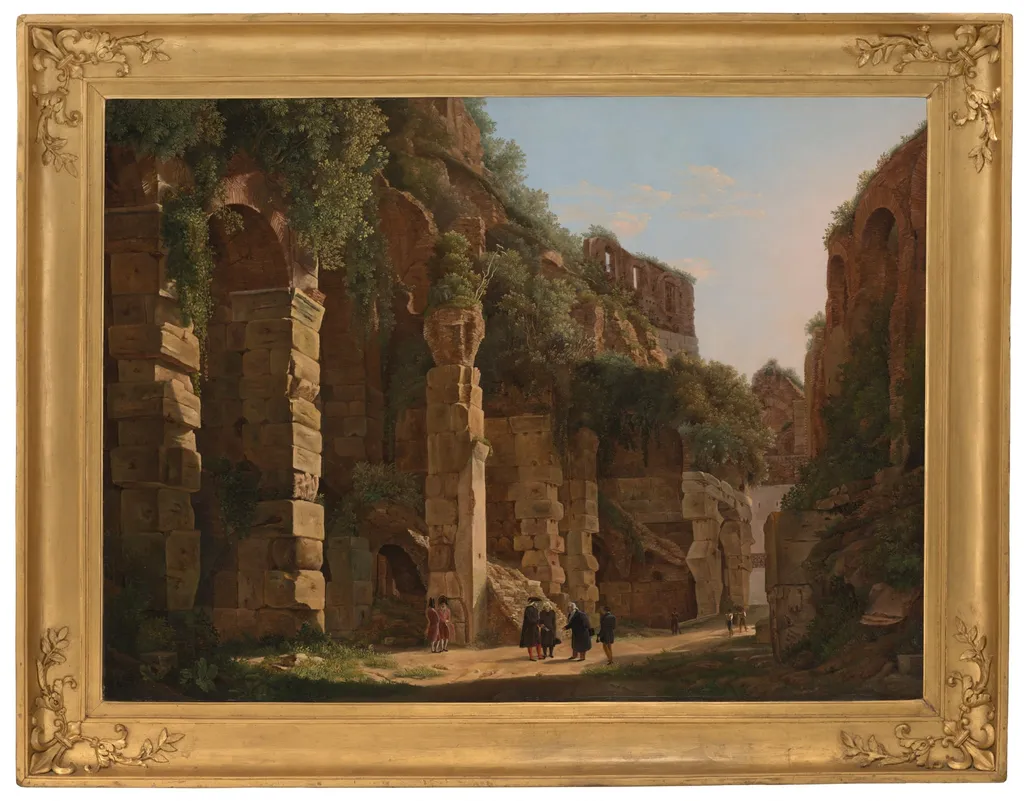
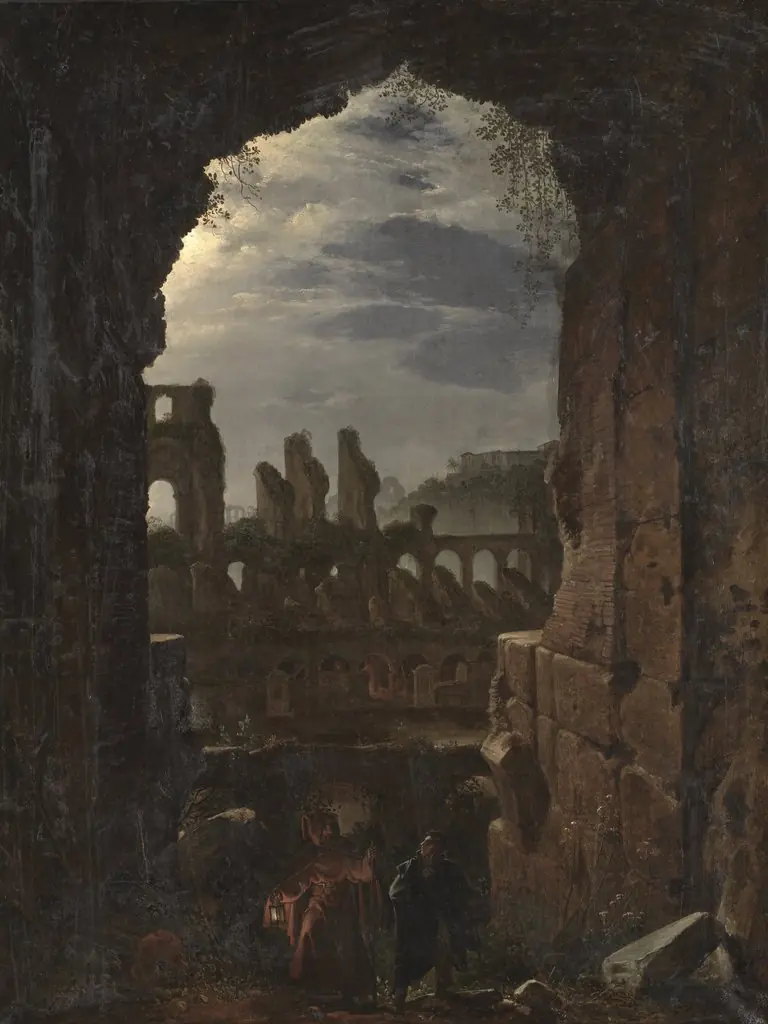
Inside the Colosseum is an oil painting by the Romanticist artist Franz Ludwig Catel. It dates from 1823 and is held in the collection of the Art Institute of Chicago.
About this work
Overview
The vast, crumbling architecture dominates the scene, while human figures appear small and incidental, emphasizing the scale of the ancient structure.
Franz Ludwig Catel’s oil painting depicts the interior of the Colosseum in Rome, capturing a moment during early restoration efforts. The vast, crumbling architecture dominates the scene, while human figures appear small and incidental, emphasizing the scale of the ancient structure. The painting was completed in 1823, shortly after official restoration work began in 1822, making it a contemporary record of the site’s transition from ruin to preserved monument.
Subject & Meaning
The scene centers on a quiet exchange between architect Giuseppe Valadier and Cardinal Ercole Consalvi, who oversaw the restoration. Valadier presents plans, his posture respectful, while the cardinal listens. In the background, laborers haul debris from the arena’s depths, underscoring the physical effort required to reclaim the structure. The painting frames restoration not as grand spectacle, but as deliberate, human-led intervention.
Technique & Style
Catel employs chiaroscuro to heighten the contrast between the dim interior and the shaft of sunlight piercing through the upper arches. This dramatic lighting isolates the figures and architectural details, reinforcing the monument’s imposing presence. The brushwork is precise yet restrained, favoring atmospheric depth over ornamental flourish, aligning with the Neoclassical preference for clarity and order.
History & Provenance
Painted in 1823, the work was created during the initial phase of state-sponsored restoration led by Consalvi and Valadier. It likely served as both a documentary record and a gesture of cultural renewal. The painting remained in private collections until entering a public museum in the 20th century, where it now functions as a visual archive of Rome’s architectural rehabilitation.
Context
By the early 19th century, the Colosseum had been neglected for centuries, used as a quarry and informal settlement. The restoration marked a shift in European attitudes toward ancient heritage, driven by Enlightenment ideals and rising nationalism. Catel’s painting reflects this new reverence, portraying the ruins not as decayed relics, but as sites worthy of careful, scholarly intervention.
Legacy
The painting endures as a quiet testament to the early days of archaeological conservation. It captures a pivotal moment when antiquity was no longer seen as mere debris, but as a cultural inheritance requiring stewardship. Its restrained tone and factual detail distinguish it from romanticized depictions of ruins, offering instead a sober vision of restoration as a deliberate, collective act.
Artist & collection


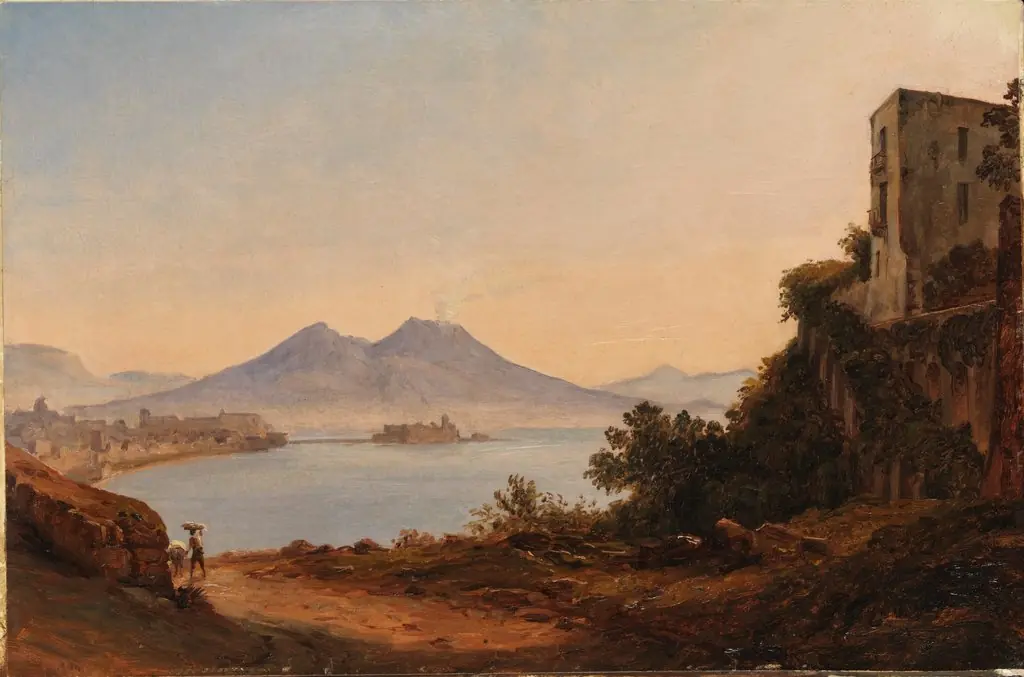
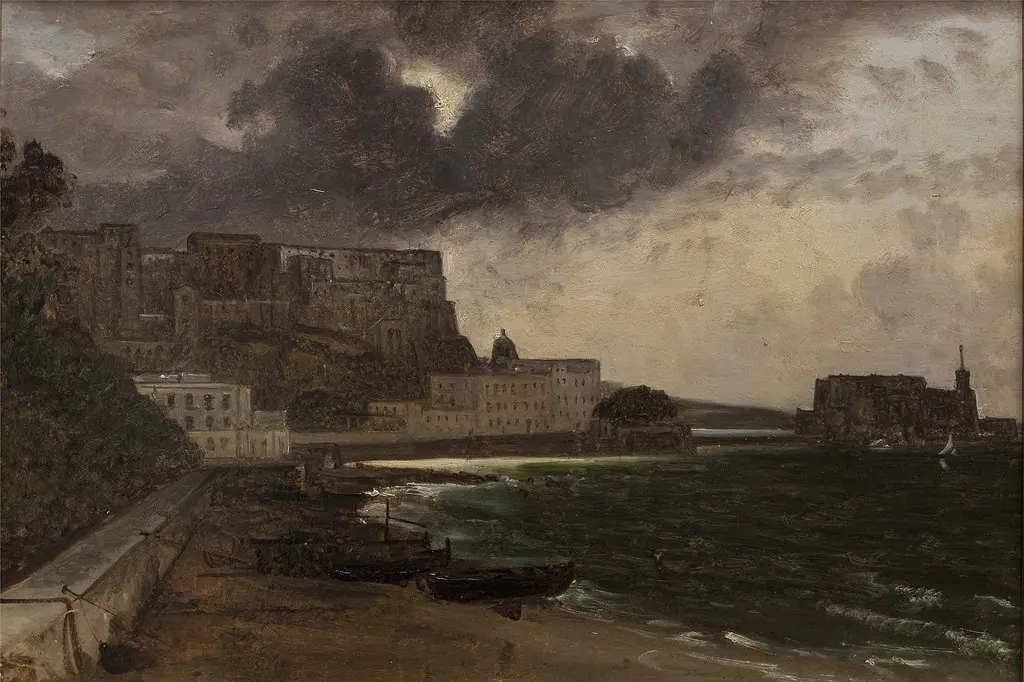
 De golf van Napels met op de achtergrond het eiland Ischia
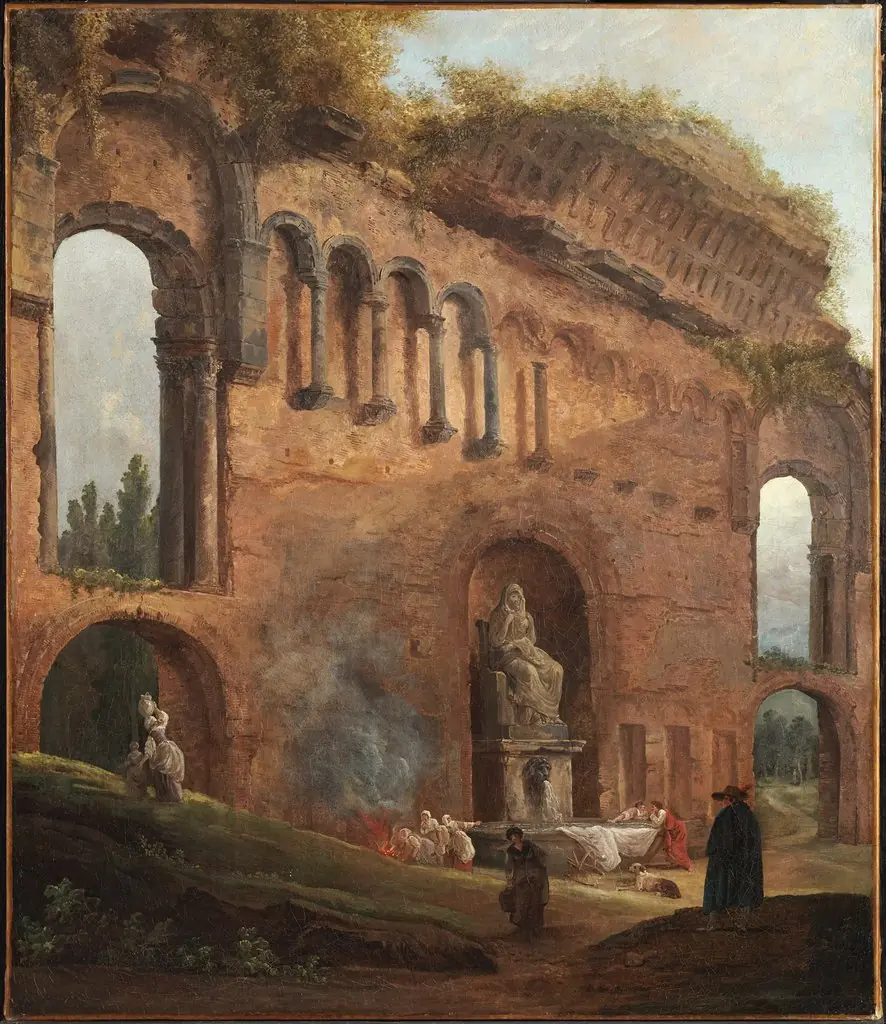 Roman Ruins with Laundresses
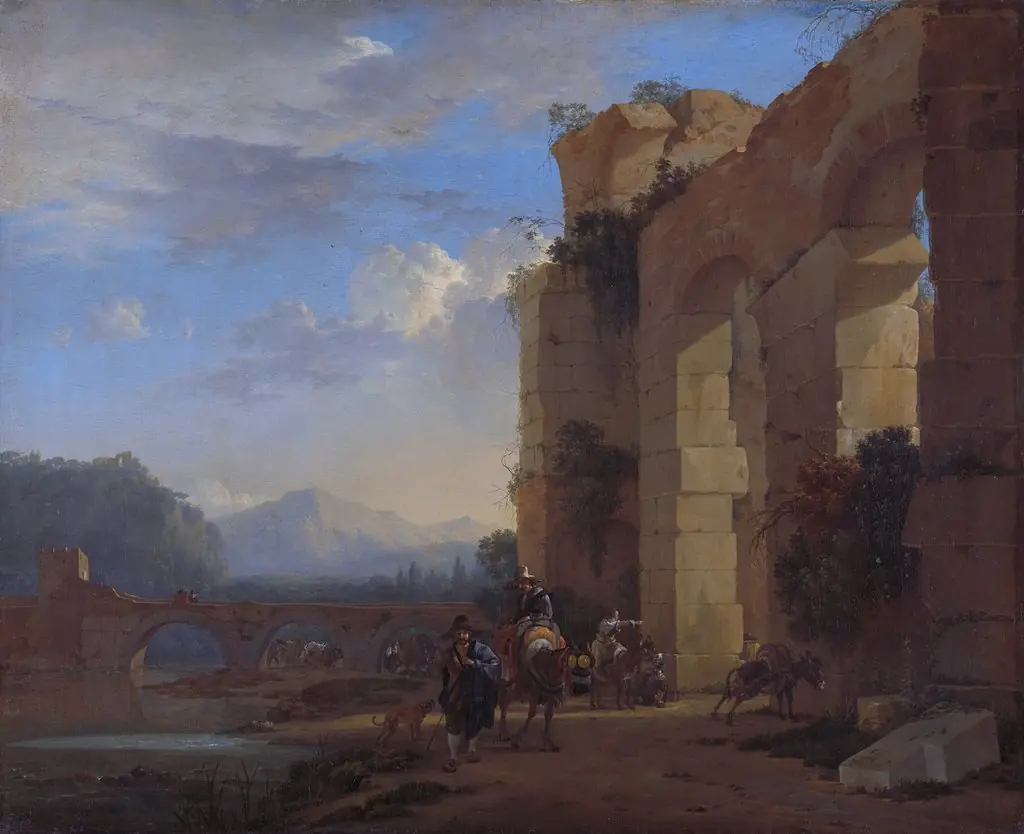 Muleteers beside an Italian Ruin
 Street Scene with Roman Ruins
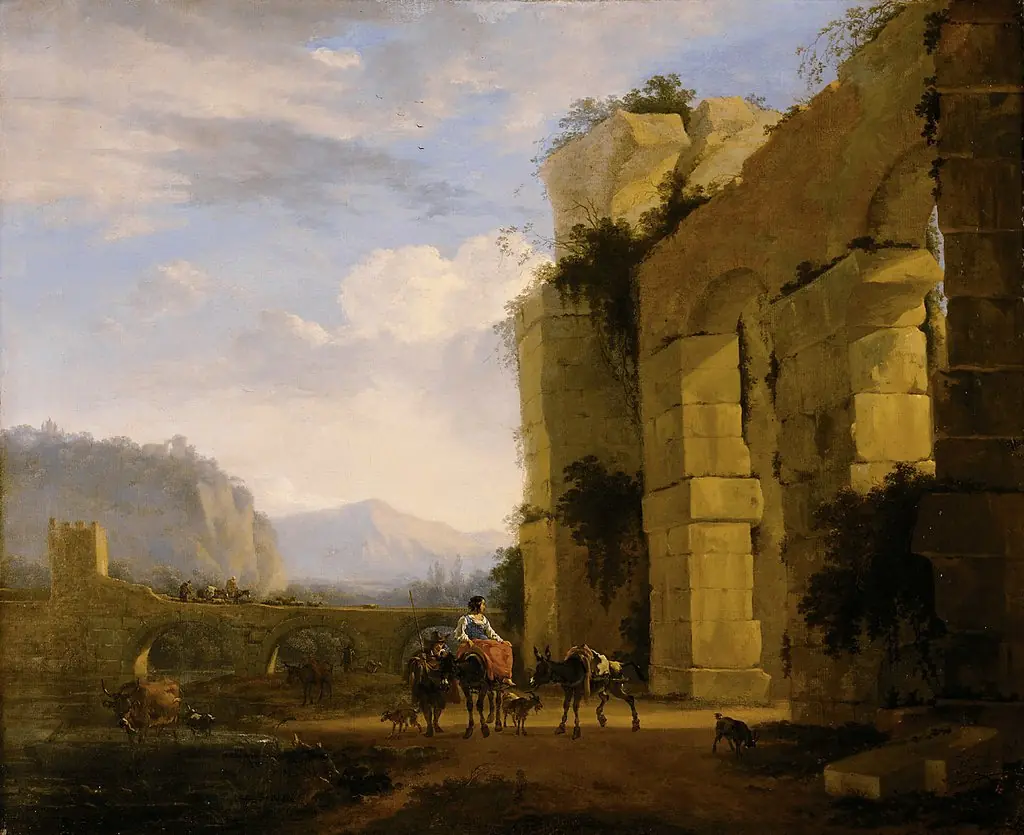 Landscape with the ruin of an aquaduct
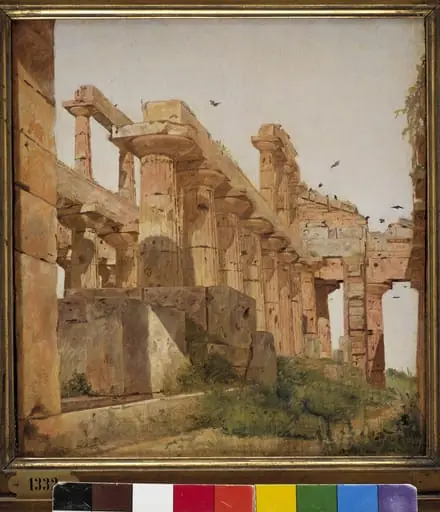 The Temple of Hera at Paestum, Italy
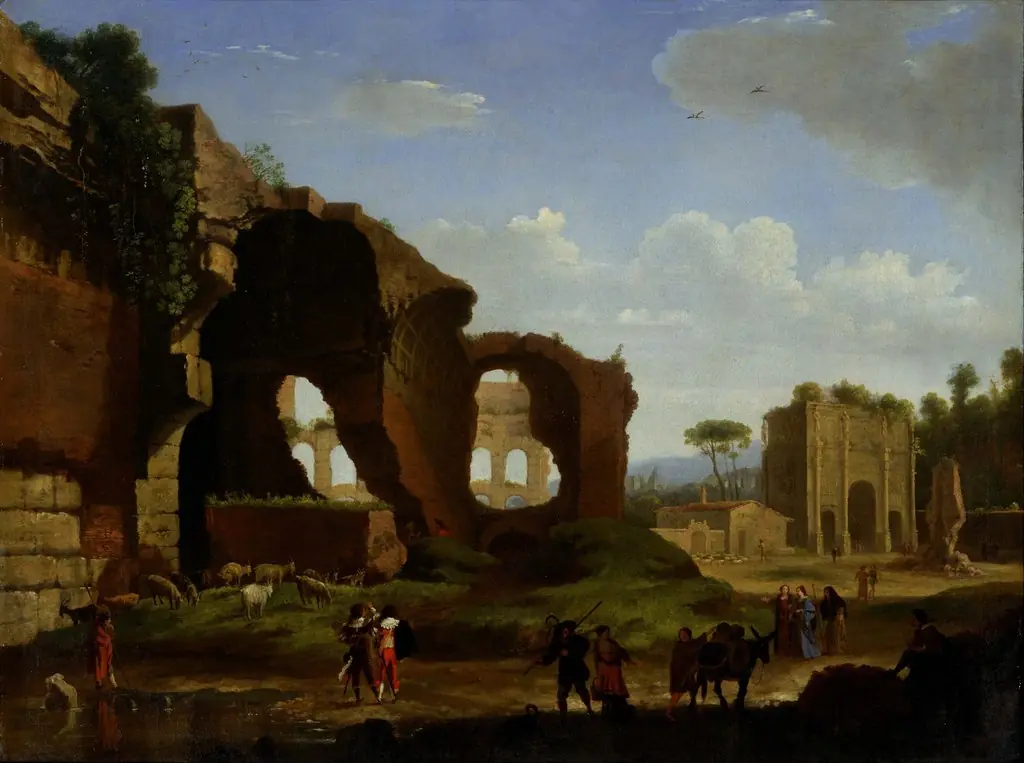 A Roman View of the Ruins of the Temple of Venus and Rome with the Colosseum and the Arch of Constantine
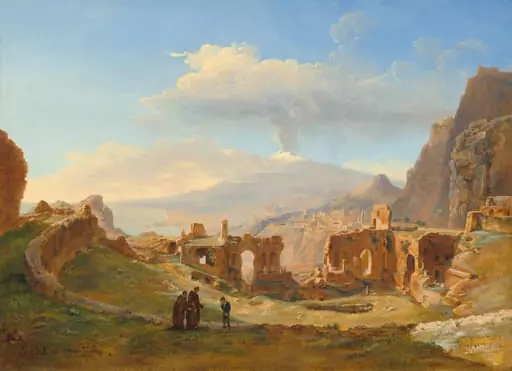 The Roman Theater at Taormina
 The Fountains