Artwork
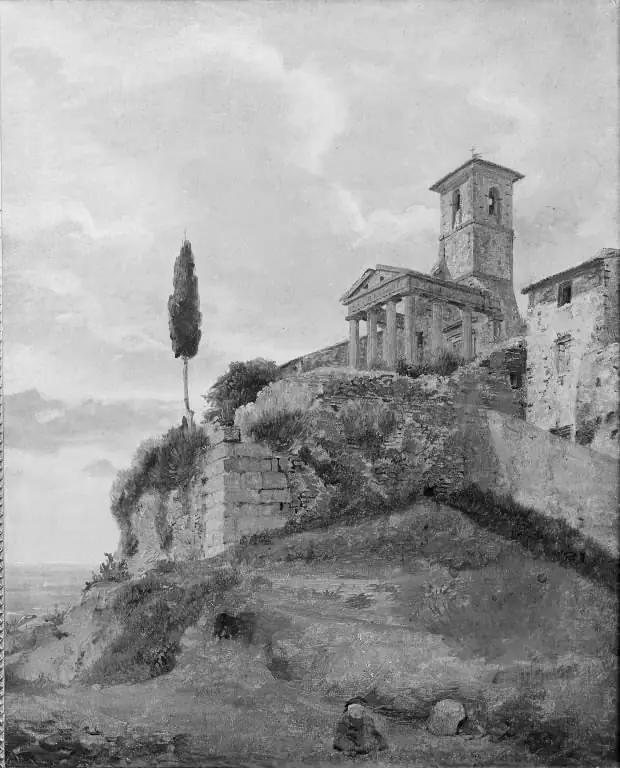
The Temple of Hercules at Cori
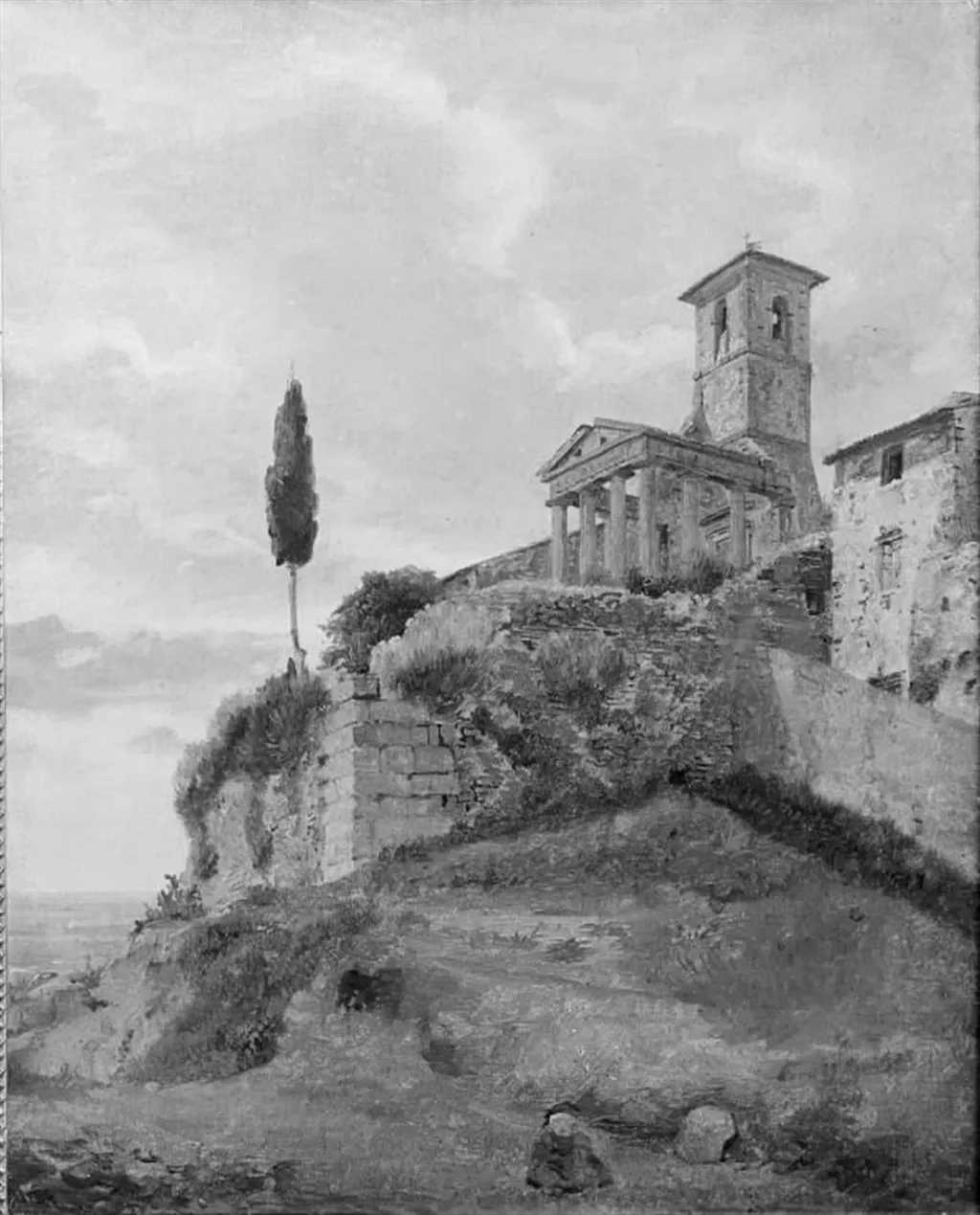
The Temple of Hercules at Cori is a photography by the Romanticist artist Unknown. It dates from 1838 and is held in the collection of the Statens Museum for Kunst.
About this work
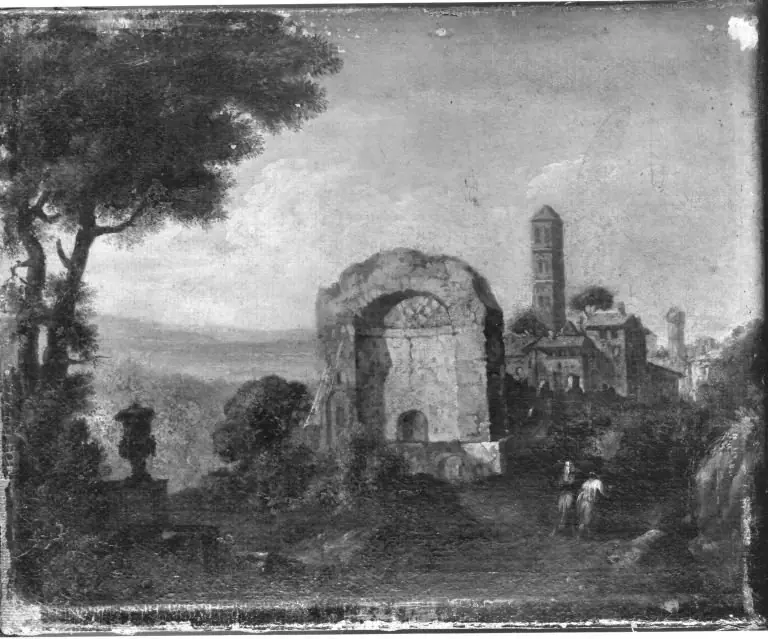
A lone cypress tree stands in front, and the ground below looks uneven with patches of grass and shadows.
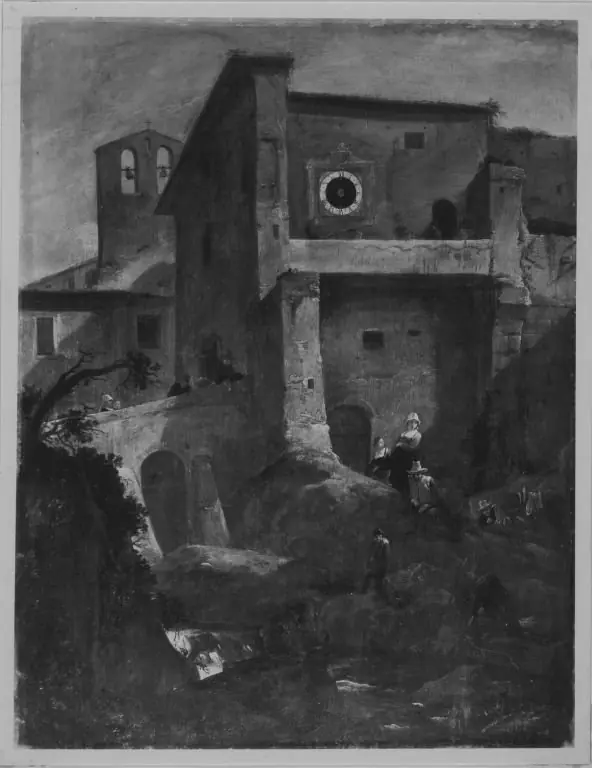
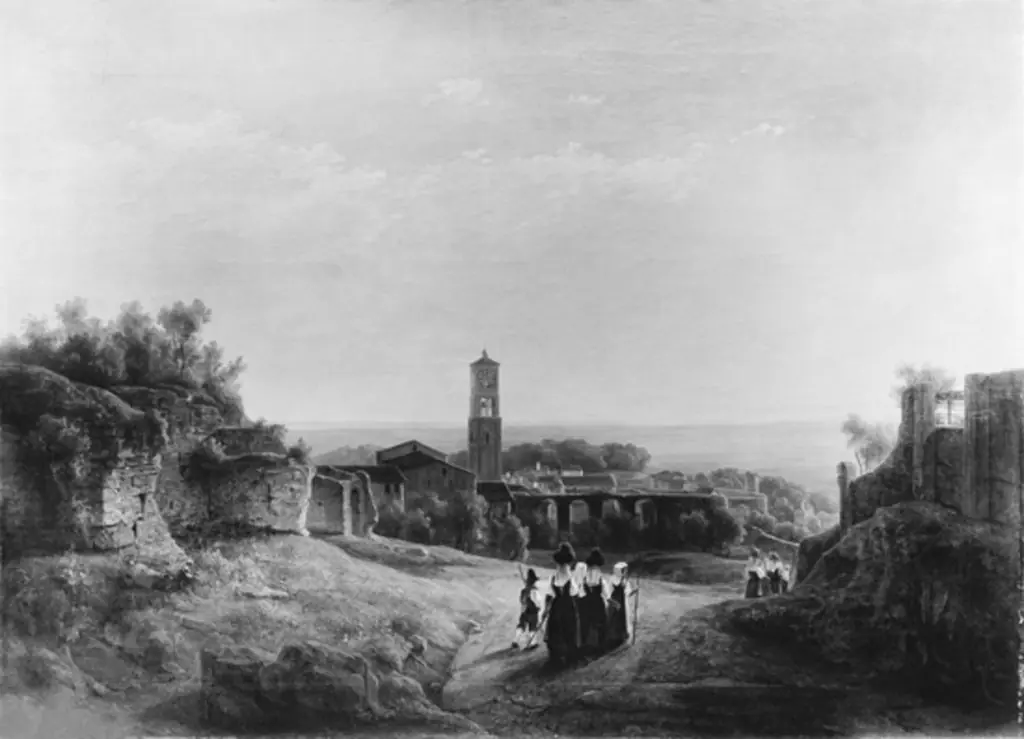
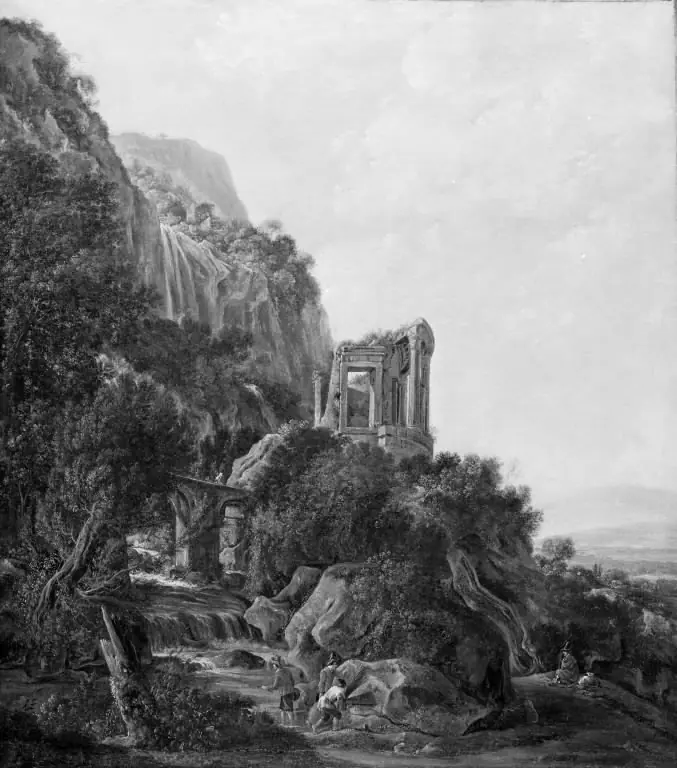
This photo shows an old temple perched on a rocky hillside. The building has a simple design with columns and a small tower behind it. A lone cypress tree stands in front, and the ground below looks uneven with patches of grass and shadows.
The temple’s ruins sit quietly, blending into the landscape. The photo was taken in 1838, when artists often focused on ancient ruins to spark imagination.
Next, check out Romanticism to see why old ruins fascinated artists back then.
Overview
The Temple of Hercules at Cori is a mythological painting created in 1838 by 1162_person, currently housed at the Museum of Ethnography.
Subject & Meaning
The painting depicts an ancient temple dedicated to Hercules, situated on a rocky hillside. The serene scene features the temple's ruins, a lone cypress tree, and uneven, grassy terrain, evoking a sense of quiet integration with the natural landscape.
Technique & Style
While specific artistic techniques are not detailed, the work reflects the early 19th-century artistic inclination towards capturing ancient ruins, characteristic of the Romantic era's fascination with antiquity and nature.
History & Provenance
Created in 1838, the painting is part of the collection at the Museum of Ethnography, though the artist's (1162_person) background and the piece's exhibition history are not provided.
Context
The painting was produced during a time when artists often depicted ancient ruins to inspire imagination and connect with the past, aligning with broader Romanticist themes.
Artist & collection

 Domestic Scene
 Giacomo and Cardinal Marco, investing Andrea, Abbot of San Zeno, with his Benefice
 The Nymph of Fontainebleau
 Portrait of a Woman
 Madonna and Child with Saints in the Enclosed Garden
 Venus and Minerva
 Family Group of Four on Sofa
 Wall painting from Room H of the Villa of P. Fannius Synistor at Boscoreale