Artwork
Sta. Giustina, Padua
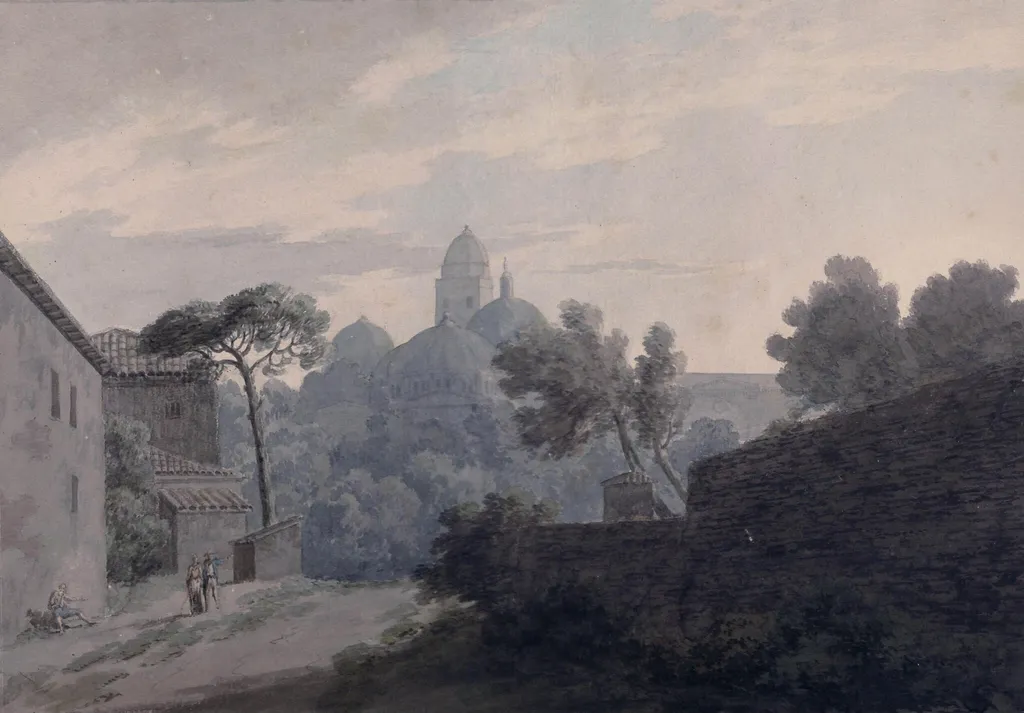
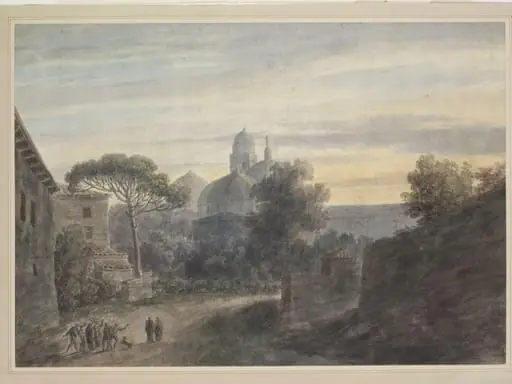
Sta. Giustina, Padua is a watercolor work on paper by the Rococo painting artist John Robert Cozens. It dates from 1786 and is held in the collection of the Victoria and Albert Museum.
About this work
Overview
John Robert Cozens created a watercolour depicting the church of Sta. Giustina in Padua, executed with delicate washes and a restrained palette. The work is signed on its mount, confirming authorship and intended presentation. Its quiet composition reflects Cozens’ interest in atmospheric landscape, capturing a moment of stillness rather than grandeur.
Subject & Meaning
A modest house on the left, with a sloping roof, anchors the foreground, while two figures move along the path, their presence adding scale and quiet narrative.
The scene centers on the imposing dome and tower of Sta. Giustina, rising behind a low stone wall and dense foliage. A modest house on the left, with a sloping roof, anchors the foreground, while two figures move along the path, their presence adding scale and quiet narrative. The church dominates not through detail but through its distant, softened silhouette, suggesting reverence through subtlety.
Technique & Style
Cozens employed transparent watercolour washes to build layered tones, allowing the paper’s white to suggest light. Forms dissolve into misty air, particularly in the background, where buildings recede into a pale, clouded sky. The muted greens, greys, and ochres evoke an overcast day, enhancing the sense of distance and quiet contemplation characteristic of his later work.
History & Provenance
The watercolour was likely made during Cozens’ travels in Italy in the 1770s, a period when he produced numerous topographical studies. It was mounted and signed, indicating it was prepared for private collection rather than public display. The piece entered the Victoria and Albert Museum’s collection, where it remains as part of a broader archive of British watercolours from the period.
Context
In the late 18th century, British artists increasingly turned to Italy for inspiration, seeking landscapes that evoked classical antiquity and spiritual serenity. Cozens’ approach diverged from topographical precision, favoring mood and atmosphere. His treatment of Sta. Giustina aligns with a growing aesthetic that valued emotional resonance over documentary accuracy.
Legacy
Cozens’ watercolours influenced later Romantic landscape painters through their emphasis on light, atmosphere, and emotional tone. His ability to convey distance and mystery with minimal brushwork set a precedent for the expressive potential of watercolour. Sta. Giustina exemplifies this shift, marking a move away from rigid representation toward subjective interpretation.
Own this work as a print
Artist & collection
Artist
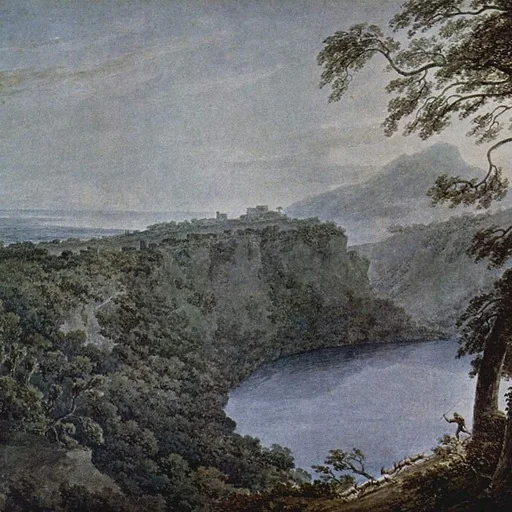
John Robert Cozens (1752 – 14 December 1797) was an English painter of romantic watercolour landscapes, nearly all of Continental scenes.

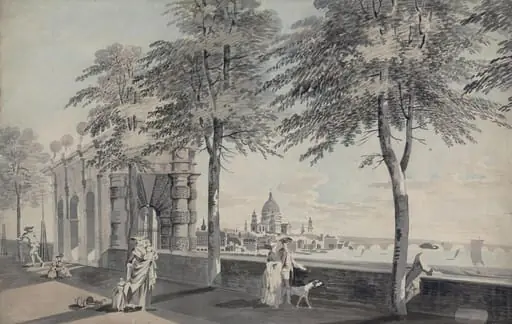 York Stairs, the Thames, Blackfriars Bridge and St. Paul's Cathedral
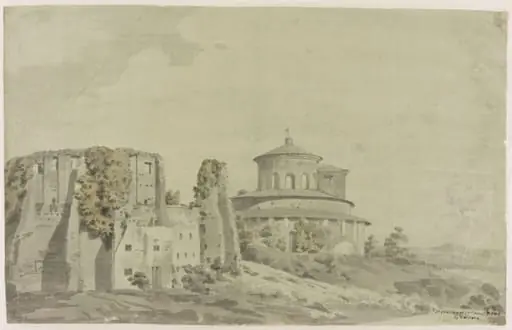 Santa Constanza, Rome
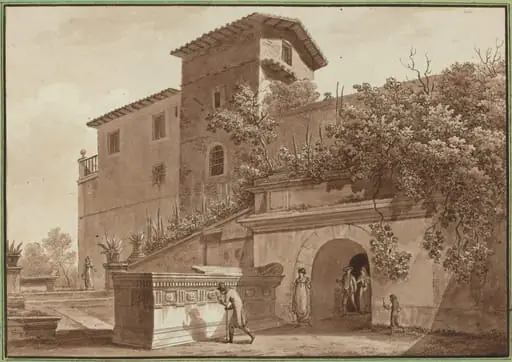 Tomb of Scipios
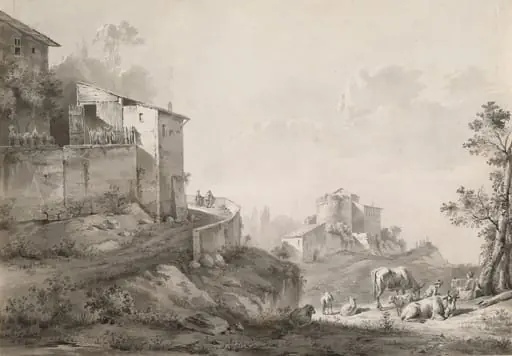 A Sunlit Landscape with Hilltop Houses
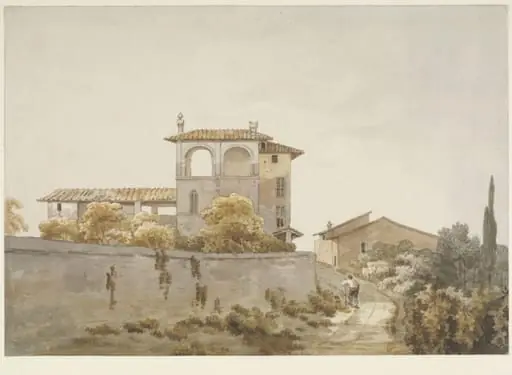 Italian villa
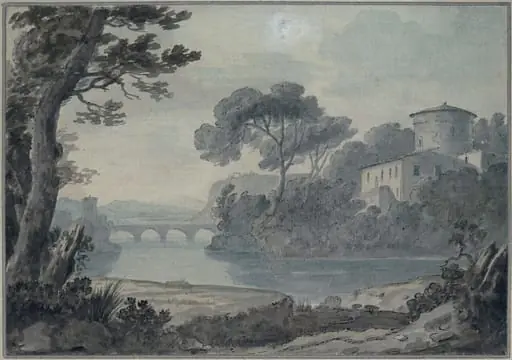 View near Rome
 Lake and Town of Nemi
![Yediküle with a Muslim Cemetery, Constantinople, by Michel-François Préaulx [Préaux]](https://artifactworldgallery.com/img/michel-francois-preaulx-preaux--yedikule-with-a-muslim-cemetery-constantinople--c422bdec8e9c6ba8-w320.webp) Yediküle with a Muslim Cemetery, Constantinople
Yediküle with a Muslim Cemetery, Constantinople View of the Church "Quattro Santi Coronati"
 A View in Italy with Mountains in the Distance
 View in the Garden of a Roman Villa, with the Temple of Hercules Victor and the Temple of Portunus
 Sta. Giustina at Padua