Artwork
Holberg overværer en prøve på Erasmus Montanus
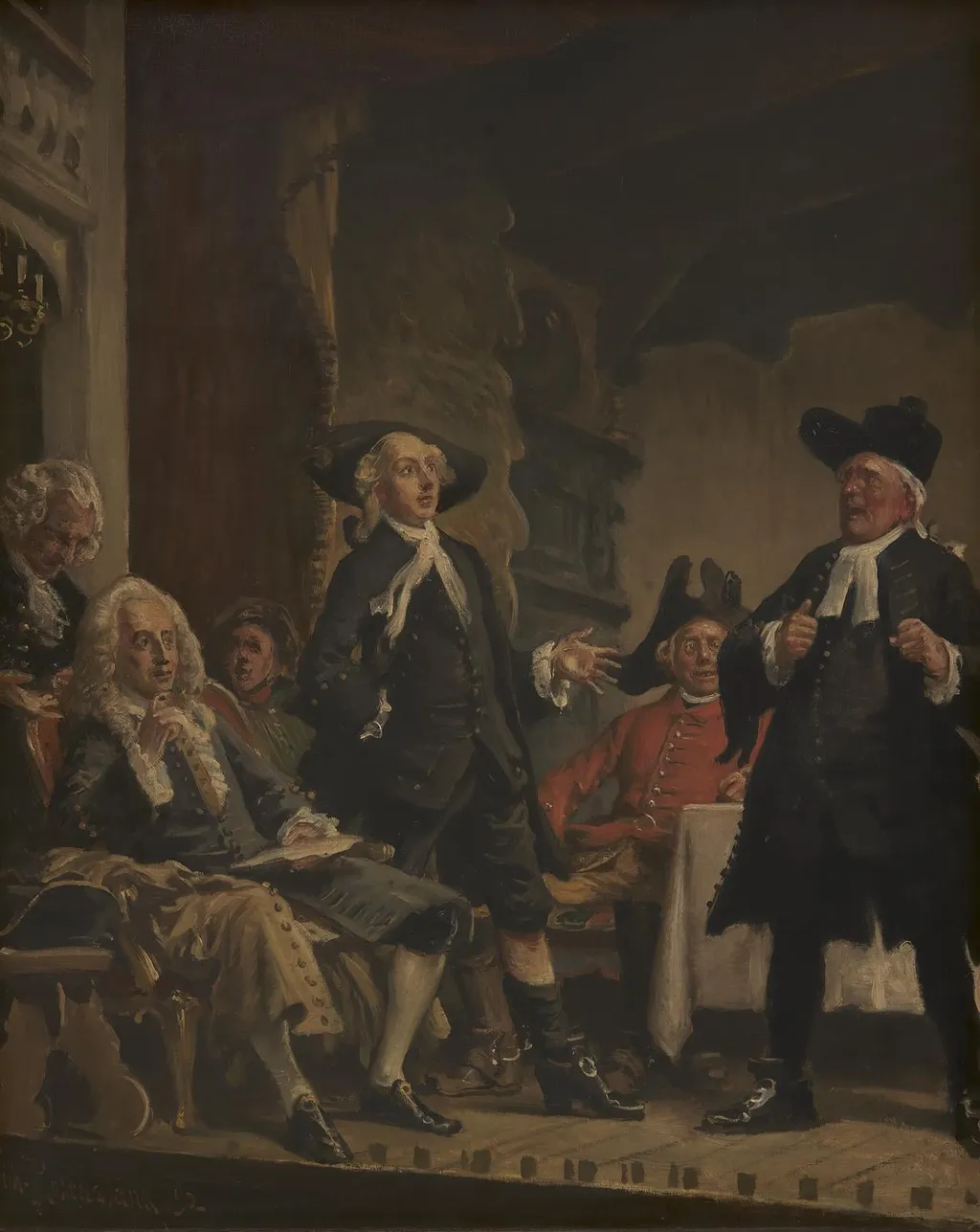
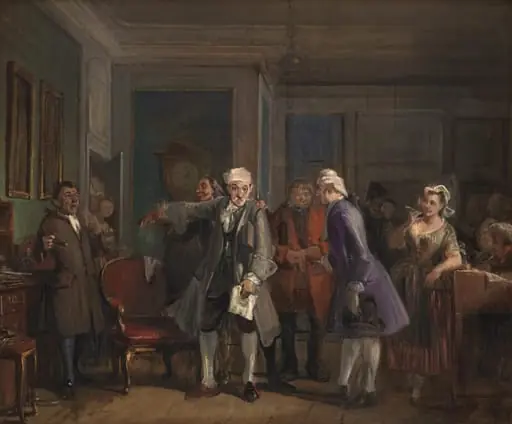
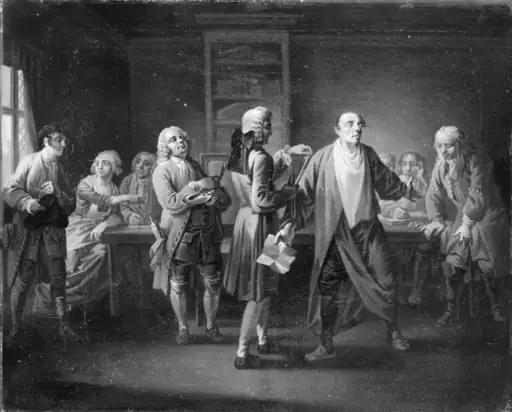
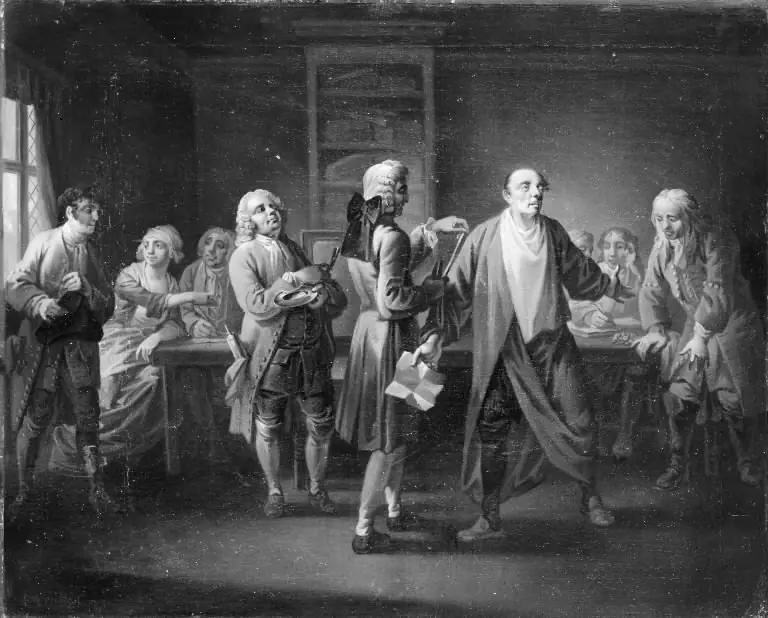
Holberg overværer en prøve på Erasmus Montanus is a photography by the Impressionist artist Unknown. It dates from 1892 and is held in the collection of the Statens Museum for Kunst. Painted in 1892, this work depicts a moment from a theatrical rehearsal of Ludvig Holberg’s comedy Erasmus Montanus.
About this work
Overview
The artist renders the figures with careful attention to individual expression and costume, emphasizing the gravity of their engagement with the text.
Painted in 1892, this work depicts a moment from a theatrical rehearsal of Ludvig Holberg’s comedy Erasmus Montanus. The scene captures a gathering of men in late 18th-century attire, gathered in a modest interior with architectural details suggesting a scholarly or domestic space. The artist renders the figures with careful attention to individual expression and costume, emphasizing the gravity of their engagement with the text.
Subject & Meaning
The painting illustrates a rehearsal of Holberg’s satirical play, in which a country youth returns from university with pretensions of intellectual superiority. The central figure, likely Holberg himself, observes the performance with quiet authority. The other men, dressed in varied hues, represent the local community reacting to the absurdity of the protagonist’s learned posturing, underscoring the play’s critique of misplaced academicism.
Technique & Style
Rendered in a detailed realist style, the painting employs precise brushwork to convey fabric textures, facial expressions, and the play of light across surfaces. The white walls and tablecloth contrast with the richly colored garments, drawing focus to the figures. The composition is carefully balanced, with the fireplace and window anchoring the spatial depth, while the elevated position of the speaker creates a subtle hierarchy among the group.
History & Provenance
The painting was completed in 1892 and entered the collection of the Museum of Ethnography, where it remains today. Its acquisition reflects a late 19th-century interest in preserving cultural moments tied to Danish literary heritage. Though not widely exhibited, it serves as a visual record of how Holberg’s works were interpreted and performed in the decades following his death.
Context
In the late 1800s, Denmark experienced a resurgence of interest in its 18th-century Enlightenment figures, particularly Holberg, whose comedies were seen as foundational to national identity. This painting emerged amid efforts to visually commemorate literary history, aligning with broader movements in Scandinavian art to document theatrical and intellectual life of the past.
Legacy
The work contributes to a visual archive of Danish cultural memory, illustrating how Holberg’s satire remained relevant into the modern era. While not widely known outside specialized circles, it stands as a quiet testament to the enduring presence of his themes in Danish public life, capturing a moment where literature, performance, and social critique intersected.
Artist & collection

 Domestic Scene
 Giacomo and Cardinal Marco, investing Andrea, Abbot of San Zeno, with his Benefice
 The Nymph of Fontainebleau
 Portrait of a Woman
 Madonna and Child with Saints in the Enclosed Garden
 Venus and Minerva
 Family Group of Four on Sofa
 Wall painting from Room H of the Villa of P. Fannius Synistor at Boscoreale