Artwork
Spruce Tree in a Summer Pasture. Norway
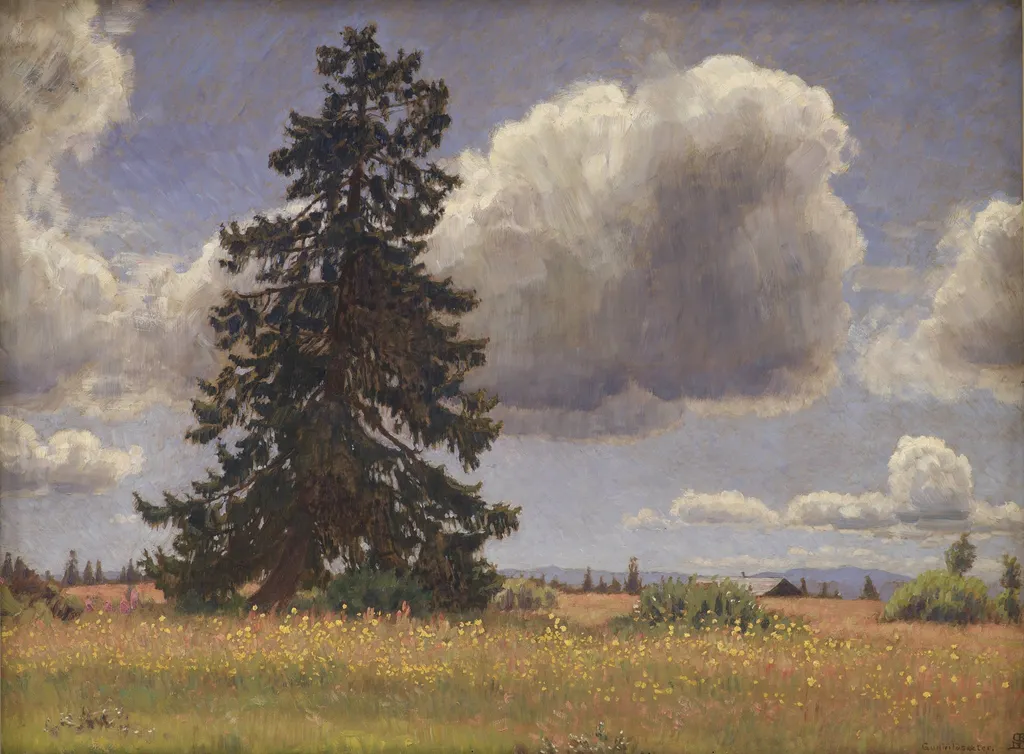
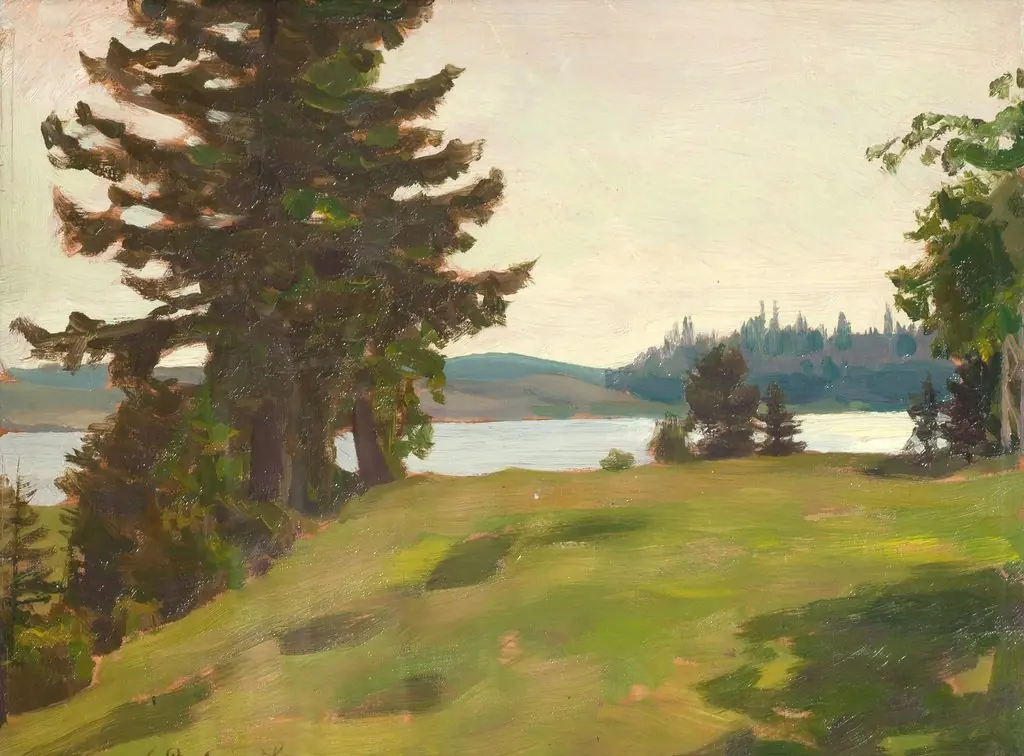
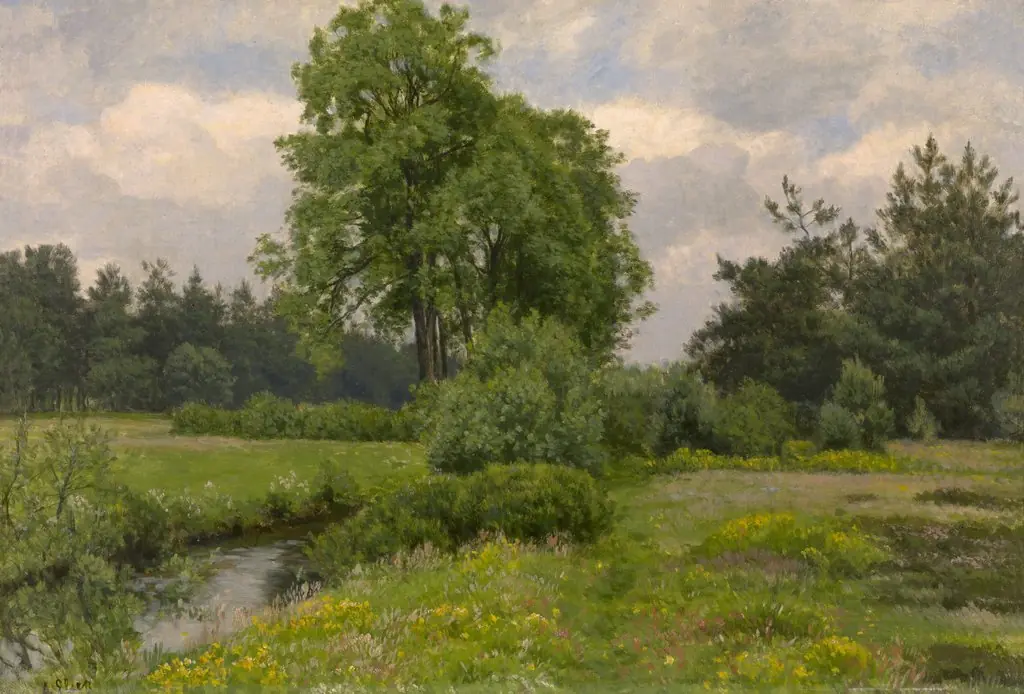
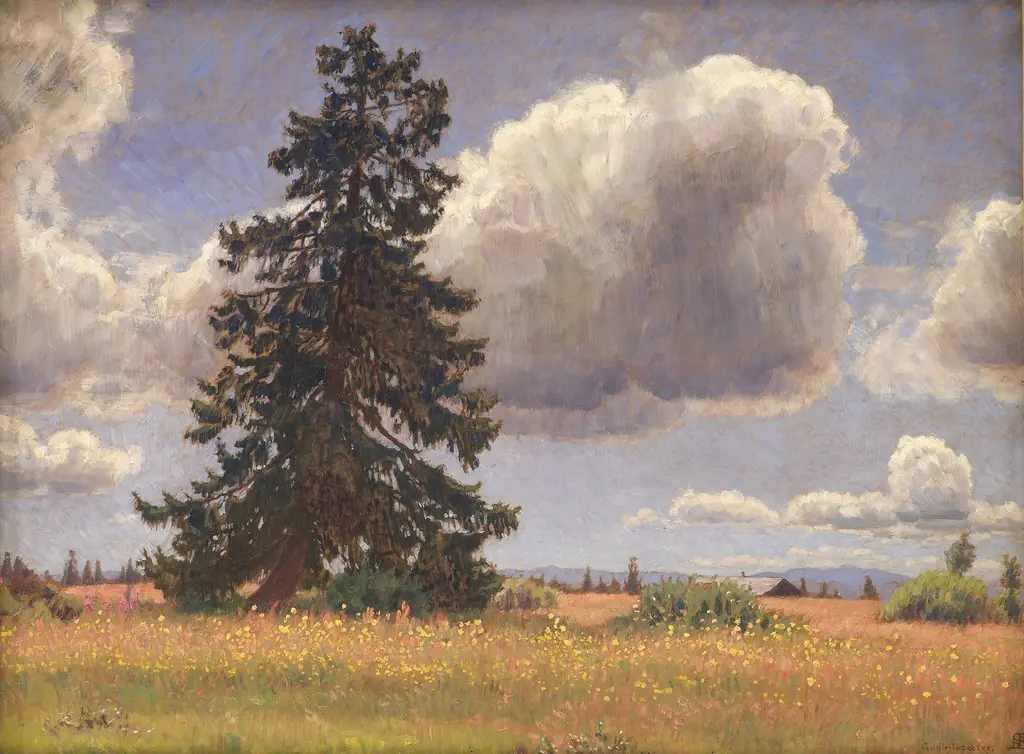
Spruce Tree in a Summer Pasture. Norway is a photography by Unknown. It dates from 1914 and is held in the collection of the Statens Museum for Kunst. Painted in 1914 by an artist from Norway, this work depicts a solitary spruce tree in a summer meadow.
About this work
Overview
Painted in 1914 by an artist from Norway, this work depicts a solitary spruce tree in a summer meadow. It is part of the collection at the Museum of Ethnography. The composition centers on the tree’s expansive form, surrounded by wildflowers and distant woodland. The scene conveys quiet rural observation, with no human presence, emphasizing nature’s quiet endurance.
Subject & Meaning
The painting evokes a sense of calm continuity, reflecting a deep, unspoken connection between the land and its enduring flora.
The lone spruce, rooted in a field of yellow blooms and scattered shrubs, suggests resilience and stillness. Its branches extend outward, framing the sky and anchoring the landscape. The absence of people or structures shifts focus to the tree as a silent witness to seasonal cycles. The painting evokes a sense of calm continuity, reflecting a deep, unspoken connection between the land and its enduring flora.
Technique & Style
The artist employs subtle gradations of green, yellow, and blue to build depth across the pasture and canopy. Light falls unevenly, casting soft shadows beneath the branches and highlighting the texture of foliage. Brushwork is deliberate but not overly detailed, favoring atmospheric effect over precision. The sky, rendered with gentle cloud forms, balances the earth tones and enhances the painting’s tranquil tone.
History & Provenance
Created in 1914, the painting entered the Museum of Ethnography’s collection shortly after its completion. Its origins lie in the artist’s personal engagement with Norwegian rural landscapes, likely inspired by regional field studies. Unlike many contemporaneous works, it was not exhibited widely; its preservation reflects institutional interest in documenting vernacular natural scenes rather than formal artistic movements.
Context
In early 20th-century Norway, interest in native flora and rural life grew alongside national identity efforts. While urban artists focused on industrial change, others turned to quiet landscapes as cultural anchors. This painting aligns with that quieter current—neither romanticized nor political, it records a moment of natural order, resonating with broader Scandinavian traditions of observational art.
Legacy
Though not widely reproduced or studied, the work remains a quiet example of early modern Norwegian landscape painting. It contributes to the museum’s documentation of regional ecological and visual culture. Its endurance lies in its restraint: a modest, unadorned record of a tree and its surroundings, valued for its sincerity rather than its spectacle.
Artist & collection

 Domestic Scene
 Giacomo and Cardinal Marco, investing Andrea, Abbot of San Zeno, with his Benefice
 The Nymph of Fontainebleau
 Portrait of a Woman
 Madonna and Child with Saints in the Enclosed Garden
 Venus and Minerva
 Family Group of Four on Sofa
 Wall painting from Room H of the Villa of P. Fannius Synistor at Boscoreale