Artwork
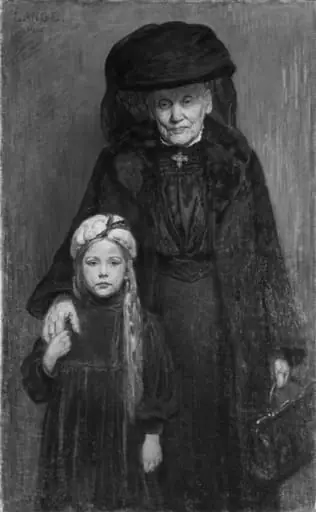
Dameportræt. Frøken Schmiegelow
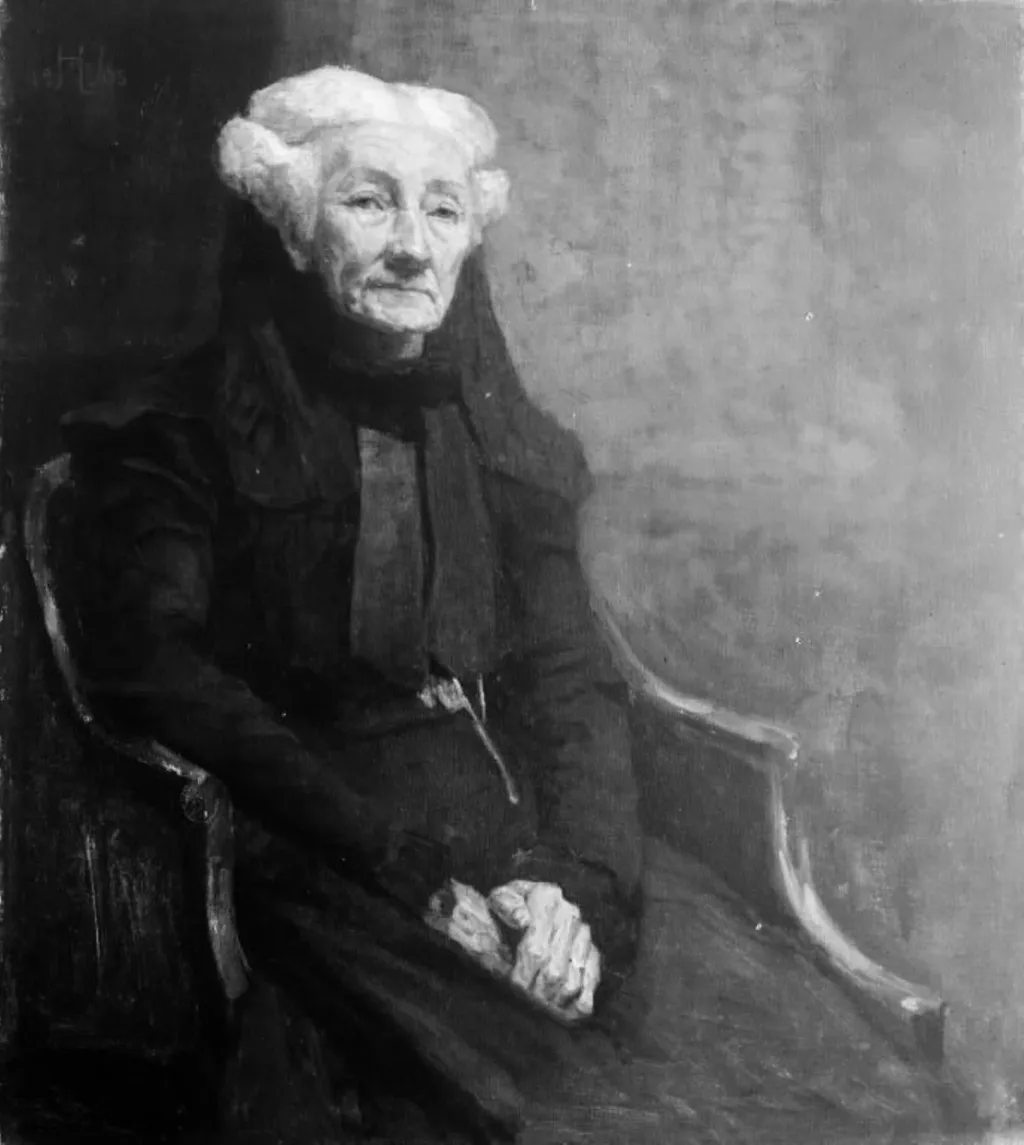
Dameportræt. Frøken Schmiegelow is a photography by Unknown. It dates from 1905 and is held in the collection of the Statens Museum for Kunst. Painted in 1905, this portrait depicts Frøken Schmiegelow, a woman of dignified bearing, seated in a simple chair.
About this work
Overview
Painted in 1905, this portrait depicts Frøken Schmiegelow, a woman of dignified bearing, seated in a simple chair. Rendered in oil, the work is part of the Museum of Ethnography’s collection. The composition centers on the subject’s stillness, with minimal environmental detail, emphasizing her presence through posture and expression rather than setting.
Subject & Meaning
Clasped hands and a solemn gaze convey introspection, possibly reflecting personal resilience or societal expectations of elderly women at the time.
The sitter, identified as Frøken Schmiegelow, is portrayed with restrained formality. Her white hair, neatly coiffed, and dark clothing suggest age and modesty. Clasped hands and a solemn gaze convey introspection, possibly reflecting personal resilience or societal expectations of elderly women at the time. The portrait avoids sentimentality, instead offering a quiet testament to individual dignity.
Technique & Style
The artist employs subtle chiaroscuro to model the face and hands, lending volume without dramatic contrast. Brushwork is controlled and precise, particularly in the rendering of hair and fabric textures. The muted background, devoid of detail, isolates the figure and enhances the psychological focus. Color is restrained, dominated by grays, browns, and off-whites, reinforcing the portrait’s contemplative tone.
History & Provenance
The painting entered the Museum of Ethnography’s holdings shortly after its creation, likely through donation or acquisition tied to the artist’s network. Its presence in an ethnographic institution, rather than a fine arts collection, suggests it was valued for its anthropological insight into personal identity and social customs of the era.
Context
Created in early 20th-century Denmark, the portrait reflects a cultural moment when portraiture increasingly turned inward, valuing psychological depth over ornamentation. While formal portraits of women were common, this work’s lack of decorative elements and emphasis on quiet endurance aligns with emerging modernist tendencies toward emotional authenticity.
Legacy
Though not widely exhibited beyond its institutional home, the portrait remains a quiet example of Nordic realism. It contributes to understanding how everyday individuals were represented in art during a period of shifting social norms. Its endurance in the museum’s collection underscores its value as a document of personal and cultural presence.
Artist & collection

 Domestic Scene
 Giacomo and Cardinal Marco, investing Andrea, Abbot of San Zeno, with his Benefice
 The Nymph of Fontainebleau
 Portrait of a Woman
 Madonna and Child with Saints in the Enclosed Garden
 Venus and Minerva
 Family Group of Four on Sofa
 Wall painting from Room H of the Villa of P. Fannius Synistor at Boscoreale
 Portrait of Marie-Thérèse Geoffrin, geb. Rodet (1699-1777)
 La Mere Adele (Cordon Bleu)
 Portræt af fru Bella Philipsen, f. Natanson
 Portrait of Jadwiga Sapieżyna née Sanguszko
 Portrait of His Mother
 Portrait of Doña Ignacia Martinez de Hoz de Casares
 Mrs. Samuel Tilton (Helen Reed)
 Louise Lange, f. Aagaard, kunstnerens moder og en lille pige