Artwork
A Jutland Sheperd on the Moors
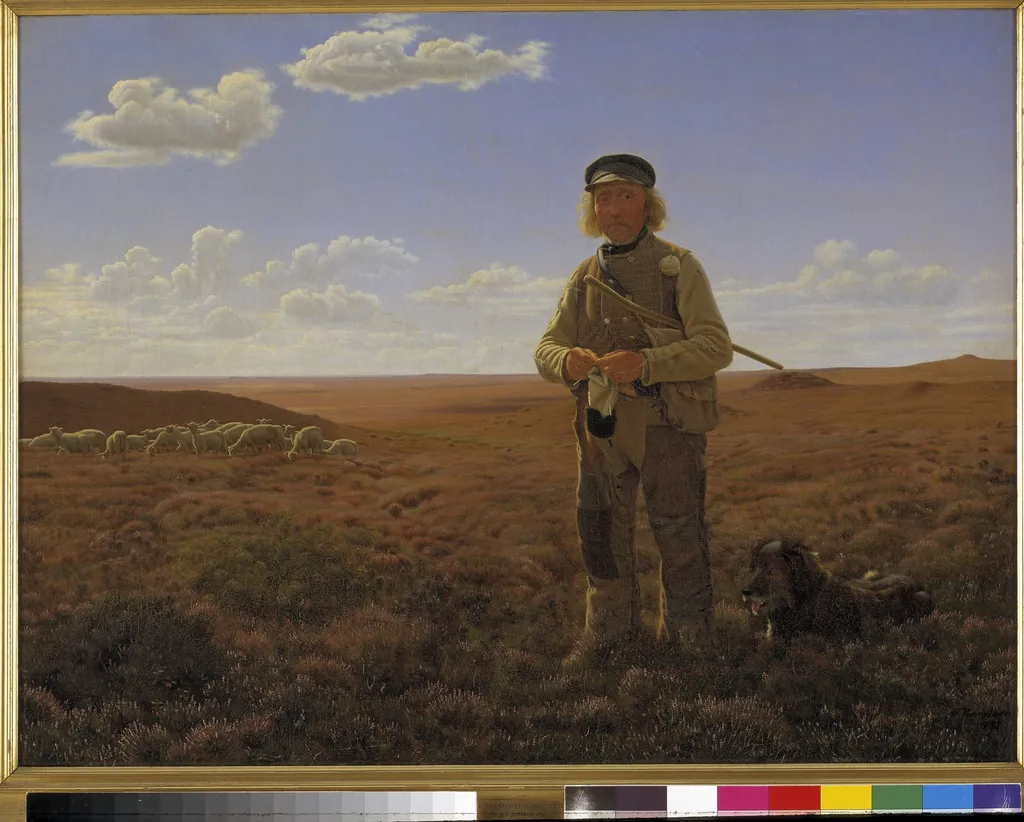
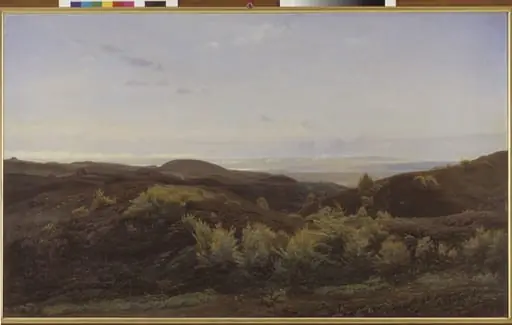
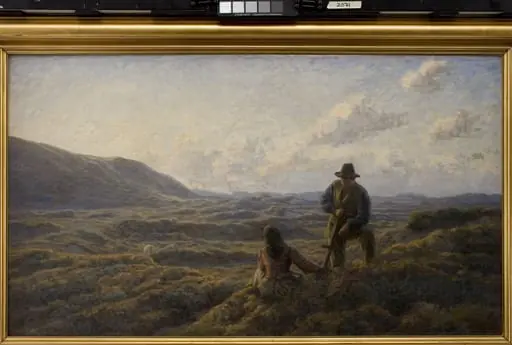
A Jutland Sheperd on the Moors is a photography by the Impressionist artist Unknown. It dates from 1855 and is held in the collection of the Statens Museum for Kunst. Created in 1855, this painting depicts a shepherd from Jutland, Denmark, standing amid open moorland with his flock.
About this work
Overview
The scene captures a quiet moment of rural life, emphasizing the figure’s quiet presence against a vast, sunlit landscape.
Created in 1855, this painting depicts a shepherd from Jutland, Denmark, standing amid open moorland with his flock. Executed in oil on canvas, it belongs to the collection of the Museum of Ethnography. The scene captures a quiet moment of rural life, emphasizing the figure’s quiet presence against a vast, sunlit landscape. The artist’s focus on ordinary labor reflects a broader 19th-century interest in documenting everyday existence.
Subject & Meaning
The figure is a local shepherd, dressed in traditional attire—a long coat, cap, and carrying a walking stick—surrounded by grazing sheep and a resting dog. The setting, a dry, grassy expanse under a bright sky, underscores the harsh yet familiar environment of Jutland’s heaths. The image conveys dignity in labor, portraying the shepherd not as a romanticized figure but as a grounded inhabitant of the land, attuned to its rhythms.
Technique & Style
The artist employs naturalistic lighting and careful tonal gradations to render the landscape with clarity. Shadows define the contours of the shepherd’s clothing and the undulating terrain, while the fluffy clouds suggest a specific time of day. Brushwork is restrained, avoiding embellishment; the composition prioritizes spatial accuracy and atmospheric truth, aligning with the principles of Realism prevalent in mid-19th-century European art.
History & Provenance
Painted in 1855, the work entered the Museum of Ethnography’s collection in the late 19th century, likely as part of efforts to document regional cultures within Denmark. Its preservation reflects an early institutional interest in ethnographic representation through visual art. No significant alterations or restorations are recorded, and its provenance remains consistent since acquisition.
Context
During the 1850s, Danish artists increasingly turned to rural subjects as national identity took shape amid political and social change. Jutland, often seen as culturally distinct, became a focal point for depictions of traditional life. This painting aligns with a movement to record folk customs and landscapes before industrialization altered them, contributing to a broader Scandinavian interest in regional authenticity.
Legacy
Though not widely exhibited outside Denmark, the painting remains a quiet example of how Realist aesthetics were applied to regional subjects. It contributes to the historical record of rural Danish life and informs later studies of ethnographic representation in art. Its enduring presence in the Museum of Ethnography underscores its role as a documentary artifact rather than a celebrated work of fine art.
Artist & collection

 Domestic Scene
 Giacomo and Cardinal Marco, investing Andrea, Abbot of San Zeno, with his Benefice
 The Nymph of Fontainebleau
 Portrait of a Woman
 Madonna and Child with Saints in the Enclosed Garden
 Venus and Minerva
 Family Group of Four on Sofa
 Wall painting from Room H of the Villa of P. Fannius Synistor at Boscoreale