Artwork
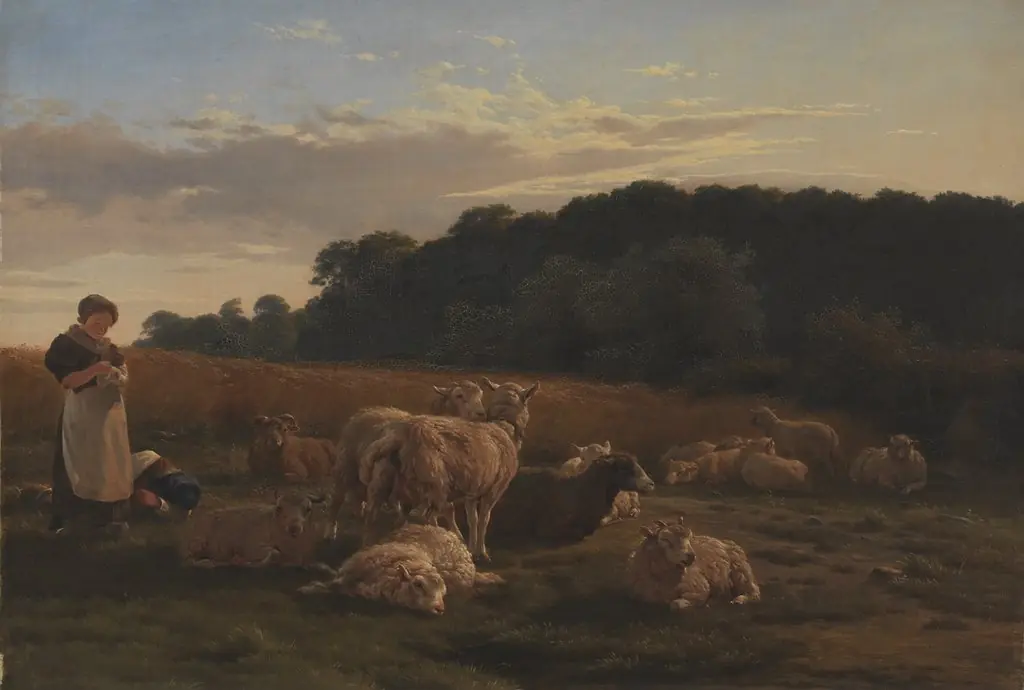
En fåreflok. Motivet fra Faxingeskoven ved Nysø
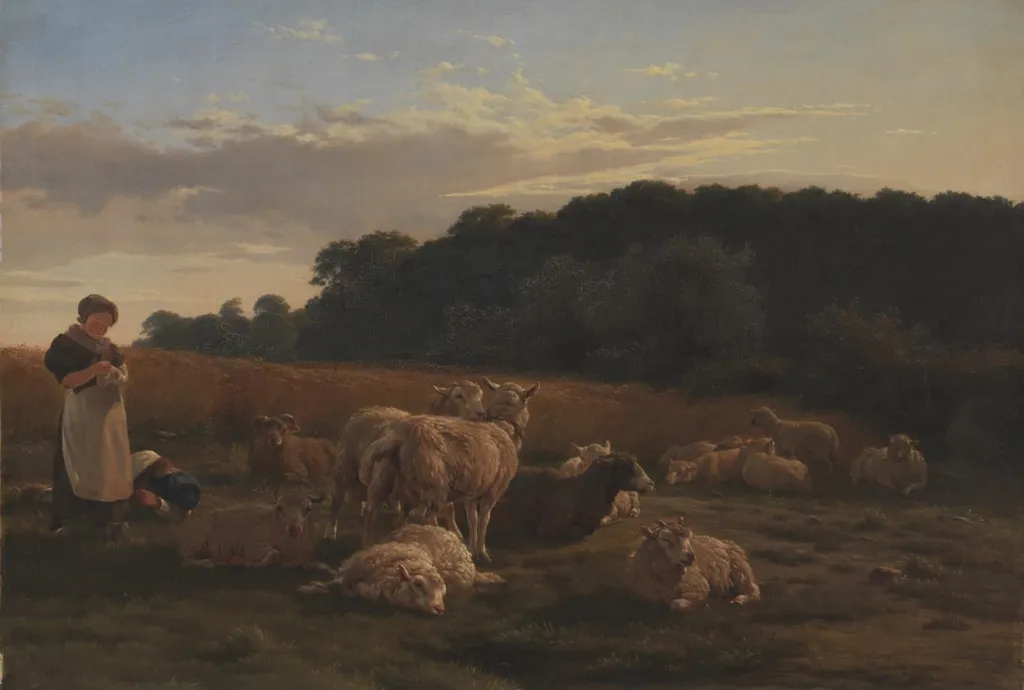
En fåreflok. Motivet fra Faxingeskoven ved Nysø is a photography by Unknown. It dates from 1850 and is held in the collection of the Statens Museum for Kunst. This painting, dated around 1850, portrays a quiet pastoral moment in Faxingeskoven near Nysø.
About this work
Overview
This painting, dated around 1850, portrays a quiet pastoral moment in Faxingeskoven near Nysø. It depicts a shepherdess with her flock under a soft sky, rendered in oil on canvas. The work is held in the collection of the Museum of Ethnography, where it is valued for its quiet observation of rural Danish life rather than as a grand historical statement.
Subject & Meaning
The scene centers on a woman in traditional dress, cradling a lamb while sheep graze nearby. There is no dramatic action—only stillness and care. The composition suggests a bond between human labor and natural rhythm, reflecting 19th-century ideals of rural simplicity. The absence of tools or buildings emphasizes the intimacy between shepherd and flock, not economic function.
Technique & Style
The artist employs subtle chiaroscuro to model forms gently, giving volume to the sheep and the shepherdess’s dress without harsh contrasts. Brushwork is restrained, favoring soft transitions between light and shadow. The green field and hazy background are rendered with muted tones, reinforcing the calm mood. The sky, lightly brushed with clouds, adds depth without distraction.
History & Provenance
The painting entered the Museum of Ethnography’s collection in the late 19th or early 20th century, likely through acquisition or donation. Its attribution to the artist remains unverified in public records, and no exhibition history or documented ownership prior to museum custody is widely known. It has been preserved as a representative example of Danish rural genre painting.
Context
Created during a period of increasing urbanization in Denmark, the image reflects a nostalgic view of agrarian life. Similar works by contemporaries often idealized the countryside as a moral counterpoint to industrial change. This painting, however, avoids sentimentality, offering instead a quiet, unembellished glimpse into daily rural routine.
Legacy
Though not widely exhibited or reproduced, the work contributes to a broader understanding of 19th-century Danish visual culture. Its quiet realism distinguishes it from more theatrical rural scenes of the era. In the museum context, it serves as a material witness to the changing relationship between Danish society and its natural landscape.
Artist & collection

 Domestic Scene
 Giacomo and Cardinal Marco, investing Andrea, Abbot of San Zeno, with his Benefice
 The Nymph of Fontainebleau
 Portrait of a Woman
 Madonna and Child with Saints in the Enclosed Garden
 Venus and Minerva
 Family Group of Four on Sofa
 Wall painting from Room H of the Villa of P. Fannius Synistor at Boscoreale
 Landscape with Cattle
 Landschap met vee
 Shepherds with Sheep in a Mountainous Landscape
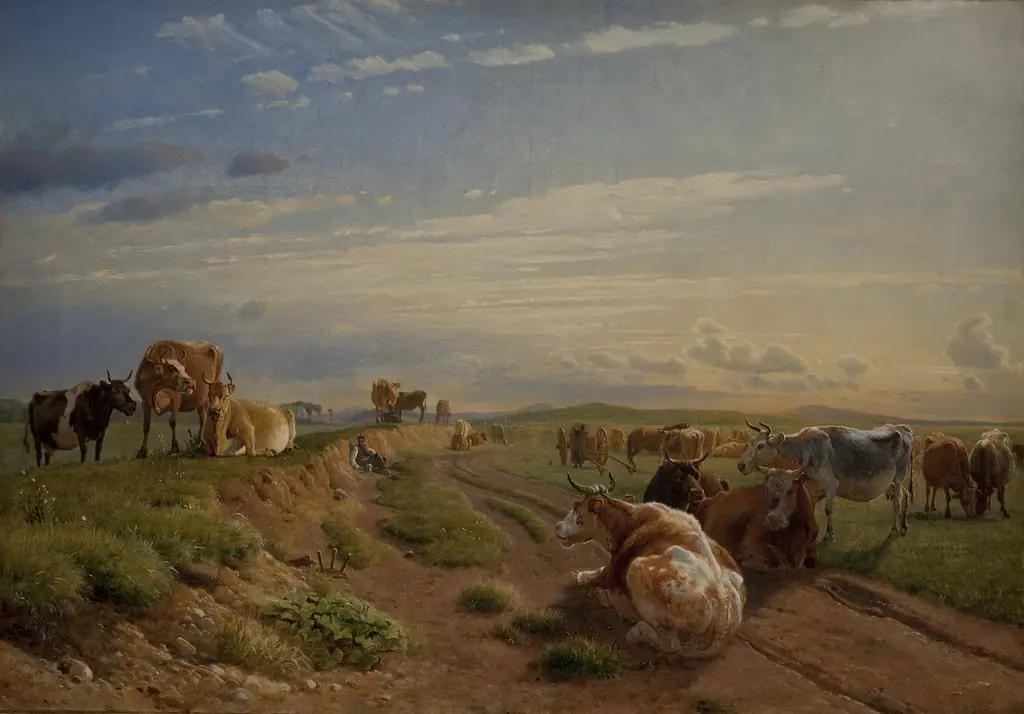 A Milking Place near Vognserup Manor, Zealand
 A Milking Place near Vognserup Manor, Zealand
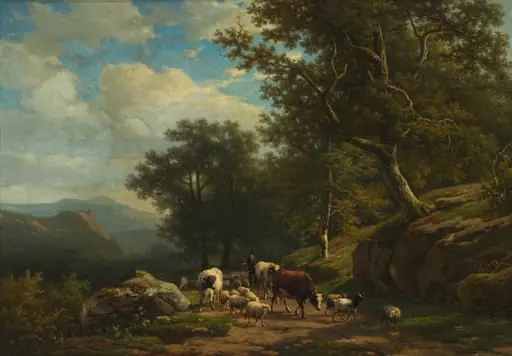 Landscape with a Peasant and His Flock
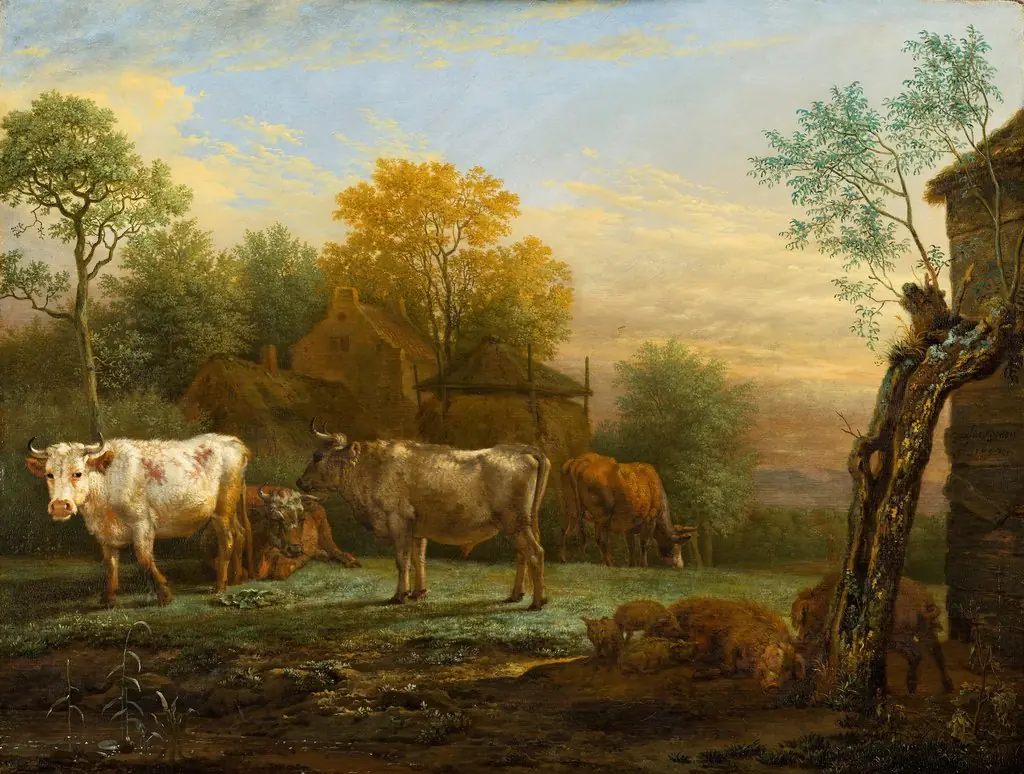 Cattle in a Meadow
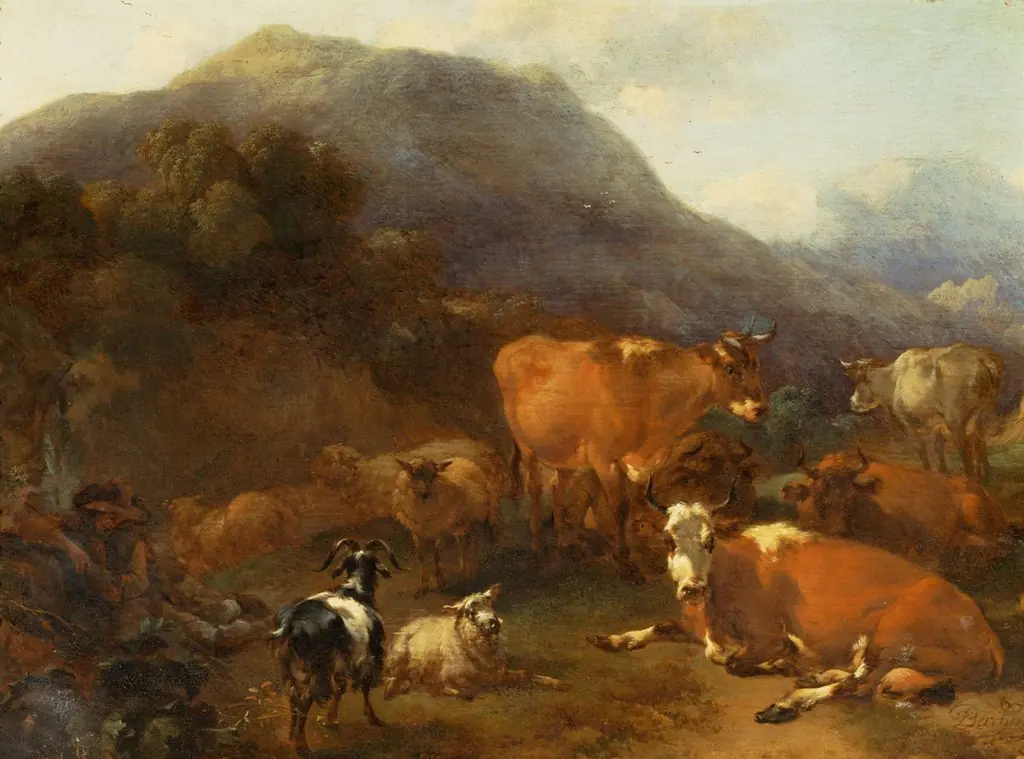 Landscape with cattle and shepherds
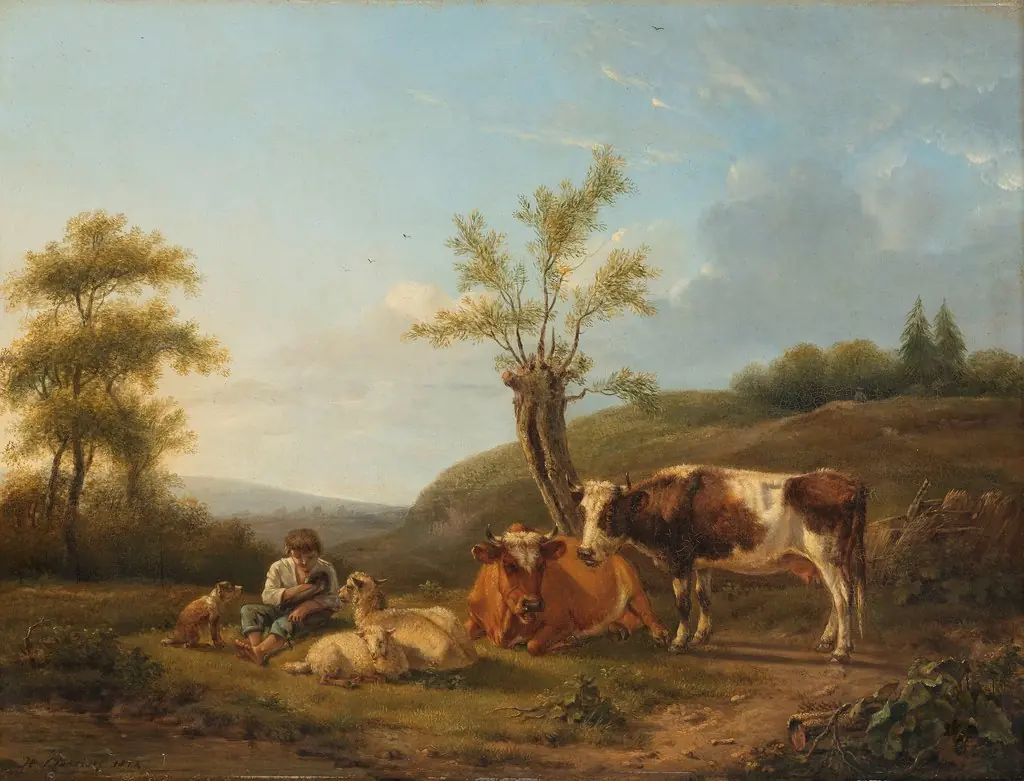 Landscape with Cattle near Darthuizen
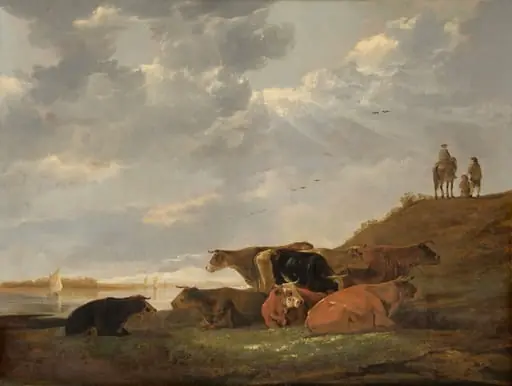 River Landscape with Cows
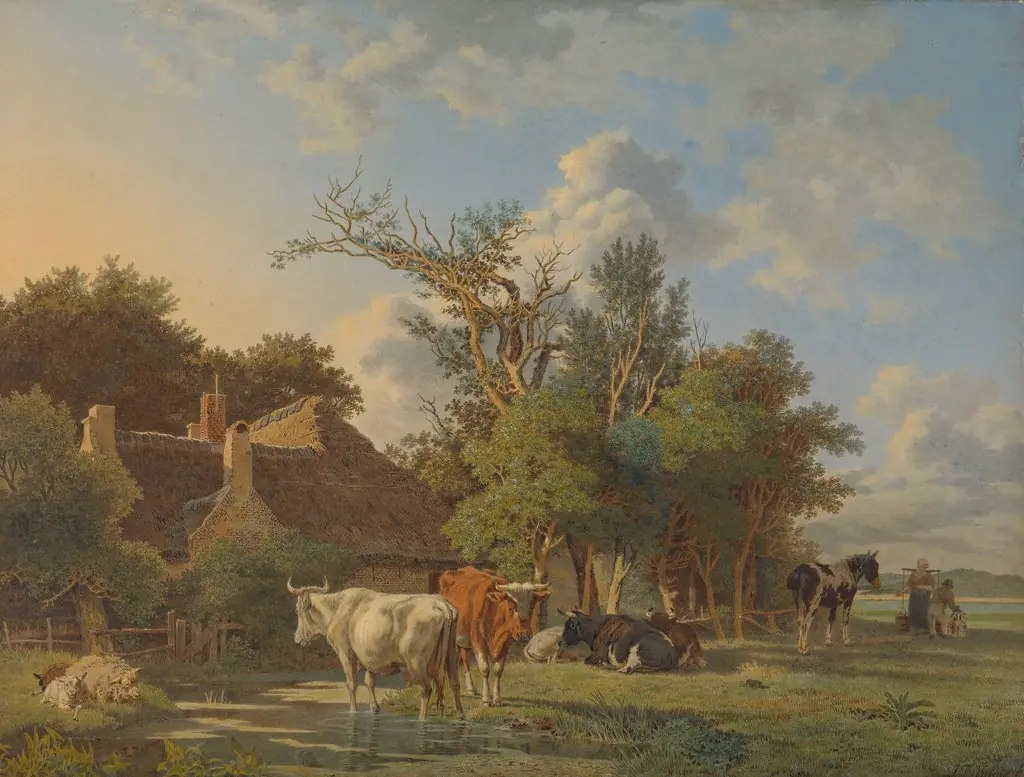 Landscape
 En fåreflok. Motivet fra Faxingeskoven ved Nysø