Artwork
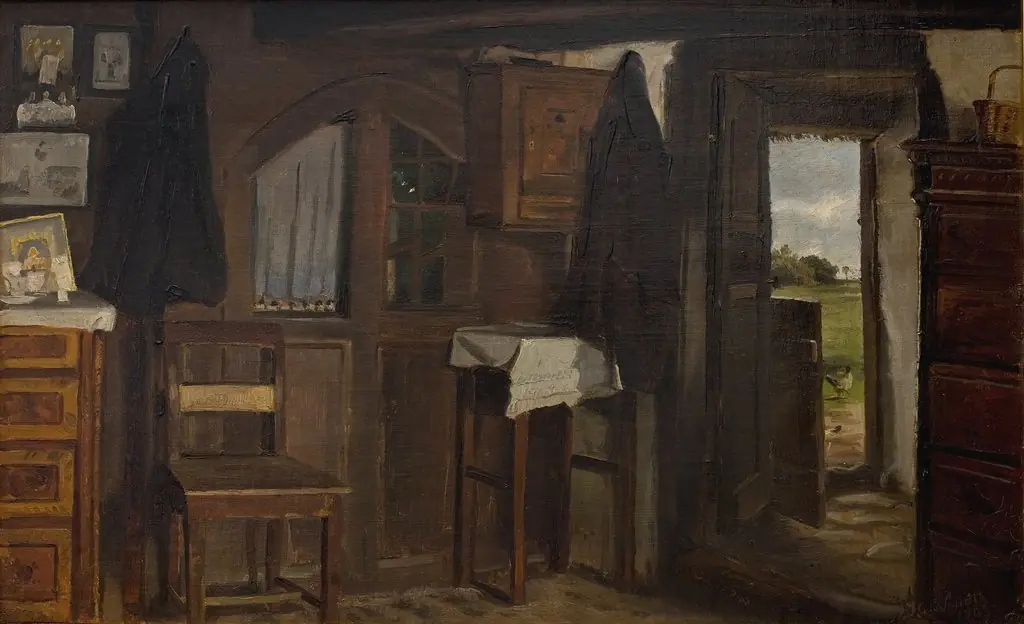
Det indvendige af en bondegård
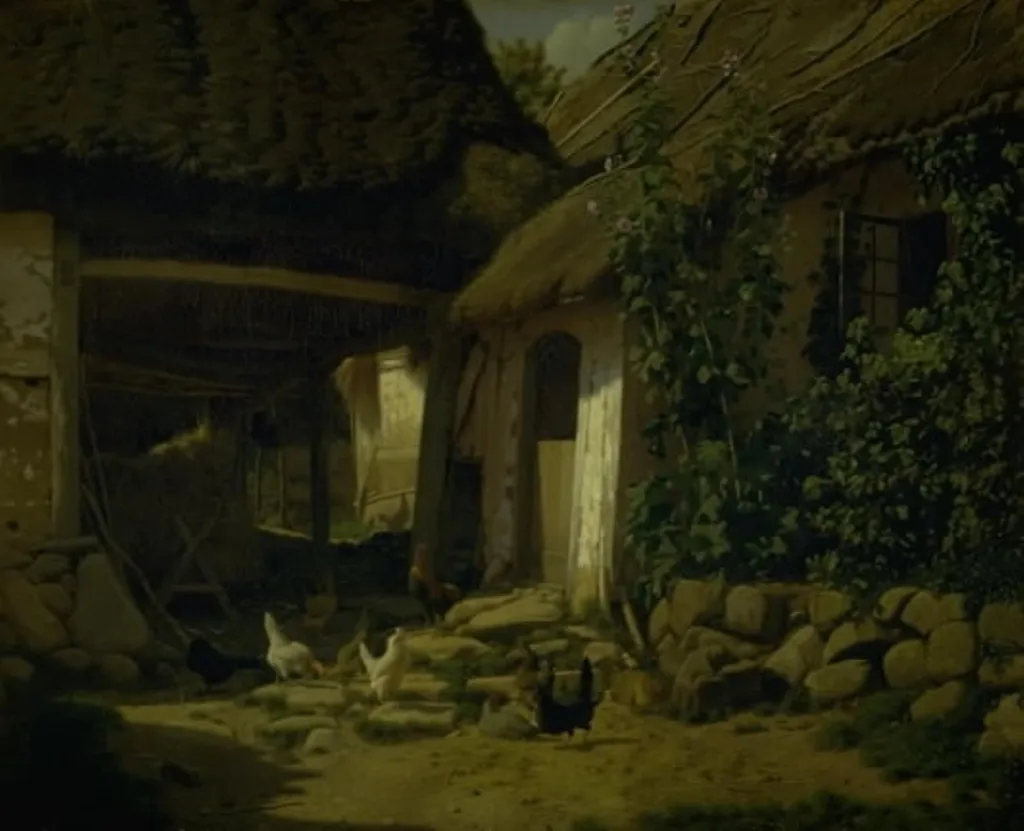
Det indvendige af en bondegård is a photography by the Impressionist artist Unknown. It dates from 1865 and is held in the collection of the Statens Museum for Kunst. This early photograph, dated 1865, depicts the interior of a rural Danish farmhouse.
About this work
Overview
This early photograph, dated 1865, depicts the interior of a rural Danish farmhouse. Taken by an unknown photographer, it records an unadorned domestic space with minimal intervention. The image is part of the Museum of Ethnography’s collection, where it serves as a documentary record of everyday life in 19th-century rural Denmark, valued for its factual rather than artistic intent.
Subject & Meaning
The scene captures a modest interior: a simple bed, scattered household items, rough-hewn wooden walls, and a stone floor.
The scene captures a modest interior: a simple bed, scattered household items, rough-hewn wooden walls, and a stone floor. A narrow window allows a sliver of natural light to fall across the space, emphasizing its quiet austerity. The presence of vines outside and rocks in the foreground suggests a close relationship between the home and its surrounding environment, reflecting a life shaped by necessity and seasonal rhythms.
Technique & Style
The photograph was made using early photographic processes, likely wet plate collodion, which required long exposures and careful handling. The low light conditions resulted in a muted tonal range, enhancing the sense of stillness. Unlike painted interiors of the period, this image avoids idealization, presenting the space with unembellished clarity and attention to texture and material.
History & Provenance
Created in 1865, the photograph entered the collection of the Museum of Ethnography in Copenhagen, where it was preserved as part of a broader effort to document vernacular culture. Its origin as a non-artistic record—possibly taken for anthropological or educational purposes—reflects the growing interest in ethnographic documentation during the mid-19th century.
Context
In the mid-1800s, as industrialization reshaped European society, there was increasing attention to rural life as a vanishing way of life. Photographers and ethnographers began systematically recording domestic interiors, tools, and customs. This image aligns with that movement, offering a direct view of peasant living conditions without romanticization or narrative embellishment.
Legacy
As one of the earliest photographic records of Danish rural interiors, it contributes to the historical understanding of domestic architecture and daily routines in pre-industrial communities. Its value lies in its authenticity, providing researchers and viewers with a tangible link to the material culture of 19th-century peasant households, preserved without alteration or interpretation.
Artist & collection

 Domestic Scene
 Giacomo and Cardinal Marco, investing Andrea, Abbot of San Zeno, with his Benefice
 The Nymph of Fontainebleau
 Portrait of a Woman
 Madonna and Child with Saints in the Enclosed Garden
 Venus and Minerva
 Family Group of Four on Sofa
 Wall painting from Room H of the Villa of P. Fannius Synistor at Boscoreale