Artwork
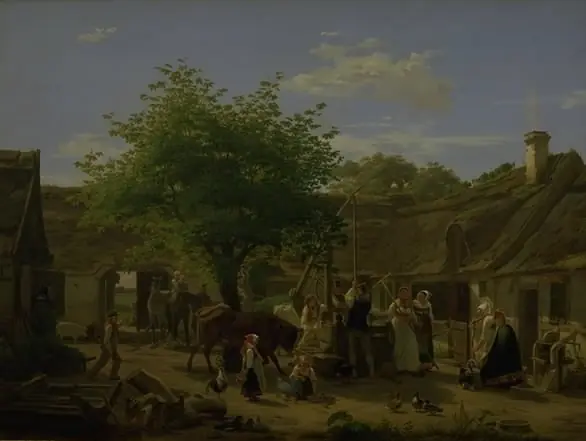
Billede af livet i en sjællandsk bondegård ved middagstid
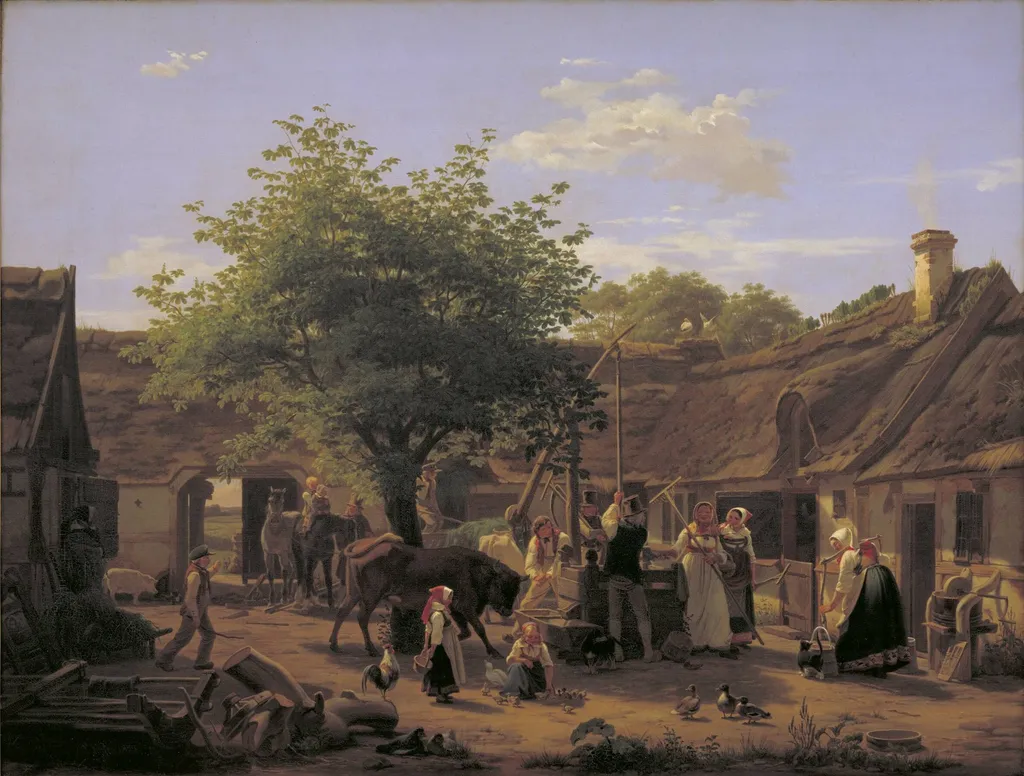
Billede af livet i en sjællandsk bondegård ved middagstid is a photography by the Impressionist artist Unknown. It dates from 1852 and is held in the collection of the Statens Museum for Kunst. Painted in 1852, this work depicts a midday scene on a farmstead in Zealand, Denmark.
About this work
Overview
The painting is held in the collection of the Museum of Ethnography, where it serves as a record of 19th-century Danish agrarian society.
Painted in 1852, this work depicts a midday scene on a farmstead in Zealand, Denmark. It captures the quiet rhythm of rural life through a composition of figures, animals, and architecture. The artist records ordinary moments without idealization, focusing on the textures of clothing, animal fur, and weathered wood. The painting is held in the collection of the Museum of Ethnography, where it serves as a record of 19th-century Danish agrarian society.
Subject & Meaning
The scene portrays a moment of pause in daily labor: people gather near a farmhouse, some engaged in chores, others in quiet conversation. Animals—cows, chickens, and ducks—move freely among them, suggesting coexistence rather than control. The composition emphasizes communal rhythm over individual drama, reflecting a cultural emphasis on collective labor and domestic harmony in rural Denmark during the mid-1800s.
Technique & Style
Rendered in a detailed realist style, the painting uses careful brushwork to convey texture: the roughness of thatch, the sheen of wet fur, the weave of woolen garments. Light falls naturally across the scene, casting soft shadows that define form and space. The palette is muted, dominated by earth tones, reinforcing the grounded, unadorned nature of the setting. No dramatic gestures interrupt the quiet authenticity of the moment.
History & Provenance
Created in 1852, the painting entered the collection of the Museum of Ethnography shortly after its completion. Its preservation reflects early institutional interest in documenting vernacular life rather than elite or historical subjects. There is no record of public exhibition prior to its acquisition, suggesting it was initially a private or regional commission, later recognized for its ethnographic value.
Context
In mid-19th century Denmark, rural communities remained the backbone of society, even as urbanization began to reshape the nation. This painting aligns with a broader European trend of documenting peasant life, not as romanticized folklore, but as lived reality. It coincides with growing national interest in Danish identity, where the farmstead symbolized continuity, tradition, and moral stability.
Legacy
The work remains a quiet reference point for studies of Danish rural life in the 1800s. While not widely reproduced, it contributes to museum collections focused on everyday material culture. Its value lies in its unembellished observation—offering scholars and visitors a direct glimpse into the rhythms of a vanishing agrarian world, preserved without sentimentality.
Artist & collection

 Domestic Scene
 Giacomo and Cardinal Marco, investing Andrea, Abbot of San Zeno, with his Benefice
 The Nymph of Fontainebleau
 Portrait of a Woman
 Madonna and Child with Saints in the Enclosed Garden
 Venus and Minerva
 Family Group of Four on Sofa
 Wall painting from Room H of the Villa of P. Fannius Synistor at Boscoreale
 Die Schmiede an der Heeresstraße
 Flemish Kermis
 An inn in the neighborhood of Nantes
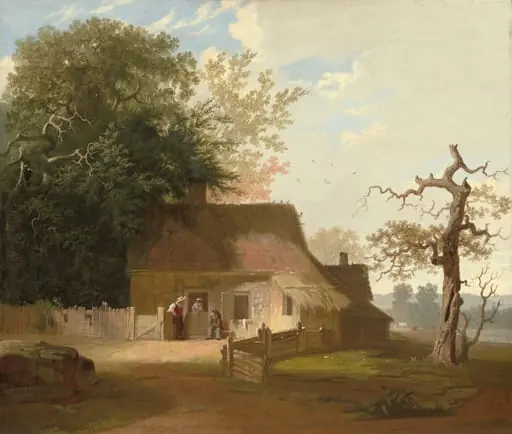 Cottage Scenery
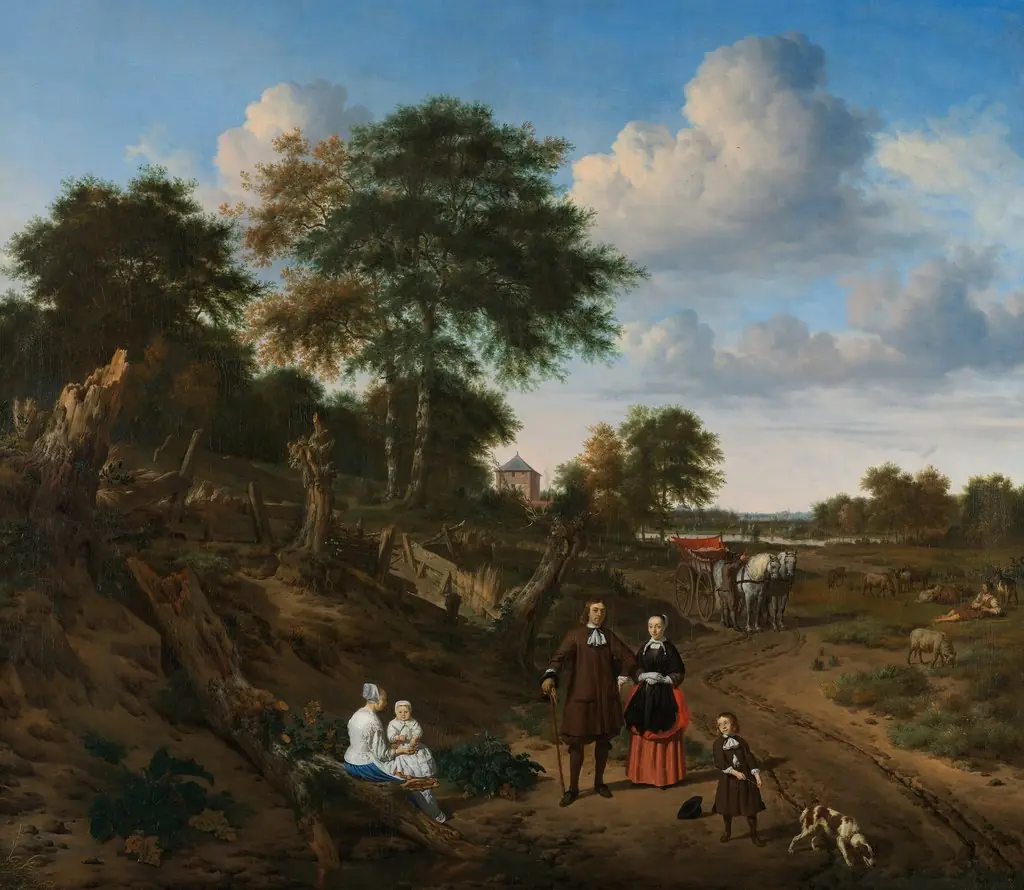 Couple in a Landscape
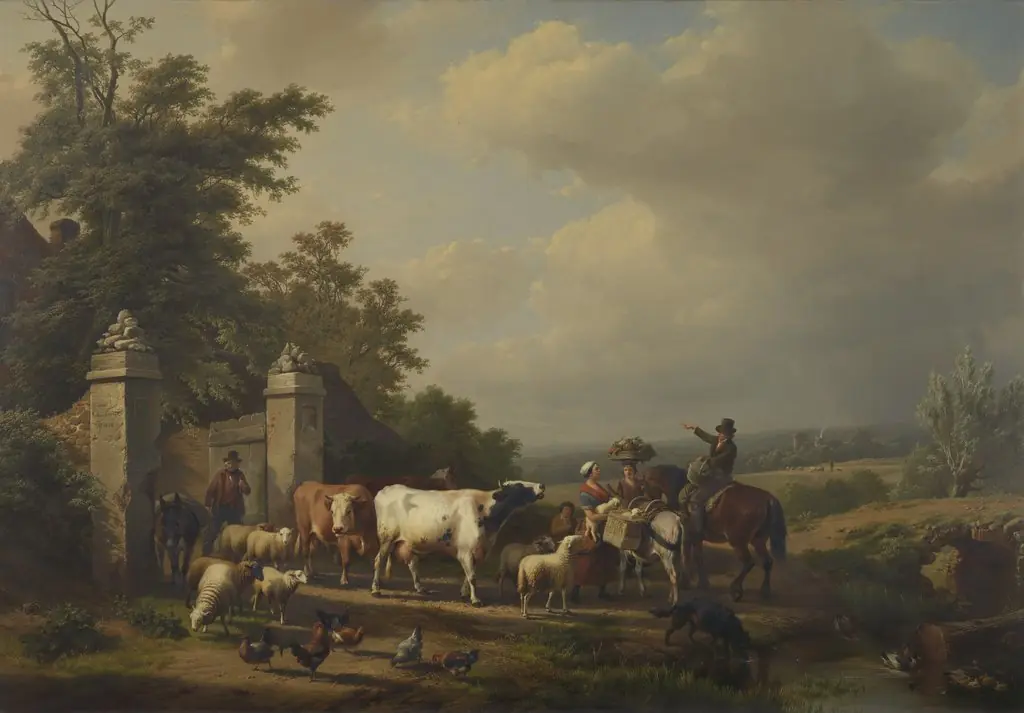 Leaving for the Market
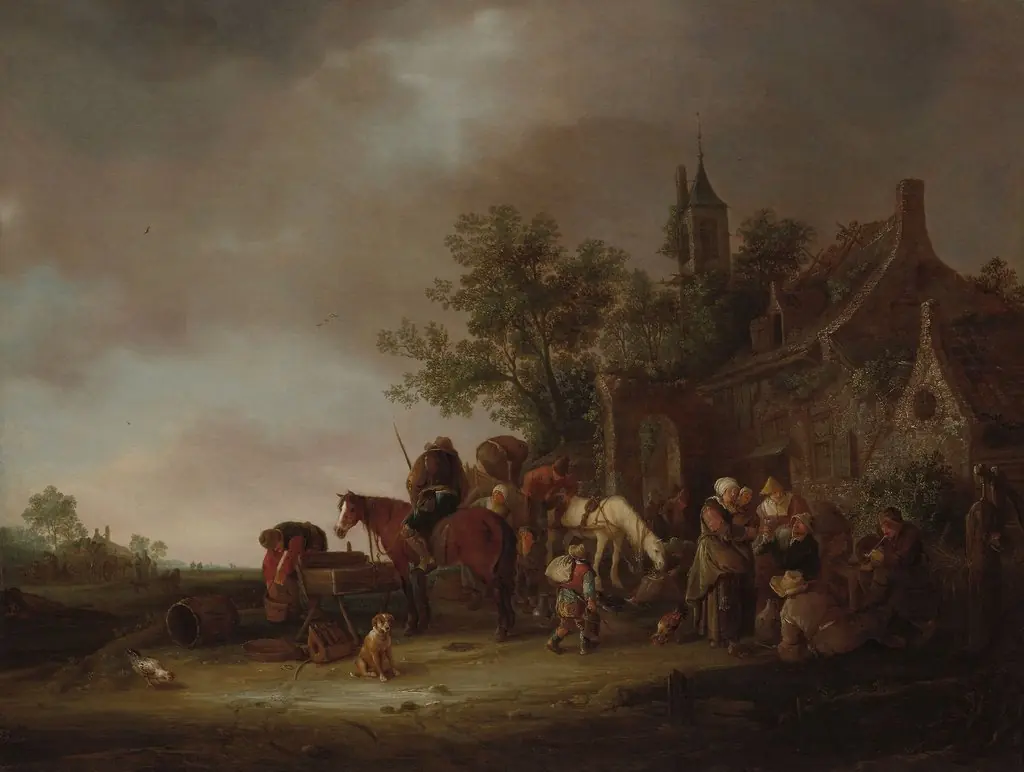 Travellers Halting at an Inn
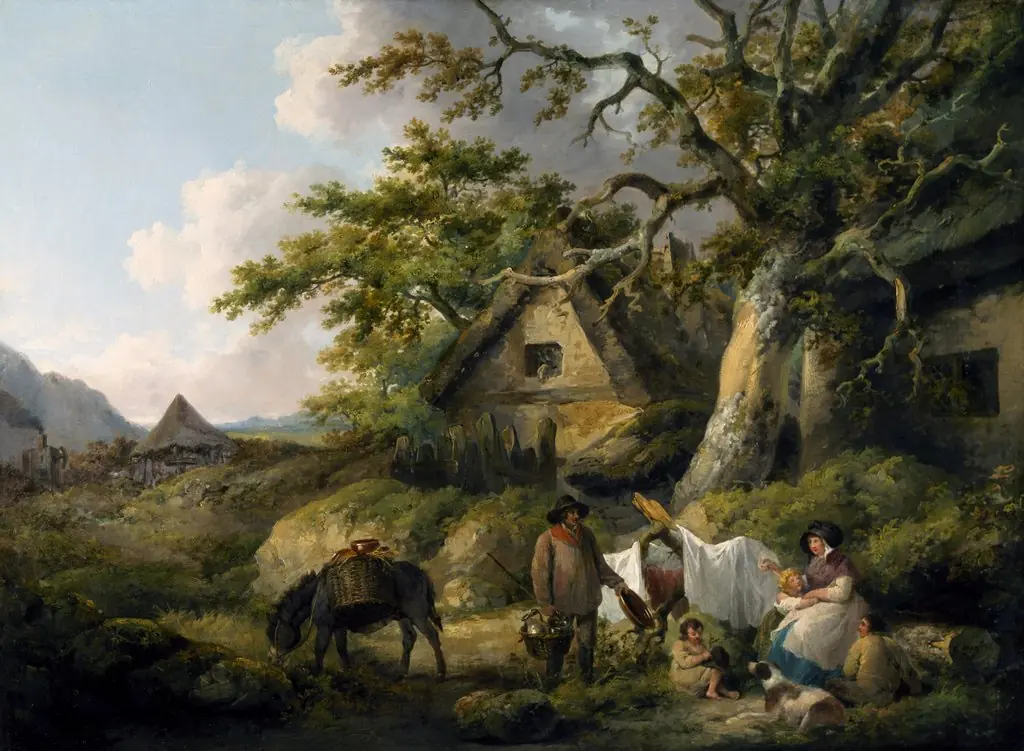 View at Enderby, Leicestershire
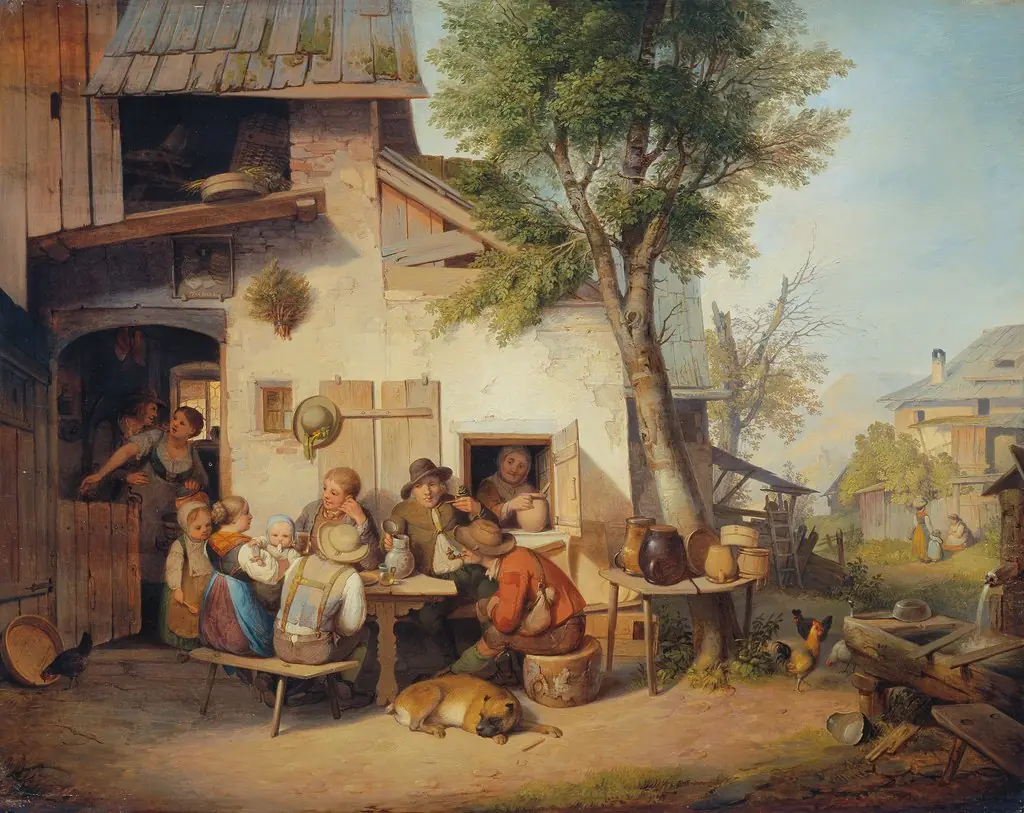 In Front of the Village Inn
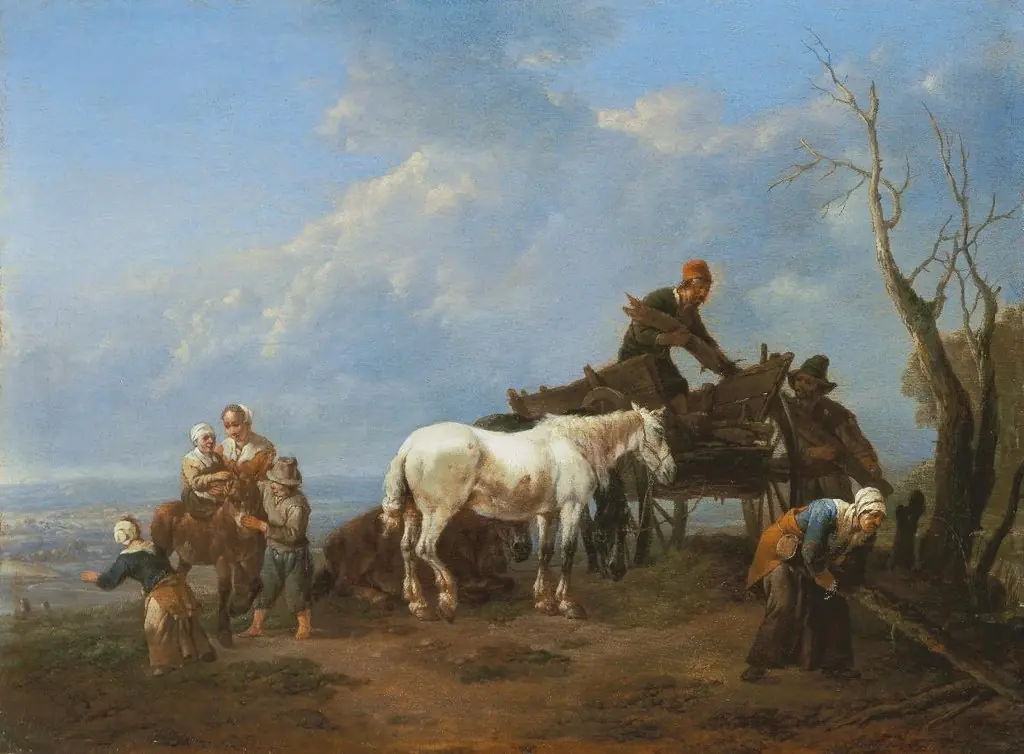 Bauern beim Sammeln von Holz
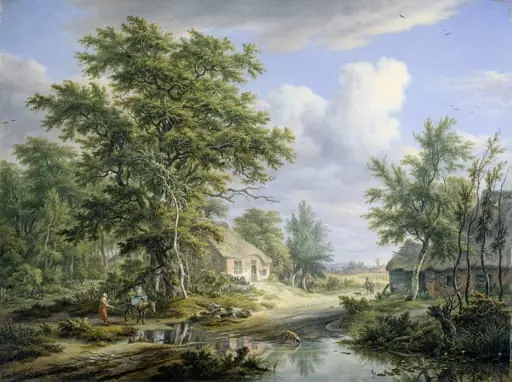 Farms on the Fringe of a Wood
 Billede af livet i en sjællandsk bondegård ved middagstid