Artwork
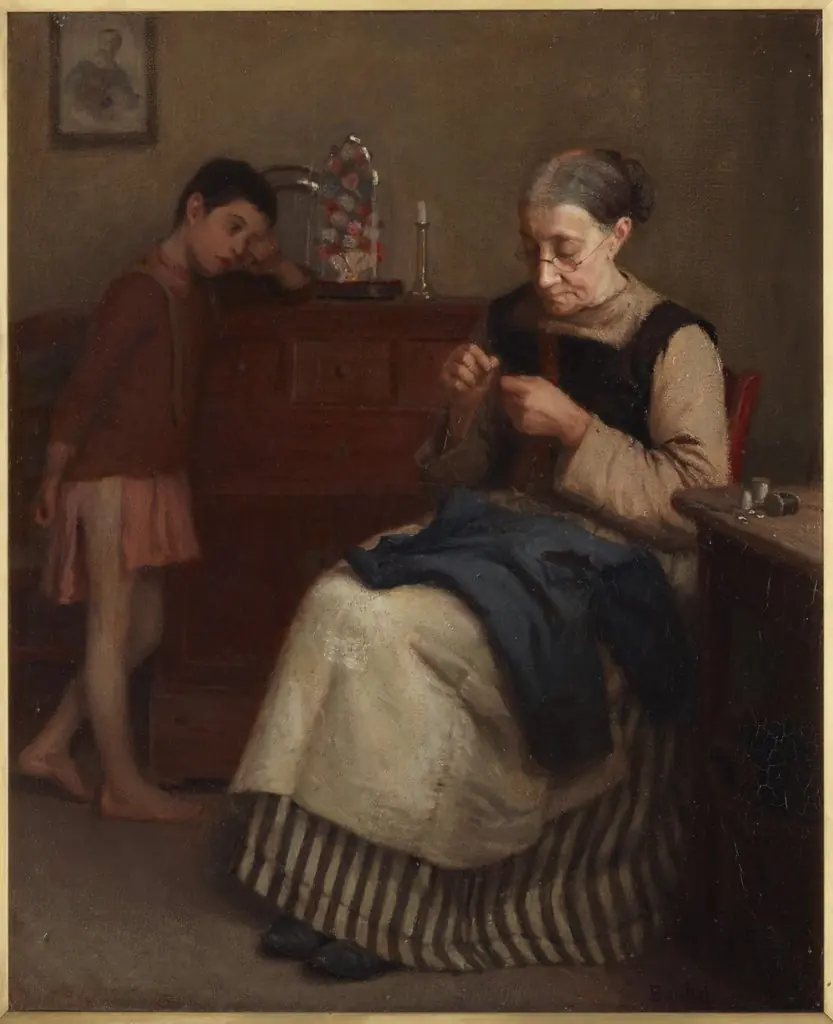
Bedstemoder med sit barnebarn
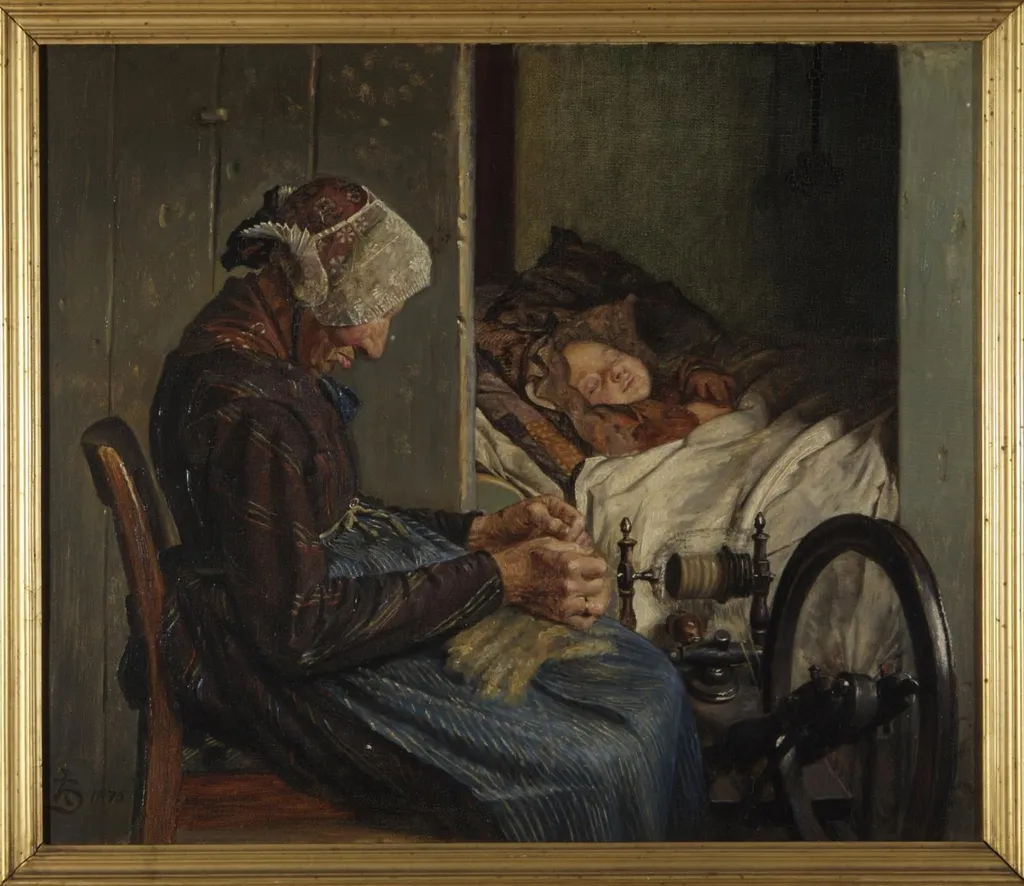
Bedstemoder med sit barnebarn is a photography by the Impressionist artist Unknown. It dates from 1875 and is held in the collection of the Statens Museum for Kunst.
About this work
Overview
Painted in 1875 by an artist associated with Danish Realism, this work depicts a quiet domestic moment between an elderly woman and her ill grandchild. The painting resides in the Museum of Ethnography and reflects a commitment to portraying ordinary life without idealization. Its unadorned setting and unpolished execution distinguish it from academic traditions of the period.
Subject & Meaning
The child’s flushed face and tangled blankets imply illness, while the presence of a spinning wheel hints at the labor that sustains their household.
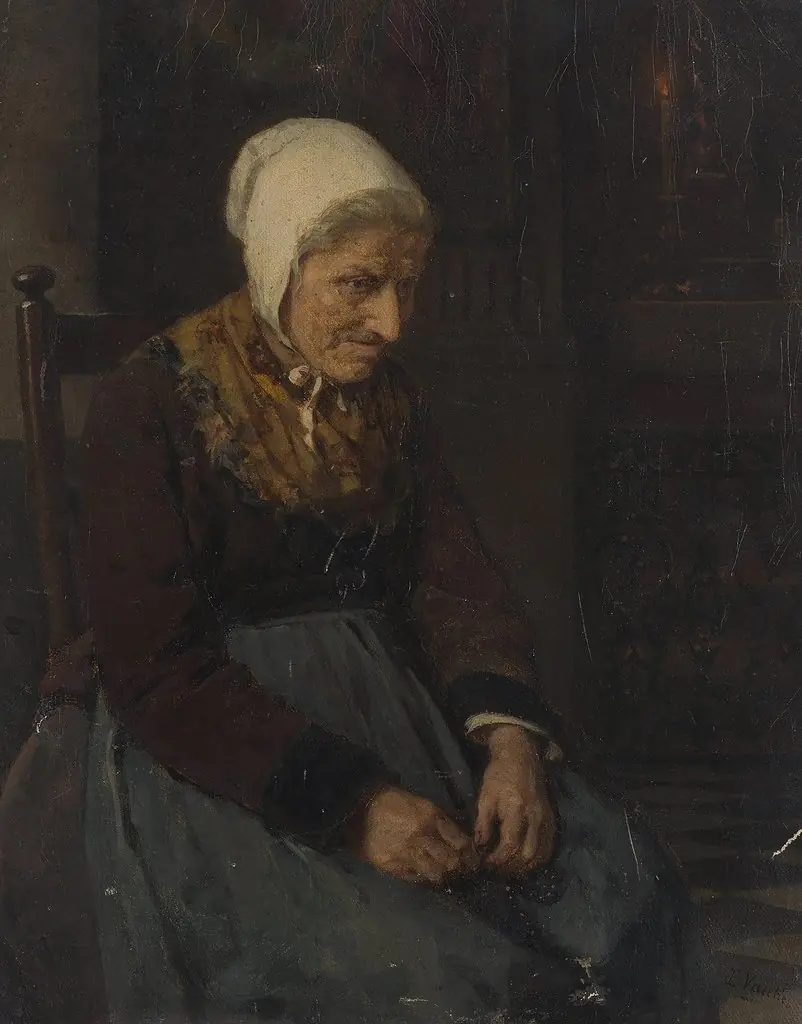
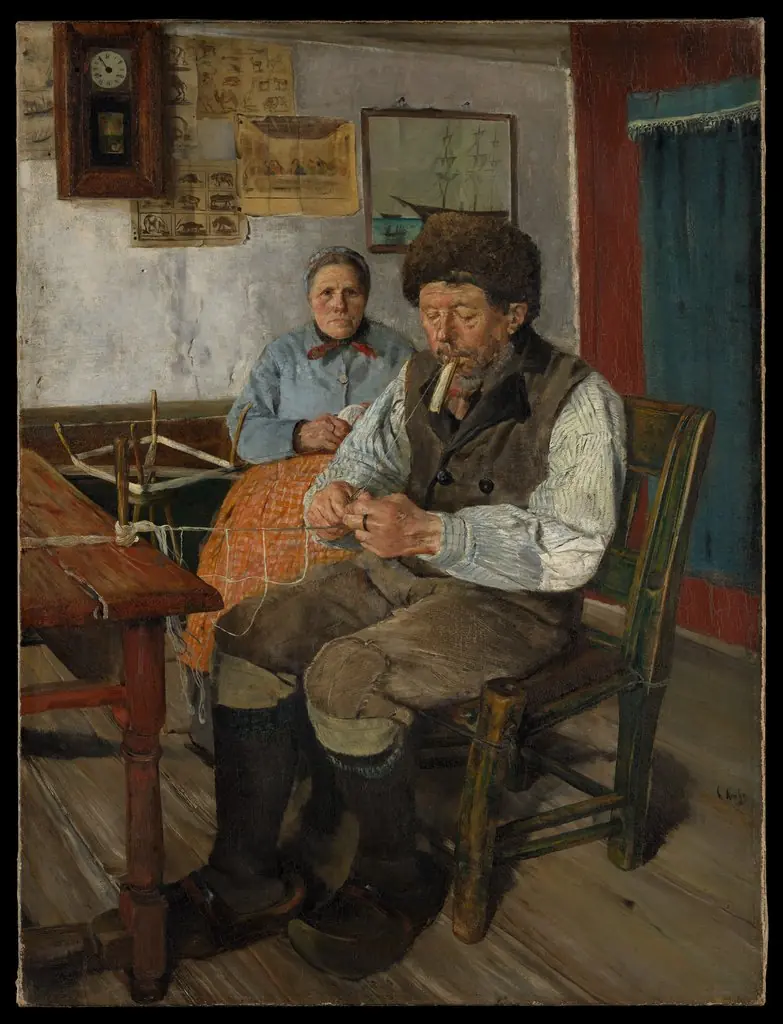
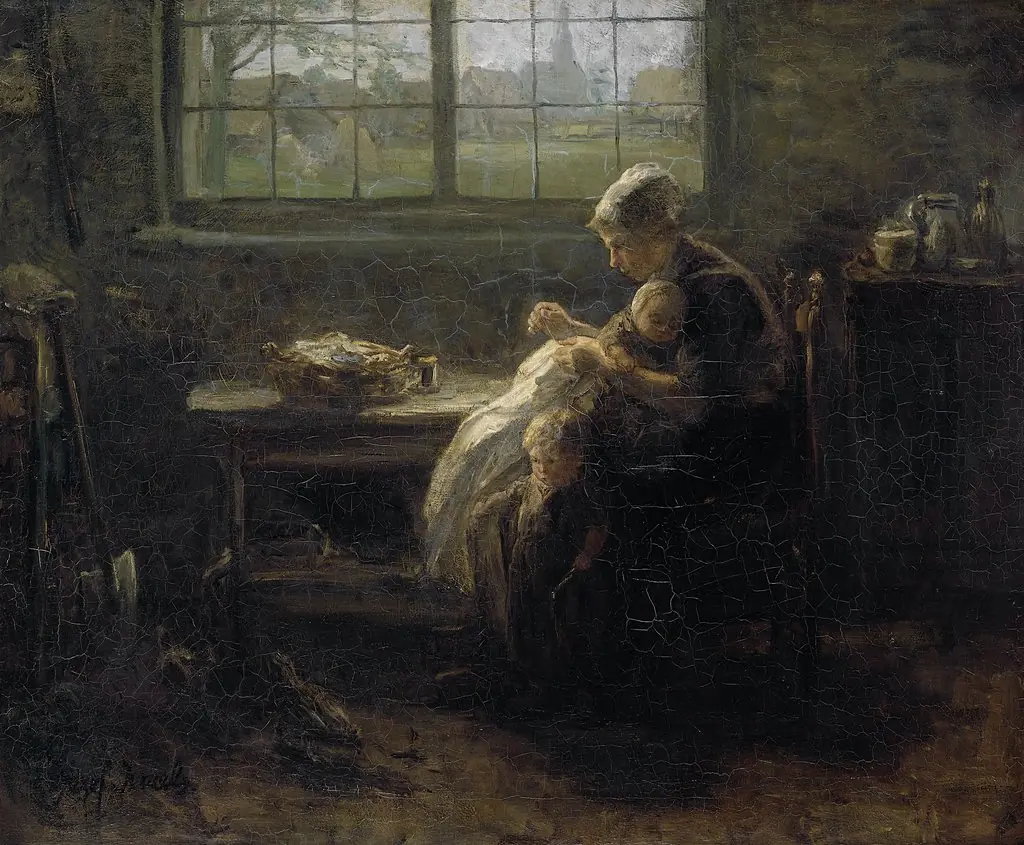
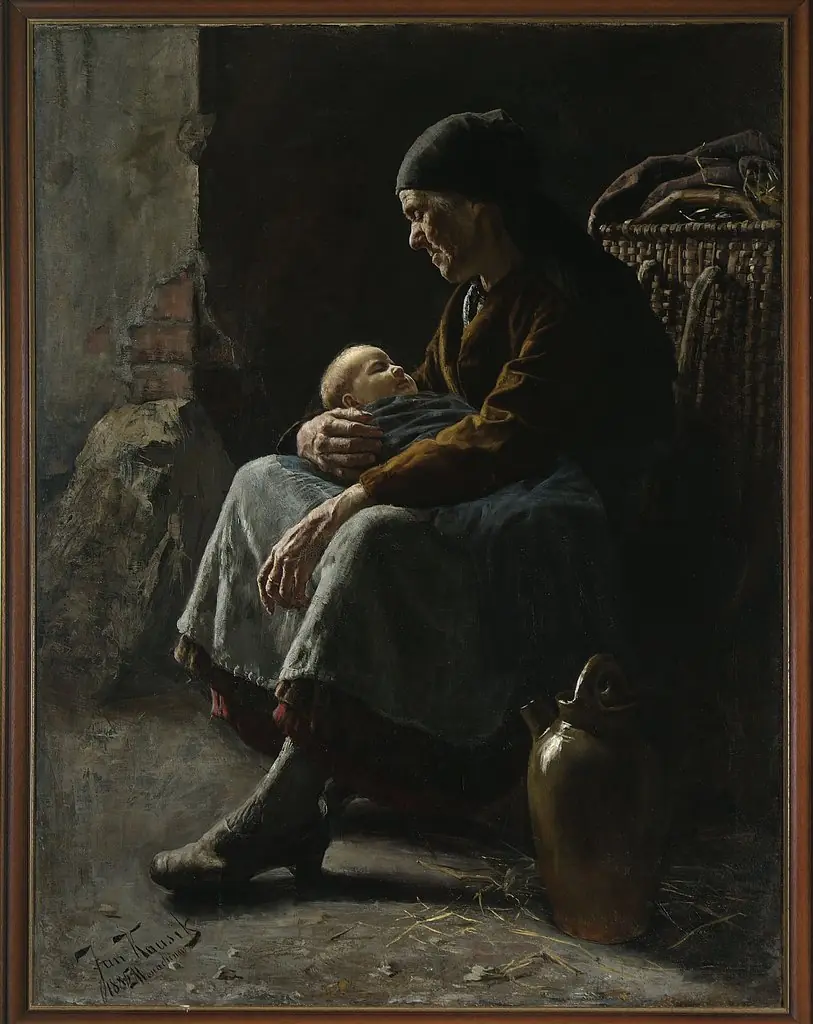
The scene captures a caregiver tending to a feverish child in a modest interior. The grandmother’s worn clothing and focused gestures suggest long-term responsibility and quiet endurance. The child’s flushed face and tangled blankets imply illness, while the presence of a spinning wheel hints at the labor that sustains their household. No dramatic gesture or symbolic flourish interrupts the intimacy of care.
Technique & Style
Loose, textured brushwork renders the figures and surroundings with immediacy rather than polish. The dim lighting emphasizes the tactile qualities of fabric, skin, and wood, while shadows obscure details to heighten emotional gravity. The painter avoids smooth finishes, favoring a sketch-like quality that conveys the fleeting, unposed nature of the moment.
History & Provenance
The painting entered the collection of the Museum of Ethnography shortly after its creation, likely through acquisition or donation tied to Danish cultural preservation efforts. Its subject matter aligned with emerging interest in documenting everyday life among rural and working-class communities, distinguishing it from elite portraiture of the era.
Context
Created during the height of Realism in Scandinavian art, the work reflects broader movements to elevate mundane experiences as worthy of artistic attention. Artists rejected historical or mythological themes in favor of truthful depictions of labor, illness, and domesticity, often influenced by social reform and emerging documentary sensibilities.
Legacy
The painting remains a reference point for studies of 19th-century Nordic domestic life and the evolution of Realist aesthetics in Northern Europe. Its unembellished approach influenced later generations of artists seeking to represent social conditions without sentimentality, contributing to a regional tradition of empathetic observation.
Artist & collection

 Domestic Scene
 Giacomo and Cardinal Marco, investing Andrea, Abbot of San Zeno, with his Benefice
 The Nymph of Fontainebleau
 Portrait of a Woman
 Madonna and Child with Saints in the Enclosed Garden
 Venus and Minerva
 Family Group of Four on Sofa
 Wall painting from Room H of the Villa of P. Fannius Synistor at Boscoreale