Artwork
Motherly Love
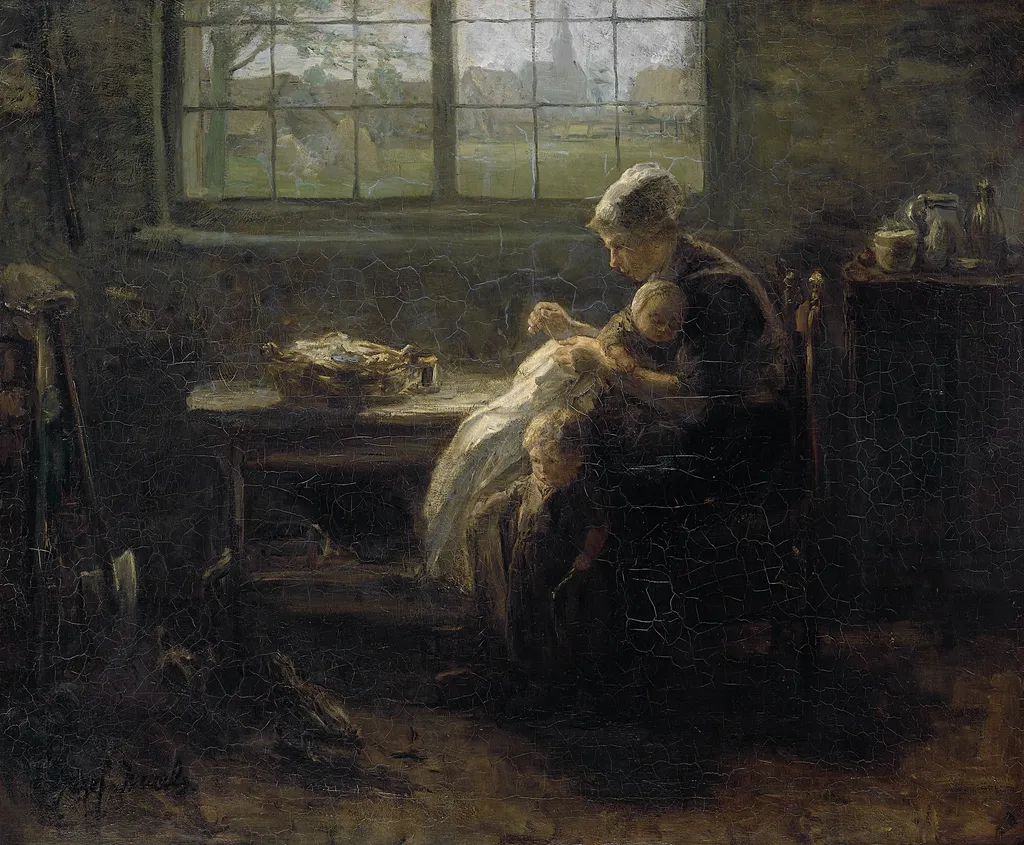
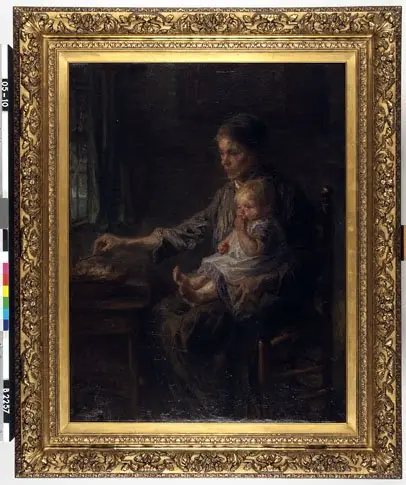
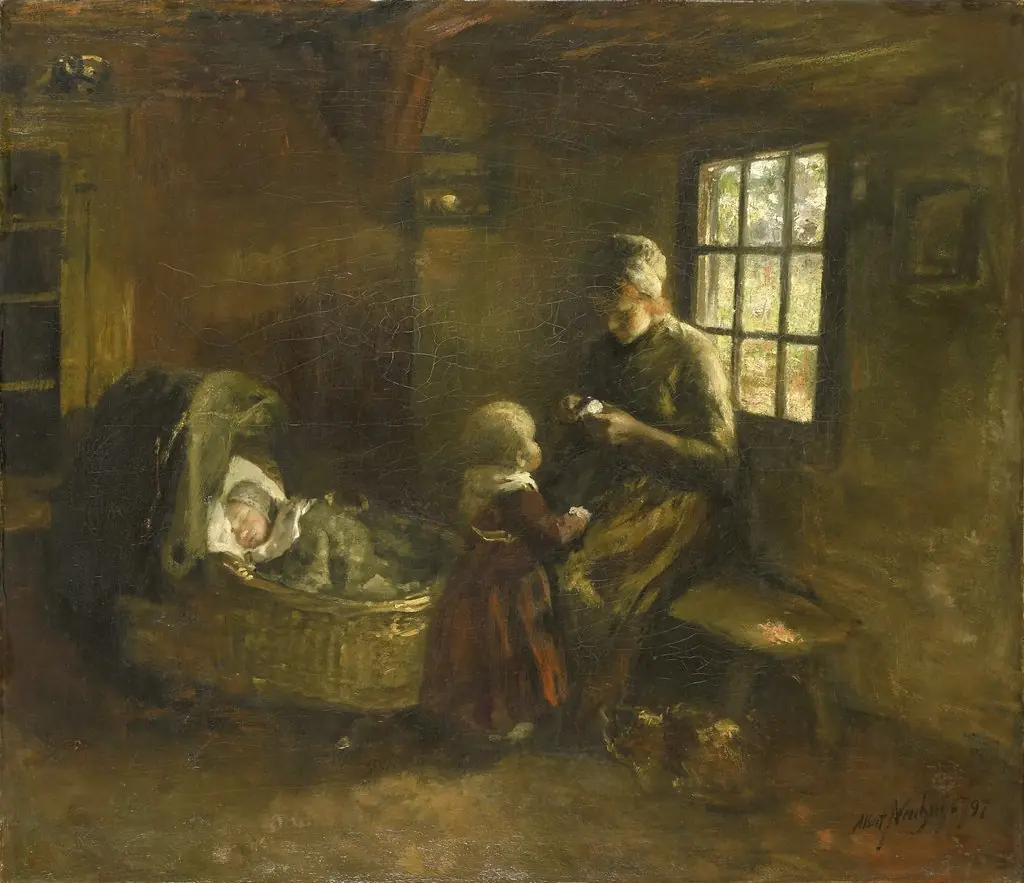
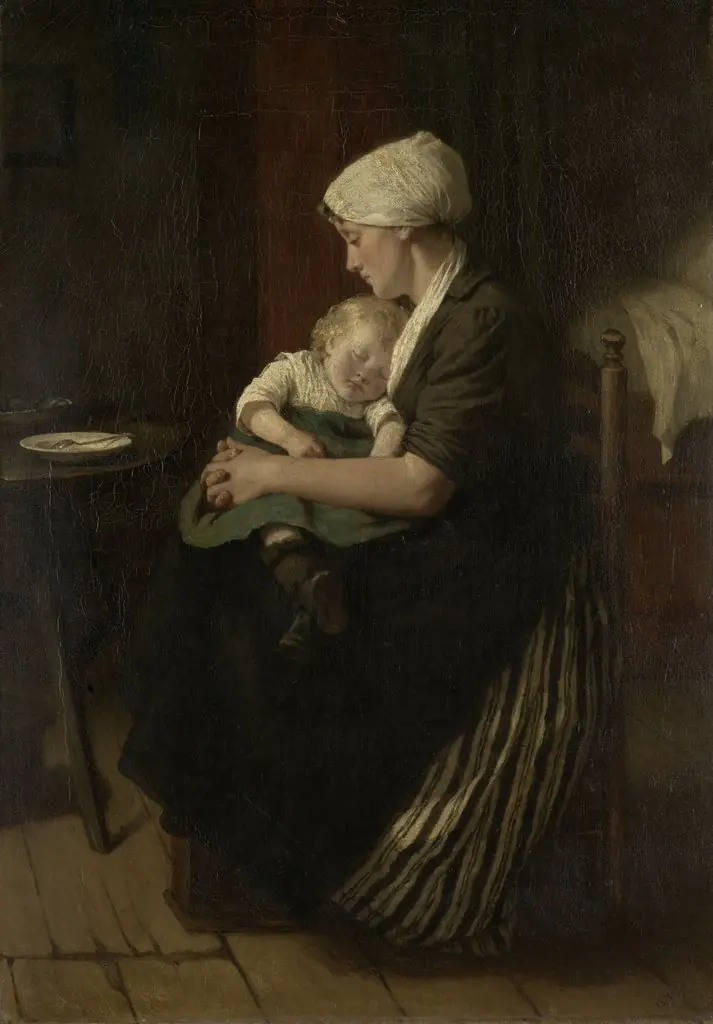
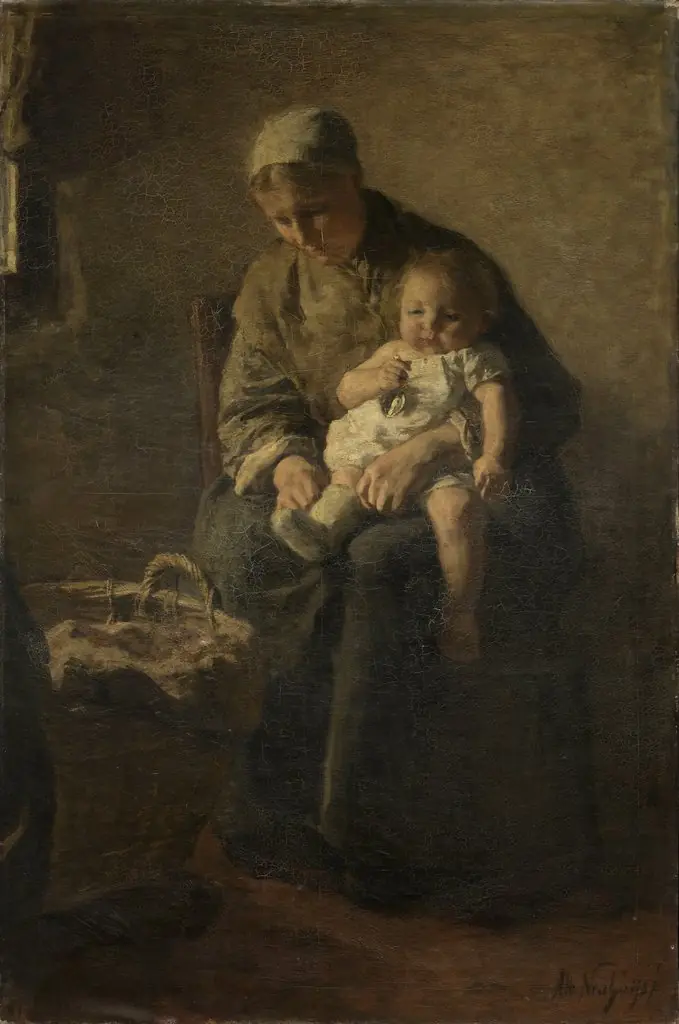
Motherly Love is an oil painting by the Post-Impressionist artist Jozef Israëls. It dates from 1896 and is held in the collection of the Rijksmuseum.
About this work
Overview
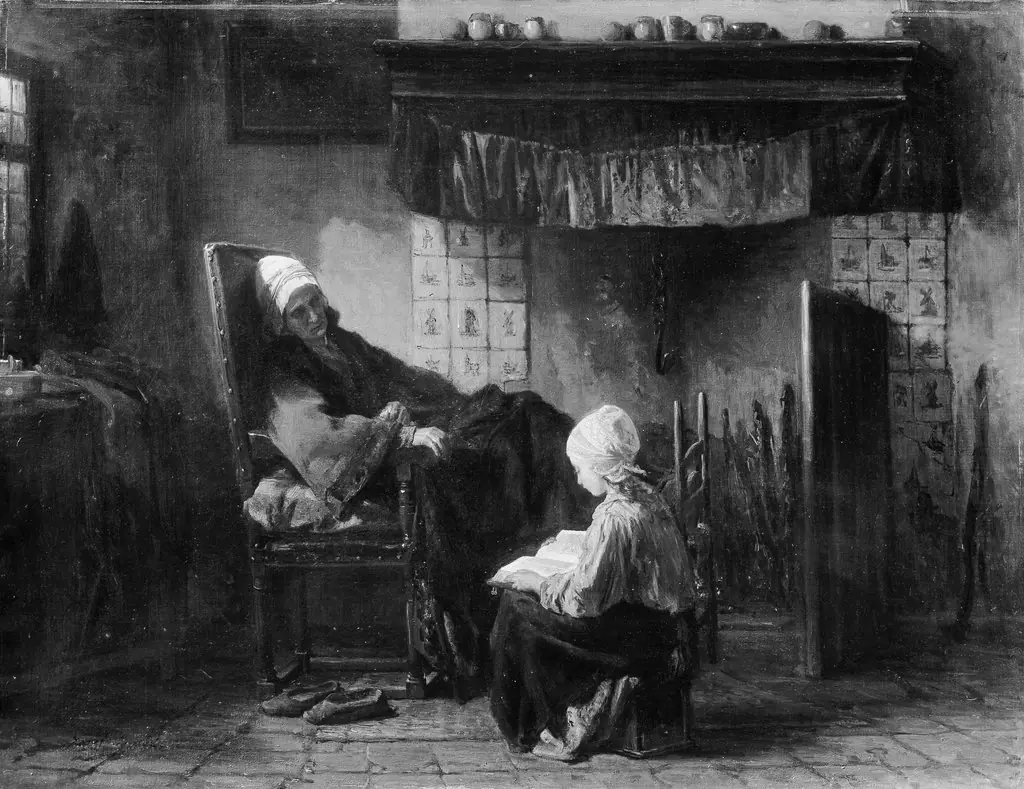
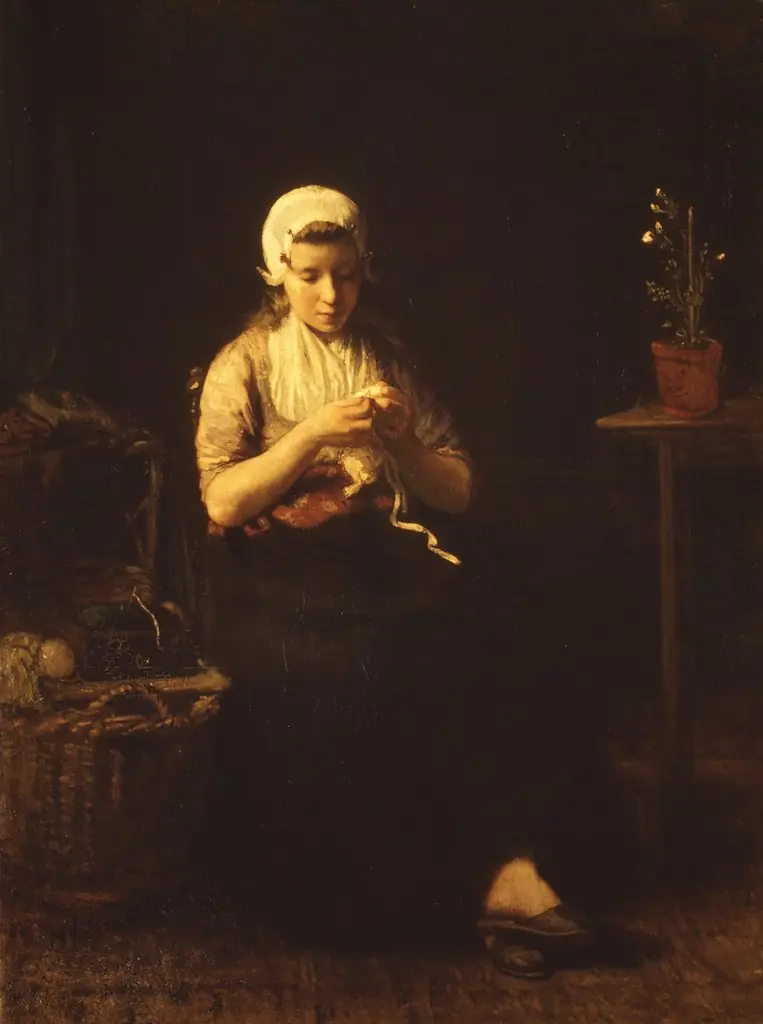
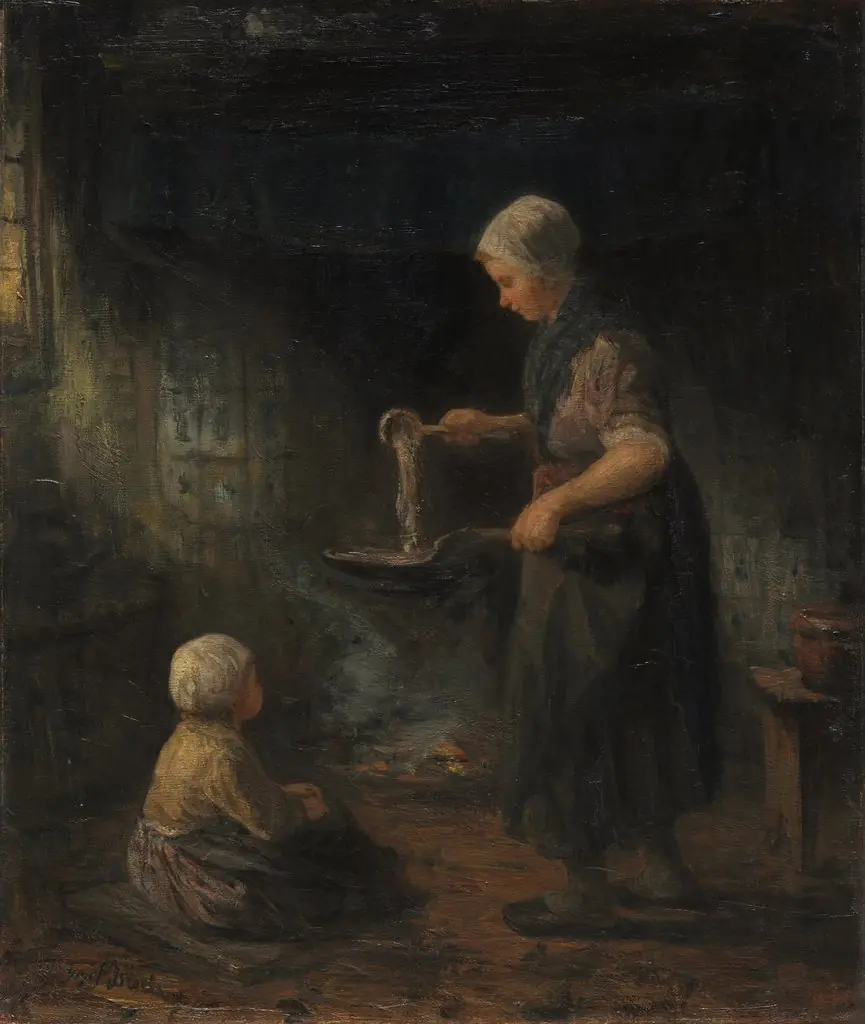
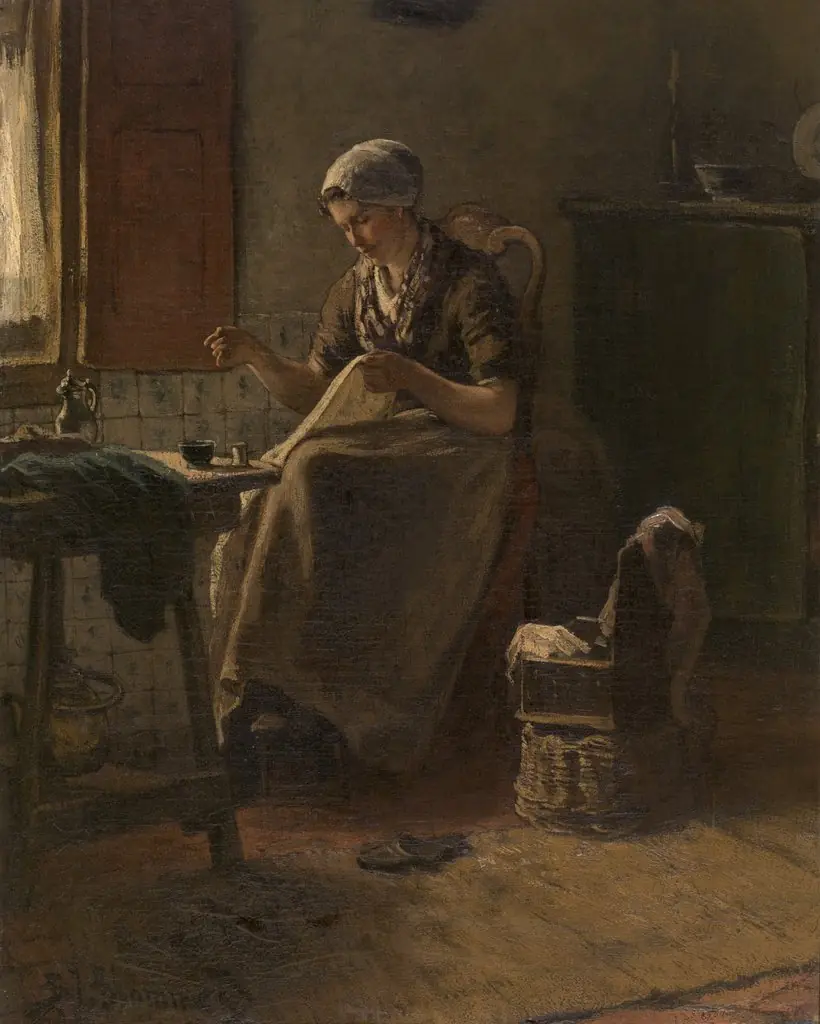
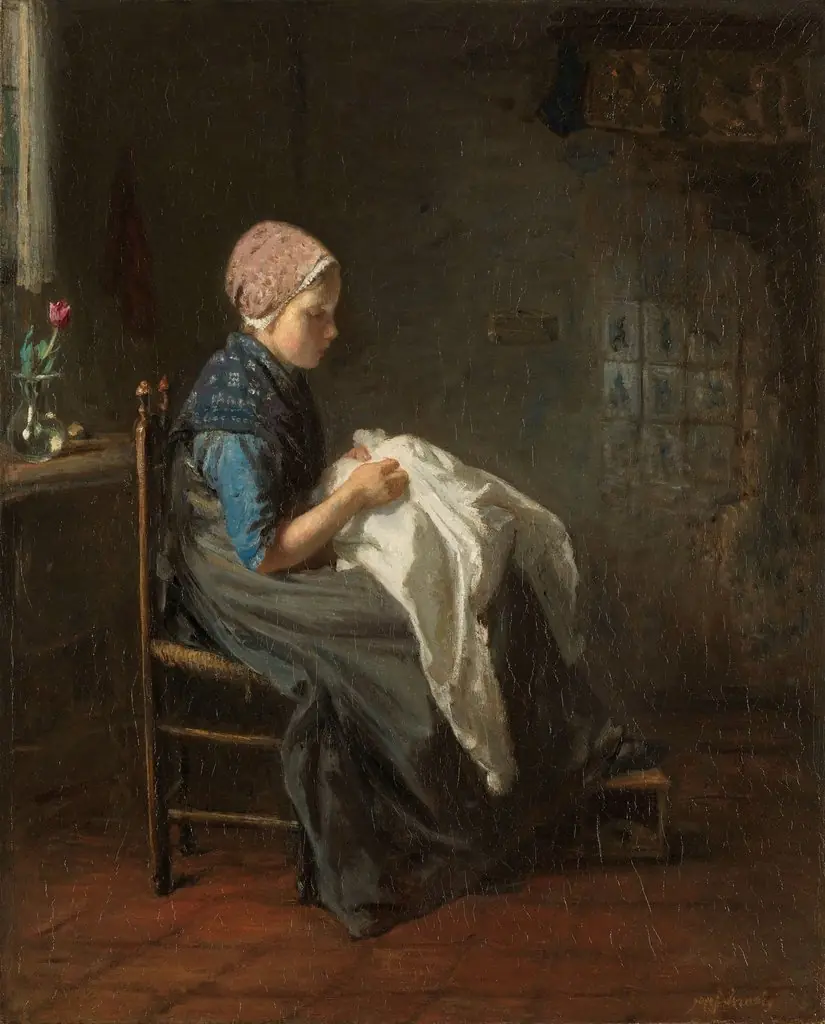
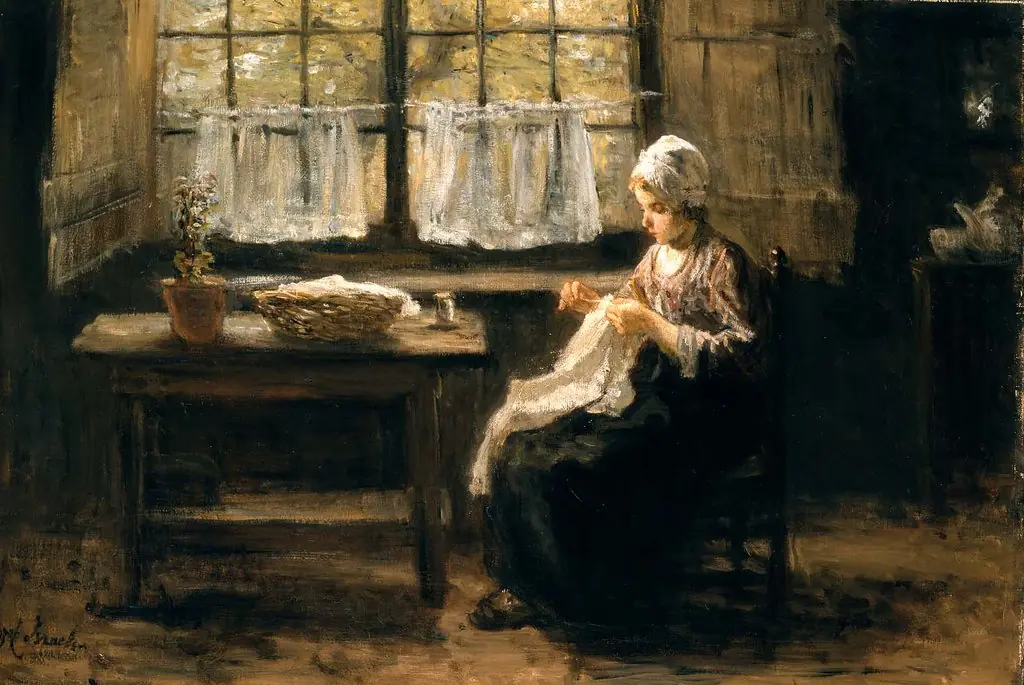
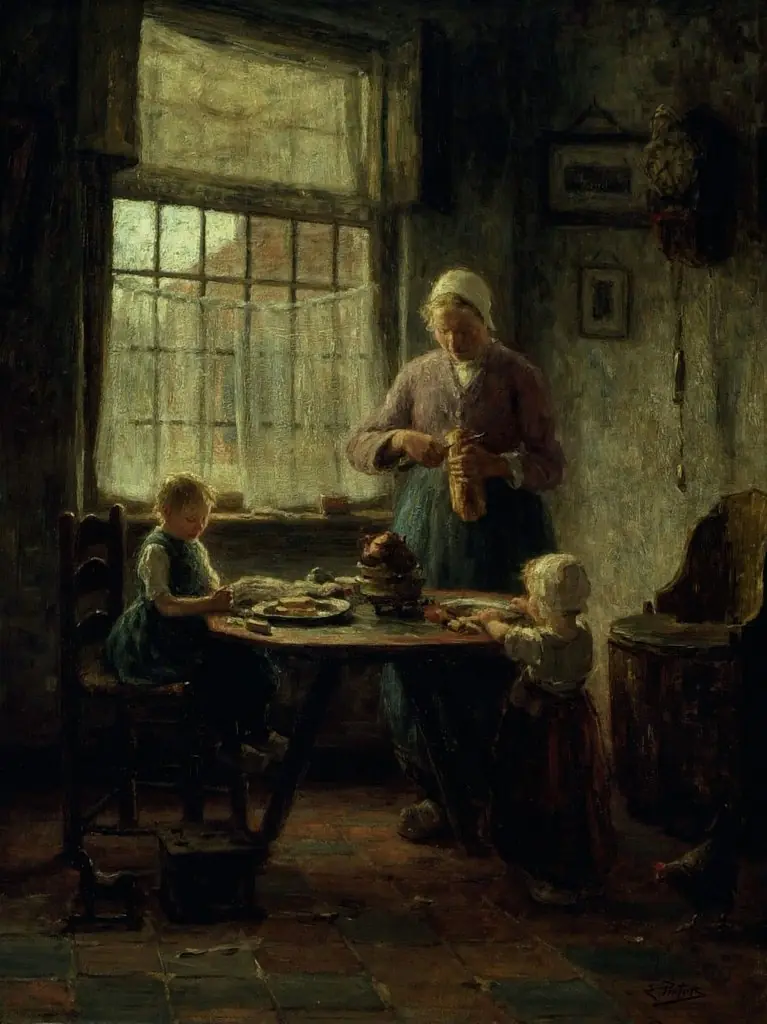
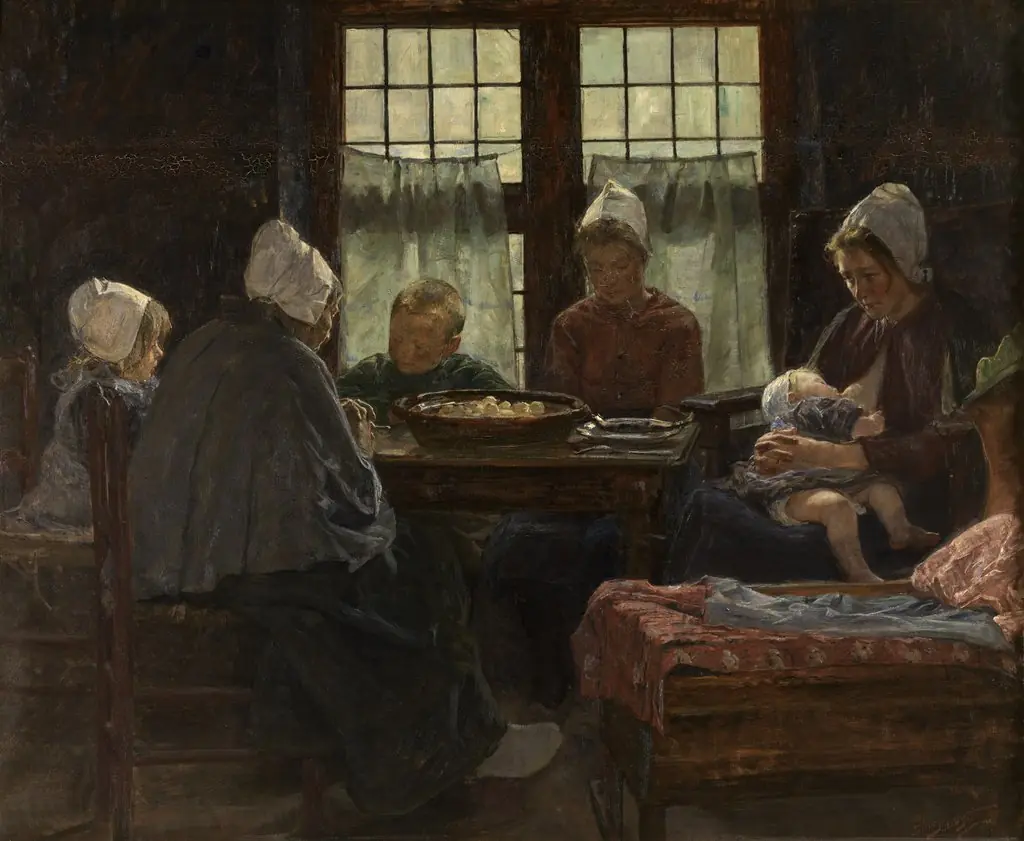
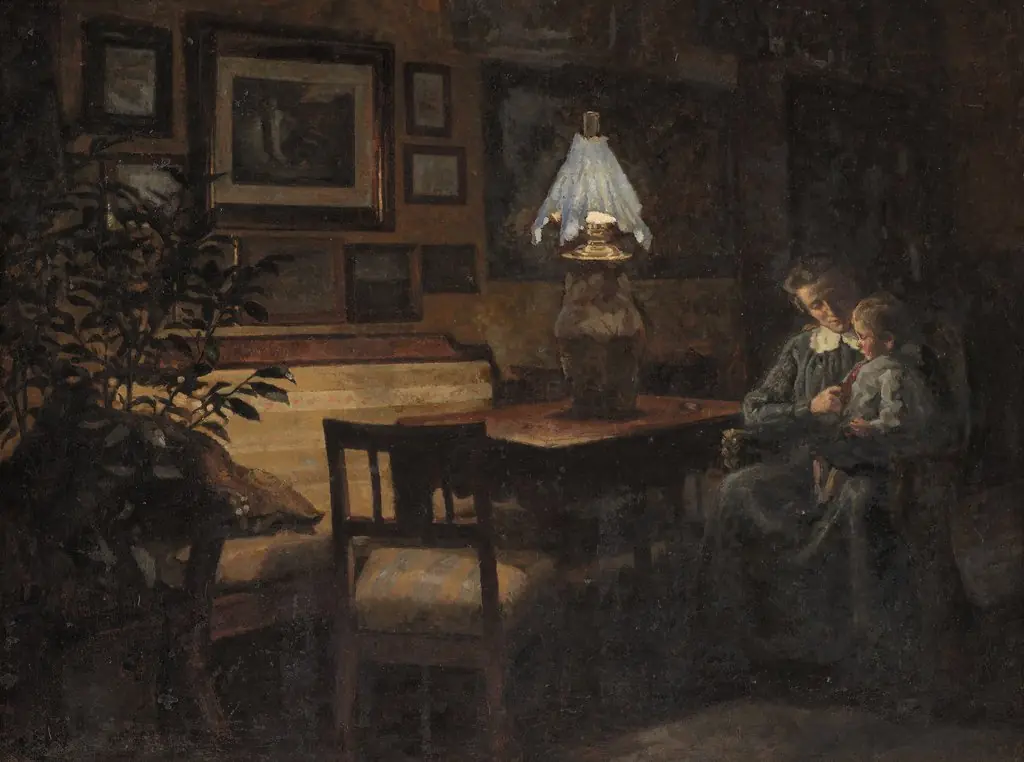
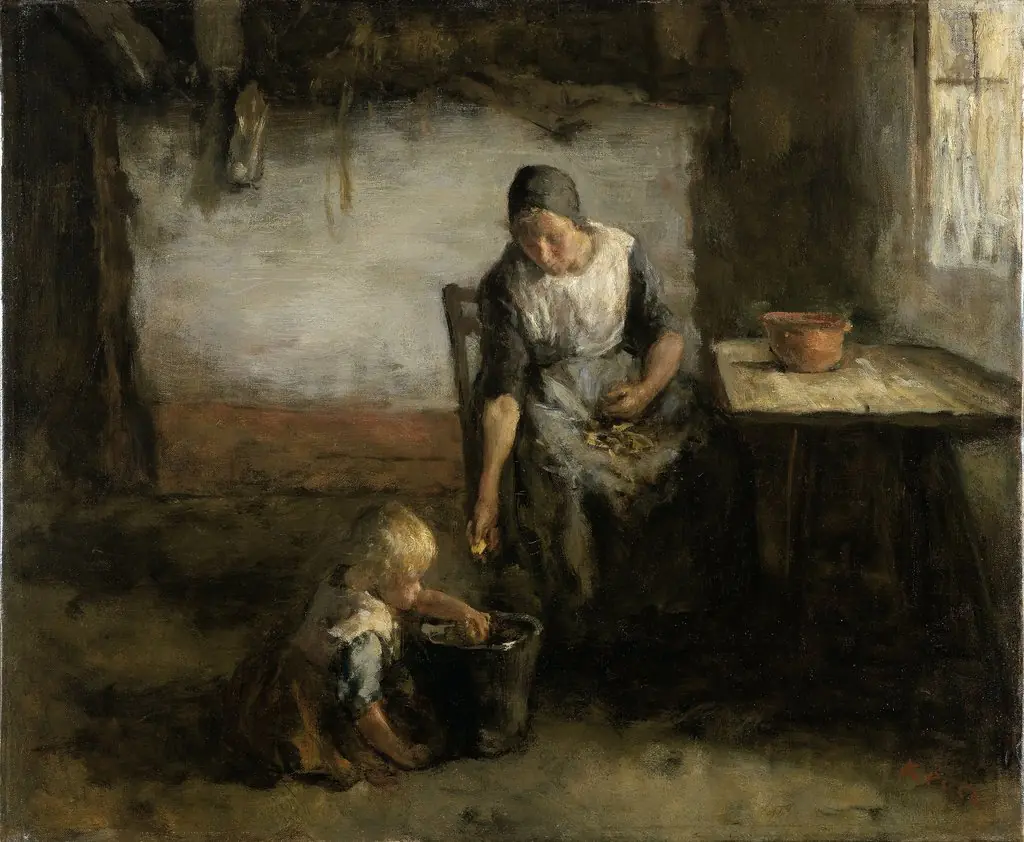
Painted in 1896 by Jozef Israëls, *Motherly Love* is an oil-on-canvas work that captures a quiet domestic moment. A central figure, a woman engaged in sewing, is surrounded by attentive children in a softly lit interior. The painting reflects Israëls’ consistent focus on humble, emotionally resonant scenes from ordinary life, characteristic of the Hague School’s realist tradition.
Subject & Meaning
The scene depicts a mother absorbed in her task, her gaze fixed on her needlework, while children observe her with quiet fascination. No grand narrative is present—instead, the painting conveys tenderness through stillness and proximity. The absence of overt gesture or expression emphasizes the quiet dignity of daily care, framing maternal attention as a subtle, enduring force.
Technique & Style
Israëls employed muted tones and controlled brushwork to evoke atmosphere rather than detail. Light enters from a single window, casting soft gradients across fabric and skin, while shadows envelop the room’s periphery. The composition is deliberately restrained, with figures arranged to draw the eye toward the mother’s hands and the children’s upturned faces, reinforcing intimacy over spectacle.
History & Provenance
Created near the end of Israëls’ career, the painting entered the Rijksmuseum’s collection shortly after its completion. It was not exhibited widely during his lifetime but has since become a representative example of his late-period work. The museum’s acquisition reflects its commitment to preserving Dutch realist painting of the 19th century.
Context
In late 19th-century Netherlands, artists like Israëls turned away from romanticized subjects toward scenes of working-class life. *Motherly Love* aligns with this shift, portraying domestic labor without sentimentality. The Hague School’s emphasis on natural light and emotional authenticity informed Israëls’ approach, distinguishing his work from academic conventions of the time.
Legacy
Though not widely reproduced in popular culture, the painting remains a touchstone in studies of Dutch realism. Its quiet power has influenced later artists interested in domesticity and psychological nuance. Within the Rijksmuseum, it continues to serve as a quiet counterpoint to more dramatic historical works, affirming the value of unadorned human moments.
Own this work as a print
Artist & collection
Artist
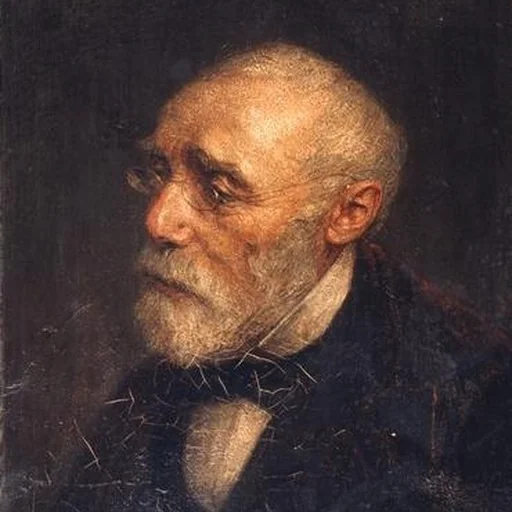
Jozef Israëls (Dutch pronunciation: ; 27 January 1824 – 12 August 1911) was a Dutch painter.