Artwork
A Landscape at the west Coast of Jutland
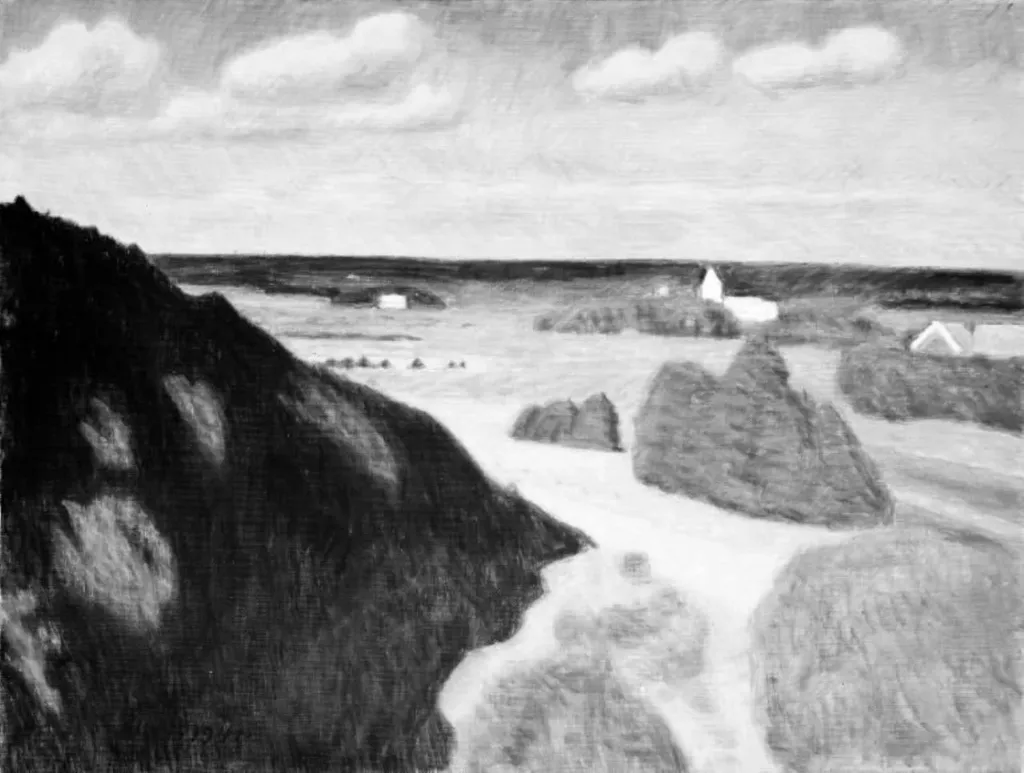
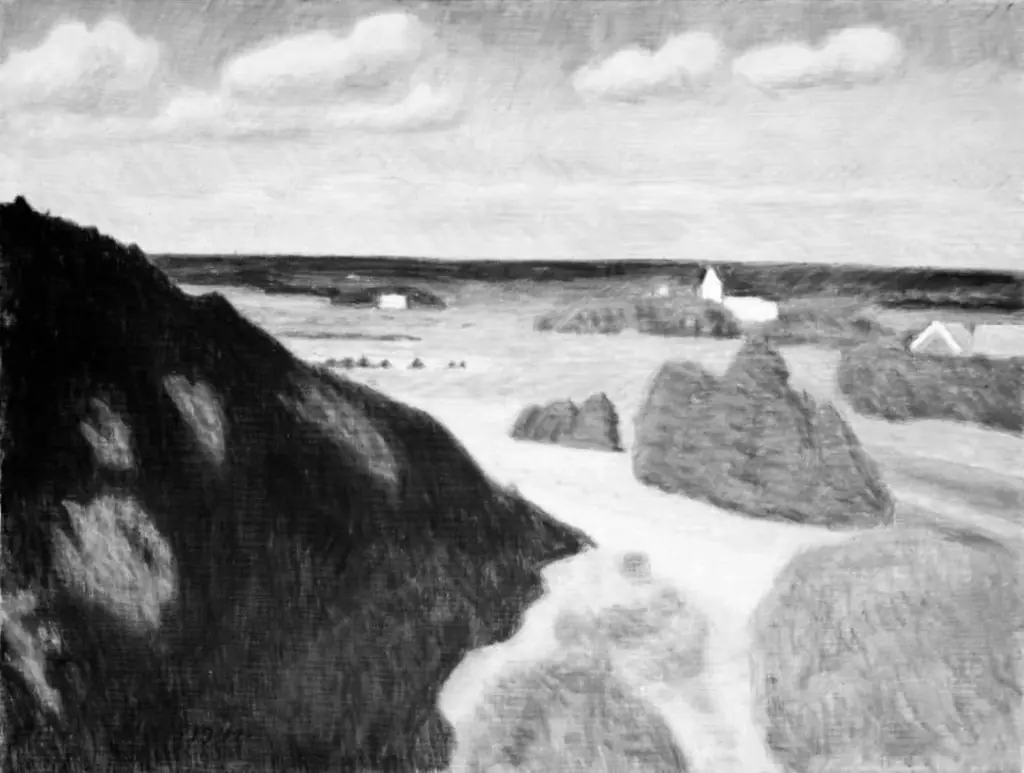
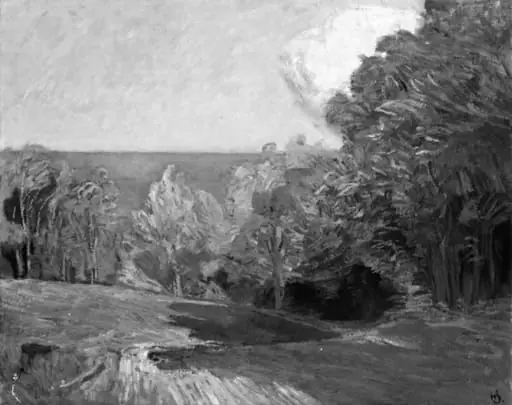
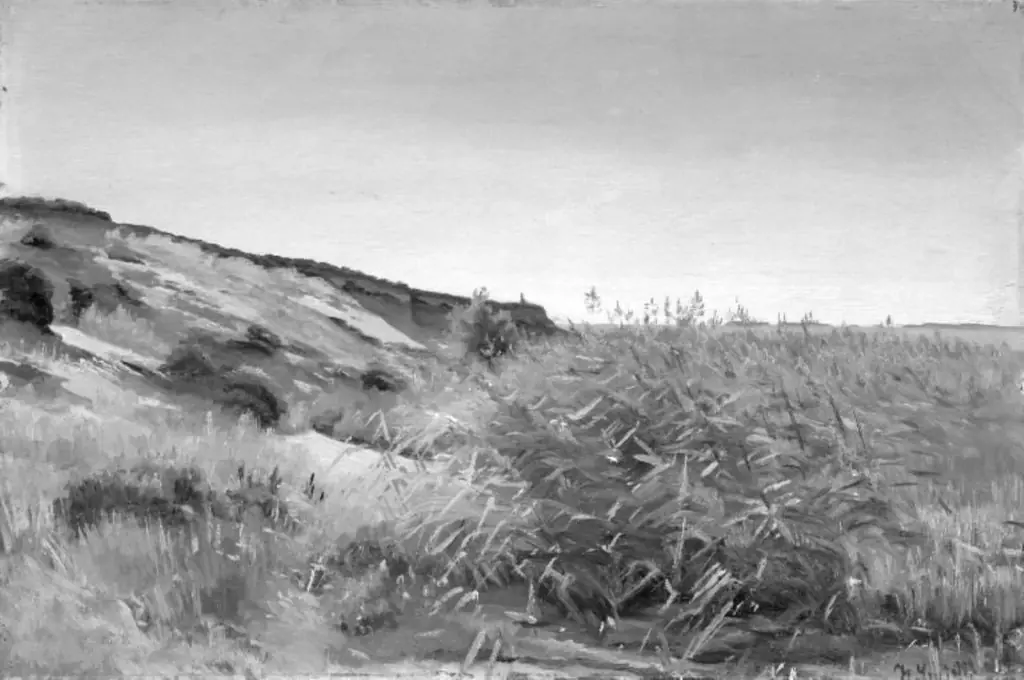
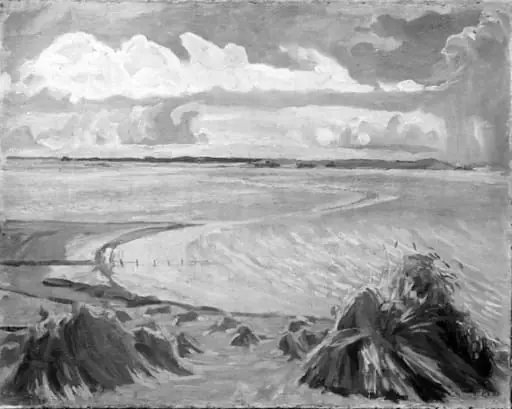
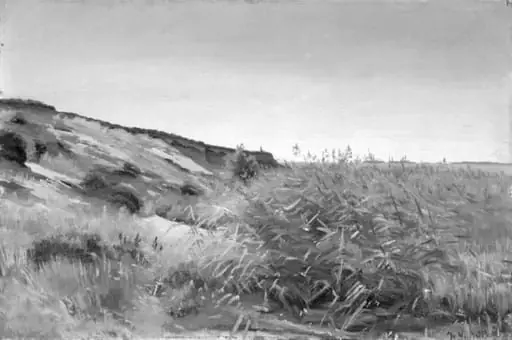
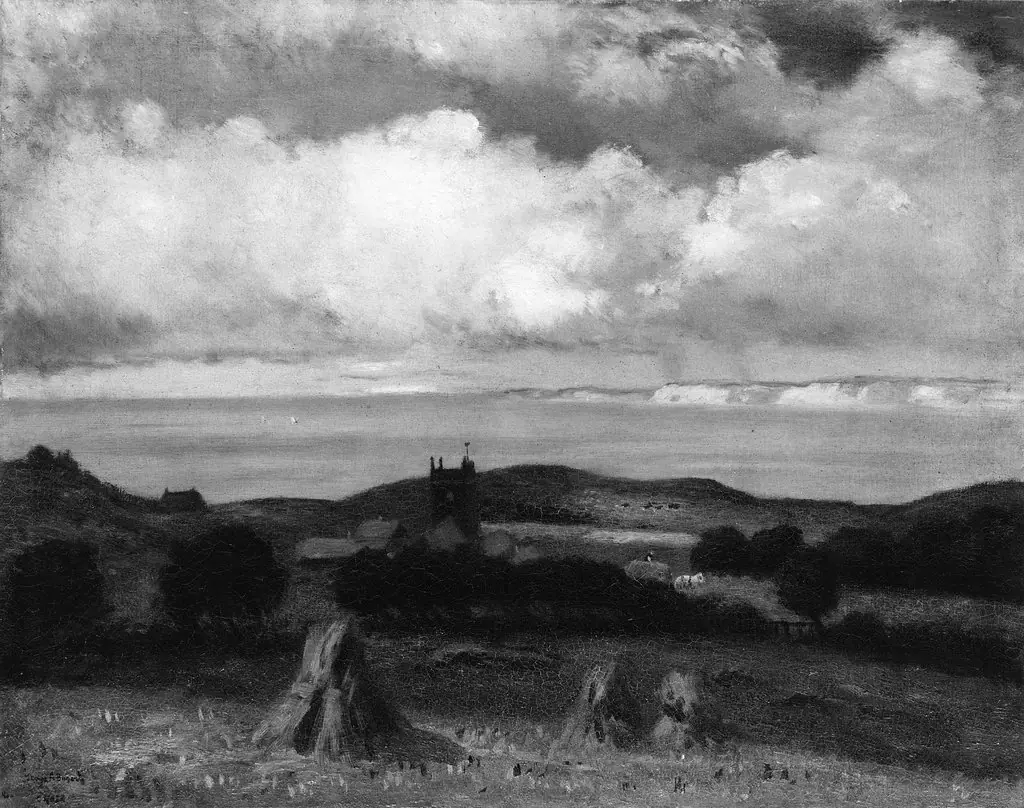
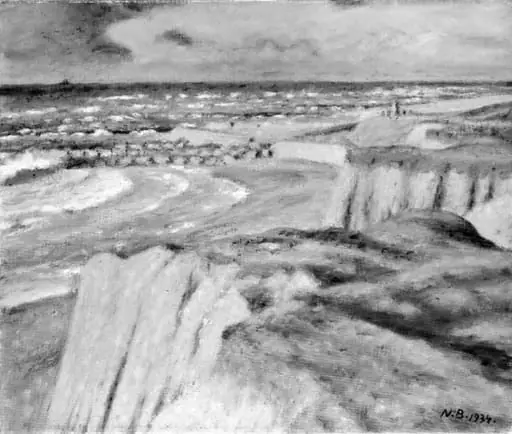
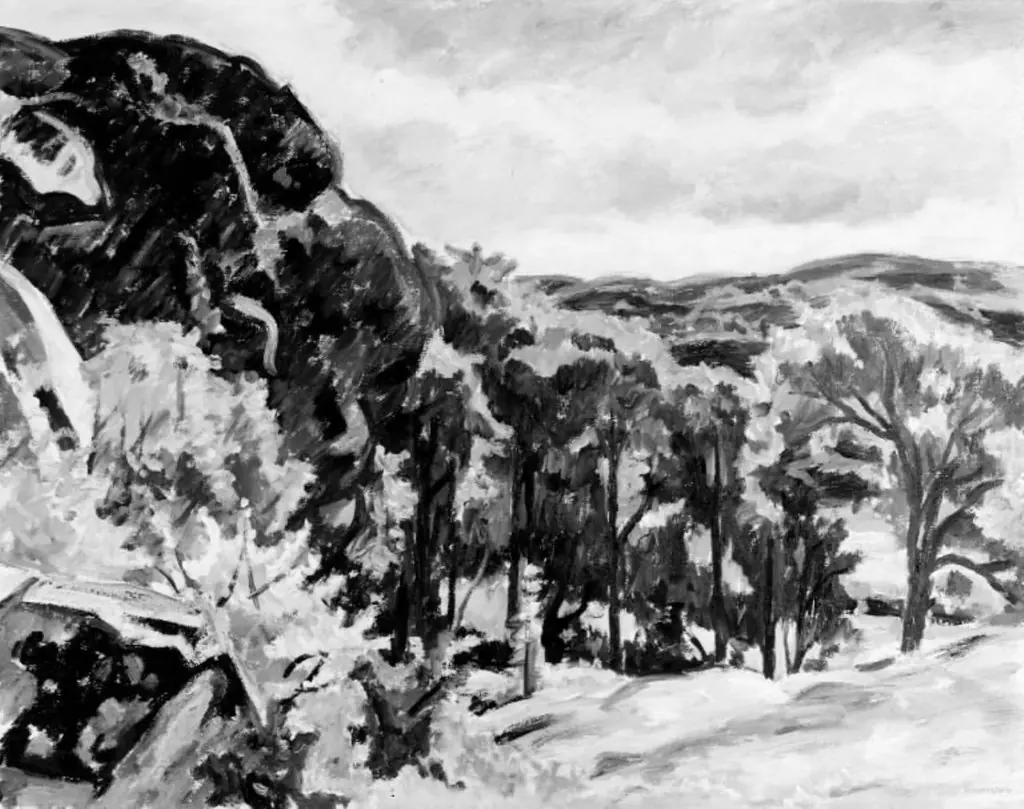
A Landscape at the west Coast of Jutland is an unspecified painting by Unknown. It dates from 1941 and is held in the collection of the Statens Museum for Kunst. Painted in 1941, this landscape depicts the rugged western shoreline of Jutland, Denmark.
About this work
Overview
Painted in 1941, this landscape depicts the rugged western shoreline of Jutland, Denmark. Executed with a tactile, expressive technique, the work captures the raw interaction between land and sea. It resides in the collection of the Museum of Ethnography, where it is contextualized within broader Scandinavian natural and cultural representations rather than as a traditional fine art piece.
Subject & Meaning
The absence of human figures emphasizes nature’s dominance, while the tower may suggest a navigational or spiritual landmark.
The scene presents a desolate coastal stretch: steep, weathered cliffs on the left give way to a distant, open plain dotted with modest structures and a solitary white tower. The absence of human figures emphasizes nature’s dominance, while the tower may suggest a navigational or spiritual landmark. The composition conveys quiet endurance, reflecting the relationship between environment and isolated coastal life.
Technique & Style
The artist employed thick, deliberate brushwork to render the rocky cliffs and turbulent waves, creating a tactile surface that mimics the terrain’s roughness. Contrasts between light and shadow, particularly along the cliff faces, establish spatial depth through chiaroscuro. The palette is restrained, dominated by grays, blues, and muted earth tones, reinforcing the scene’s somber, elemental character.
History & Provenance
Created in 1941 during a period of heightened national introspection in Denmark, the painting entered the Museum of Ethnography’s collection shortly after its completion. Its placement there, rather than in a fine arts institution, suggests an early interest in documenting regional landscapes as cultural artifacts, aligning with broader ethnographic efforts to record everyday environments.
Context
This work emerged during Denmark’s occupation in World War II, when many artists turned to domestic landscapes as a form of quiet resistance or contemplation. The painting’s focus on an unpopulated, enduring coastline may reflect a yearning for stability amid political upheaval. It aligns with a broader Nordic tradition of landscape painting that values atmosphere over narrative.
Legacy
Though not widely exhibited outside its institutional home, the painting remains a significant example of mid-20th-century Danish regionalism. Its inclusion in an ethnographic museum underscores a shift in how natural environments were valued—not merely as aesthetic subjects, but as cultural and ecological records tied to local identity and resilience.
Artist & collection

 Domestic Scene
 Giacomo and Cardinal Marco, investing Andrea, Abbot of San Zeno, with his Benefice
 The Nymph of Fontainebleau
 Portrait of a Woman
 Madonna and Child with Saints in the Enclosed Garden
 Venus and Minerva
 Family Group of Four on Sofa
 Wall painting from Room H of the Villa of P. Fannius Synistor at Boscoreale