Artwork
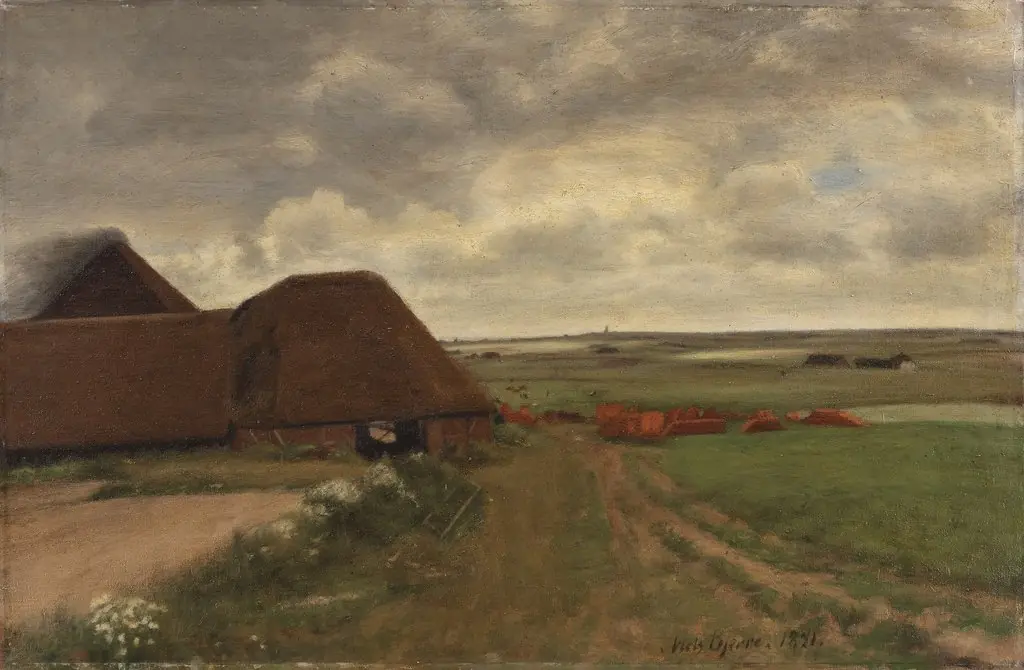
Ved et vestjysk teglværk. Gråvejr
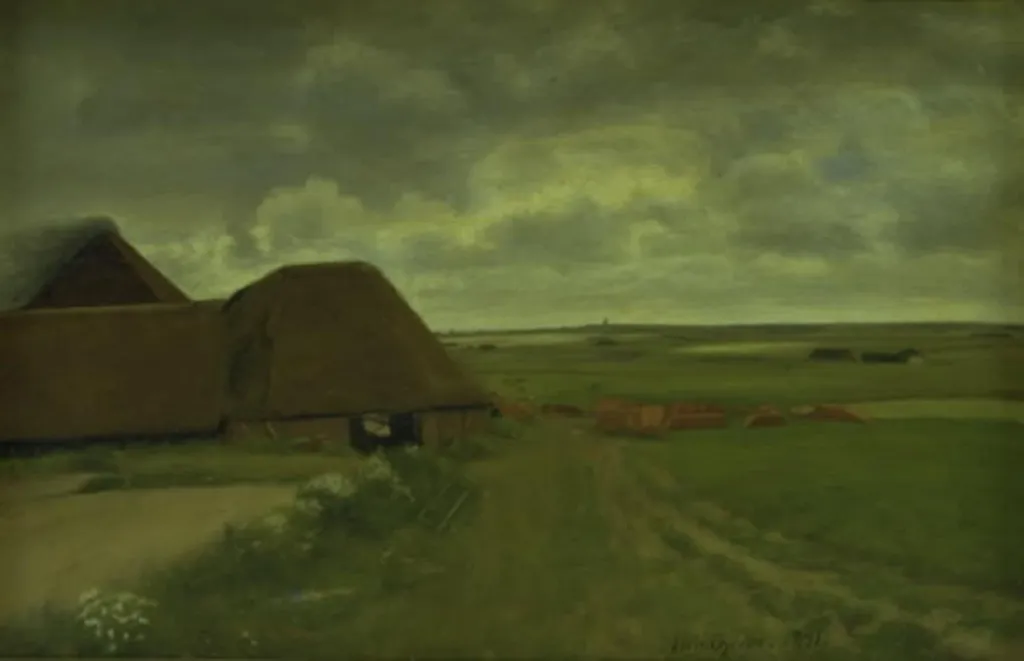
Ved et vestjysk teglværk. Gråvejr is a photography by the Impressionist artist Unknown. It dates from 1891 and is held in the collection of the Statens Museum for Kunst. Created in 1891, this photograph captures a brickworks site in western Jutland, Denmark, under a leaden sky.
About this work
Next, check out Realism to see how artists captured everyday life this way.
This photo shows two dark, sloped roofs under a cloudy, greenish sky. The ground is flat and grassy, with a few small bushes near the buildings. In the distance, two pyramid-shaped mounds rise above the horizon.
The mood feels quiet and overcast, like a misty day. This photo was taken in 1891, showing a real brickworks in Denmark.
Next, check out Realism to see how artists captured everyday life this way.
Overview
Created in 1891, this photograph captures a brickworks site in western Jutland, Denmark, under a leaden sky. The image records an ordinary industrial landscape with quiet precision, avoiding dramatic emphasis. Its composition focuses on the sloping roofs of functional buildings, a flat grassy expanse, and distant earth mounds, all rendered in muted tones that reflect the overcast conditions of the day.
Subject & Meaning
The scene depicts a working brickyard, a common feature of rural Denmark’s industrial periphery. The absence of human figures and the subdued atmosphere suggest a contemplative observation of labor and environment. The pyramid-shaped mounds in the distance may be natural or man-made earthworks, subtly anchoring the site within its regional topography without imposing symbolic meaning.
Technique & Style
The photograph employs natural lighting and a level perspective to emphasize texture and tone over narrative. The greenish-gray sky and flat ground create a harmonious tonal range, while the sharp definition of roofs and bushes reveals technical control. The image avoids romanticization, aligning with documentary practices of the time that valued accuracy over artistic embellishment.
History & Provenance
The photograph was taken in 1891 and entered the collection of the Museum of Ethnography, where it remains. Its preservation reflects an early 20th-century interest in documenting vernacular industry and landscape. No record of the photographer’s identity is provided, suggesting the work may have been produced as part of a broader survey or institutional project.
Context
In late 19th-century Denmark, industrialization transformed rural economies, and brickworks became emblematic of this shift. Photographs like this one emerged alongside ethnographic efforts to record everyday life before it changed further. The image fits within a broader European trend of using photography to archive the mundane, not as art but as evidence of social and material conditions.
Legacy
The photograph endures as a quiet record of a transient industrial landscape. It contributes to historical archives that trace Denmark’s rural industrialization, offering insight into the visual culture of observation during the rise of documentary photography. Its value lies not in novelty, but in its unembellished testimony to a specific time and place.
Artist & collection

 Domestic Scene
 Giacomo and Cardinal Marco, investing Andrea, Abbot of San Zeno, with his Benefice
 The Nymph of Fontainebleau
 Portrait of a Woman
 Madonna and Child with Saints in the Enclosed Garden
 Venus and Minerva
 Family Group of Four on Sofa
 Wall painting from Room H of the Villa of P. Fannius Synistor at Boscoreale