Artwork
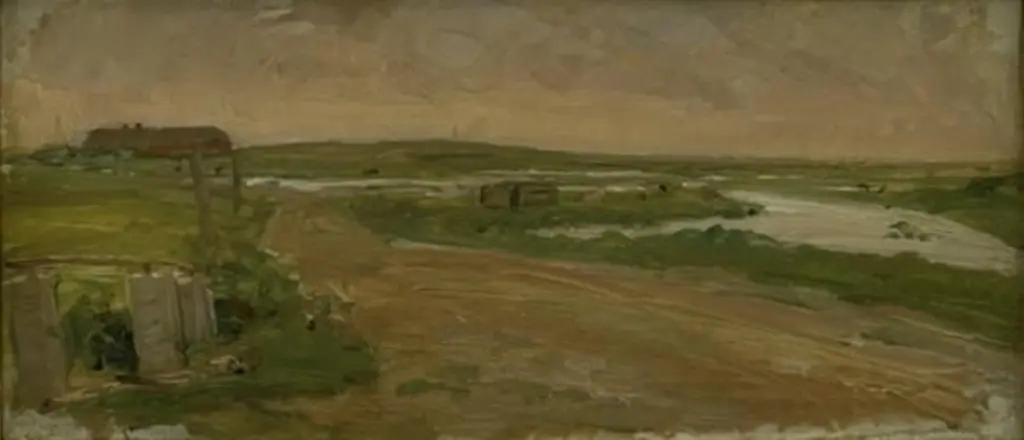
Vestjysk landskab. Holmsland
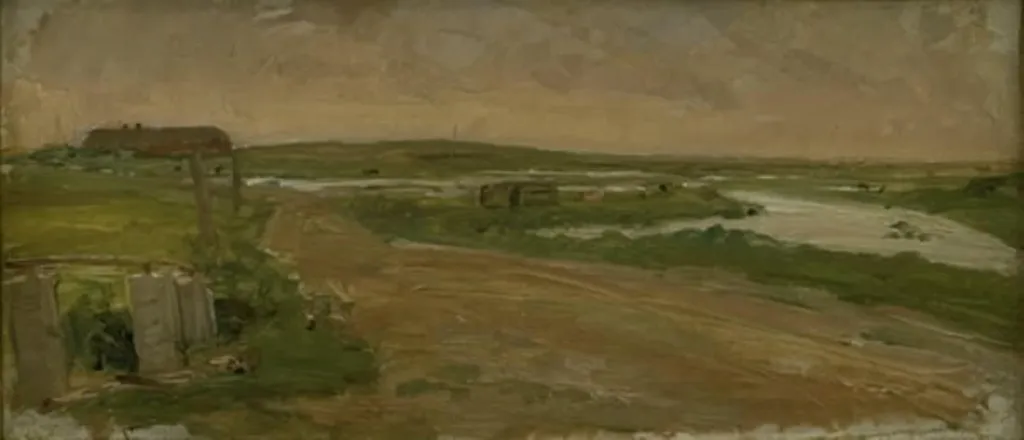
Vestjysk landskab. Holmsland is a photography by the Impressionist artist Unknown. It dates from 1886 and is held in the collection of the Statens Museum for Kunst. Painted in 1886, Vestjysk landskab.
About this work
Overview
Painted in 1886, Vestjysk landskab. Holmsland depicts a modest rural scene in western Jutland. Executed in oil, the work belongs to a series of regional landscapes by the artist, emphasizing unidealized terrain. It is currently held in the collection of the Museum of Ethnography, where it is valued for its documentary quality rather than decorative appeal.
Subject & Meaning
The painting portrays a quiet, unremarkable stretch of Danish countryside—rolling hills, a narrow stream, and sparse farm buildings. There is no narrative or human activity, only the quiet presence of land. The artist avoids romanticized vistas, instead focusing on the ordinary topography of Holmsland, suggesting an interest in place as it is, not as it might be imagined.
Technique & Style
Loose, visible brushwork and a restrained palette of greens, browns, and soft yellows define the painting’s texture. The sky is hazy, diffusing light across the scene without sharp contrasts. The handling of paint prioritizes atmospheric effect over detail, aligning with Impressionist concerns for transient light and direct observation, though without the vibrancy typical of French Impressionism.
History & Provenance
Created in 1886, the work entered the Museum of Ethnography’s collection shortly after its completion. Its acquisition reflects a late 19th-century interest in documenting regional life and landscape as cultural artifacts. Unlike many contemporary works, it was not exhibited widely in major art circles, remaining instead within scholarly and ethnographic contexts.
Context
In the 1880s, Danish artists increasingly turned to local landscapes as subjects, moving away from historical or mythological themes.
In the 1880s, Danish artists increasingly turned to local landscapes as subjects, moving away from historical or mythological themes. This painting reflects a broader national trend toward realism and regional identity. While influenced by French Impressionism’s emphasis on light, it retains a subdued tone, characteristic of Nordic landscape traditions that favored quiet observation over dramatic effect.
Legacy
The painting contributes to a body of work that redefined Danish landscape art by valuing authenticity over grandeur. Though not widely known outside Denmark, it remains a reference point for studies of regional realism in Nordic art. Its presence in an ethnographic museum underscores its role as a record of place, bridging art and cultural documentation.
Artist & collection

 Domestic Scene
 Giacomo and Cardinal Marco, investing Andrea, Abbot of San Zeno, with his Benefice
 The Nymph of Fontainebleau
 Portrait of a Woman
 Madonna and Child with Saints in the Enclosed Garden
 Venus and Minerva
 Family Group of Four on Sofa
 Wall painting from Room H of the Villa of P. Fannius Synistor at Boscoreale
 Landscape, a Grey Day
 En eng ved en skovsø
 En eng ved en skovsø
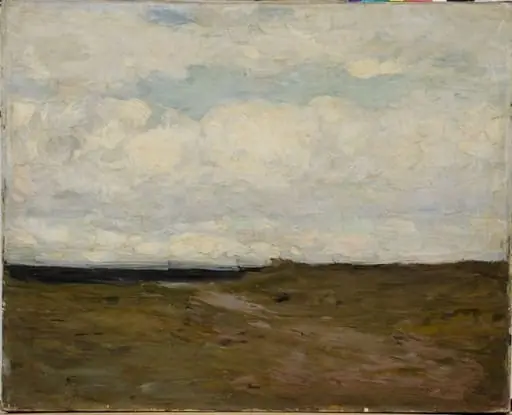 Bărăganul
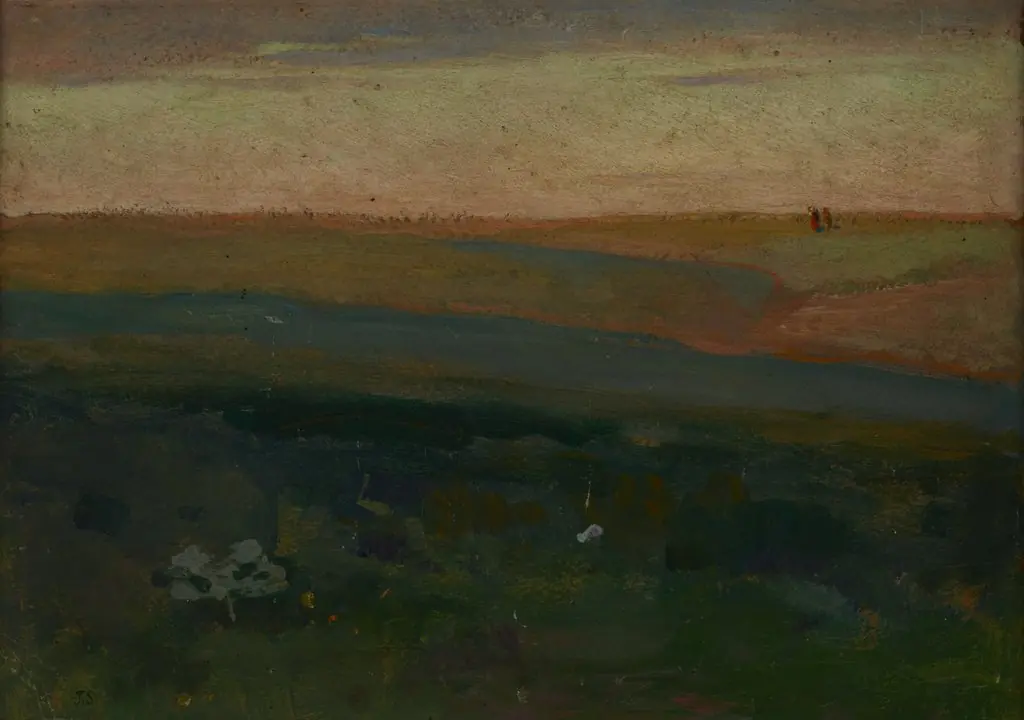 Green Steppe in the Ukraine
 Graves of Travellers, Fort Kearny, Nebraska
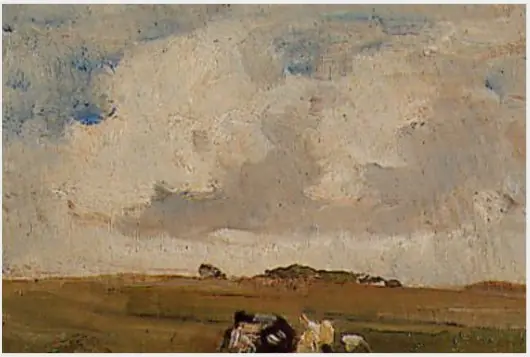 Summer Pastures
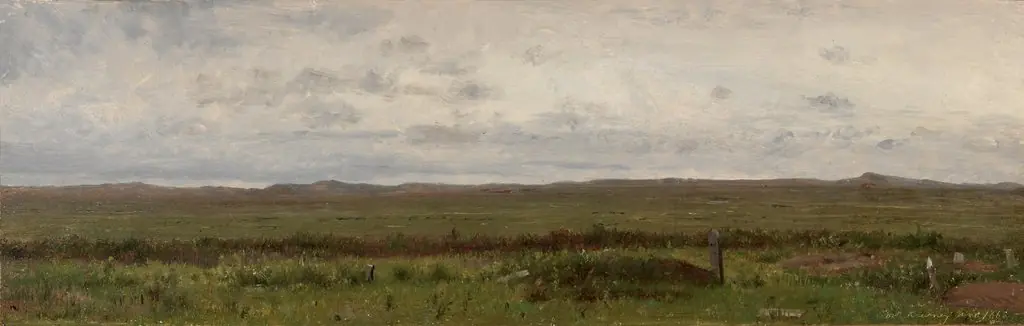 Graves of Travellers, Fort Kearny, Nebraska
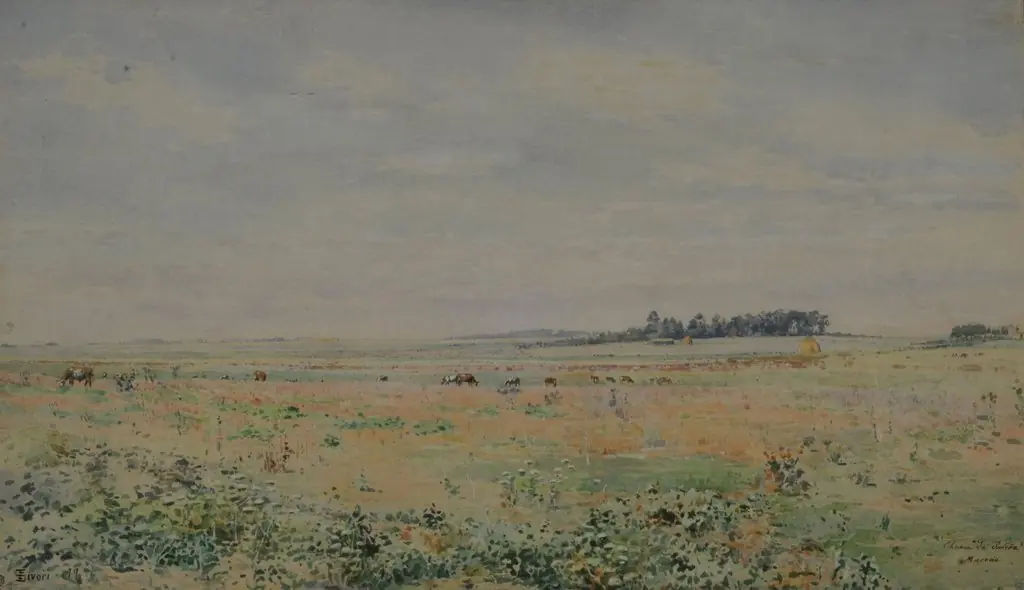 Plains or La Porteña Ranch, Moreno
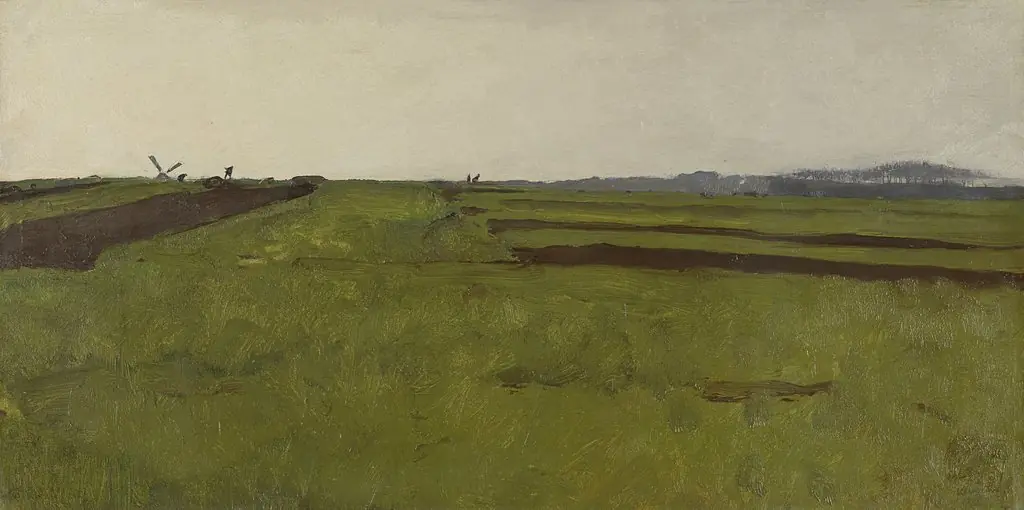 Landscape with fields
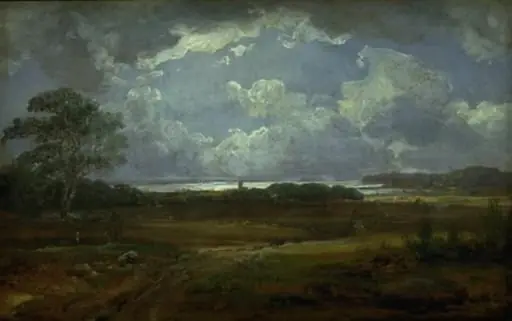 View towards Jungshoved
 Vestjysk landskab. Holmsland