Artwork
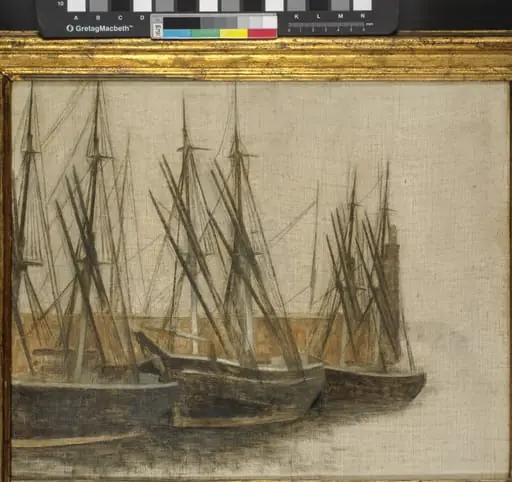
A Boat Harbour. Humlebæk, Zealand
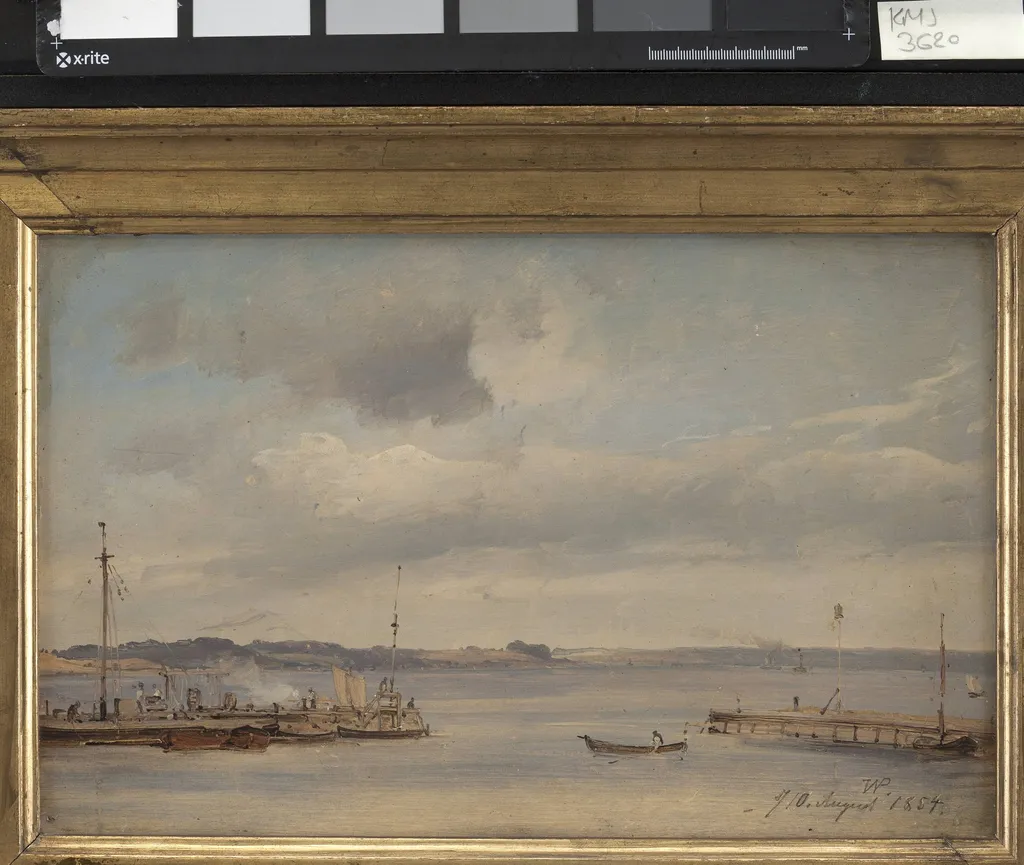
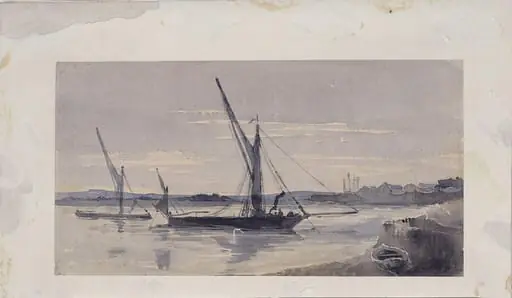
A Boat Harbour. Humlebæk, Zealand is a photography by the Impressionist artist Unknown. It dates from 1854 and is held in the collection of the Statens Museum for Kunst. Painted in 1854, this landscape depicts a quiet harbor in Humlebæk, on the Danish island of Zealand.
About this work
Overview
Painted in 1854, this landscape depicts a quiet harbor in Humlebæk, on the Danish island of Zealand. The scene captures a modest maritime setting with minimal human presence, emphasizing stillness and natural light. The work is part of the Museum of Ethnography’s collection, though its subject is not ethnographic in nature, suggesting a later acquisition or contextual reclassification.
Subject & Meaning
The painting portrays a routine coastal moment: a few small vessels anchored near shore, one with a solitary figure standing aboard. There is no narrative drama or symbolic intent; the focus lies in the quiet rhythm of daily life by the water. The subdued atmosphere suggests an appreciation for ordinary, unremarkable scenes, common in 19th-century Danish realism.
Technique & Style
Brushwork is restrained, with soft transitions between tones of blue, gray, and muted earth. Forms are simplified, particularly the boats, rendered with loose outlines rather than detailed rendering. The sky and water blend gently, avoiding sharp contrasts. The composition favors horizontal calm over vertical drama, aligning with Nordic landscape traditions of the period.
History & Provenance
The painting was created in 1854 and entered the Museum of Ethnography’s holdings at an unknown later date. Its presence there, rather than in a fine arts institution, may reflect early 20th-century collecting practices that blurred boundaries between cultural artifacts and regional scenes. No significant exhibition or ownership history is documented prior to its current placement.
Context
Produced during a time when Danish artists were turning toward local landscapes and everyday life, this work reflects a broader shift away from grand historical themes. Though not part of the Impressionist movement, its quiet observation of light and atmosphere shares affinities with emerging Nordic naturalism, particularly in its avoidance of theatricality.
Legacy
The painting remains a quiet example of mid-19th-century Danish coastal observation. It has not been widely reproduced or critically analyzed, but it contributes to a broader understanding of how regional artists documented their surroundings without idealization. Its modest scale and tone reflect a cultural preference for understated realism over dramatic expression.
Artist & collection

 Domestic Scene
 Giacomo and Cardinal Marco, investing Andrea, Abbot of San Zeno, with his Benefice
 The Nymph of Fontainebleau
 Portrait of a Woman
 Madonna and Child with Saints in the Enclosed Garden
 Venus and Minerva
 Family Group of Four on Sofa
 Wall painting from Room H of the Villa of P. Fannius Synistor at Boscoreale
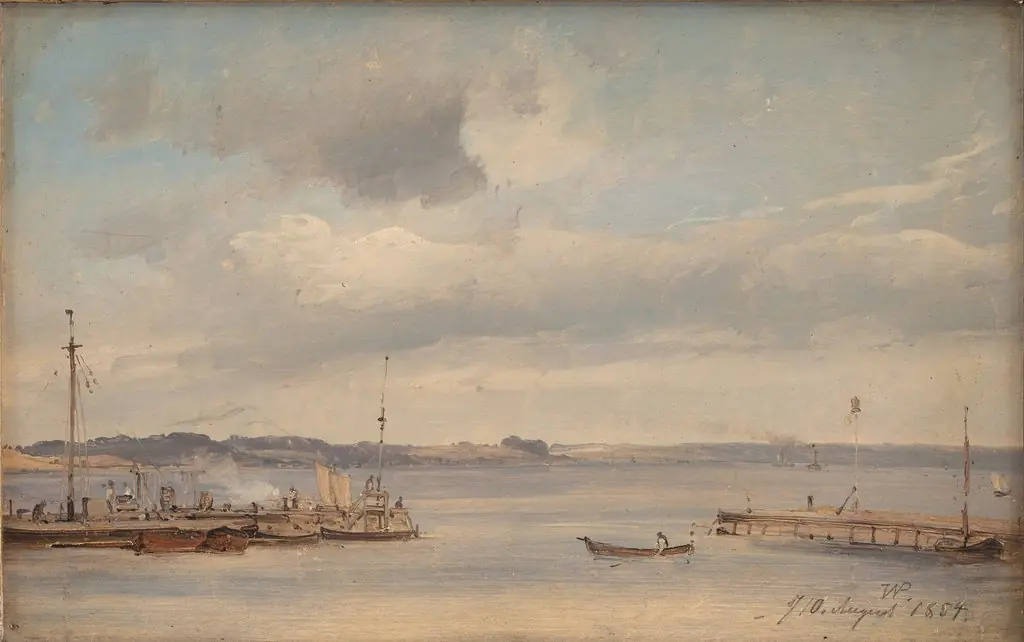 En bådehavn
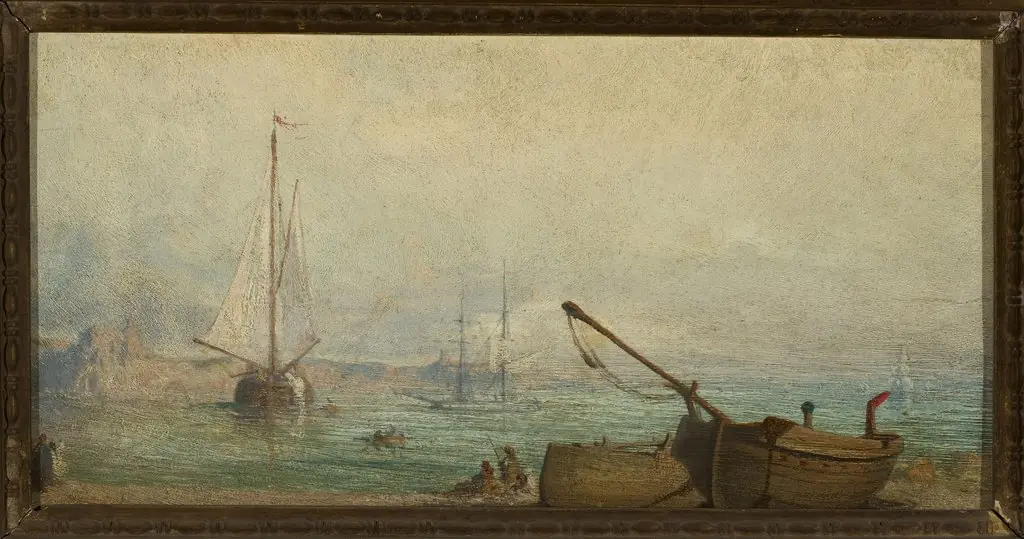 View of the Avignon port
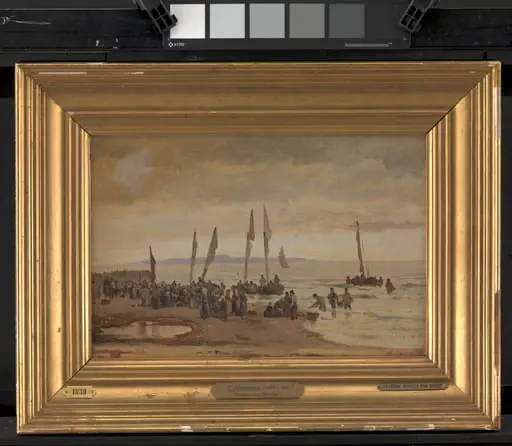 Hjemvendende fiskere modtages på Hornbæk Strand
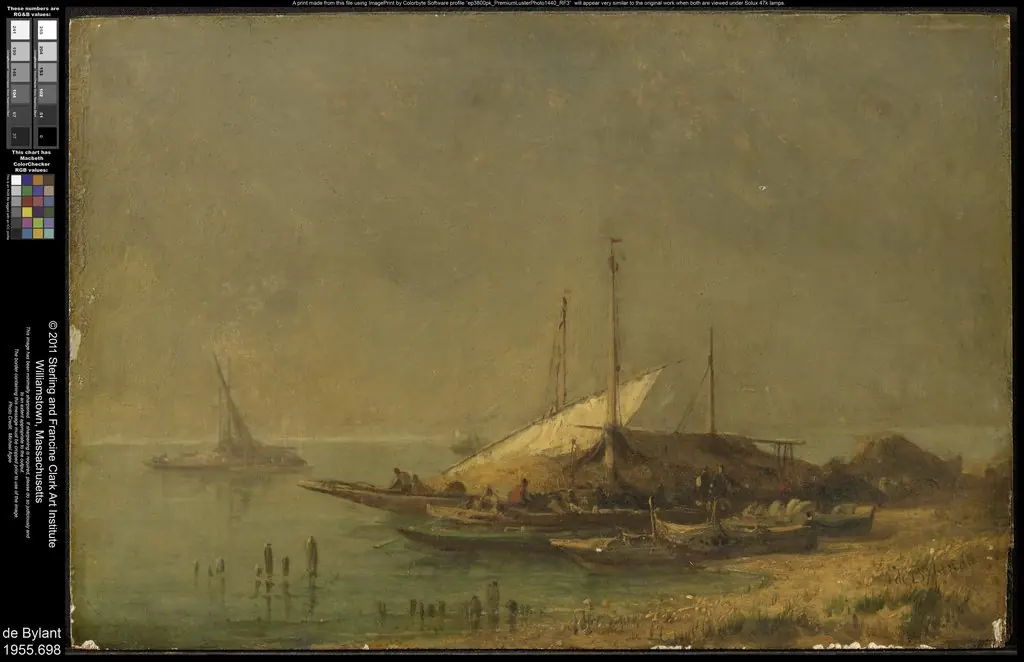 Boats
Boats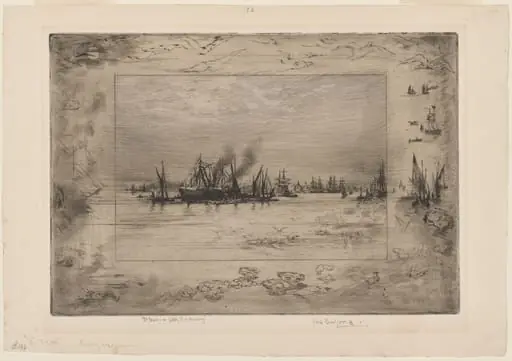 Le Port aux Mouettes (Port with Seagulls)
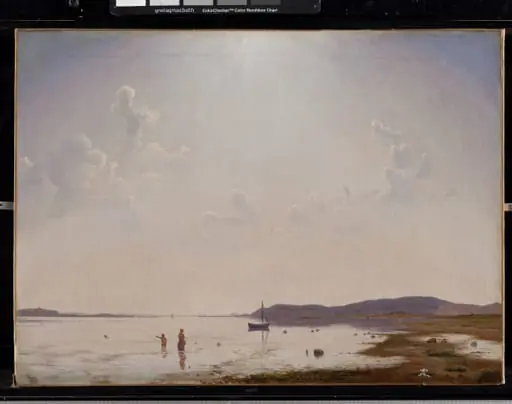 View of Roskilde Fjord near Frederikssund, Zealand
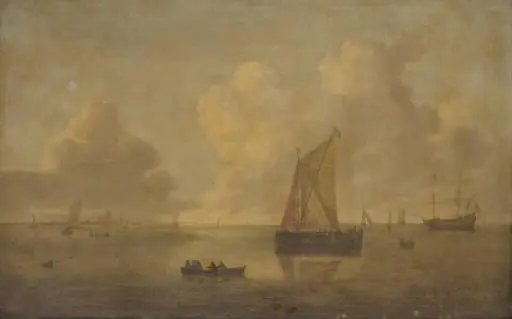 Seascape with a Town in the Background
 Coast Scene: Sunset
 Egypt and Nubia, Volume III: Alexandria
 Embarkation of Troops on a Dutch River
 Fishing boats in Rye Harbour, with a windmill in the distance
 From Christianshavn's Canal, Copenhagen