Artwork
Egypt and Nubia, Volume III: Alexandria
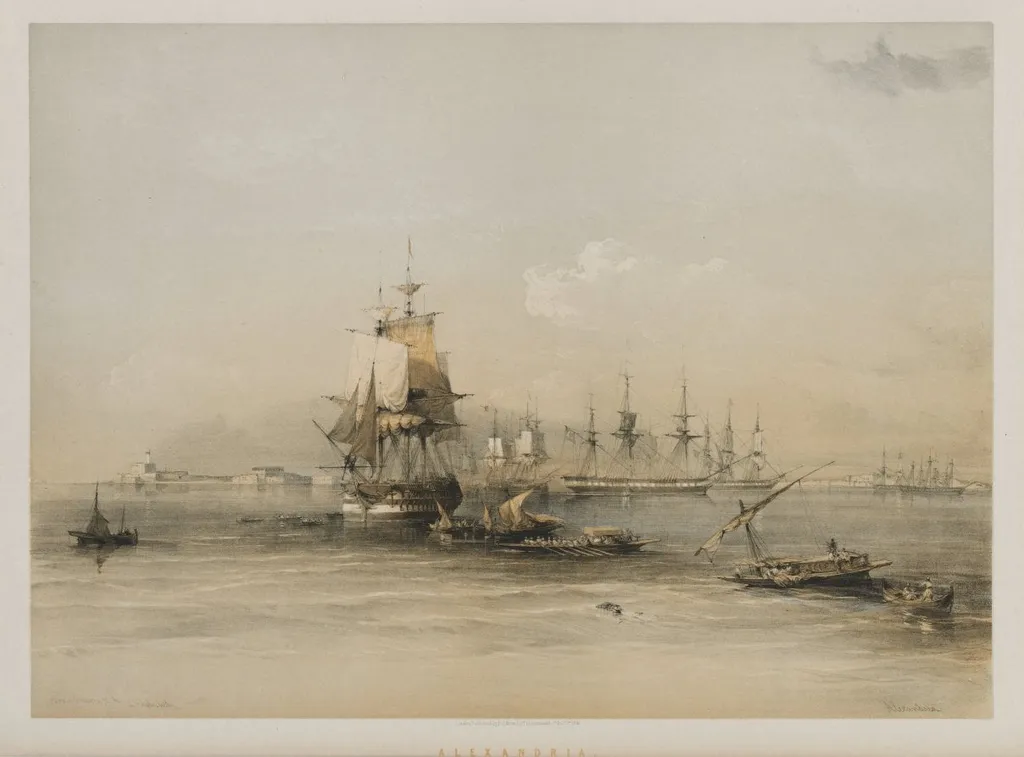
Egypt and Nubia, Volume III: Alexandria is a print by the Romanticist artist Louis Haghe. It dates from 1848 and is held in the collection of the Cleveland Museum of Art.
About this work
To learn more about the Romanticism movement, you can explore the works of artists like J.
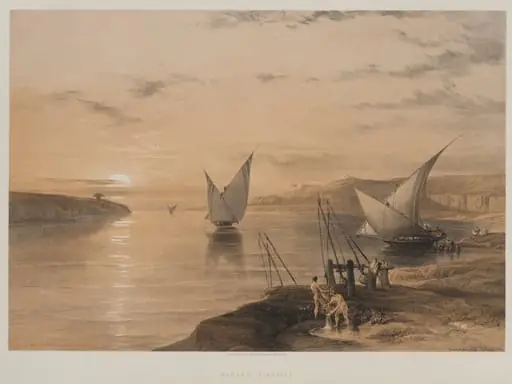
This painting shows a harbor scene with many ships in the water. There are large ships with tall masts and smaller boats. The ships are in a calm sea, with the sky above them.
In the foreground, there are several small boats with people in them. They seem to be rowing or sailing. The painting is done in muted colors, with shades of brown and gray dominating the scene.
The painting is part of the "Egypt and Nubia" series, which was created in 1848. The artist, Louis Haghe, was a British painter who was known for his Romantic style. The painting is held at The Cleveland Museum of Art. To learn more about the Romanticism movement, you can explore the works of artists like J.M.W. Turner and Caspar David Friedrich.
Overview
Louis Haghe, a Belgian-born artist active in England, produced *Egypt and Nubia, Volume III: Alexandria* in 1848 as part of a multi-volume lithographic series. The work captures a harbor scene in Alexandria, rendered through the emerging medium of lithography. Haghe, trained in watercolor and later a pioneer in commercial lithography, co-founded the firm Day & Haghe, which became known for detailed topographical prints. This piece belongs to a broader project documenting architectural and landscape views of Egypt and Nubia.
Subject & Meaning
The print presents Alexandria’s harbor in the mid-19th century, showing a mix of large sailing vessels and smaller local boats under a subdued sky. The scene conveys quiet activity rather than grandeur, emphasizing daily maritime life. No human figures are prominently featured, and the composition avoids dramatic narrative, instead offering a measured observation of the port’s commercial character. The image functions as a documentary record, aligned with the era’s interest in ethnographic and geographic documentation.
Technique & Style
Haghe employed lithography to achieve fine tonal gradations, using muted browns and grays to evoke atmospheric stillness. The technique allowed precise rendering of ship rigging, water ripples, and architectural outlines without the vibrancy of color painting. His style reflects a Romantic sensibility through its emphasis on mood and spatial depth, yet avoids theatricality. The restrained palette and careful detail align with the precision expected in topographical prints of the period, blending artistic sensitivity with documentary intent.
History & Provenance
Created in 1848, the print was issued as part of a three-volume set commissioned to illustrate Egypt and Nubia for European audiences. Haghe’s firm, Day & Haghe, specialized in such illustrated works, often based on sketches by travelers. The Cleveland Museum of Art acquired the print as part of its collection of 19th-century prints, where it remains as an example of British lithographic practice and Orientalist documentation. Its provenance traces back to the original subscribers of the series.
Context
The print emerged during a period of heightened European interest in Egypt following Napoleon’s campaign and the rise of Egyptology. Lithography enabled mass distribution of images previously limited to watercolor or engraving. Haghe’s work contributed to a genre that blended scientific curiosity with aesthetic representation, often shaped by colonial perspectives. Similar projects by artists like David Roberts appeared around the same time, reflecting a broader trend in visual ethnography.
Legacy
Haghe’s contribution to lithographic illustration helped standardize the medium for architectural and travel documentation. While his work is no longer widely exhibited, it remains a valuable resource for historians studying 19th-century perceptions of the Middle East. The *Egypt and Nubia* series exemplifies how print technology facilitated the circulation of visual knowledge, influencing both public imagination and academic study of the region during the Victorian era.
Artist & collection
Artist
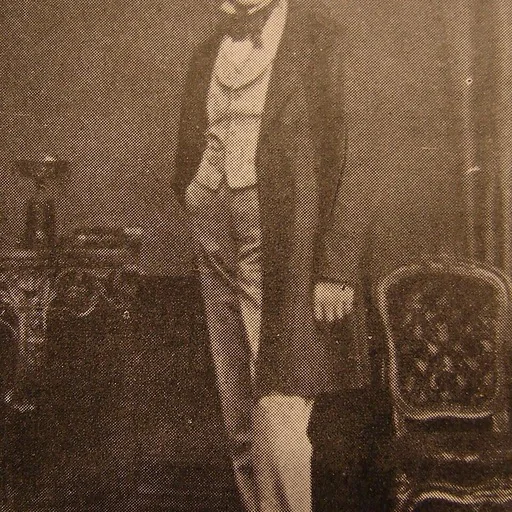
Louis Haghe (17 March 1806 – 9 March 1885) was a lithographer and watercolourist from the Netherlands and then the United Kingdom.

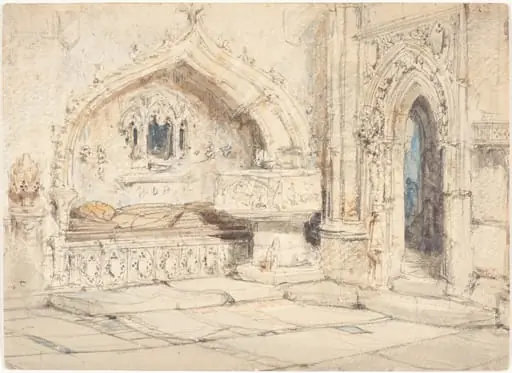 Interior of a Church with a Wall Tomb and Medieval Font
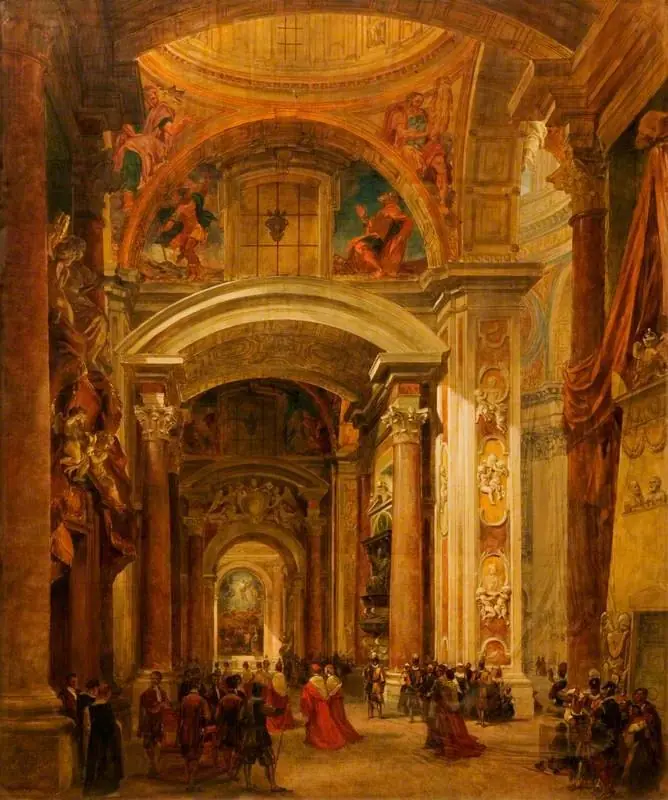 Interior of St Peter's, Rome
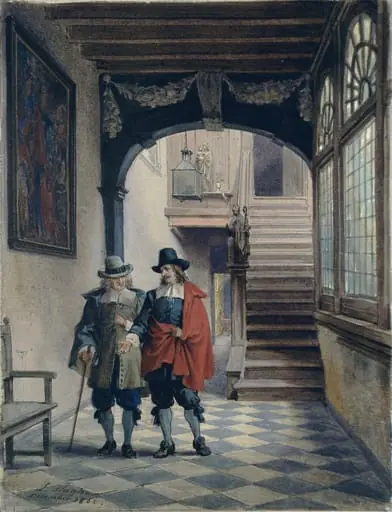 The Corridor, Brewer's Hall, Antwerp
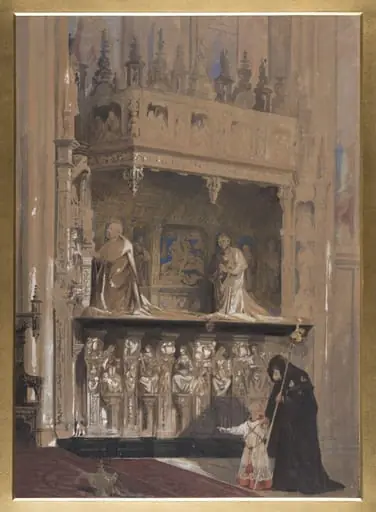 Monument of the Cardinald D'Amboise in Rouen Cathedral
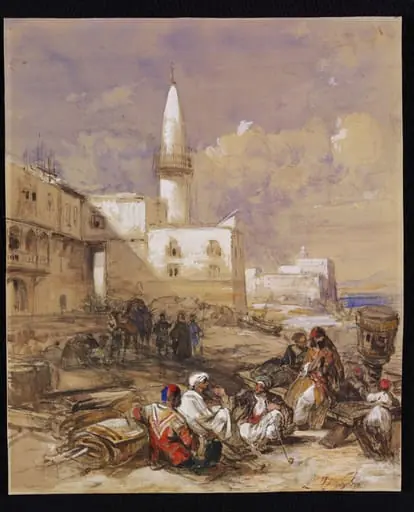 The Quay at Suez
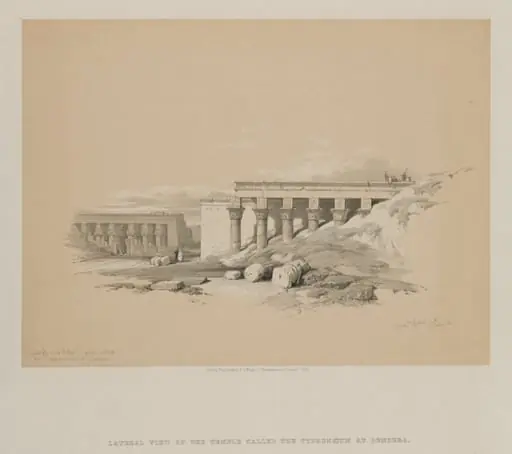 Egypt and Nubia, Volume II: Lateral View of the Temple called The Typhonoeum at Dendera
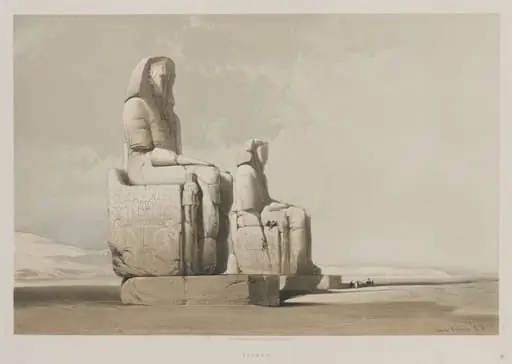 Egypt and Nubia, Volume I: Thebes
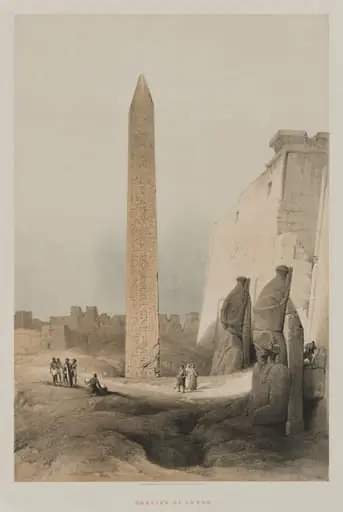 Egypt and Nubia, Volume I: Luxor
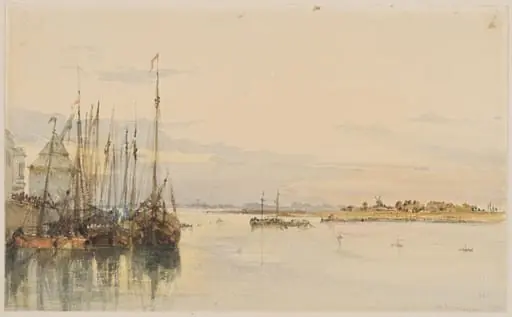 Nimwegen
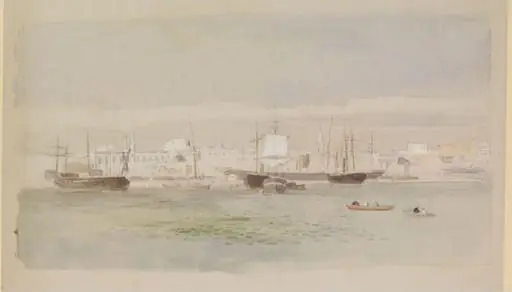 Shipping in Alexandria Harbour
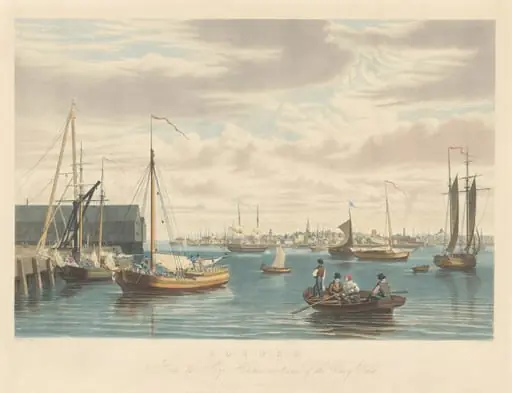 Boston: From the Ship House West End of the Navy Yard
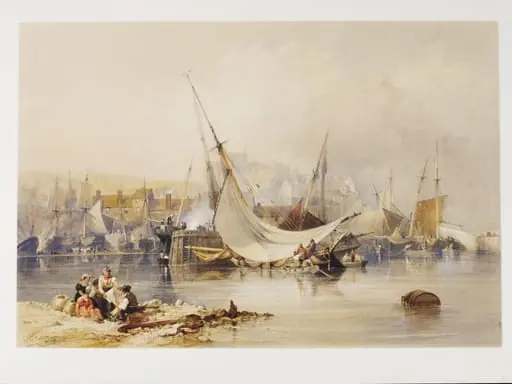 Whitby
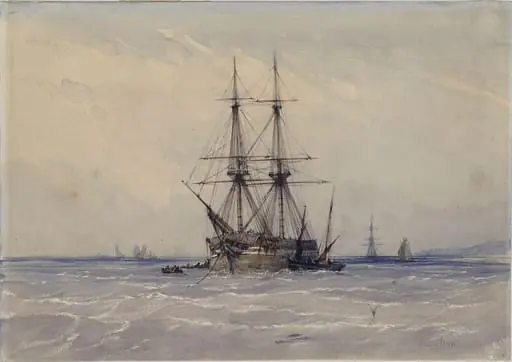 Brig at Anchor, and Boats Alongside
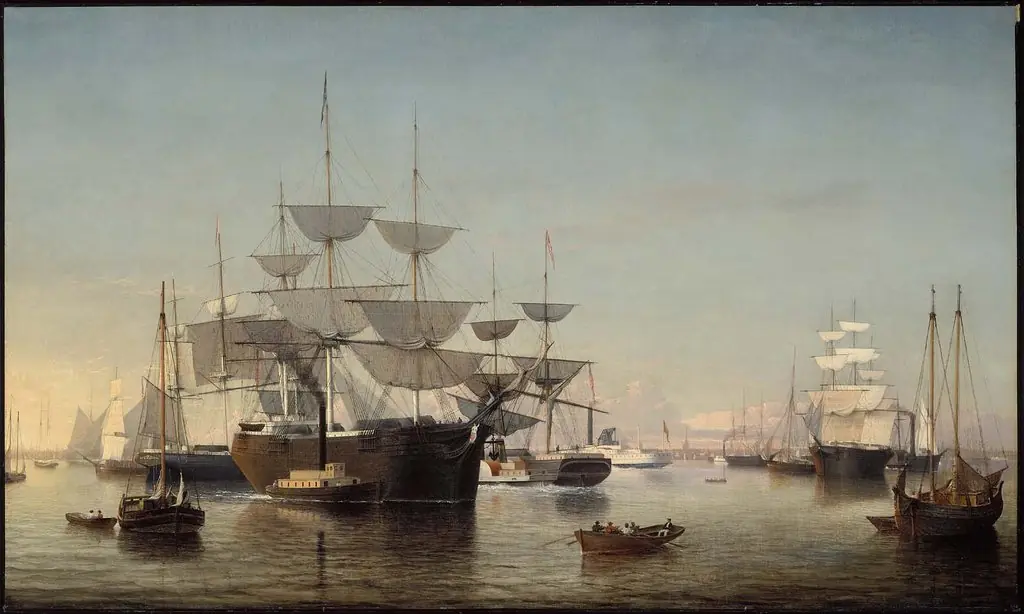 New York Harbor
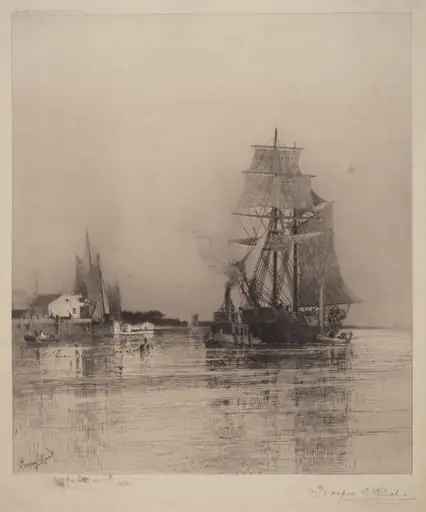 In Low Tide
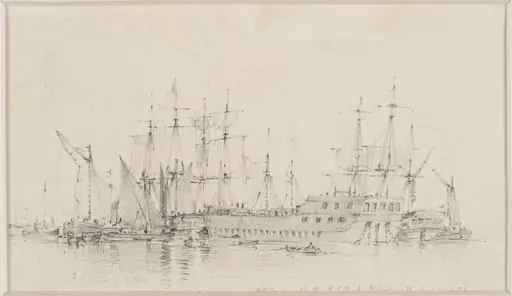 Old Mag off the East India Dock, Blackwall
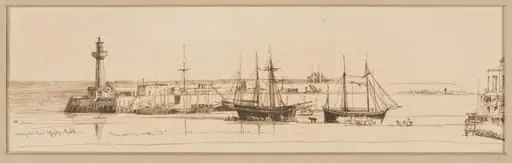 Margate Pier
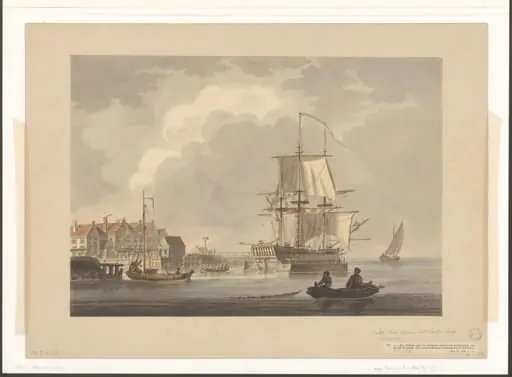 Untitled
 Egypt and Nubia, Volume II: Hagar Setsilis
 New Orleans: Taken from the Opposite Side, a Short Distance above the Middle or Picayyune Ferry