Artwork
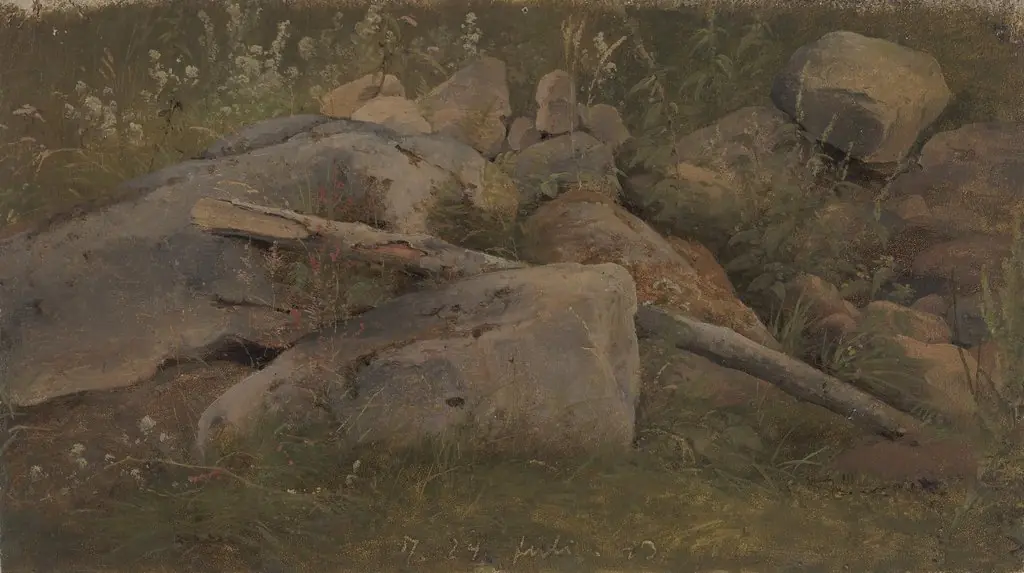
Study of a Stone Heap
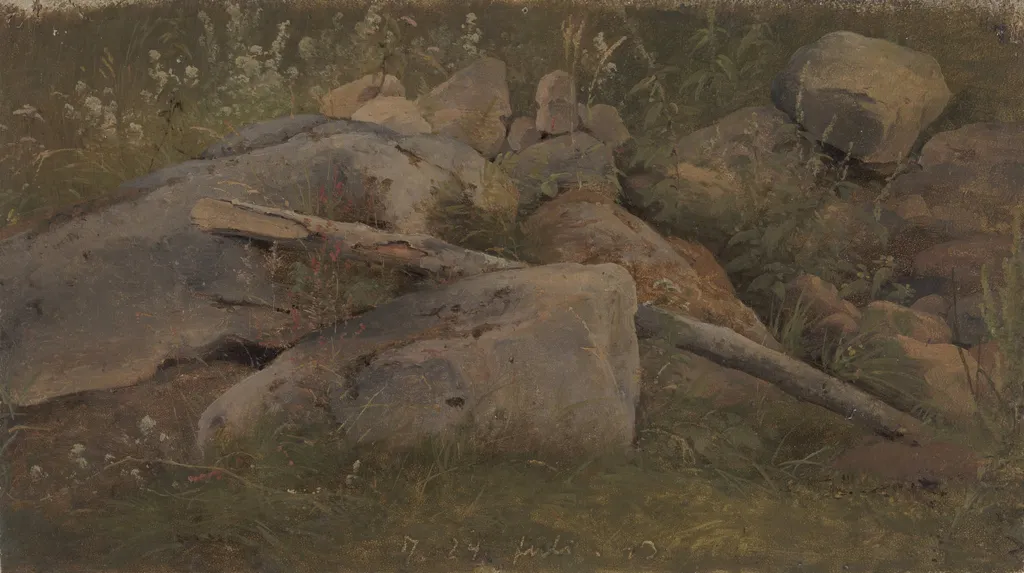
Study of a Stone Heap is a drawing by the Romanticist artist Unknown. It dates from 1843 and is held in the collection of the Statens Museum for Kunst. Created in 1843 by 1321_person, this oil painting depicts a modest accumulation of stones in an open field.
About this work
Overview
It is part of the collection at the Museum of Ethnography, where it is preserved as a quiet observation of natural accumulation rather than a formal monument.
Created in 1843 by 1321_person, this oil painting depicts a modest accumulation of stones in an open field. It is part of the collection at the Museum of Ethnography, where it is preserved as a quiet observation of natural accumulation rather than a formal monument. The composition avoids dramatic elements, focusing instead on the quiet persistence of geological and botanical life in rural terrain.
Subject & Meaning
The pile of stones, weathered and uneven, suggests human activity—perhaps boundary markers or cleared field debris—left to return to nature. Surrounding vegetation, lush and unmanaged, contrasts with the stones’ inert presence, implying time’s slow reclamation of human marks. The work invites contemplation of impermanence and the subtle interplay between labor and decay.
Technique & Style
Rendered in muted earth tones, the stones are modeled with soft transitions of gray and brown, emphasizing texture over detail. The brushwork is deliberate but unobtrusive, allowing the natural irregularities of the stones and the delicate growth of grass to dominate. The composition is low-contrast and horizontally grounded, aligning with observational traditions of 19th-century landscape studies.
History & Provenance
The painting entered the Museum of Ethnography’s collection in the late 19th century, likely acquired as part of a broader interest in vernacular landscapes and rural life. Its attribution to 1321_person is documented in early catalog records, though little is known about the artist’s broader output. The work has remained in institutional custody since its acquisition, with no evidence of public exhibition prior to the 20th century.
Context
Produced during a period when European artists increasingly turned to humble, everyday scenes, this study reflects a shift away from idealized nature toward the unembellished realities of the countryside. Though not formally part of the Romantic movement, its quiet reverence for natural processes aligns with broader cultural interests in authenticity and the passage of time.
Legacy
The painting remains a modest but persistent example of 19th-century observational art, valued for its restraint and attention to subtle environmental detail. It contributes to scholarly understanding of how artists engaged with non-monumental landscapes, offering a counterpoint to more dramatic or symbolic treatments of nature in the same era.
Artist & collection

 Domestic Scene
 Giacomo and Cardinal Marco, investing Andrea, Abbot of San Zeno, with his Benefice
 The Nymph of Fontainebleau
 Portrait of a Woman
 Madonna and Child with Saints in the Enclosed Garden
 Venus and Minerva
 Family Group of Four on Sofa
 Wall painting from Room H of the Villa of P. Fannius Synistor at Boscoreale
 Rocks in the Forest of Fontainebleau
 Study from Nature
 A View of Putte
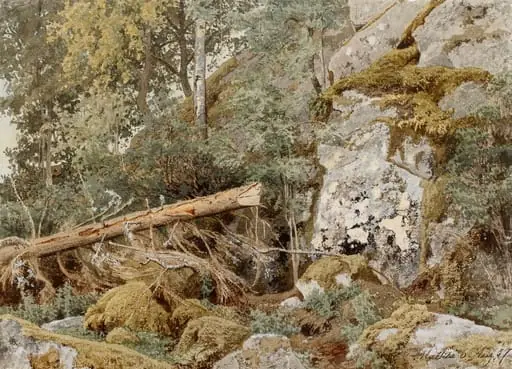 Sammaleinen kallio metsässä
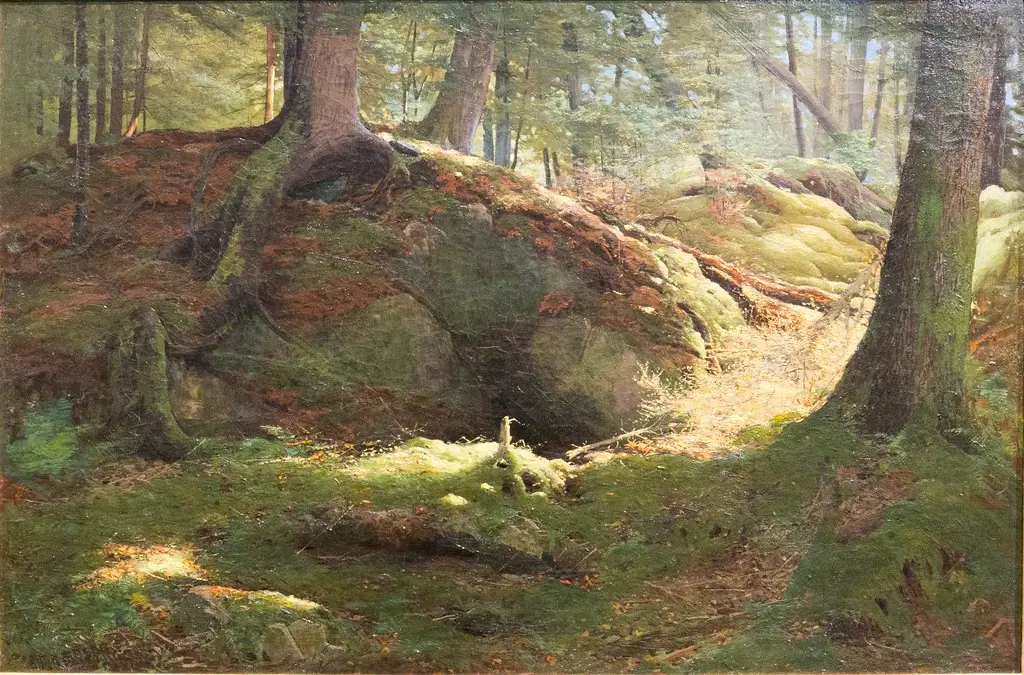 Deep in the Woods
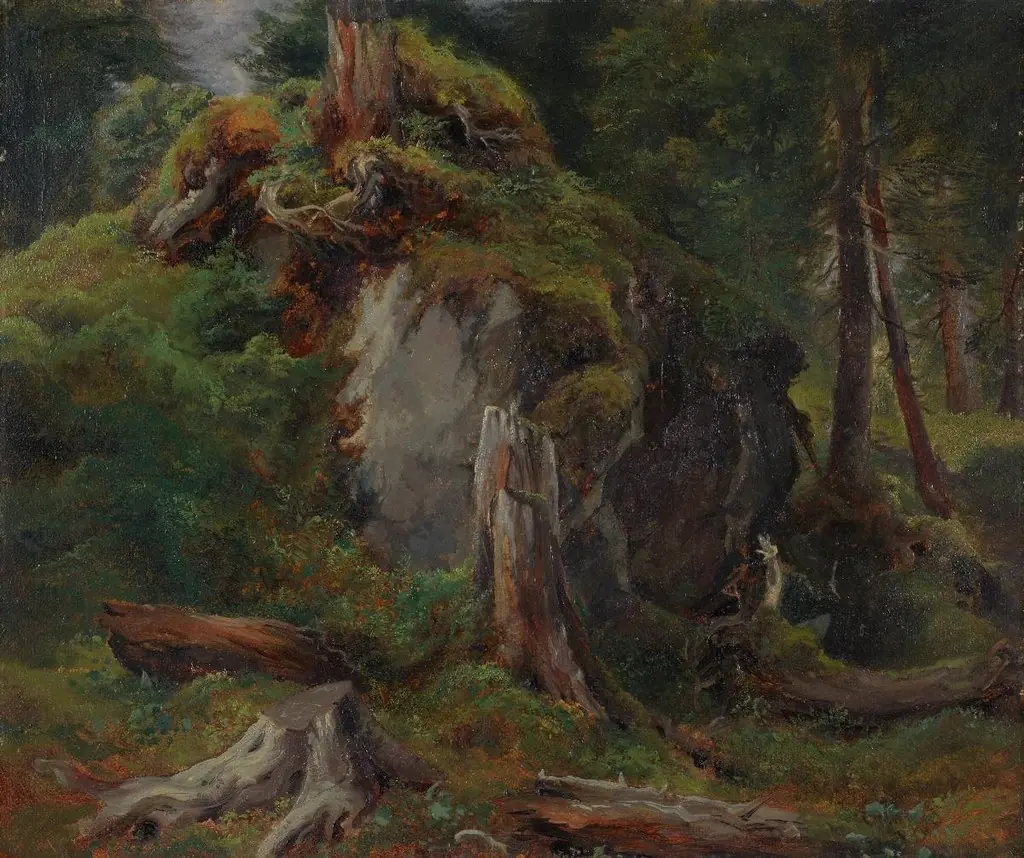 Rocher couvert de mousses et troncs d'arbres abattus
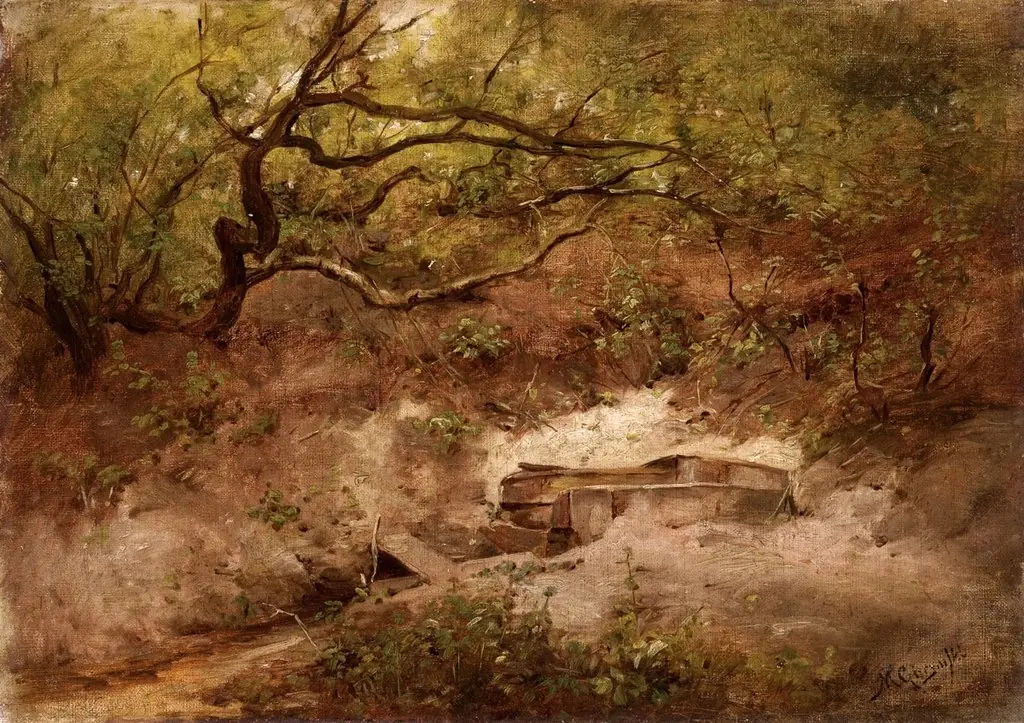 Apple-tree over stream.
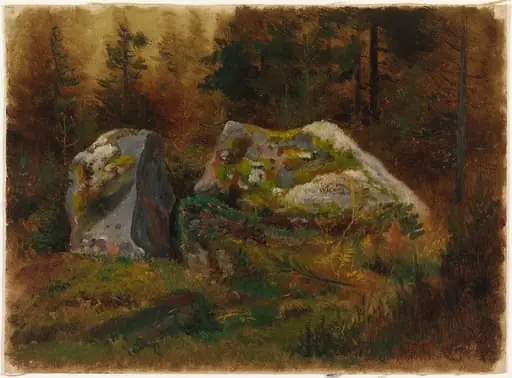 Sammaleisia kiviä metsässä
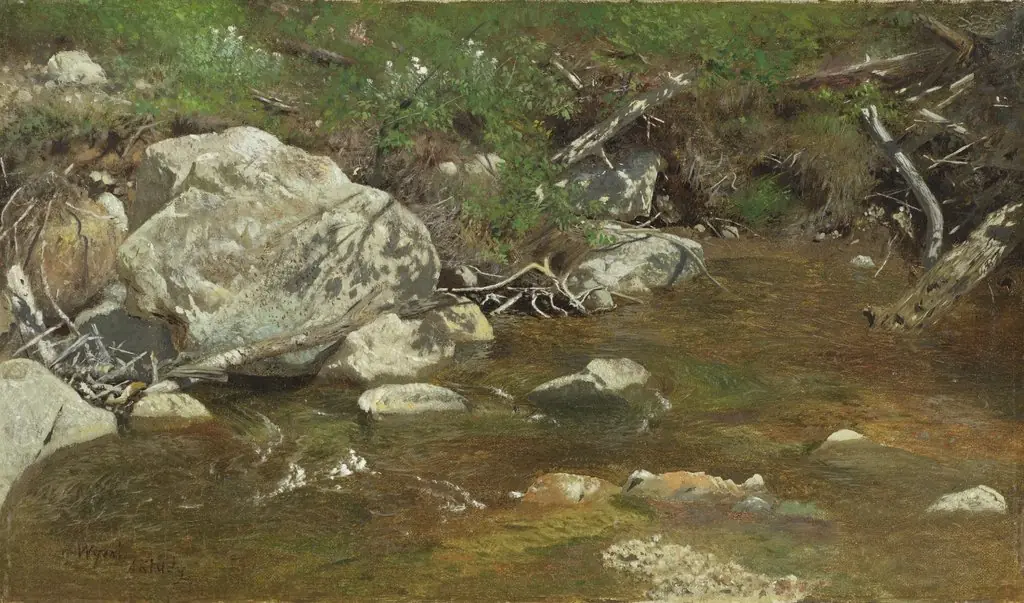 Mountain Brook: A Study
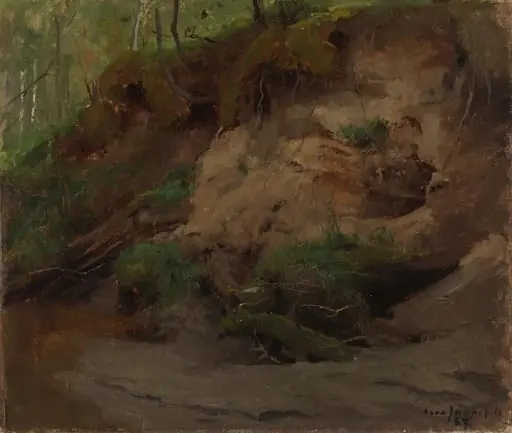 Metsää ja hiekkarinne
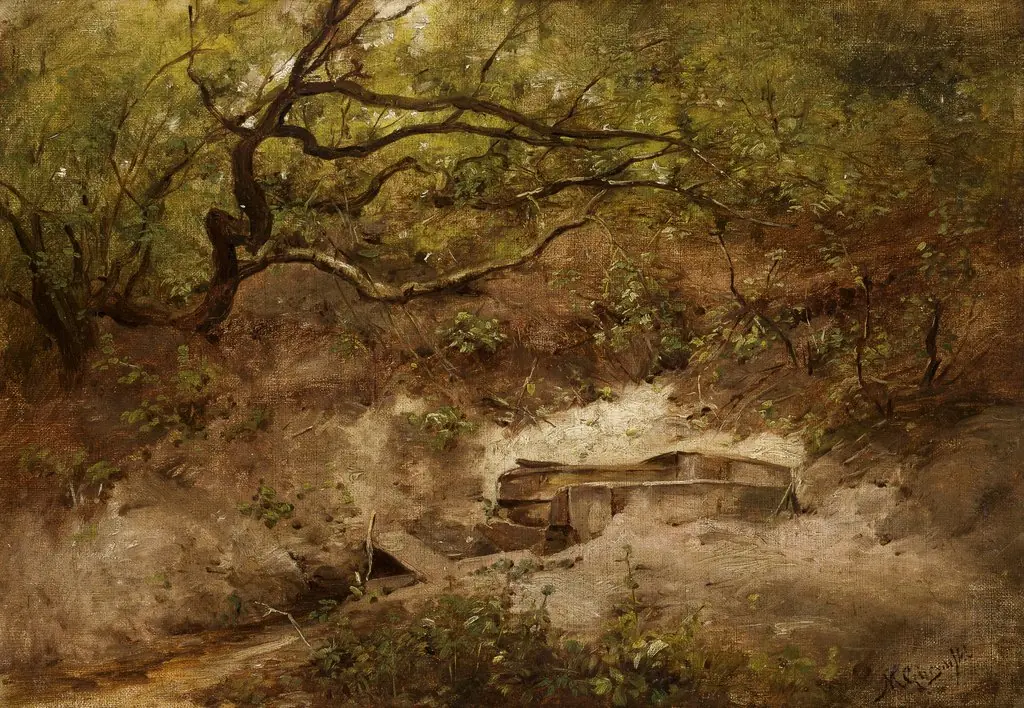 An Apple Tree at a Stream
 Study of a Stone Heap