Artwork
Der læsses tang ved Hornbæk Strand
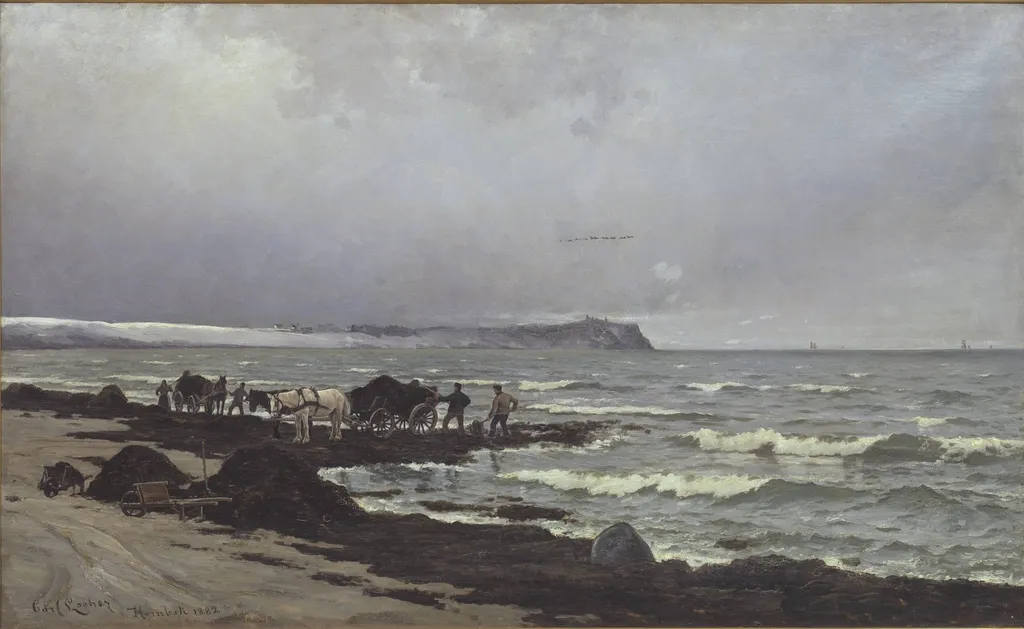
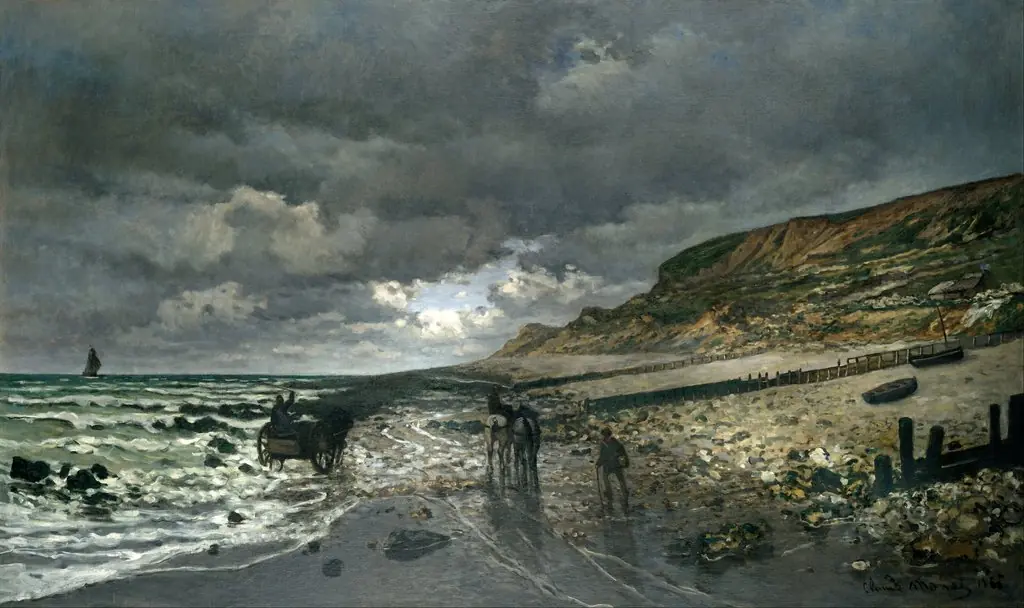
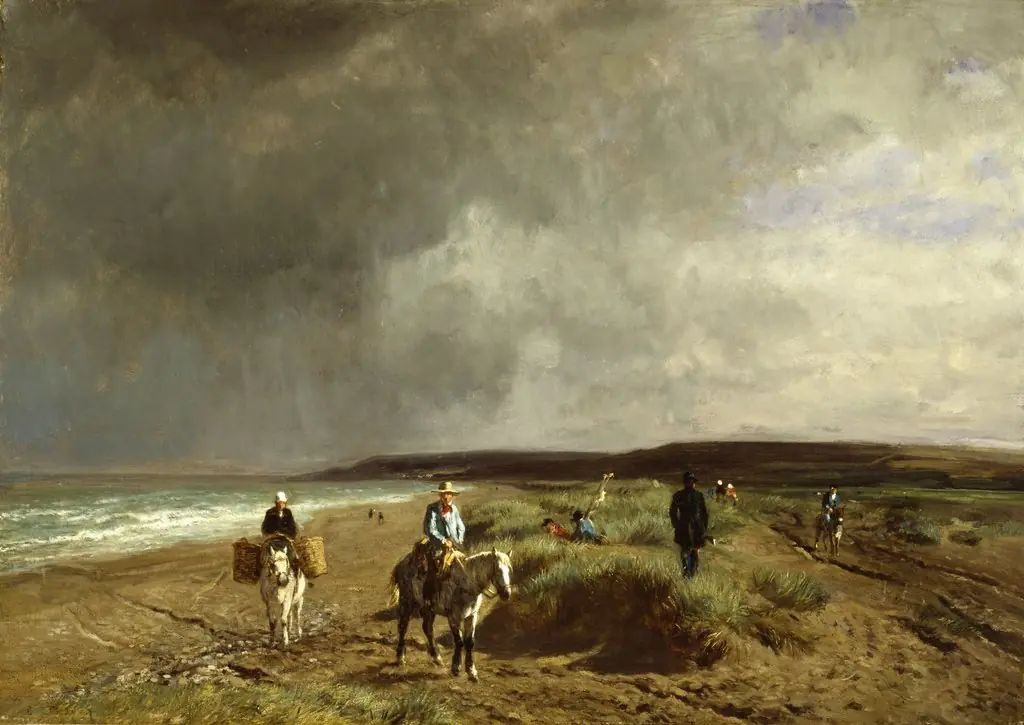
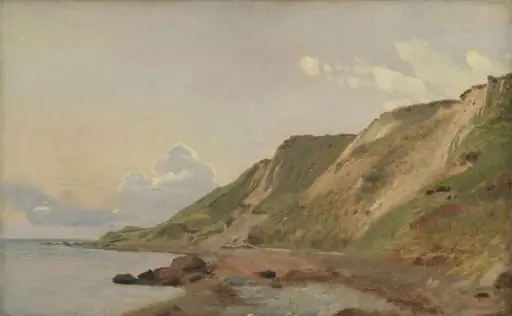
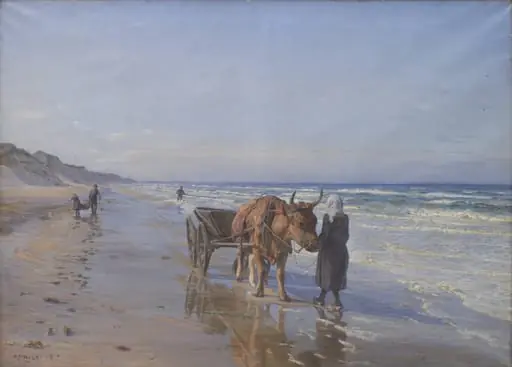
Der læsses tang ved Hornbæk Strand is a photography by the Impressionist artist Unknown. It dates from 1882 and is held in the collection of the Statens Museum for Kunst. Painted in 1882 by 1349_person, this work depicts a coastal scene at Hornbæk Strand where seaweed is being collected.
About this work
Overview
Painted in 1882 by 1349_person, this work depicts a coastal scene at Hornbæk Strand where seaweed is being collected. The composition centers on a horse-drawn cart surrounded by laborers, with the sea and rocky shore forming a quiet backdrop. It is part of the collection at the Museum of Ethnography, reflecting an interest in everyday rural labor during the late 19th century.
Subject & Meaning
The scene captures the practical activity of gathering seaweed, a common coastal practice used for fertilizer and fuel. Figures are engaged in quiet, repetitive labor, emphasizing the rhythm of subsistence work rather than romanticizing the landscape. The absence of idealization suggests a documentary intent, honoring the dignity of manual toil in a specific regional context.
Technique & Style
The artist employs a restrained palette dominated by grays, browns, and muted greens, aligning with naturalistic observation. Textural detail is rendered with precision—individual strands of seaweed, the coarse fur of horses, and the weave of clothing are carefully distinguished. Light falls evenly, avoiding dramatic contrasts, which supports the work’s unembellished tone.
History & Provenance
Created in 1882, the painting entered the Museum of Ethnography’s collection, likely through acquisition or donation tied to ethnographic studies of Danish coastal communities. Its preservation reflects early institutional interest in documenting vernacular life, though its specific journey from studio to museum remains undocumented in public records.
Context
In late 19th-century Denmark, rural labor and coastal economies were subjects of growing cultural interest. Artists and ethnographers alike turned to everyday scenes as records of social life. This work aligns with broader movements that valued authenticity over idealized narratives, capturing a practice that was gradually fading with industrialization.
Legacy
Though not widely exhibited outside specialized collections, the painting contributes to a body of Nordic realist works that document vanishing rural practices. Its quiet observation has influenced later studies of labor in coastal communities, serving as a visual archive rather than a celebrated artistic statement.
Artist & collection

 Domestic Scene
 Giacomo and Cardinal Marco, investing Andrea, Abbot of San Zeno, with his Benefice
 The Nymph of Fontainebleau
 Portrait of a Woman
 Madonna and Child with Saints in the Enclosed Garden
 Venus and Minerva
 Family Group of Four on Sofa
 Wall painting from Room H of the Villa of P. Fannius Synistor at Boscoreale