Artwork
La Pointe de la Hève at Low Tide
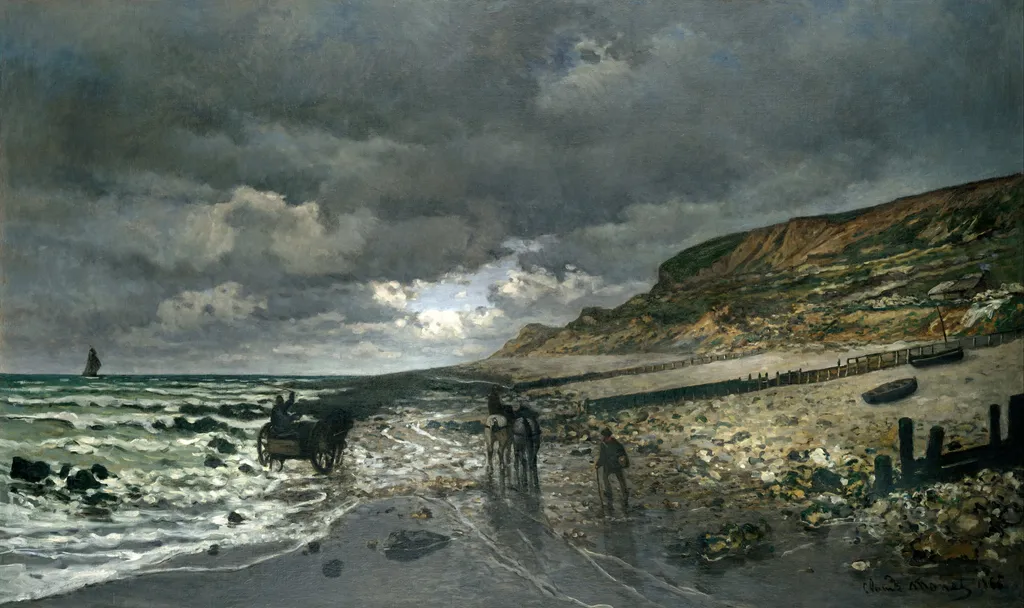
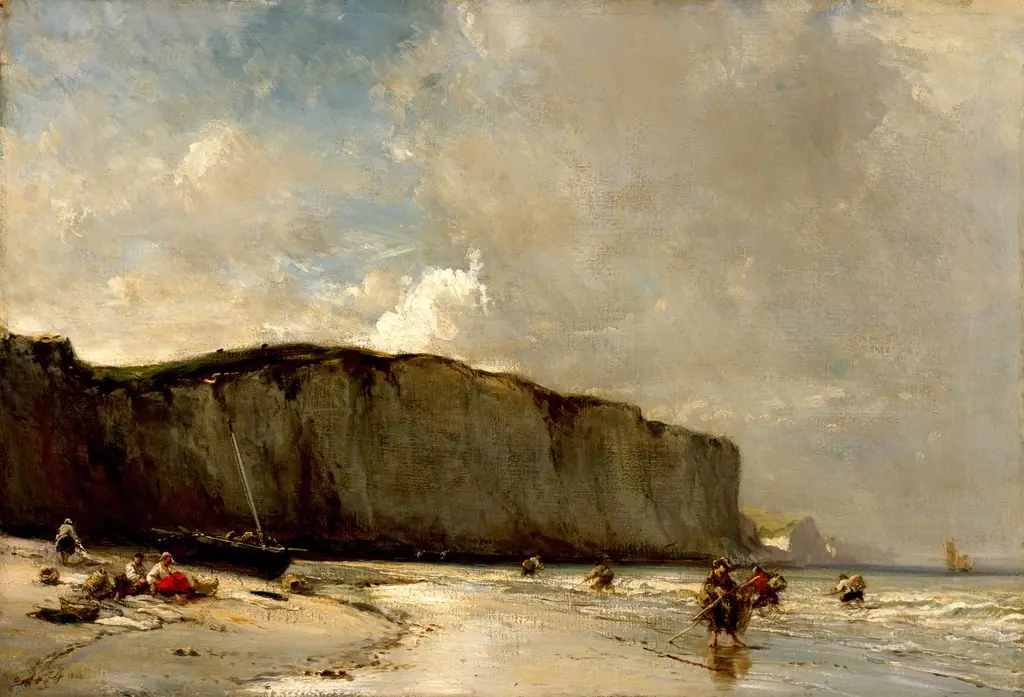
La Pointe de la Hève at Low Tide is an oil painting by the Realist artist Claude Monet. It dates from 1865 and is held in the collection of the Kimbell Art Museum.
About this work
Overview
Its quiet atmosphere and observational focus reflect Monet’s early engagement with natural light and landscape before his later Impressionist innovations.
Painted in 1865, La Pointe de la Hève at Low Tide is an oil on canvas work by Claude Monet depicting a coastal scene in Normandy. The composition captures the shoreline during low tide, with rocky outcrops, scattered figures, and draft animals rendered in subdued tones. Its quiet atmosphere and observational focus reflect Monet’s early engagement with natural light and landscape before his later Impressionist innovations.
Subject & Meaning
The scene portrays a quiet moment along the Normandy coast, where a handful of figures and horses move across the exposed tidal flats. Their small scale emphasizes the vastness of the natural environment, suggesting a contemplative relationship between humans and the sea. No narrative is imposed; instead, the painting conveys the stillness and transient character of the shore at low tide.
Technique & Style
Monet applied oil paint with loose, textured brushwork to suggest the movement of water and the roughness of rock. The palette is dominated by muted grays, browns, and muted whites, avoiding vivid color in favor of atmospheric harmony. The sky and sea are rendered with broad strokes, while figures are simplified into silhouettes, reinforcing the painting’s emphasis on mood over detail.
History & Provenance
Created during Monet’s formative years, the painting remained in private collections until acquired by the Kimbell Art Museum in Fort Worth, Texas. Its early date places it among his pre-Impressionist works, reflecting his study of natural phenomena under the influence of Eugène Boudin and other Barbizon painters. The work’s survival and eventual institutional acquisition mark its significance in his artistic development.
Context
Painted during a period when Monet was exploring coastal subjects in Normandy, the work aligns with broader 19th-century interests in seaside life and the effects of weather on landscape. Unlike idealized marine paintings of the time, this scene avoids drama or sentiment, instead offering a direct, unembellished view of the coast — a precursor to his later focus on transient light and atmosphere.
Legacy
Though less known than his later series, this painting illustrates Monet’s evolving approach to observation and composition. Its restrained palette and emphasis on natural conditions foreshadow his mature style, contributing to the foundation of Impressionism. It remains a quiet but important document of his early commitment to painting directly from nature.
Own this work as a print
Artist & collection
Artist
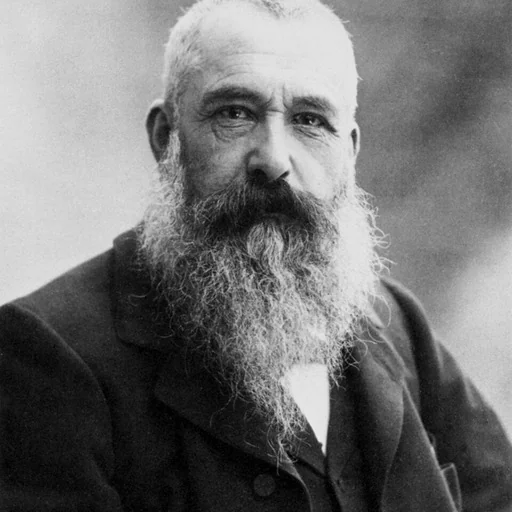
Oscar-Claude Monet was born in Paris on November 14, 1840, and raised from the age of five in Le Havre, where he began selling charcoal caricatures as a teenager.