Artwork
Haven
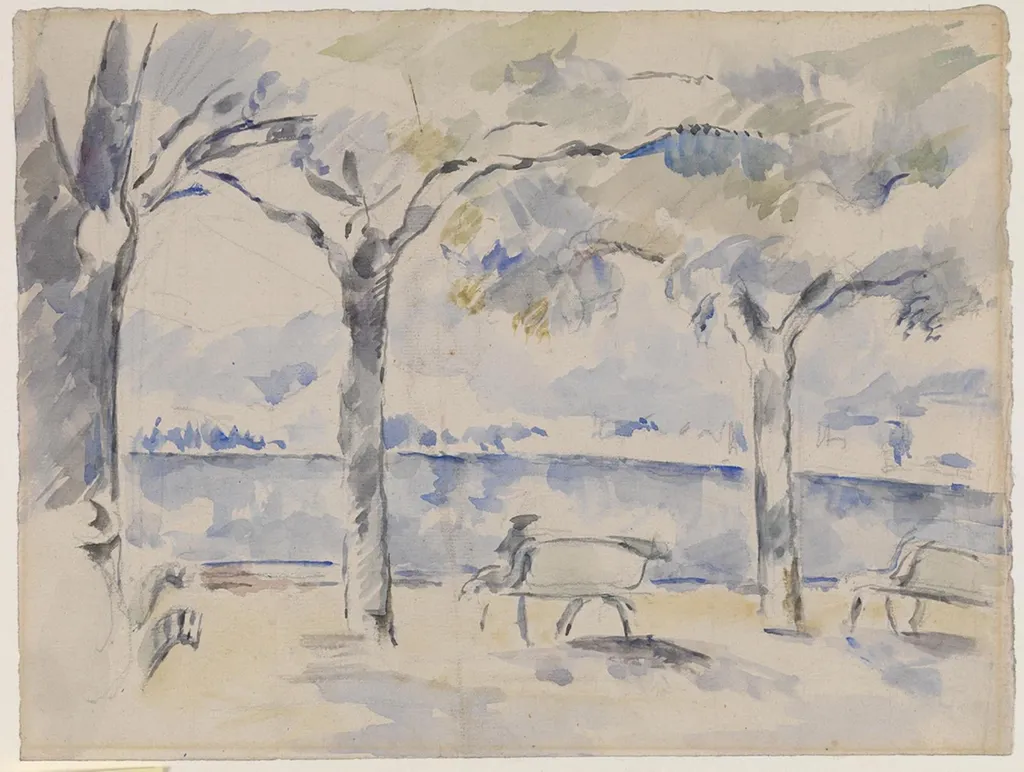
Haven is an unspecified painting by Unknown. It dates from 1850 and is held in the collection of the Statens Museum for Kunst.
About this work
Overview
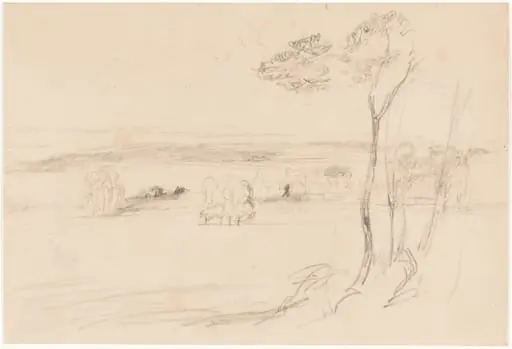
It depicts a quiet rural scene with three slender trees beside a body of water, a horse and rider on a sandy path, and a pale, softly graded sky.
Created around 1850, Haven is a landscape painting attributed to 1387_person. It depicts a quiet rural scene with three slender trees beside a body of water, a horse and rider on a sandy path, and a pale, softly graded sky. The work is held in the collection of the Museum of Ethnography. Its loose, rapid brushwork suggests an impressionistic approach, capturing a fleeting moment rather than a detailed rendering.
Subject & Meaning
The painting presents a solitary equestrian figure moving along a path beside water and sparse trees, evoking a sense of stillness and isolation. No narrative or symbolic elements are overtly present; the focus lies in the quiet interaction between human presence and natural elements. The absence of detail invites contemplation of solitude and transience within the landscape.
Technique & Style
The artist employs loose, fluid brushstrokes and a restrained palette of pale blues, grays, and whites to suggest form rather than define it. The dark, undulating branches of the trees contrast with the light sky, while the horse and rider are rendered with minimal definition. The surface shows little texture, indicating thin paint application, not impasto, reinforcing the sketch-like immediacy of the composition.
History & Provenance
The painting entered the Museum of Ethnography’s collection in the late 19th or early 20th century, though its earlier ownership remains undocumented. Its attribution to 1387_person is based on stylistic comparison and archival references, as no signed or dated version is known. The work’s modest scale and unassuming subject suggest it may have been a personal study rather than a commissioned piece.
Context
Created during a period when European artists increasingly turned to everyday landscapes and informal scenes, Haven reflects a shift away from grand historical or mythological themes. Its emphasis on atmosphere and transient light aligns with emerging trends in plein air painting, even if it lacks the full development of later Impressionist techniques.
Legacy
Haven remains a quiet example of mid-19th-century landscape study, valued for its restraint and sensitivity to natural light. While not widely exhibited, it contributes to understanding the evolution of observational painting in the decades before Impressionism gained prominence. Its preservation in an ethnographic museum underscores its role as a cultural artifact of rural life and artistic practice.
Artist & collection

 Domestic Scene
 Giacomo and Cardinal Marco, investing Andrea, Abbot of San Zeno, with his Benefice
 The Nymph of Fontainebleau
 Portrait of a Woman
 Madonna and Child with Saints in the Enclosed Garden
 Venus and Minerva
 Family Group of Four on Sofa
 Wall painting from Room H of the Villa of P. Fannius Synistor at Boscoreale
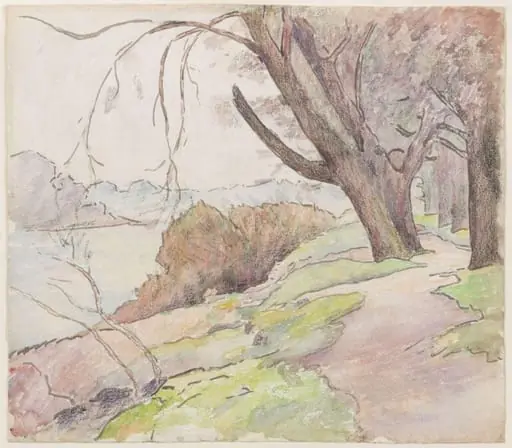 Towpath, Richmond, 1913
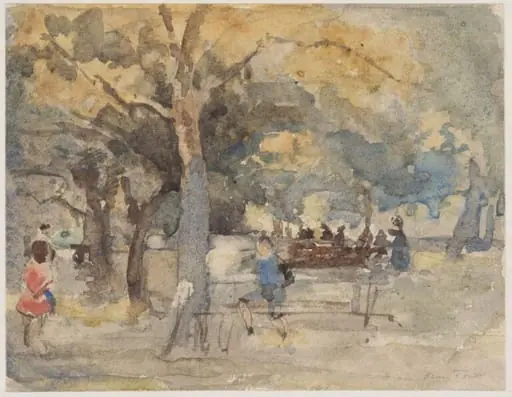 Scene in a park with two children playing
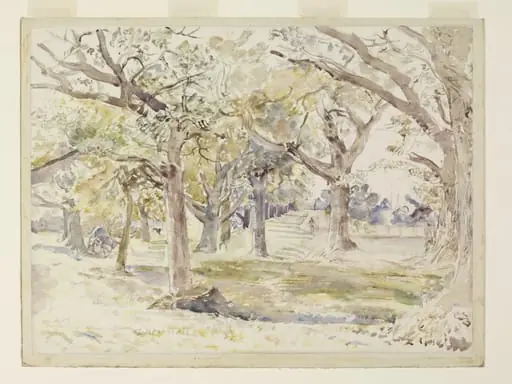 The Avenue, Bucklebury
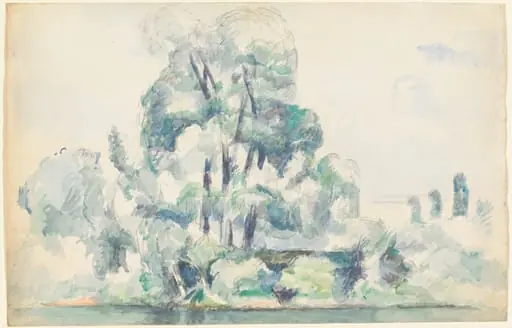 Banks of the Seine at Médan
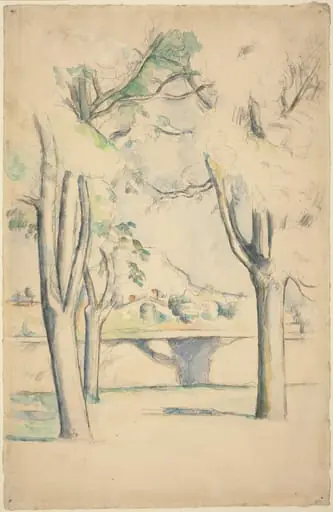 Mont Sainte-Victoire Seen beyond the Wall of the Jas de Bouffan
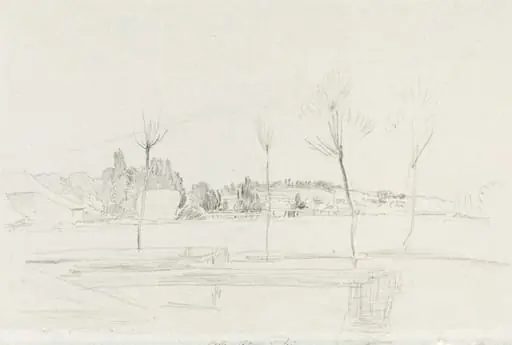 Landscape in Hertfordshire
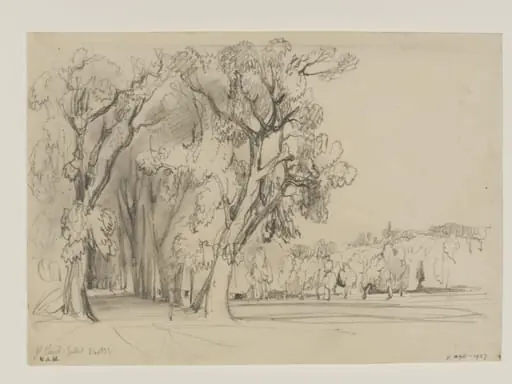 Drawing of St. Cloud
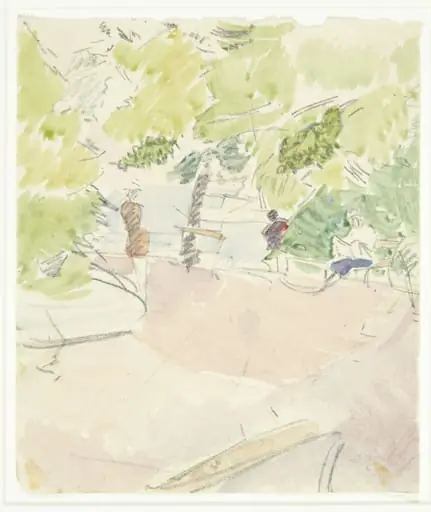 Farvestudie til Langeliniebilledet
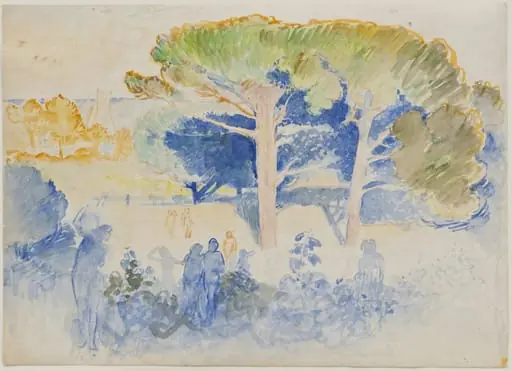 Untitled
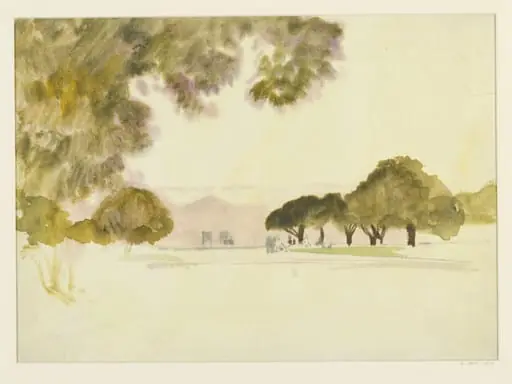 Study : lawn and trees : hills in the distance
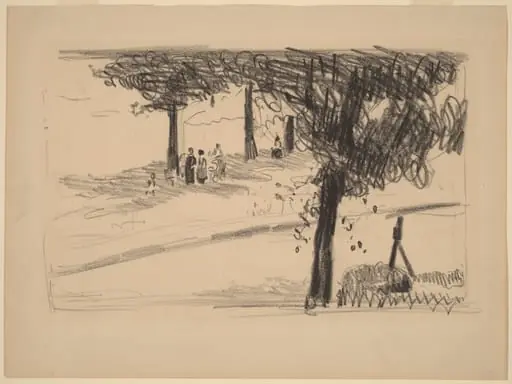 Under the Trees
 Trouville-sur-Mer