Artwork
Mont Sainte-Victoire Seen beyond the Wall of the Jas de Bouffan
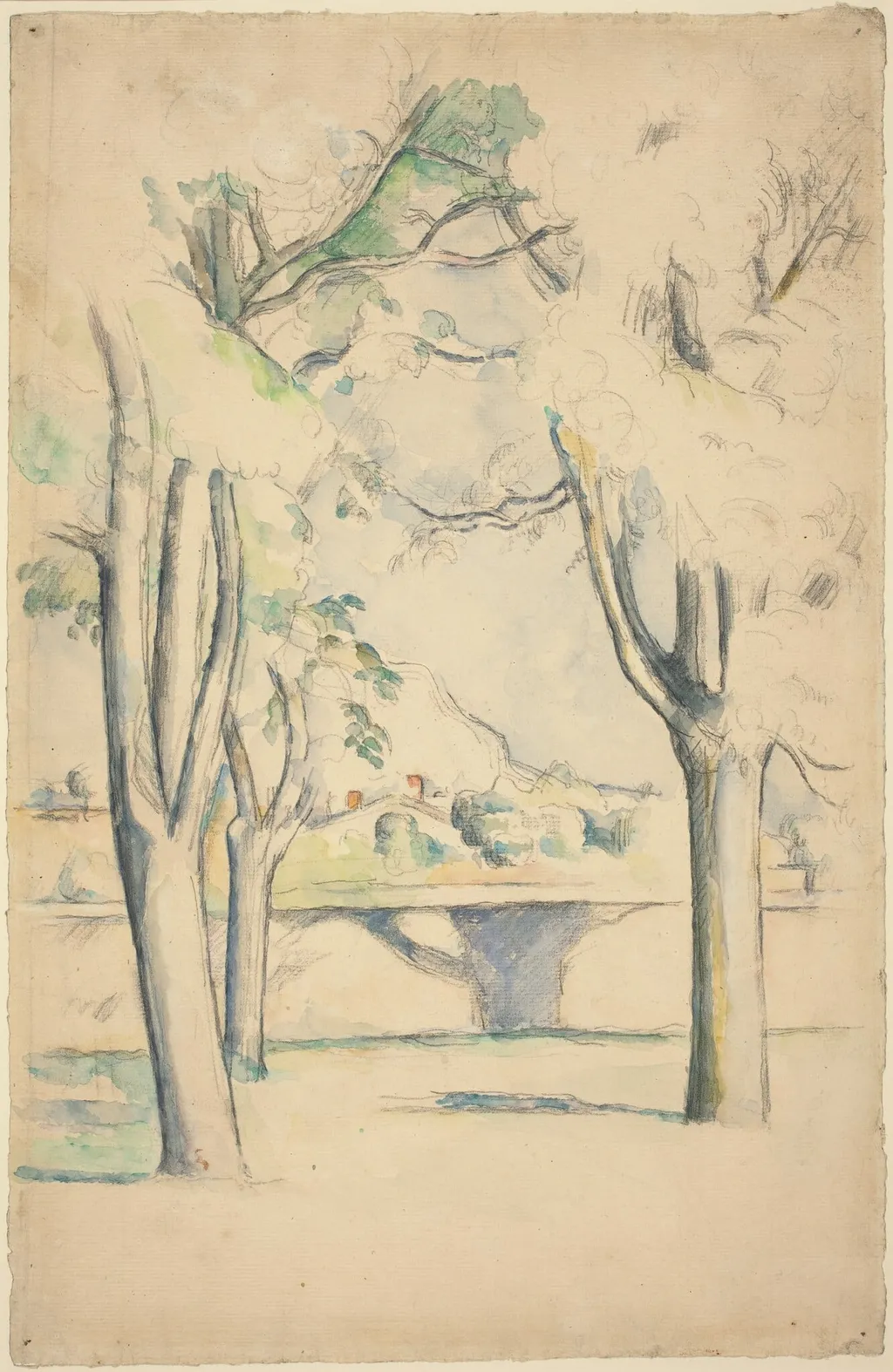
Mont Sainte-Victoire Seen beyond the Wall of the Jas de Bouffan is a graphite drawing by the Impressionist artist Paul Cezanne. It dates from 1886 and is held in the collection of the National Gallery of Art.
About this work
Overview
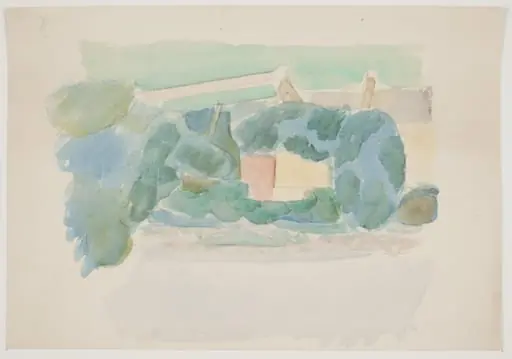
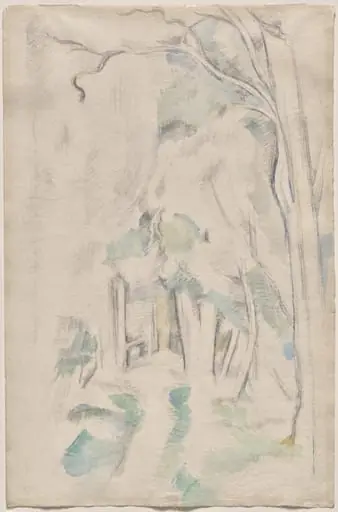
This drawing by Paul Cézanne, dated around 1886, depicts Mont Sainte-Victoire as seen from the grounds of Jas de Bouffan, his family’s estate near Aix-en-Provence. Executed in watercolor and graphite on laid paper, it belongs to a series of works in which Cézanne explored the mountain from varying distances and angles, using the landscape as a structural study rather than a mere scenic view.
Subject & Meaning
The composition centers on the distant mountain, framed by a low stone wall in the foreground. This barrier introduces a psychological and spatial divide between observer and subject, suggesting contemplation rather than direct access. The mountain, recurring in Cézanne’s oeuvre, functions as a constant, enduring form amid shifting perceptions of light and structure.
Technique & Style
Cézanne layered translucent watercolor washes over delicate graphite lines to build form without heavy outline. The foreground trees are rendered with loose, suggestive strokes, while the wall’s earthy tones ground the scene. Pencil underdrawing remains visible, revealing his methodical approach to volume and spatial relationships, blending observational precision with expressive abstraction.
History & Provenance
Created during Cézanne’s mature period at Jas de Bouffan, the work reflects his deepening engagement with the Provençal landscape after returning from Paris. It remained in his possession until his death, later entering private collections before being acquired by a public institution. Its survival in original condition offers insight into his working process on paper.
Context
In the mid-1880s, Cézanne moved away from Impressionist spontaneity toward a more structured analysis of nature. This drawing aligns with his broader effort to reconcile sensory experience with geometric order. While contemporaries pursued atmospheric effects, he sought underlying architecture in the landscape, laying groundwork for modern abstraction.
Legacy
Works like this contributed to a redefinition of landscape painting, influencing 20th-century artists who valued structural clarity over illusion. The integration of drawing and wash, the emphasis on form over detail, and the use of natural barriers to frame space became touchstones for later modernists seeking to decode visual reality through disciplined observation.
Artist & collection
Artist
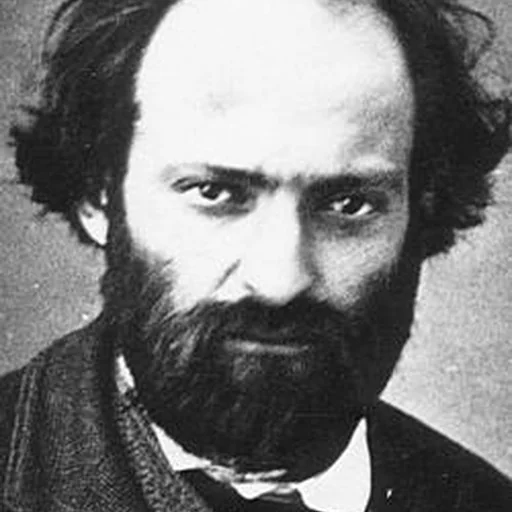
Paul Cézanne was born on January 19, 1839, in Aix-en-Provence, the son of a hatter turned wealthy banker.

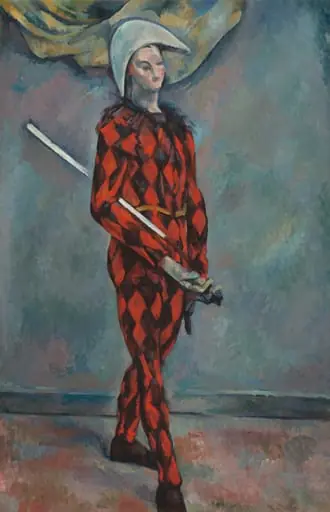 Harlequin
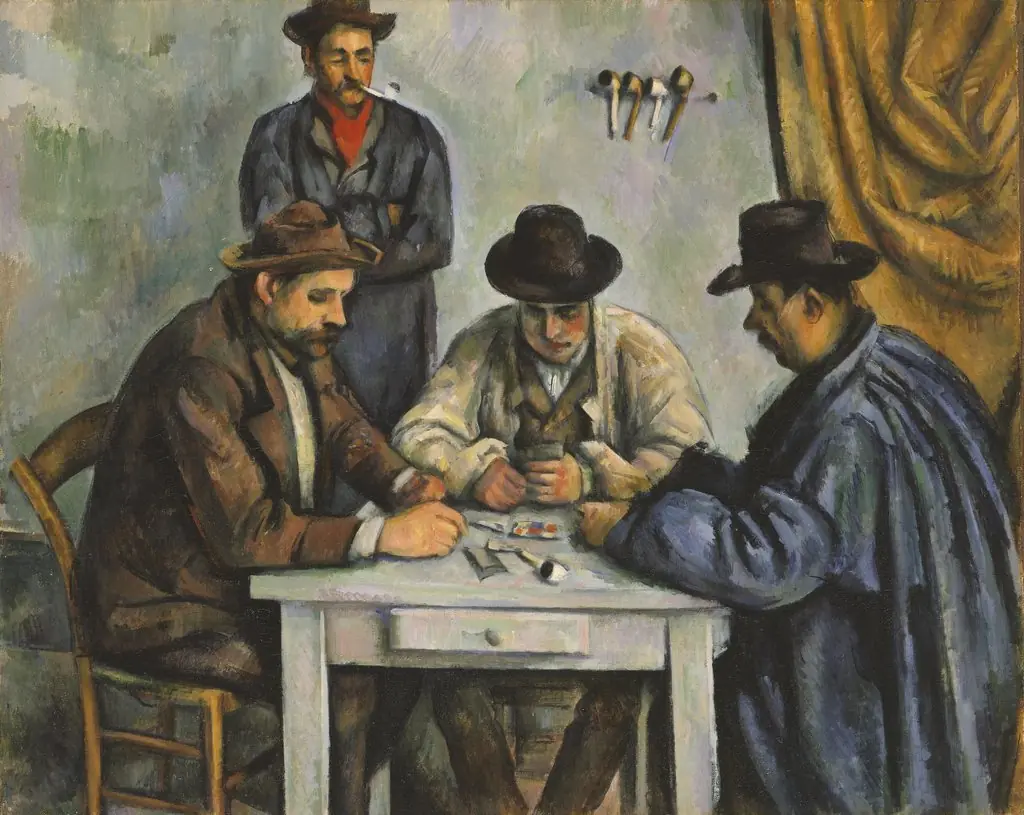 The Card Players
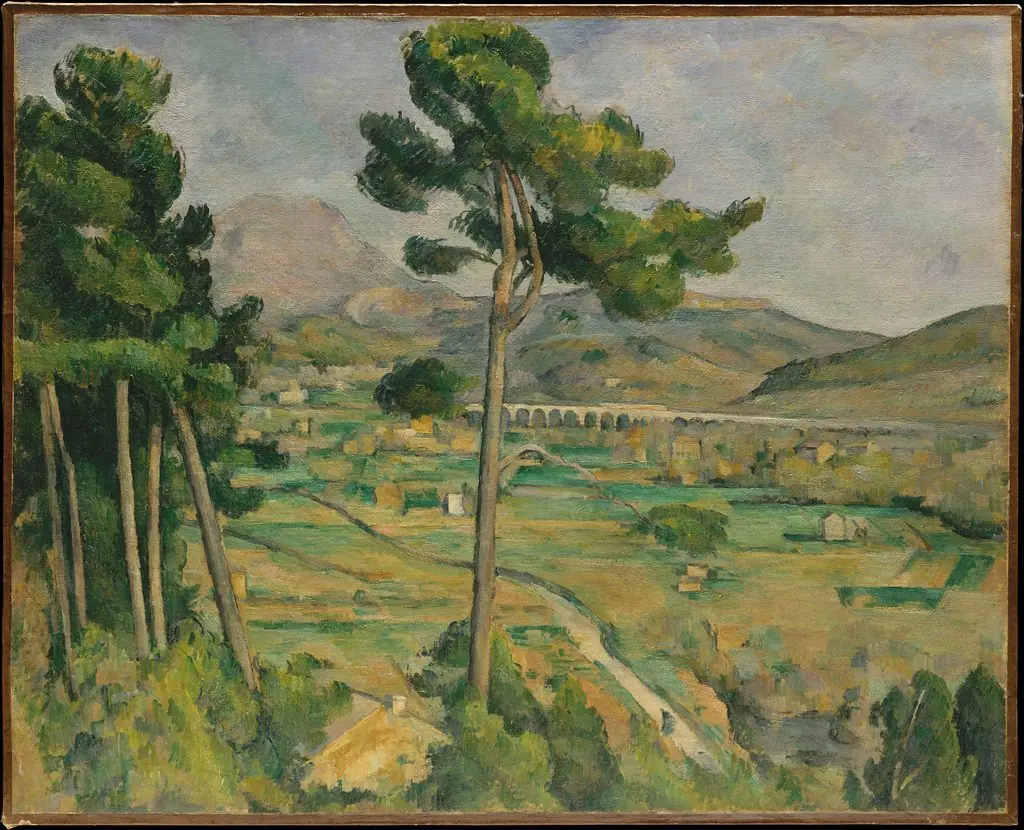 Mont Sainte-Victoire and the Viaduct of the Arc River Valley
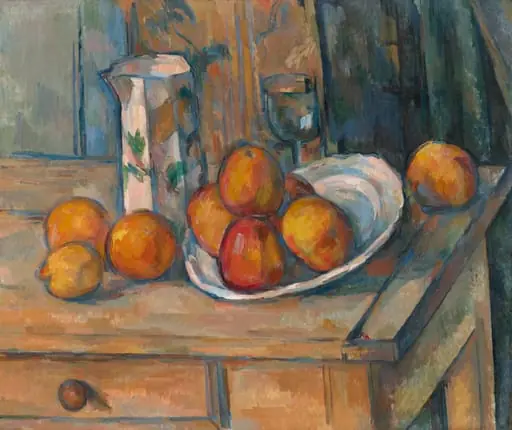 Still Life with Milk Jug and Fruit
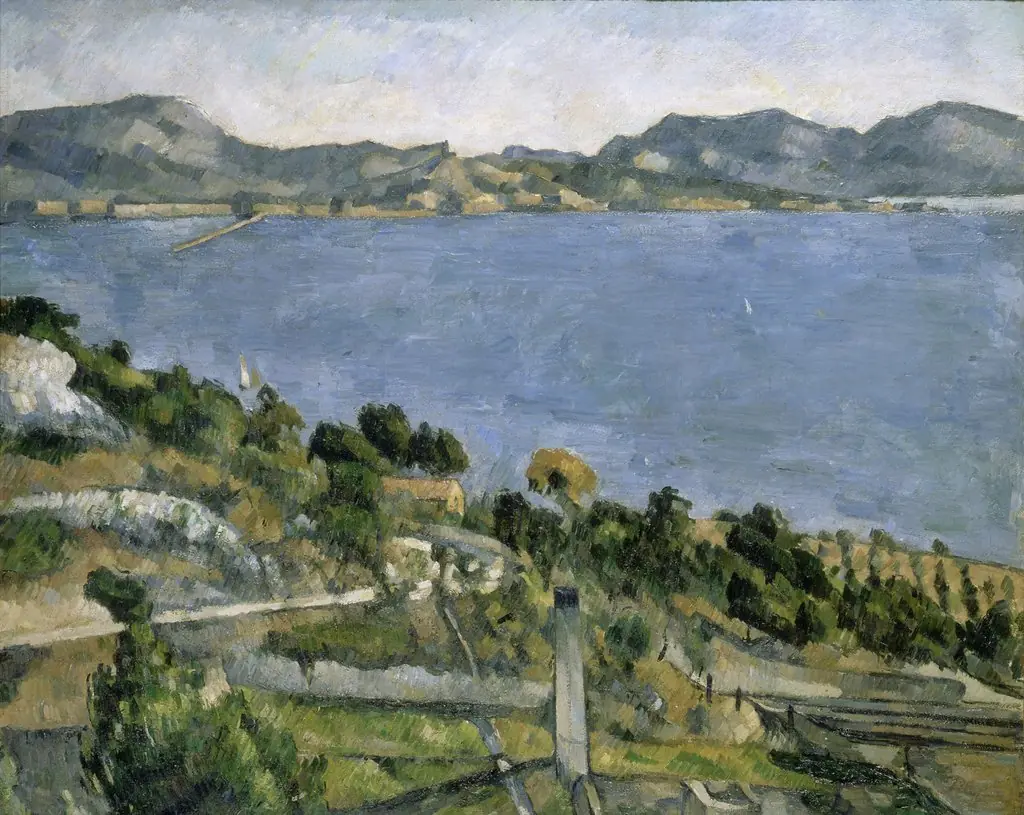 Le Golfe de Marseille vu de l'Estaque (The Gulf of Marseille Seen from L'Estaque)
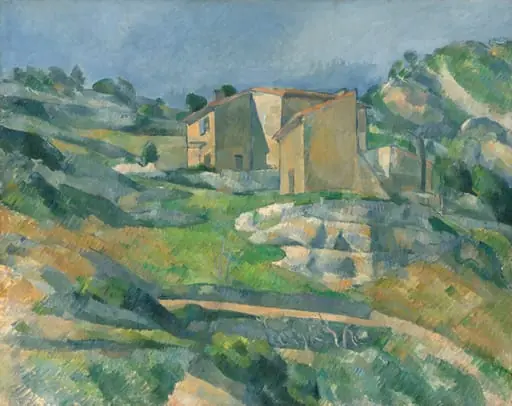 Houses in Provence: The Riaux Valley near L'Estaque
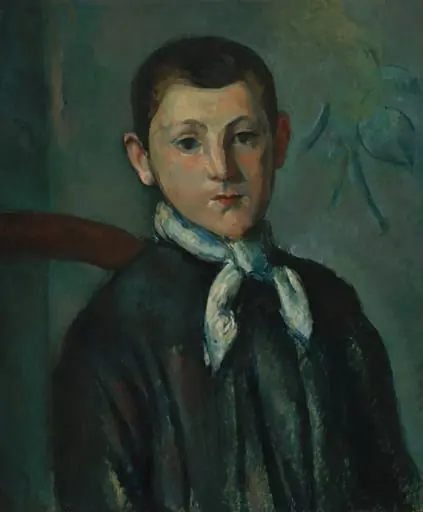 Louis Guillaume
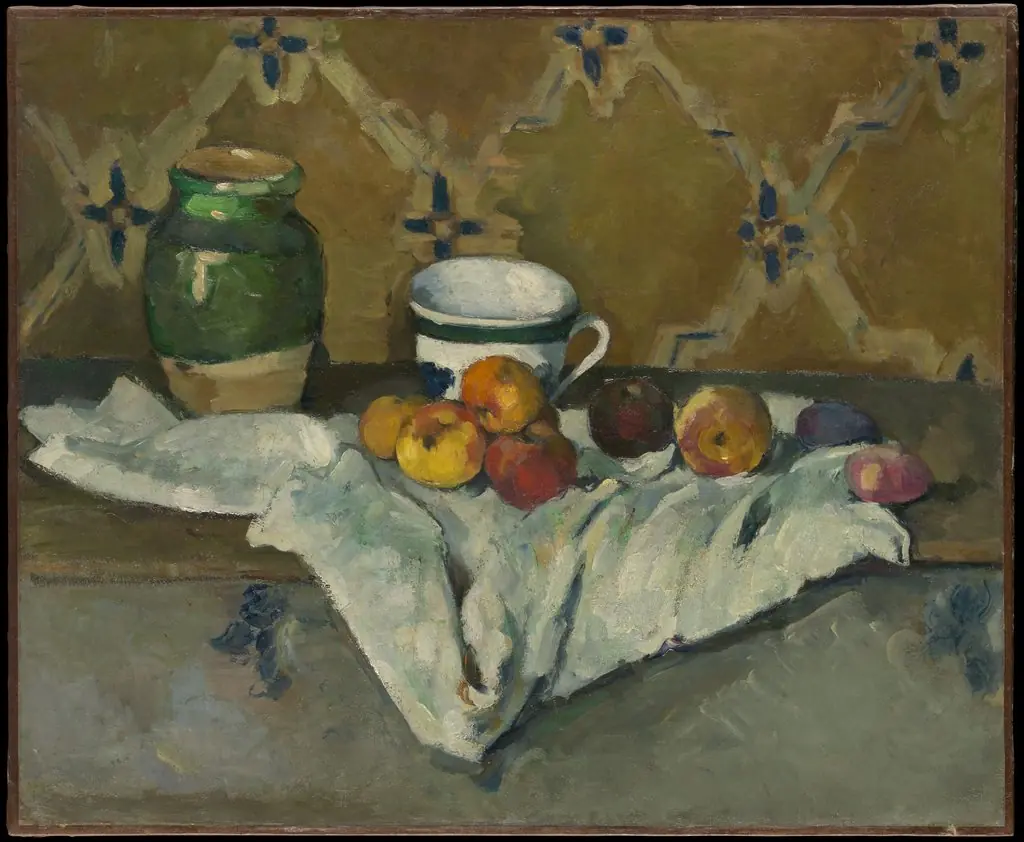 Still Life with Jar, Cup, and Apples