Artwork
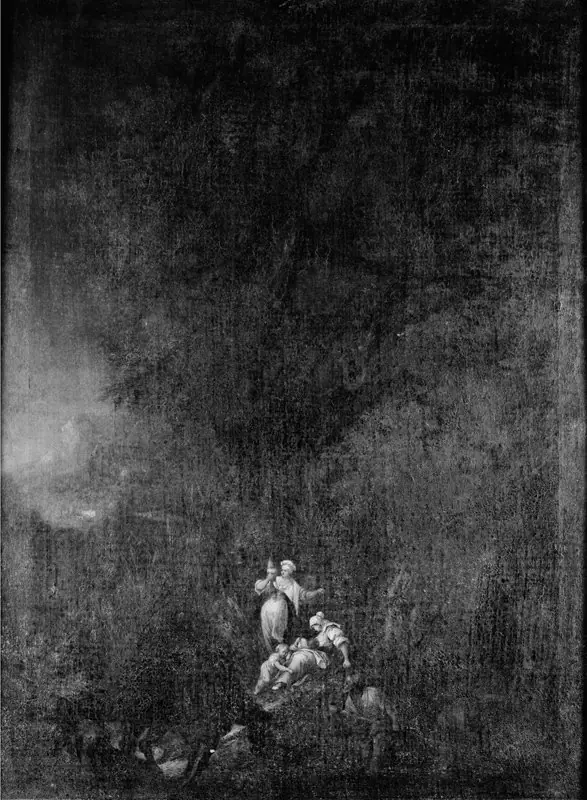
Landscape with a Crayfisher, a Donkey and Peasant Women with their Children
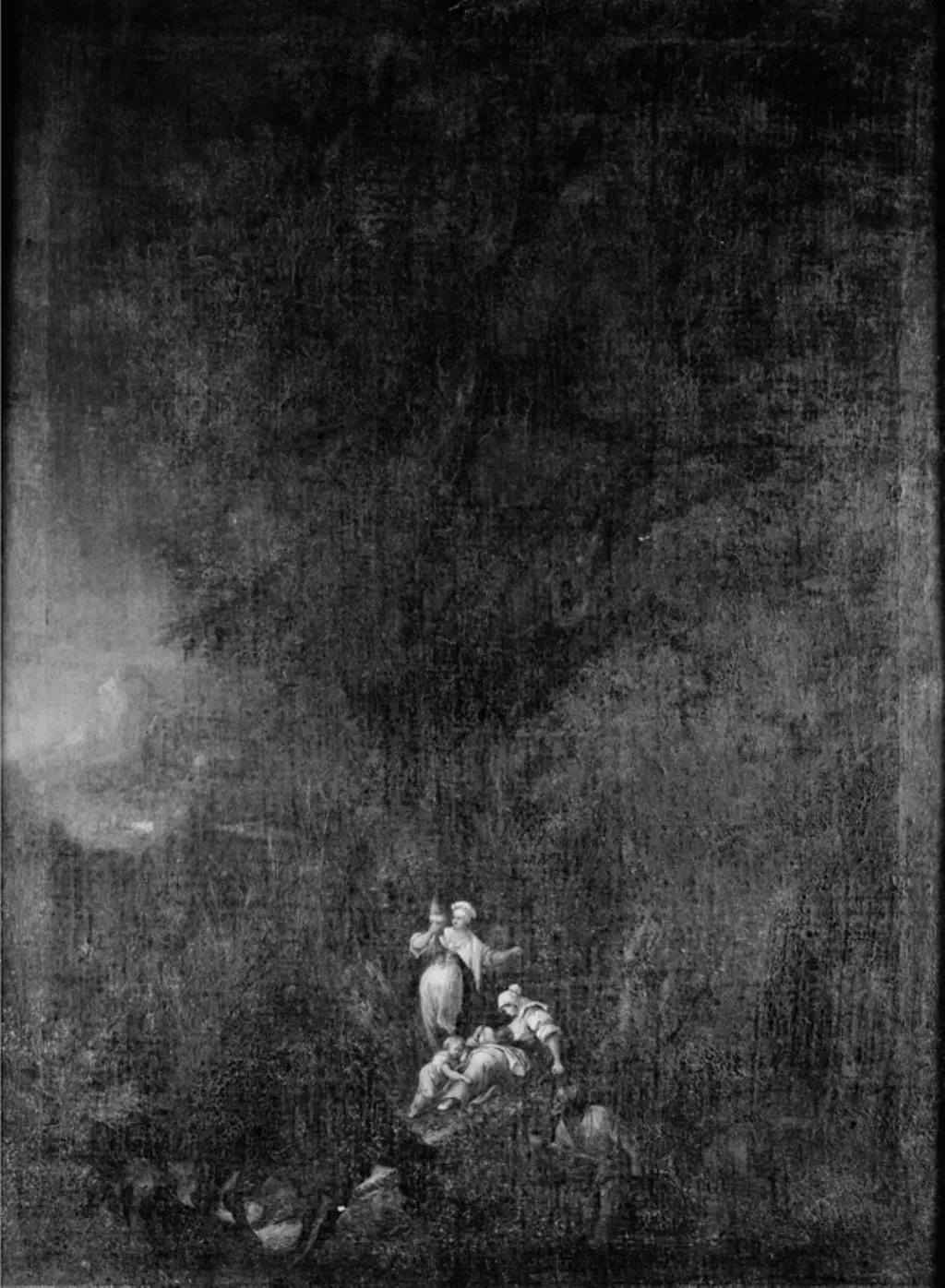
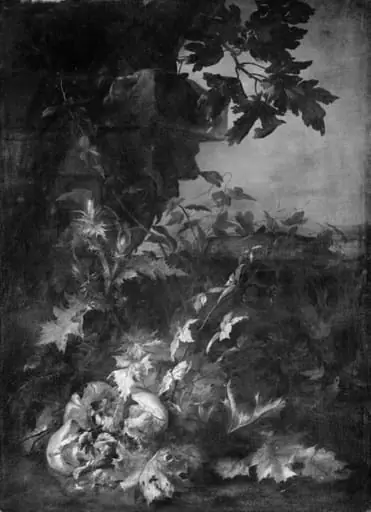
Landscape with a Crayfisher, a Donkey and Peasant Women with their Children is an unspecified painting by Unknown. It dates from 1750 and is held in the collection of the Statens Museum for Kunst. This landscape painting, dated around 1750, depicts a quiet rural scene with three figures and a donkey in a dimly lit environment.
About this work
Overview
The work is currently housed in the Museum of Ethnography, where it is preserved as an example of regional visual culture rather than high artistic prestige.
This landscape painting, dated around 1750, depicts a quiet rural scene with three figures and a donkey in a dimly lit environment. Executed in oil or similar medium, it belongs to a tradition of peasant genre scenes common in 18th-century European art. The work is currently housed in the Museum of Ethnography, where it is preserved as an example of regional visual culture rather than high artistic prestige.
Subject & Meaning
Three figures—a standing woman with a stick, a kneeling woman, and a donkey—are arranged near the foreground, engaged in quiet, laborious activity. The absence of narrative clarity suggests an emphasis on daily life over storytelling. The figures appear absorbed in their tasks, their forms rendered with minimal detail, reinforcing a sense of anonymity and routine in rural existence.
Technique & Style
The composition relies on strong chiaroscuro, with deep shadows dominating the background and selective light falling on the figures and donkey. This contrast isolates the subjects from the murky terrain, creating visual tension. Brushwork is restrained, textures of grass and stone are suggested rather than defined, and the overall tone remains muted, favoring mood over detail.
History & Provenance
The painting’s origin is undocumented prior to its inclusion in the Museum of Ethnography’s collection. No records of its commission, artist, or early ownership survive. Its attribution to a specific hand remains uncertain, though stylistic elements align with regional Dutch or Flemish peasant scenes from the mid-18th century.
Context
Created during a period when rural life was increasingly romanticized or marginalized in European art, this work resists idealization. Unlike pastoral fantasies, it presents labor without sentimentality, reflecting a more observational approach. Similar images were often made for local patrons or as studies, not for elite collections.
Legacy
Though not widely exhibited or studied, the painting contributes to understanding how ordinary rural life was visually recorded outside academic traditions. Its preservation in an ethnographic museum underscores its value as a cultural artifact rather than a celebrated work of fine art, offering insight into regional visual habits of the time.
Artist & collection

 Domestic Scene
 Giacomo and Cardinal Marco, investing Andrea, Abbot of San Zeno, with his Benefice
 The Nymph of Fontainebleau
 Portrait of a Woman
 Madonna and Child with Saints in the Enclosed Garden
 Venus and Minerva
 Family Group of Four on Sofa
 Wall painting from Room H of the Villa of P. Fannius Synistor at Boscoreale
 The Flight into Egypt
 The Flight into Egypt
 Moonlight
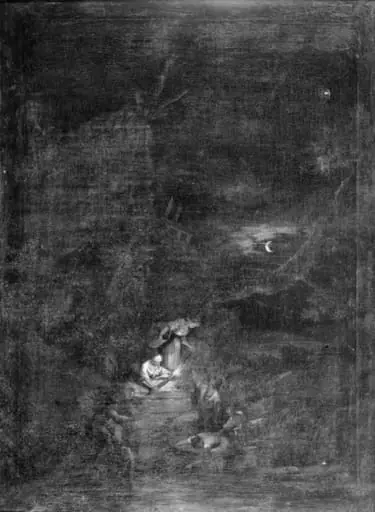 Moonlight
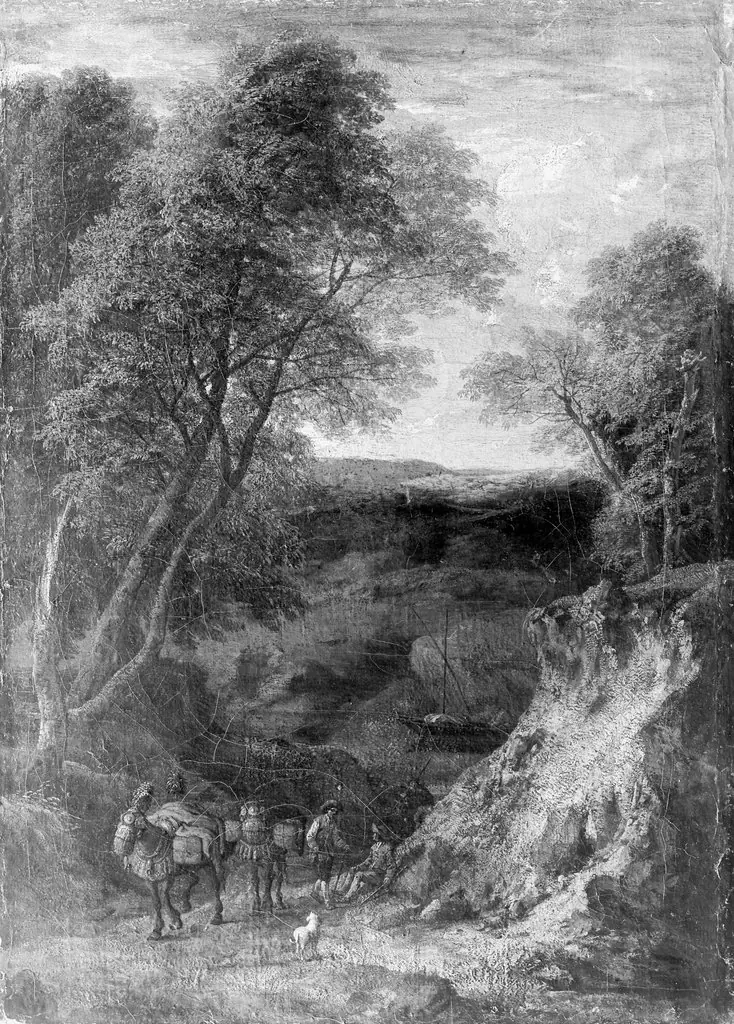 The ravine
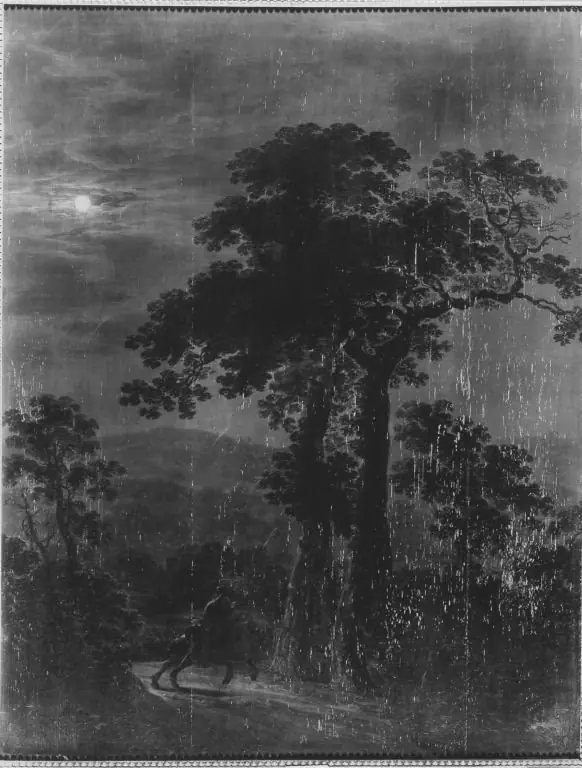 Mondscheinlandschaft
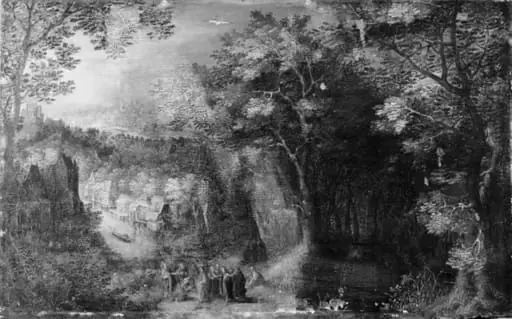 Christ and the Canaanite Woman
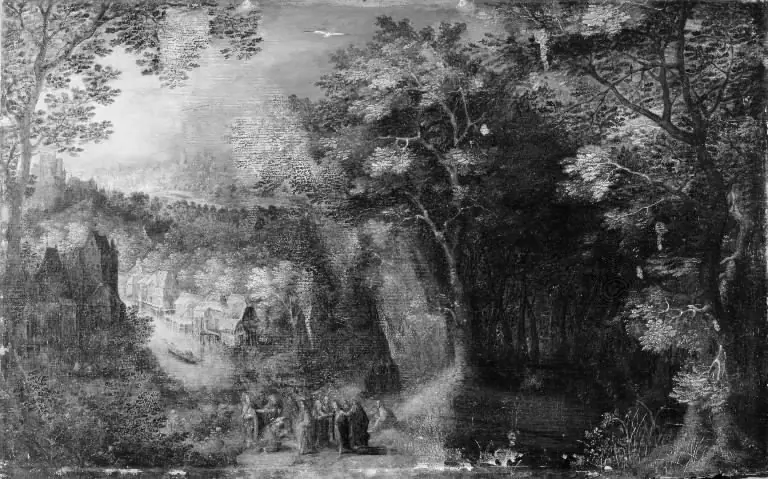 Christ and the Canaanite Woman
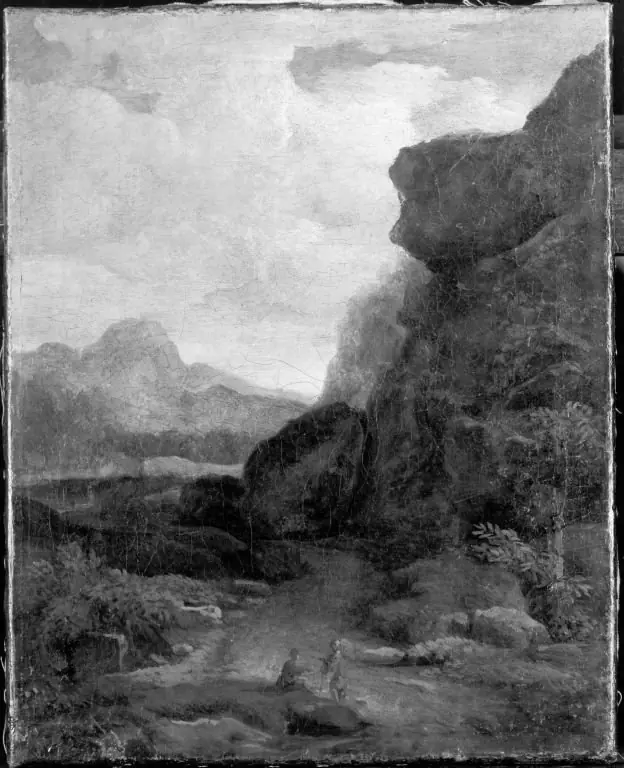 Felsenlandschaft
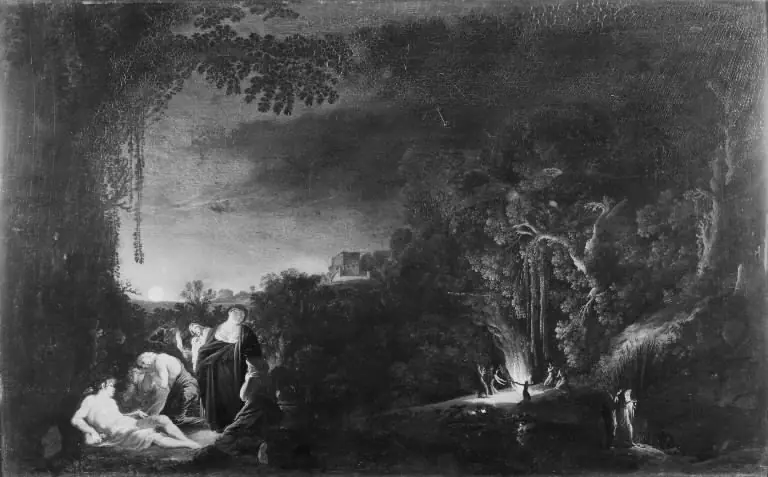 Måneskinslandskab med mytologisk (?) motiv
 Landscape with a Crayfisher, a Donkey and Peasant Women with their Children
 Thistles and Toadstools