Artwork
Self-Portrait
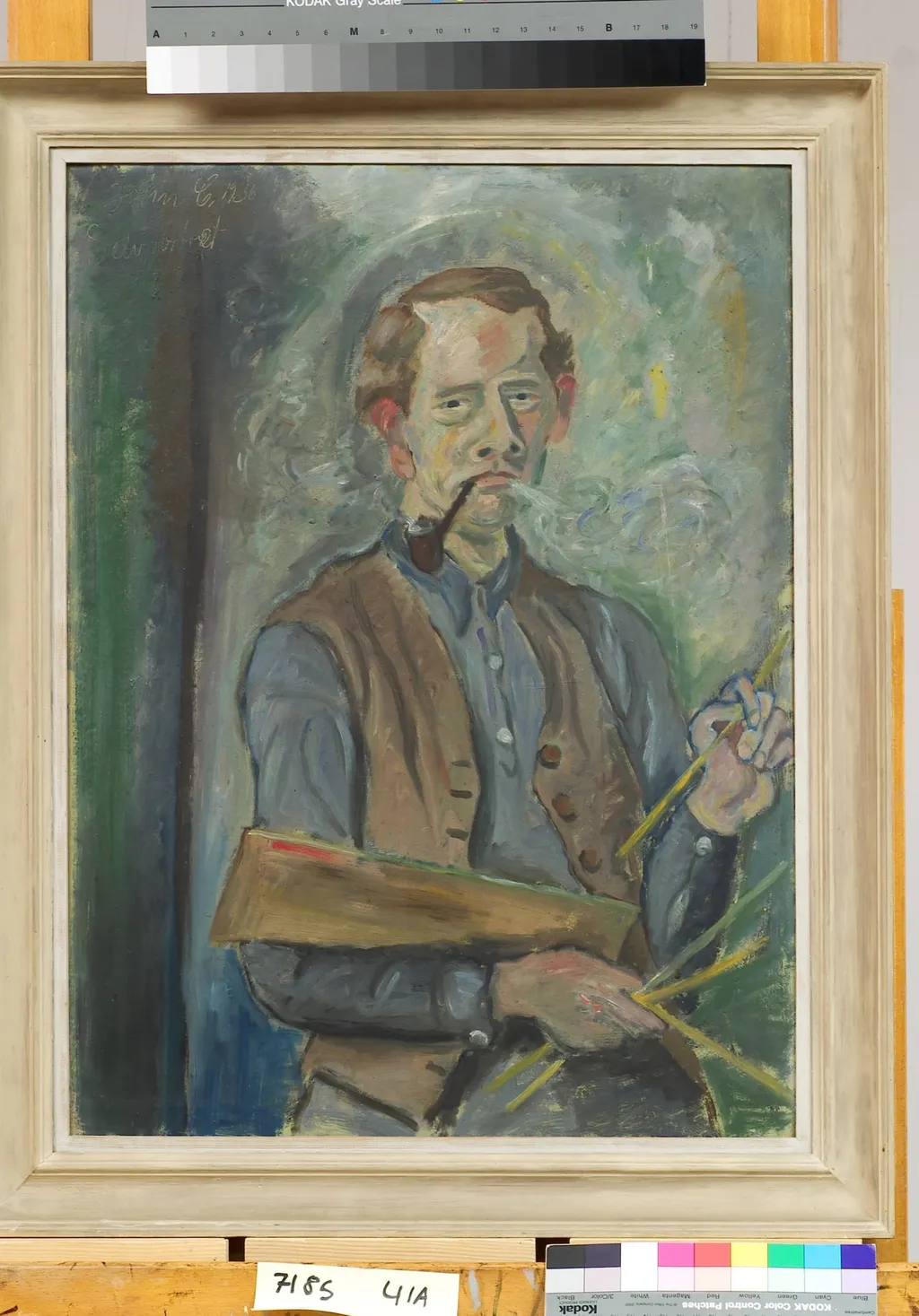
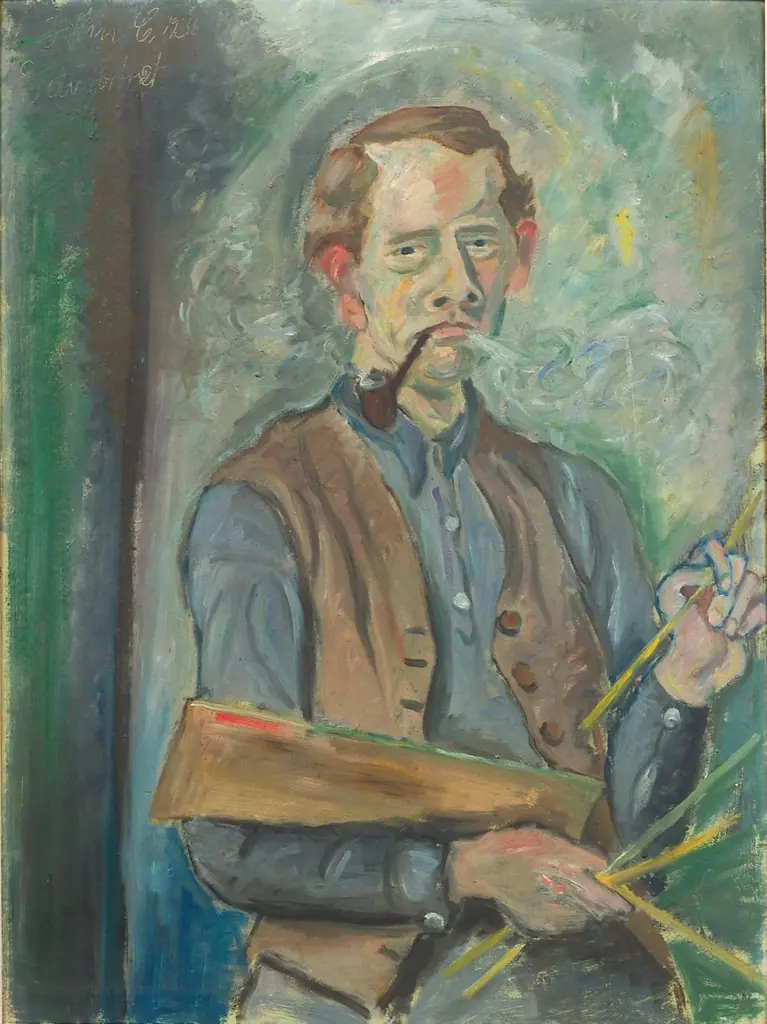
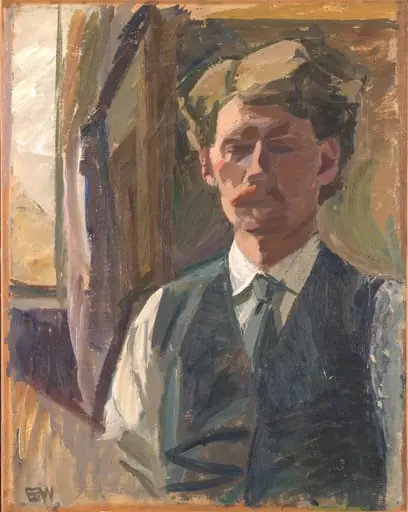
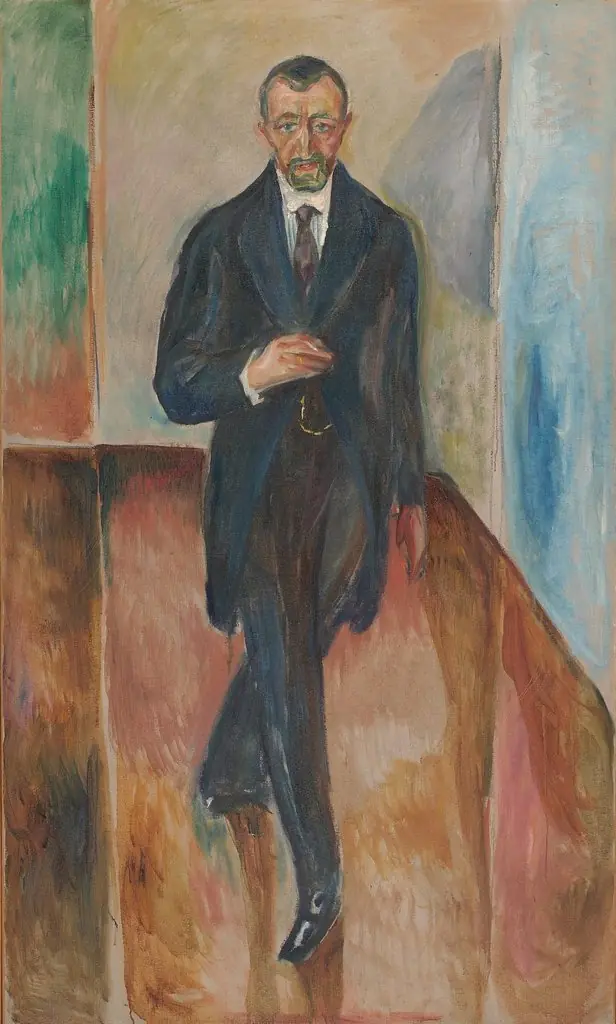
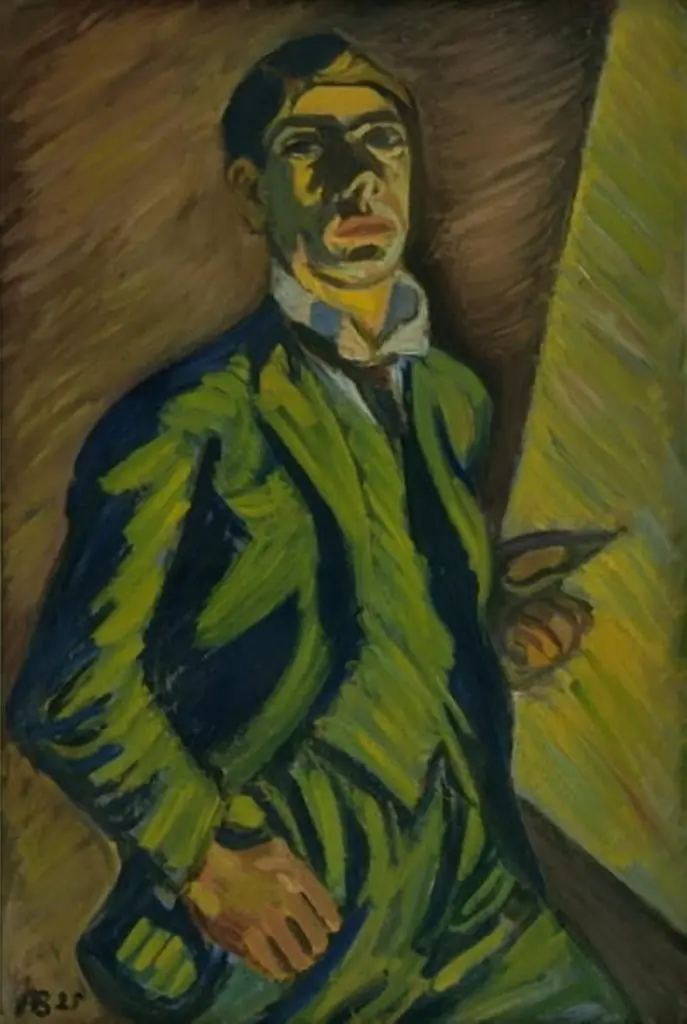
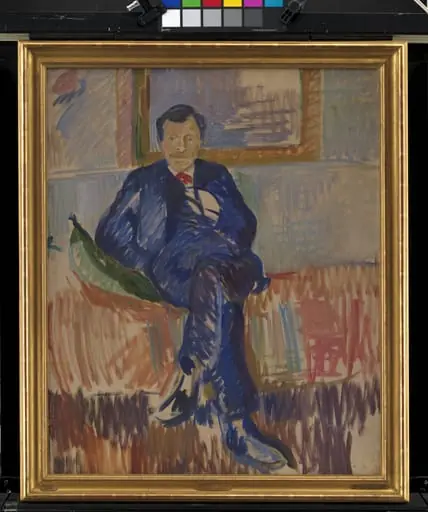
Self-Portrait is an unspecified painting by Unknown. It dates from 1936 and is held in the collection of the Statens Museum for Kunst.
About this work
His jacket is brown with a blue collar, and he holds a cigarette in one hand.
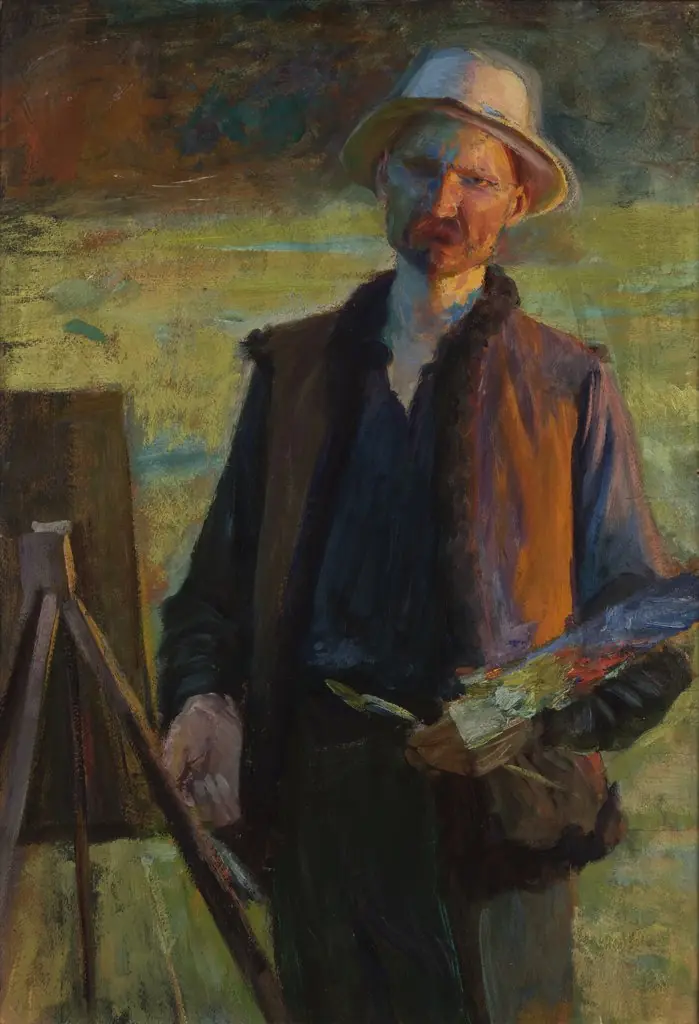
A man sits holding a wooden palette with brushes and paint. His jacket is brown with a blue collar, and he holds a cigarette in one hand. The brushes are thick and the paint looks wet. The background is mostly green and gray, with quick, loose strokes.
This painting was made in 1936, and the artist signed it in the top corners. The brushwork is rough, almost like the paint was applied fast.
If you like this style, look up impasto next.
Overview
Painted in 1936, this self-portrait depicts the artist seated with a wooden palette and brushes in hand, a cigarette resting between his fingers. Executed in a direct, energetic manner, the work is held by the Museum of Ethnography. The signature appears in both upper corners, confirming authorship and date. The composition centers on the artist’s presence, framed by a muted backdrop of green and gray.
Subject & Meaning
The artist portrays himself as a working creator, tools of his trade prominently displayed. The cigarette suggests a moment of pause amid labor, not idle contemplation. The unidealized stance and unpolished setting convey a sense of authenticity, emphasizing the act of painting over personal glorification. This is less a formal portrait than a declaration of identity through practice.
Technique & Style
Thick, rapidly applied paint creates a textured surface, with visible brushstrokes and wet pigment still apparent. The background is rendered in loose, sweeping motions, contrasting with the more defined forms of the figure and palette. The impasto technique lends physicality to the image, reinforcing the immediacy of the moment captured. Color is restrained, focusing attention on gesture and materiality.
History & Provenance
The painting entered the collection of the Museum of Ethnography shortly after its creation. No record of prior ownership or exhibition exists prior to its acquisition. Its placement in an ethnographic institution, rather than a fine arts museum, suggests an interest in the artist as a cultural figure, possibly reflecting broader institutional priorities of the time.
Context
Created in 1936, the work emerges during a period when many artists rejected academic polish in favor of raw, expressive modes. While European modernism explored abstraction and distortion, this portrait retains figuration but embraces spontaneity. The choice of everyday attire and unadorned setting aligns with a broader trend toward depicting the artist as a working individual, not a romanticized genius.
Legacy
Though not widely reproduced, the painting remains a quiet example of mid-1930s artist self-representation. Its presence in an ethnographic collection invites reflection on how artistic identity is categorized and preserved. The technique anticipates later postwar approaches to materiality and gesture, though its influence remains localized within the artist’s immediate circle.
Artist & collection

 Domestic Scene
 Giacomo and Cardinal Marco, investing Andrea, Abbot of San Zeno, with his Benefice
 The Nymph of Fontainebleau
 Portrait of a Woman
 Madonna and Child with Saints in the Enclosed Garden
 Venus and Minerva
 Family Group of Four on Sofa
 Wall painting from Room H of the Villa of P. Fannius Synistor at Boscoreale