Artwork
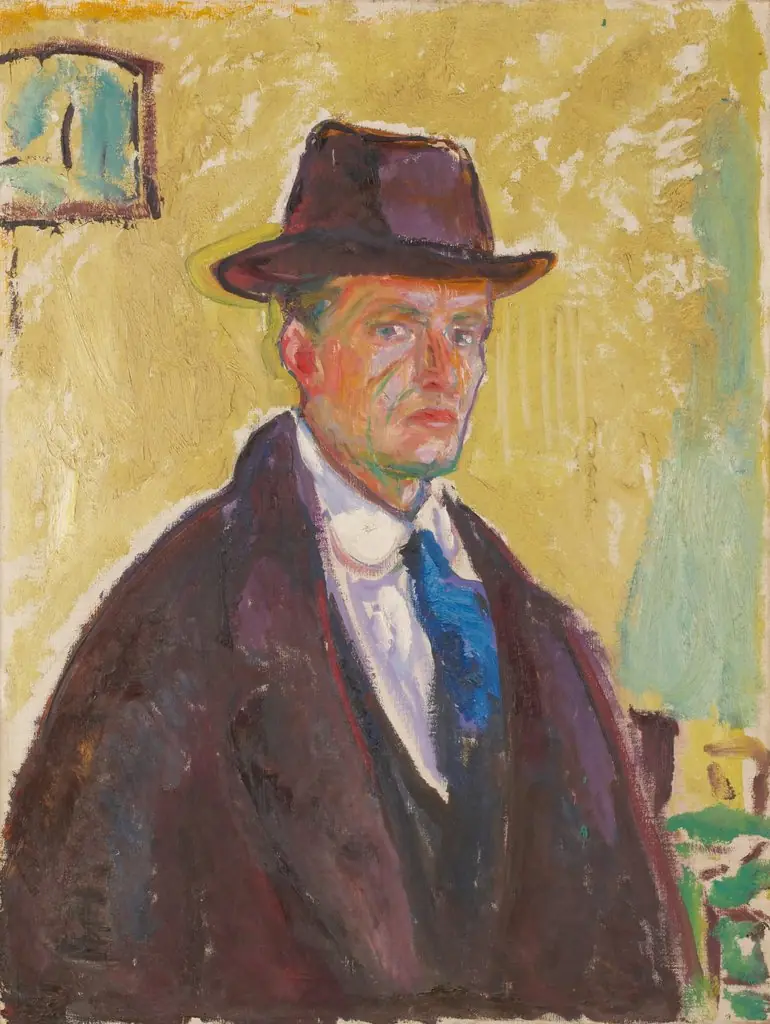
Self-Portrait against Yellow Background
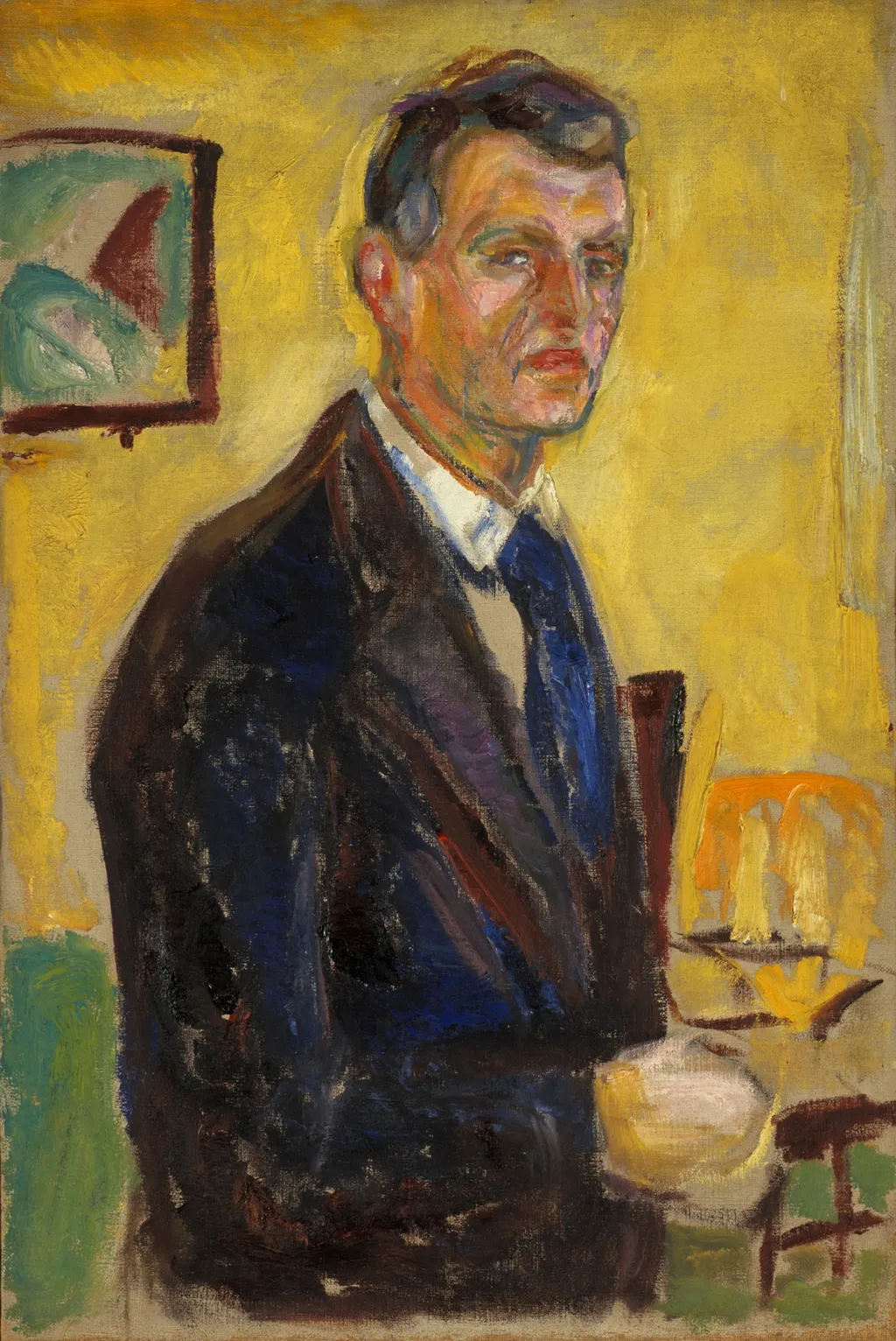
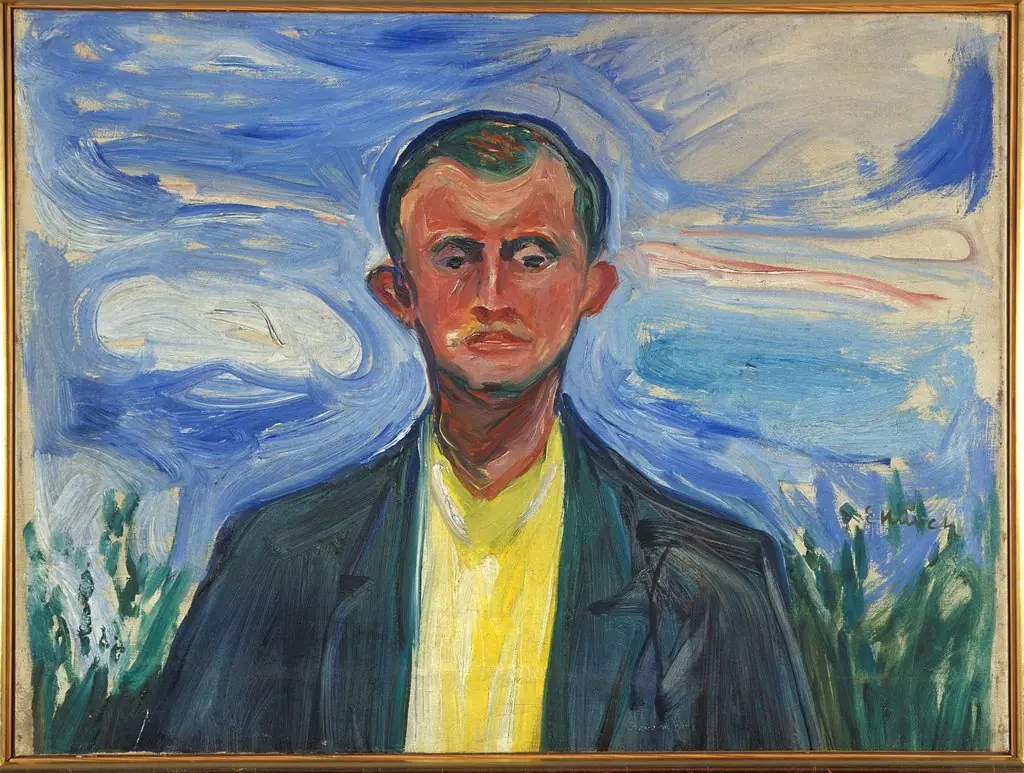
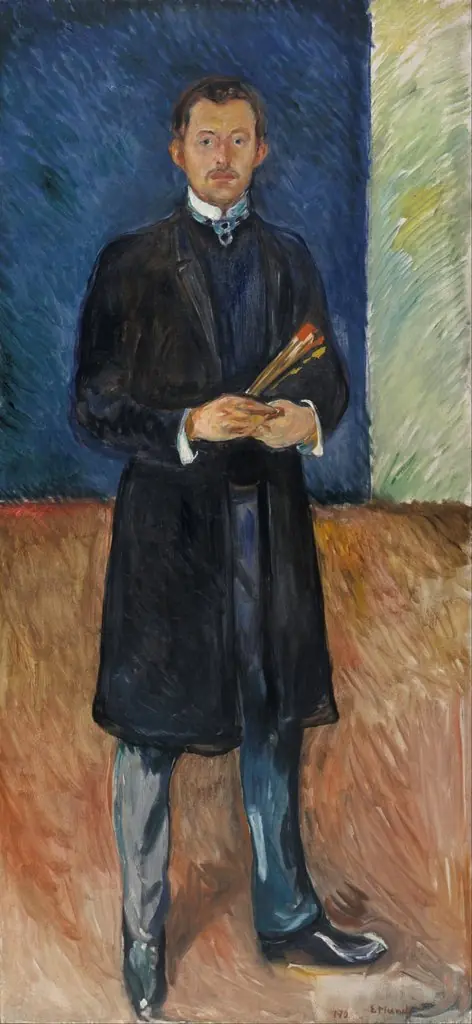
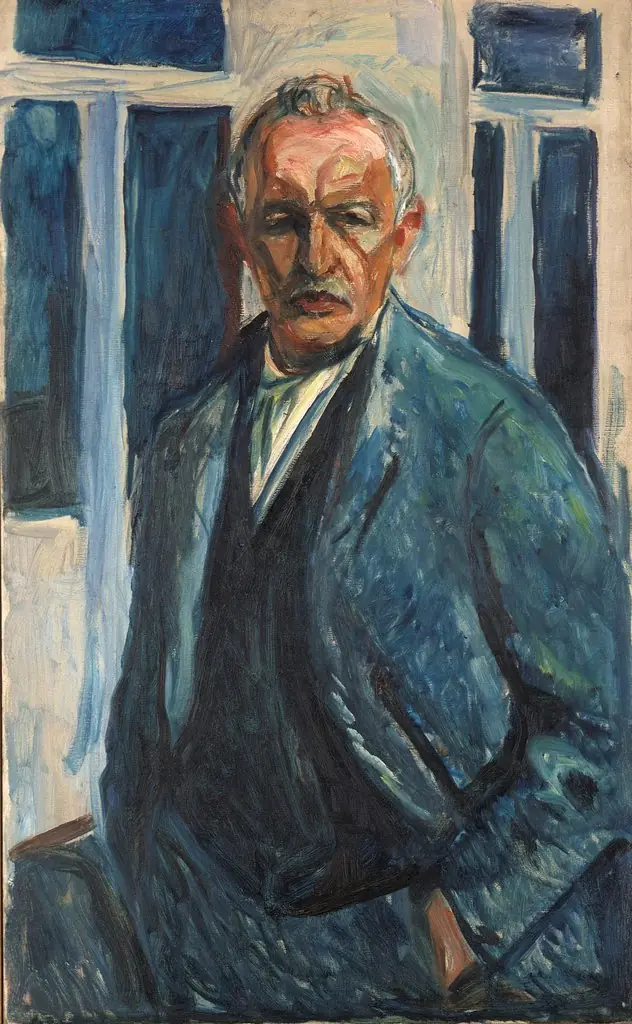
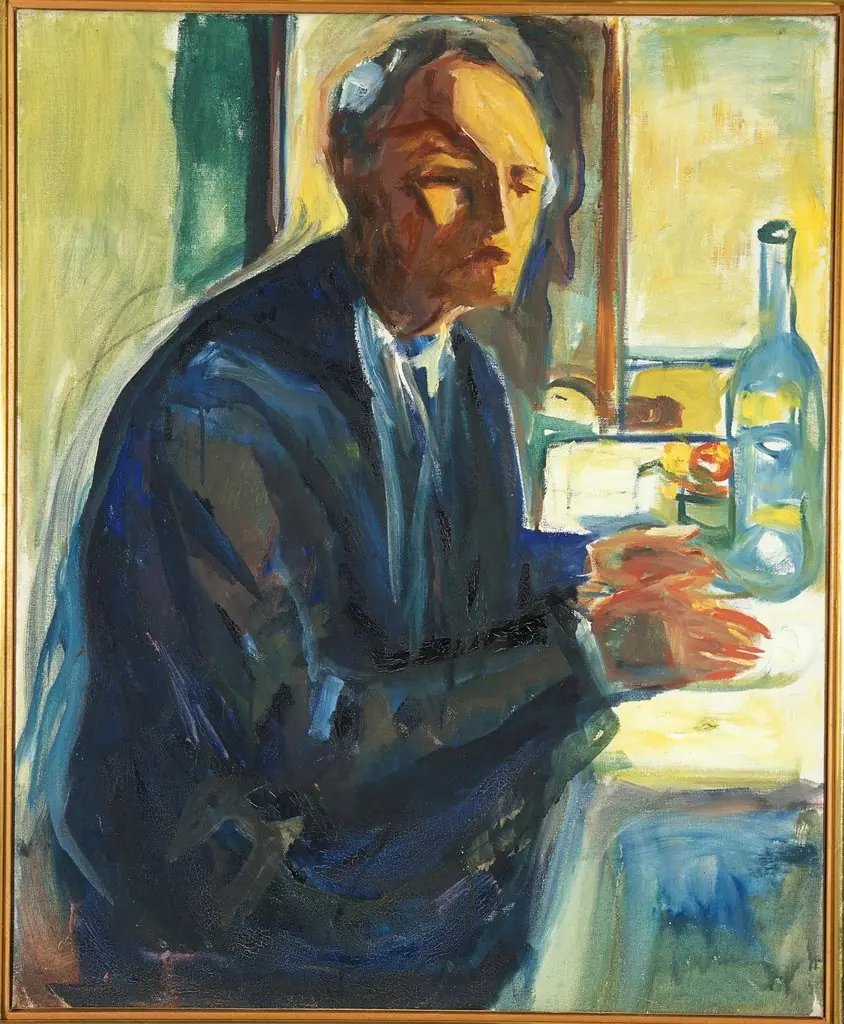
Self-Portrait against Yellow Background is an oil painting by the Post-Impressionist artist Edvard Munch. It dates from 1910 and is held in the collection of the Munch Museum.
About this work
Overview
Painted in 1910, this oil on canvas self-portrait by Edvard Munch presents the artist in formal attire, holding a glass, set against a vivid yellow field.
Painted in 1910, this oil on canvas self-portrait by Edvard Munch presents the artist in formal attire, holding a glass, set against a vivid yellow field. The work belongs to a series of introspective self-representations Munch produced during his middle years, reflecting a sustained engagement with personal identity and inner turmoil. Its composition avoids idealization, favoring emotional resonance over physical accuracy.
Subject & Meaning
Munch portrays himself with detached composure, dressed in a dark suit and blue tie, yet his face is rendered ambiguously, eyes unfocused and expression unreadable. The glass in his hand suggests a moment of pause or ritual, perhaps hinting at solitude or intoxication. The lack of clear emotion invites interpretation of psychological distance, aligning with Munch’s broader interest in alienation and inner fragility.
Technique & Style
Brushwork is loose and emphatic, with visible strokes that define form without precise delineation. The yellow background is applied in broad, uneven planes, contrasting sharply with the muted tones of the figure. Facial features are blurred, emphasizing mood over likeness. This expressive handling reflects Munch’s departure from naturalism, prioritizing emotional texture over optical fidelity.
History & Provenance
Created during Munch’s time in Oslo, the painting remained in the artist’s possession until his death in 1944. It was later transferred to the Munch Museum, established in Oslo to house his personal collection. The work has been consistently exhibited as part of the museum’s core holdings, representing a key phase in his artistic development following his earlier Symbolist period.
Context
Painted after Munch’s recovery from a mental breakdown and during a period of relative stability, this portrait emerges amid his broader exploration of selfhood. While his earlier works like 'The Scream' conveyed existential dread, this image reflects a quieter, more contained anxiety. It aligns with European post-impressionist tendencies that favored psychological depth over narrative clarity.
Legacy
The painting contributes to Munch’s enduring reputation as an artist who transformed personal suffering into visual language. Its restrained intensity influenced later generations of expressionist and figurative painters interested in emotional ambiguity. Though less widely known than his iconic works, it remains a vital document of his lifelong inquiry into the self.
Artist & collection
Artist
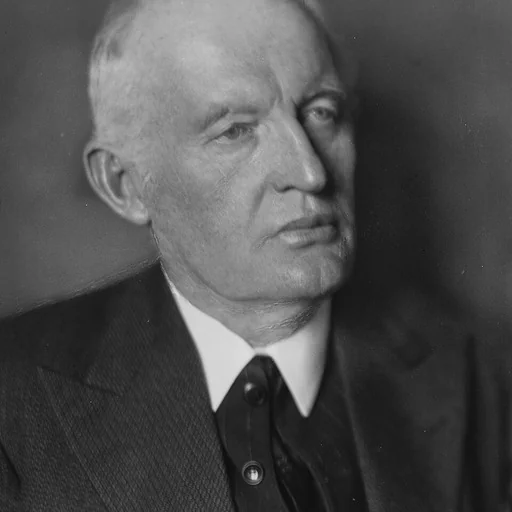
Edvard Munch ( MUUNK; Norwegian: ; 12 December 1863 – 23 January 1944) was a Norwegian painter.