Artwork
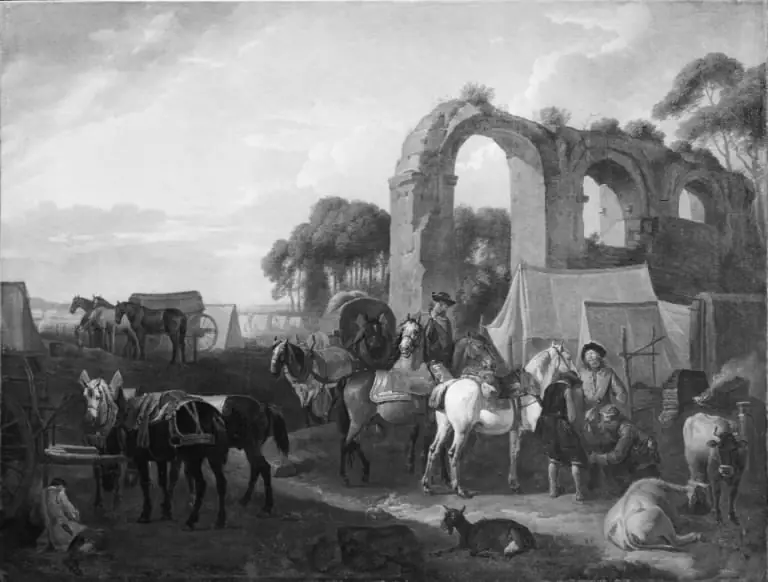
Horse Being Shoed in a Military Encampment
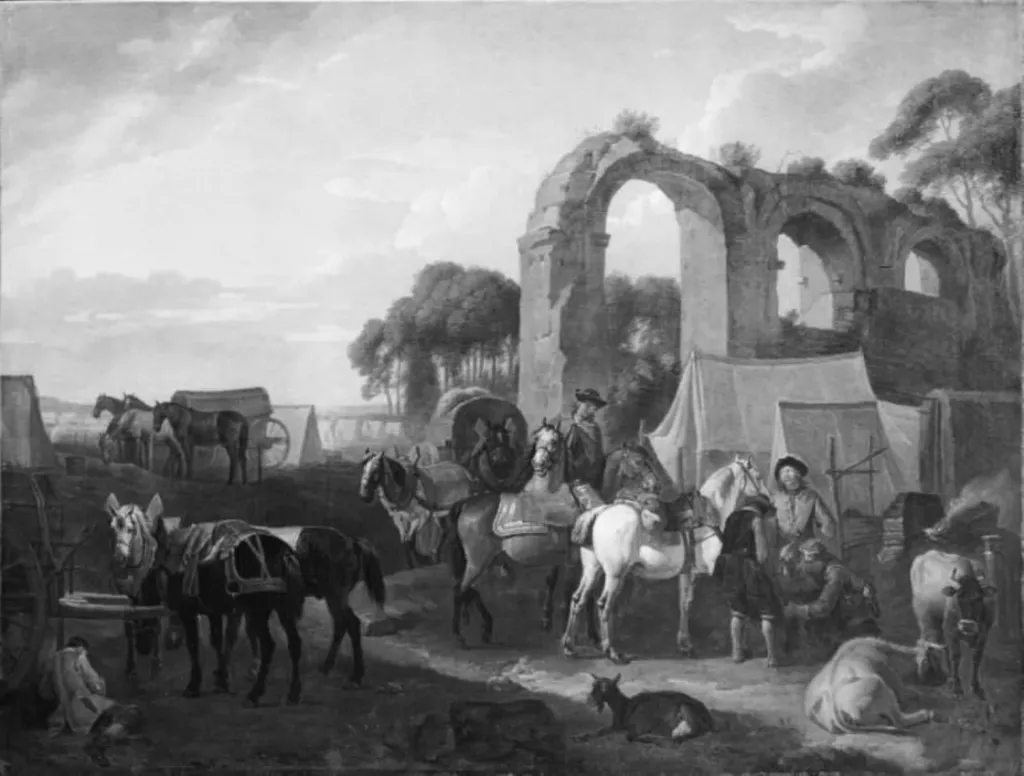
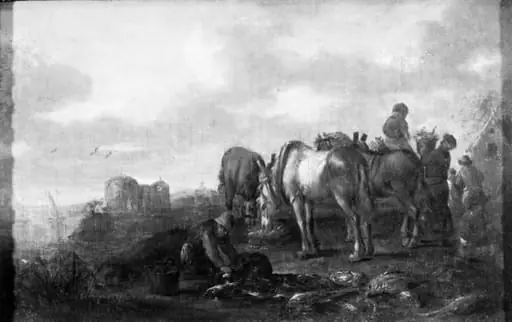
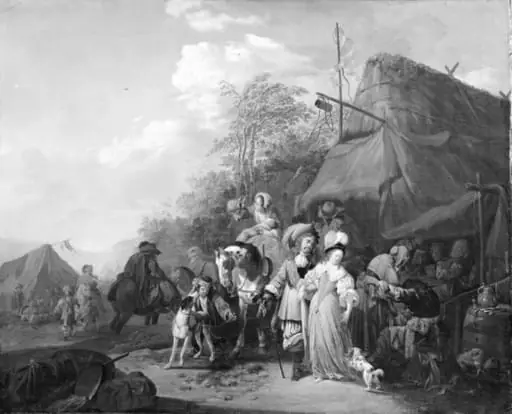
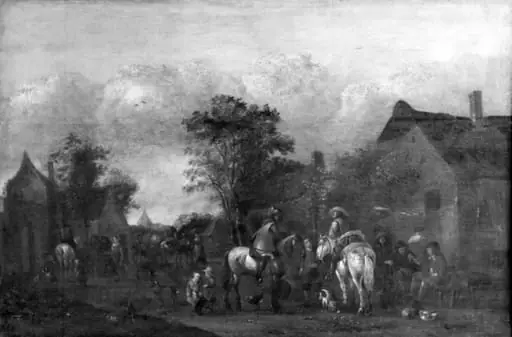
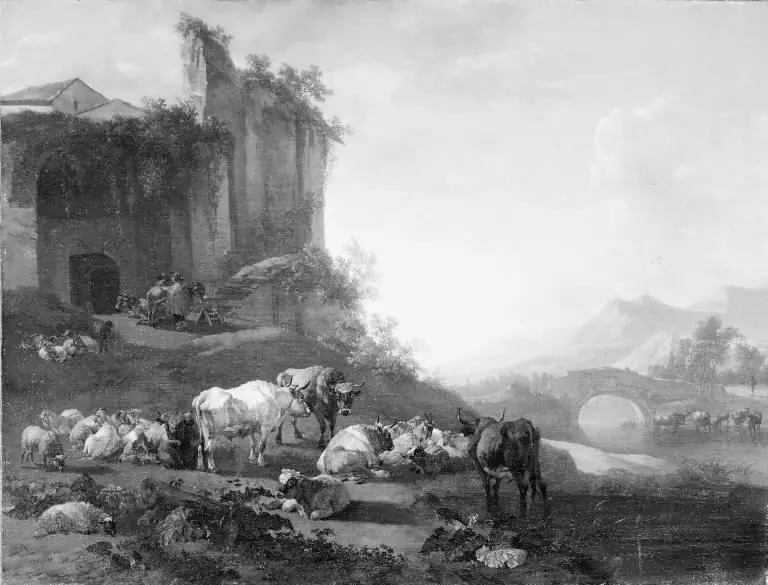
Horse Being Shoed in a Military Encampment is a photography by the Baroque artist Unknown. It dates from 1705 and is held in the collection of the Statens Museum for Kunst. This image depicts a military encampment where a blacksmith is shoeing a horse, surrounded by soldiers and animals.
About this work
Overview
The composition captures daily activity in a transient camp, blending practical labor with the quiet presence of decayed architecture.
This image depicts a military encampment where a blacksmith is shoeing a horse, surrounded by soldiers and animals. The scene is set against the backdrop of ancient stone ruins with arched windows and weathered walls. The composition captures daily activity in a transient camp, blending practical labor with the quiet presence of decayed architecture. The work dates to 1705 and is attributed to an artist identified as 1489_person.
Subject & Meaning
The scene emphasizes routine military life, highlighting the essential role of horses in warfare and logistics. Soldiers engage in idle conversation or care for their mounts, suggesting a moment of pause amid campaign life. The ancient ruins in the background imply a layered history, contrasting the temporary nature of the encampment with enduring, forgotten structures. The dog at the blacksmith’s feet adds a quiet, domestic note to the military setting.
Technique & Style
The image employs careful observation of figures and animals, rendered with attention to posture and detail. The lighting and spatial arrangement suggest a naturalistic approach, though without overt theatricality. The ruins are rendered with soft edges, integrating them into the background rather than dominating the scene. The composition avoids dramatic contrast, favoring a calm, documentary tone over Baroque dynamism.
History & Provenance
Created in 1705, the work entered the collection of the Museum of Ethnography, where it remains today. Its origins are tied to military documentation or personal record-keeping rather than formal commission. The artist, identified only as 1489_person, is otherwise undocumented, suggesting the image may have been produced by a soldier, surveyor, or attendant with observational skills rather than a trained painter.
Context
In the early 18th century, military encampments were common across Europe during periods of prolonged conflict. Artists and observers often recorded such scenes for logistical or personal purposes. The presence of ancient ruins reflects a broader cultural awareness of antiquity, even in field settings. This image aligns with a growing interest in documenting everyday military life beyond grand battles or heroic narratives.
Legacy
The image contributes to a modest but valuable archive of non-idealized military scenes from the period. It offers insight into the material conditions of soldiers and their animals, preserving details often omitted in official art. While not widely known, it serves as a quiet testament to the routines that sustained armies, valued today for its unembellished realism and historical specificity.
Artist & collection

 Domestic Scene
 Giacomo and Cardinal Marco, investing Andrea, Abbot of San Zeno, with his Benefice
 The Nymph of Fontainebleau
 Portrait of a Woman
 Madonna and Child with Saints in the Enclosed Garden
 Venus and Minerva
 Family Group of Four on Sofa
 Wall painting from Room H of the Villa of P. Fannius Synistor at Boscoreale