Artwork
Landscape
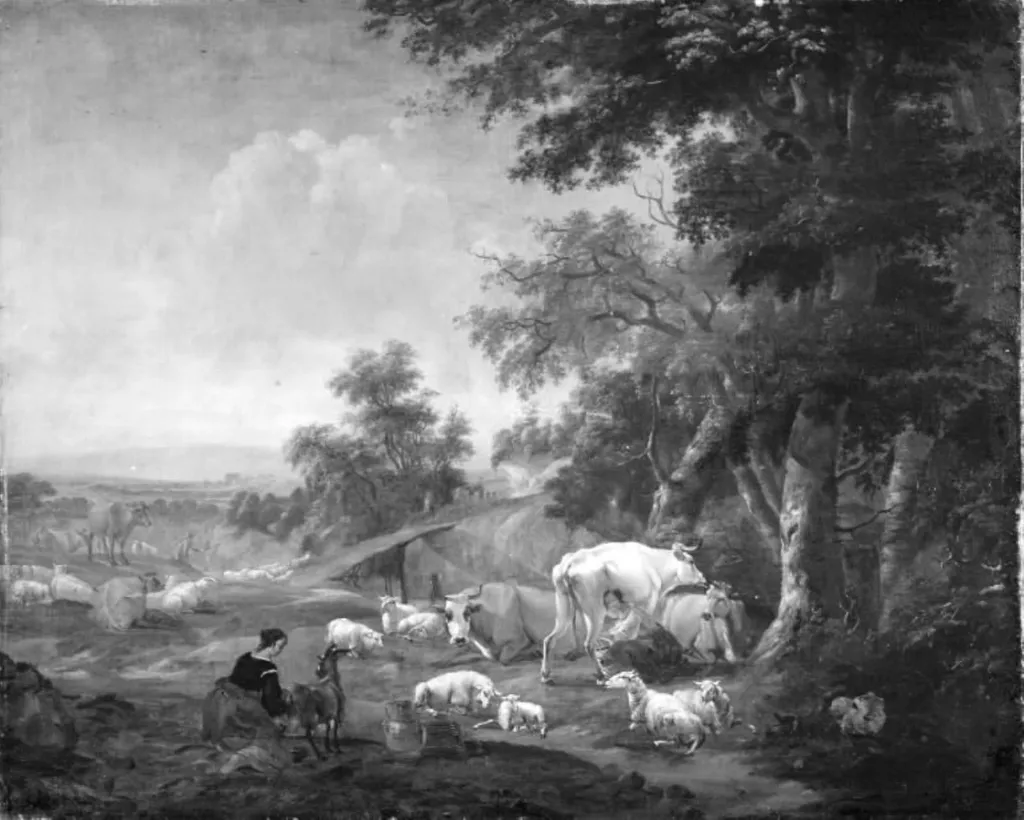
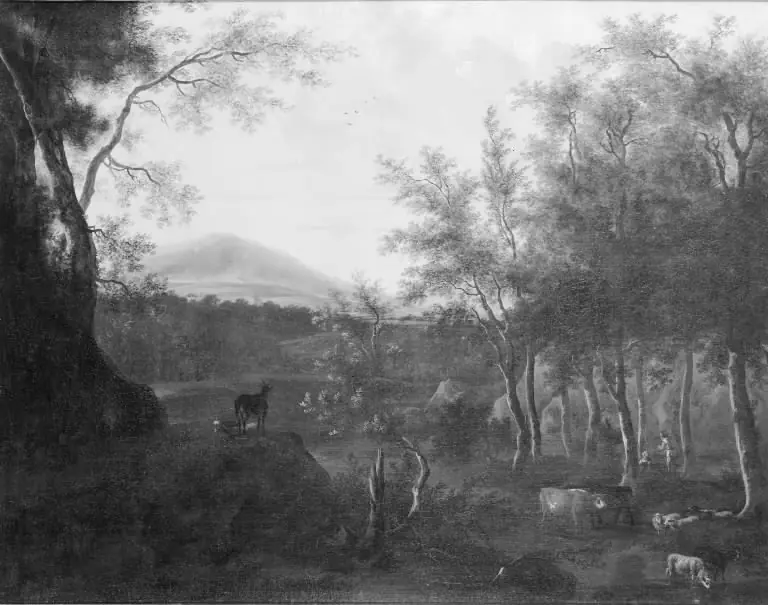
Landscape is an unspecified painting by the Romanticist artist Unknown. It dates from 1809 and is held in the collection of the Statens Museum for Kunst.
About this work
Overview
Created in 1809, this landscape painting is attributed to an artist identified as 37685_person. It resides in the collection of the Museum of Ethnography, where it is presented as a quiet depiction of rural nature. The work lacks overt narrative or dramatic elements, instead emphasizing stillness and harmony between human figures and the natural world.
Subject & Meaning
A woman sits calmly on a stone in the foreground, observing a small herd of livestock—cows, sheep, and goats—grazing nearby. The composition suggests a moment of quiet stewardship rather than labor. The absence of human structures or signs of industry reinforces an idealized view of nature as a peaceful, self-sustaining realm, aligning with Romantic ideals of solitude and natural order.
Technique & Style
The painting employs soft transitions between hues of green, brown, and white to render foliage, earth, and animals. Brushwork is restrained, avoiding sharp definition in favor of gentle tonal gradations. The placement of the large tree on the right and the smaller one on the left creates a balanced, asymmetrical frame, guiding the viewer’s eye toward the central figure and herd.
History & Provenance
The painting entered the Museum of Ethnography’s collection in the early 20th century, though its earlier ownership remains undocumented. Its classification within an ethnographic institution, rather than a fine arts museum, suggests it was once interpreted as a cultural record of rural life rather than a work of artistic ambition.
Context
Produced during the height of Romanticism, the work reflects broader European interests in nature as a moral and emotional refuge. While not by a major name of the movement, its quiet tone and pastoral subject align with contemporaneous efforts to depict rural existence as spiritually meaningful, contrasting with industrialization’s encroachment.
Legacy
The painting continues to serve as a modest example of regional Romantic landscape traditions. Its presence in an ethnographic setting underscores how such works were historically valued for their anthropological insight as much as their aesthetic qualities, offering insight into 19th-century perceptions of nature and human roles within it.
Artist & collection

 Domestic Scene
 Giacomo and Cardinal Marco, investing Andrea, Abbot of San Zeno, with his Benefice
 The Nymph of Fontainebleau
 Portrait of a Woman
 Madonna and Child with Saints in the Enclosed Garden
 Venus and Minerva
 Family Group of Four on Sofa
 Wall painting from Room H of the Villa of P. Fannius Synistor at Boscoreale
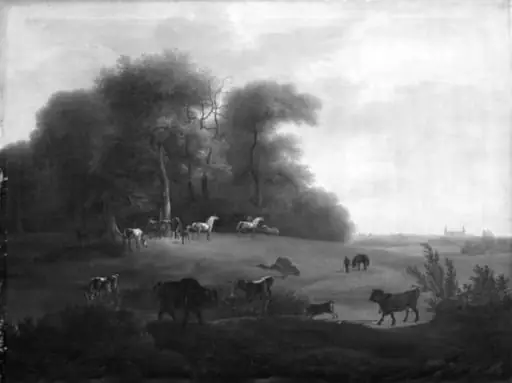 Keld Skov ved Frederiksborg med en del af det kongelige stutteri. I forgrunden schweizer- og tyrolerkvæg
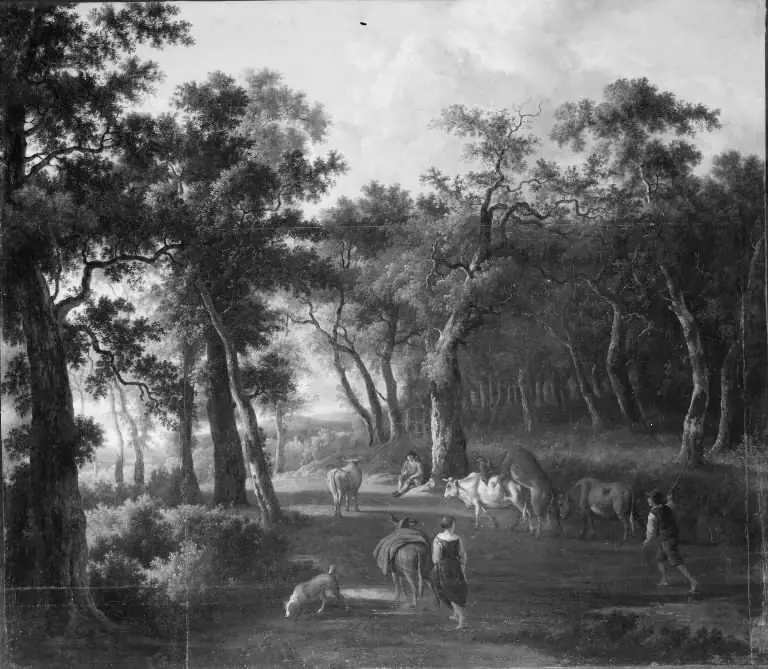 Landscape
 Landscape
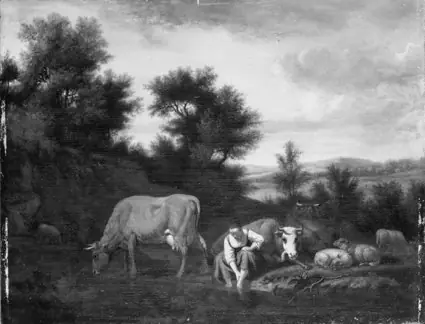 Shepherdess with Cattle
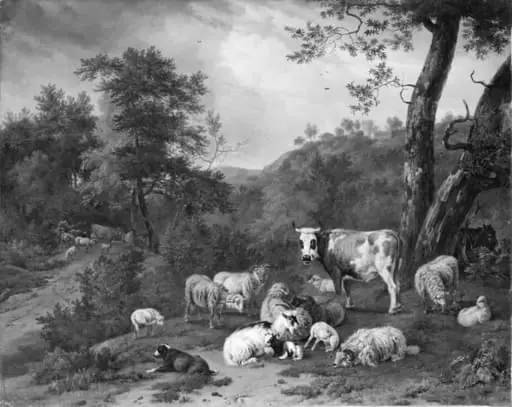 Wooded Country with Cattle
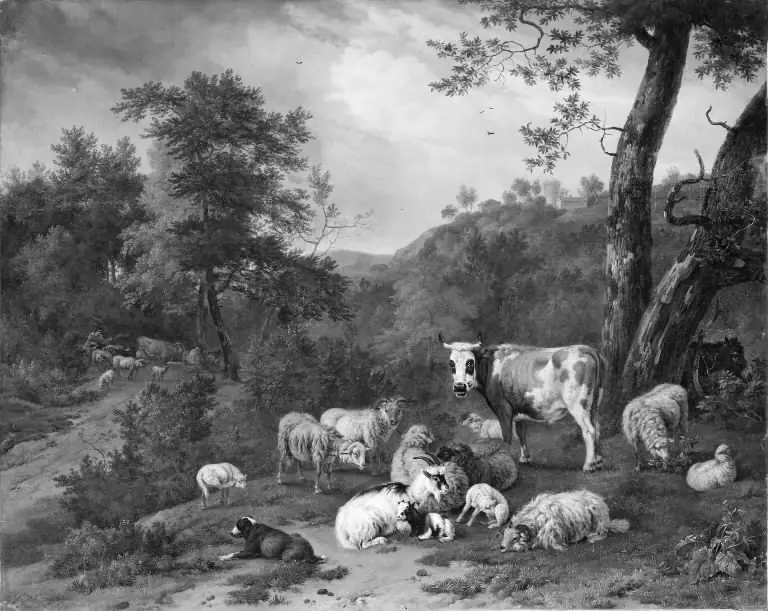 Wooded Country with Cattle
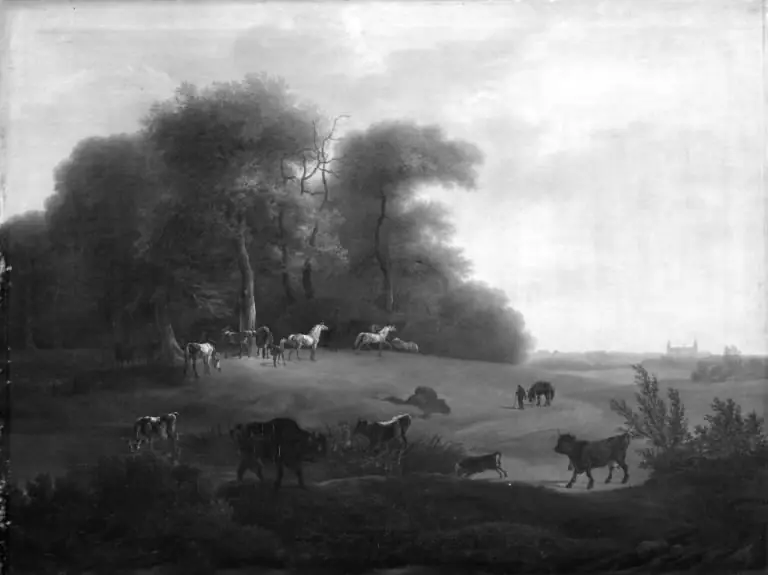 Keld Skov ved Frederiksborg med en del af det kongelige stutteri. I forgrunden schweizer- og tyrolerkvæg
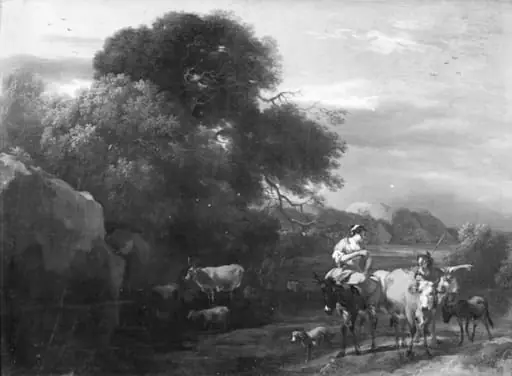 Evening Landscape with Wooded Rocks and Cattle
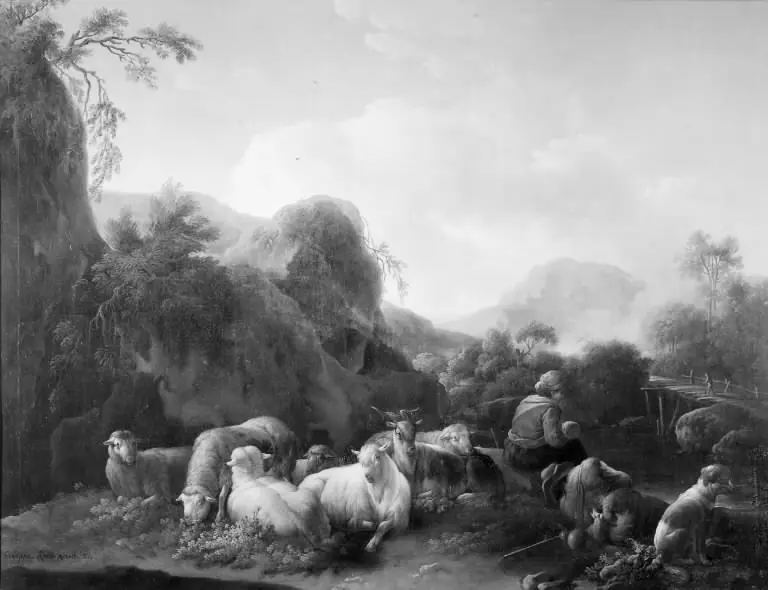 Family of Shepherds in a Mountainous Landscape
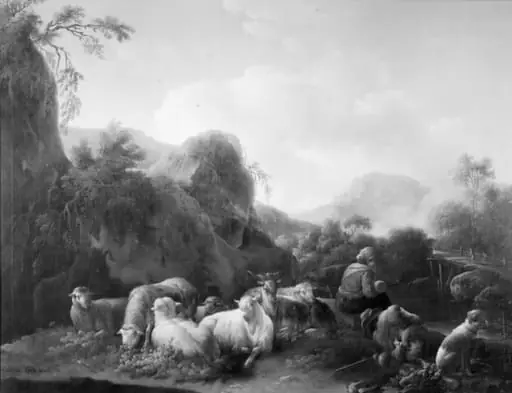 Family of Shepherds in a Mountainous Landscape
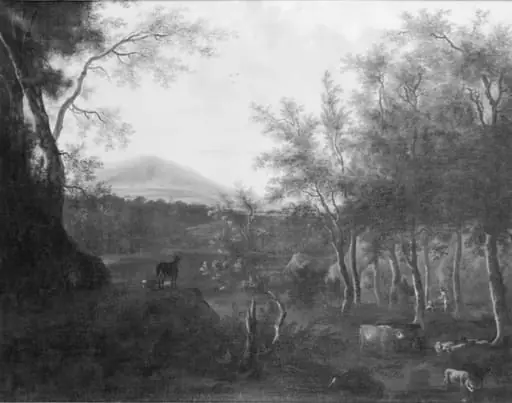 Wooded Landscape
 Wooded Landscape