Artwork
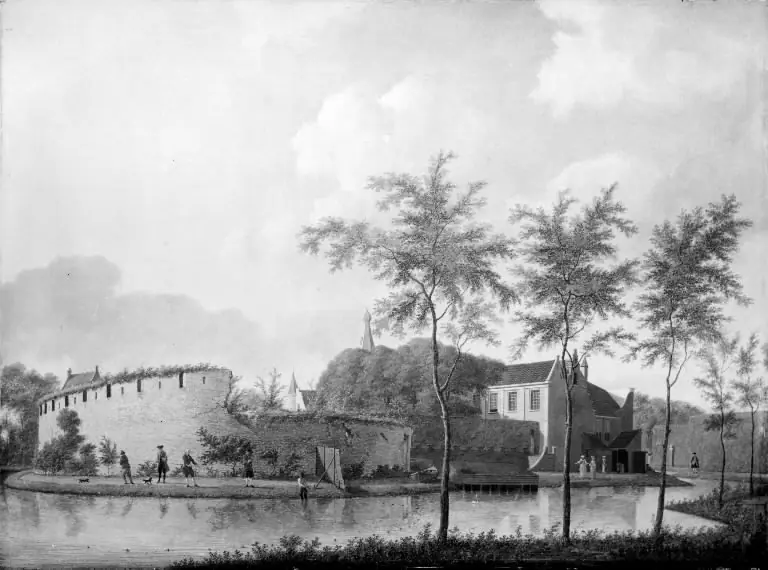
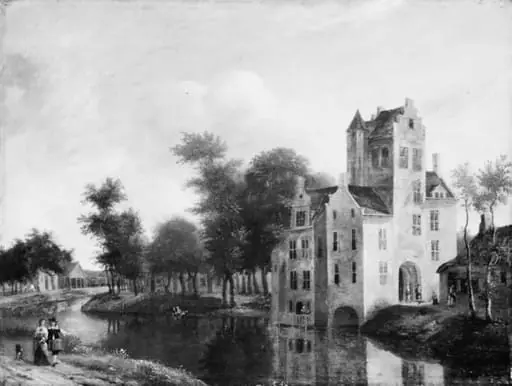
Castle Marquette, seen from North East
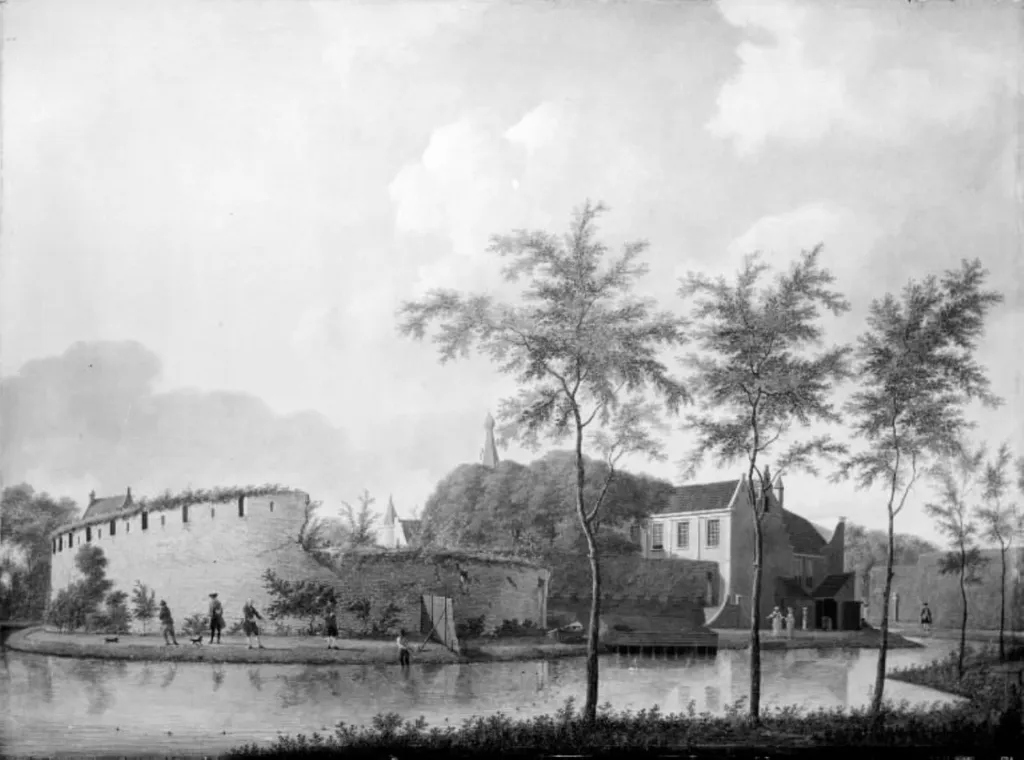
Castle Marquette, seen from North East is a photography by the Romanticist artist Unknown. It dates from 1753 and is held in the collection of the Statens Museum for Kunst.
About this work
Overview
This black-and-white image depicts Castle Marquette as viewed from the northeast, rendered in 1753 by an artist whose name is recorded as 1559_person. The work is part of the Museum of Ethnography’s collection. It captures a tranquil riverside setting with modest human activity, emphasizing the quiet integration of architecture and landscape rather than grandeur or drama.
Subject & Meaning
The scene portrays ordinary life along the riverbank near the castle—figures walking, one seated, others near trees—without ceremonial or heroic overtones. The weathered stone structures and low retaining wall suggest long-standing habitation. The composition favors stillness and subtle human presence, implying a contemplative relationship between people and their environment over time.
Technique & Style
Executed in monochrome, the image employs soft, diffused tones to create a hazy, atmospheric effect. Details are rendered with restraint, avoiding sharp definition in favor of muted textures that evoke age and quietude. The brushwork or engraving technique emphasizes tonal gradation, reinforcing a sense of calm and temporal depth.
History & Provenance
Created in 1753, the work entered the Museum of Ethnography’s holdings at an unknown date. Its origin as a standalone image, rather than part of a larger series, suggests it may have served documentary or personal purposes. The artist’s designation as '1559_person' indicates incomplete archival records, leaving biographical context uncertain.
Context
Produced during the mid-18th century, the image aligns with emerging interests in vernacular landscapes and everyday observation, precursors to Romanticism’s focus on mood and nature. Unlike formal architectural renderings, it avoids idealization, instead valuing the quiet decay and lived-in quality of the site, reflecting a shift toward authenticity in visual culture.
Legacy
The image contributes to a growing body of 18th-century works that documented regional architecture and daily life with observational precision. Though not widely exhibited, it remains a quiet example of how non-elite spaces were visually preserved, offering insight into pre-Romantic sensibilities toward place and memory.
Artist & collection

 Domestic Scene
 Giacomo and Cardinal Marco, investing Andrea, Abbot of San Zeno, with his Benefice
 The Nymph of Fontainebleau
 Portrait of a Woman
 Madonna and Child with Saints in the Enclosed Garden
 Venus and Minerva
 Family Group of Four on Sofa
 Wall painting from Room H of the Villa of P. Fannius Synistor at Boscoreale