Artwork
Dutch City
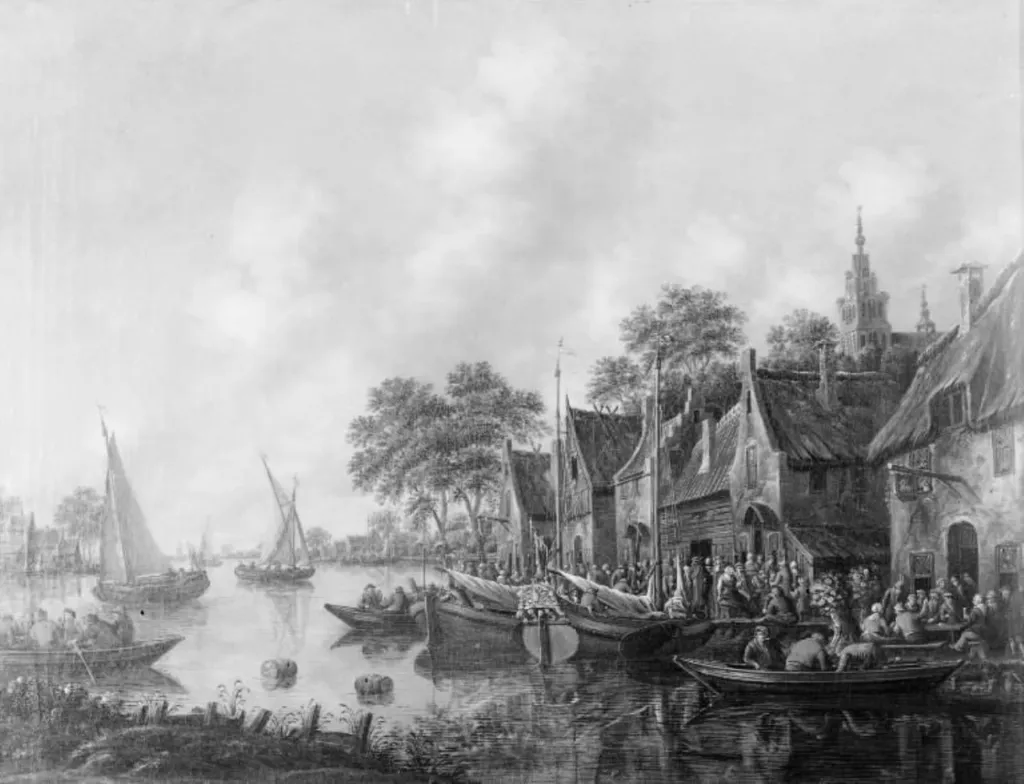
Dutch City is a photography by the Baroque artist Unknown. It dates from 1689 and is held in the collection of the Statens Museum for Kunst.
About this work
Overview
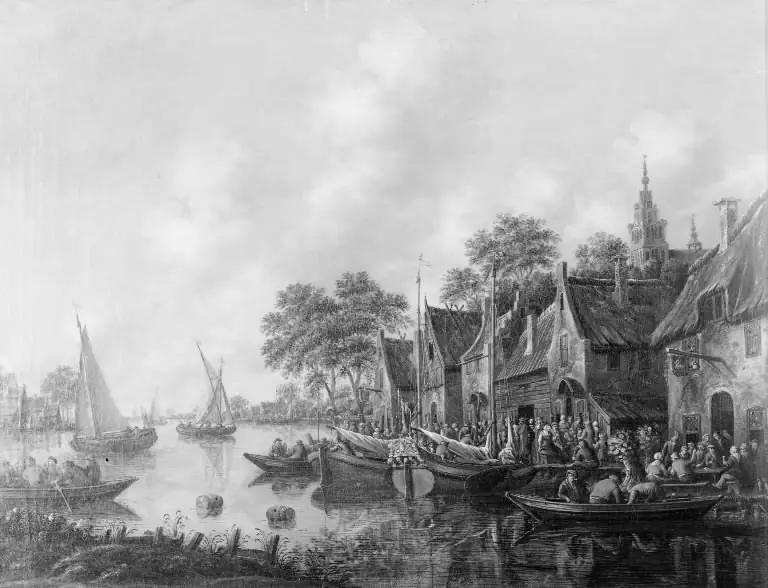
Dutch City is a black-and-white photograph of a painted scene, produced in 1689 by an artist associated with the Dutch Golden Age.
Dutch City is a black-and-white photograph of a painted scene, produced in 1689 by an artist associated with the Dutch Golden Age. The image captures a riverfront urban landscape and is currently held in the collection of the Museum of Ethnography. Though presented as a photograph, the work is a modern reproduction of an earlier painting, its grainy surface mimicking the aged quality of historical documentation.
Subject & Meaning
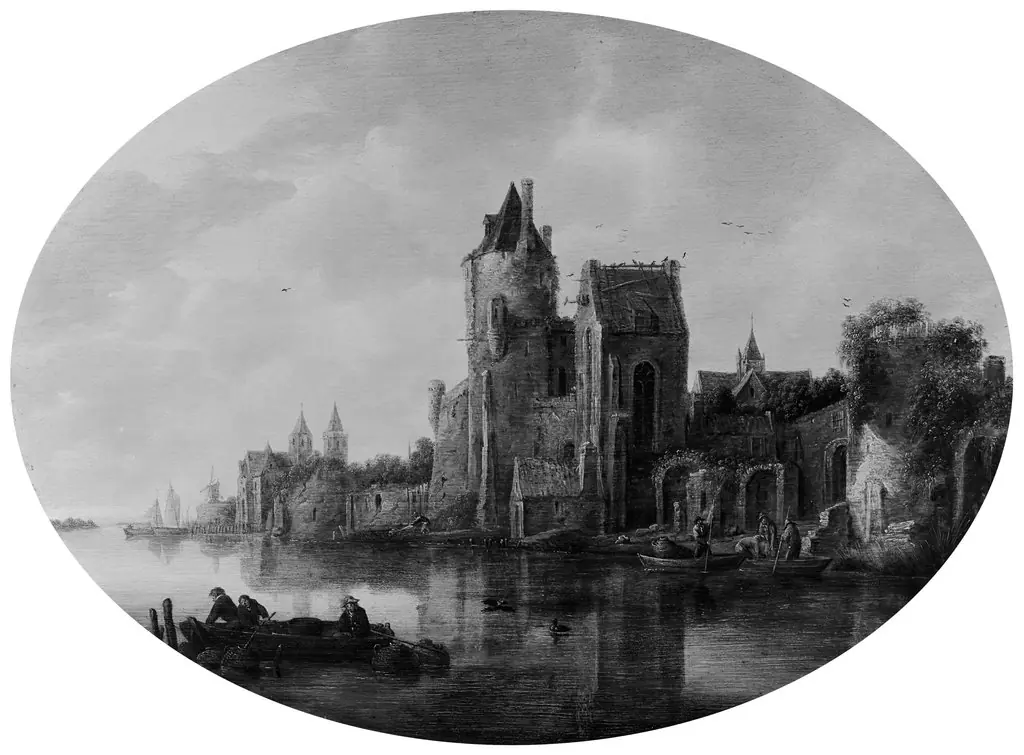
The scene depicts a bustling river port with wooden vessels moored beside tightly packed, narrow buildings. Flags flutter from masts, a church spire dominates the skyline, and figures in period dress move along the docks. The composition suggests a thriving commercial hub, emphasizing maritime activity and civic order. The absence of color focuses attention on daily life and architectural structure rather than ornamentation.
Technique & Style
The original painting employs fine brushwork to render intricate details: rigging on boats, folds in clothing, and textures of stone and wood. Monochrome tones create subtle gradations of light and shadow, lending spatial depth despite the lack of color. The composition is tightly organized, with vertical buildings and horizontal waterlines guiding the viewer’s eye through the scene in a balanced, deliberate manner.
History & Provenance
The painting was completed in 1689, during a period of Dutch economic and maritime prominence. It remained in private or institutional hands until entering the Museum of Ethnography’s collection. The photograph now displayed is a 20th-century reproduction, chosen for its clarity and archival fidelity, allowing the original’s detail to be studied without risking damage to the fragile surface.
Context
Created during the late Baroque era, the work reflects the Dutch emphasis on realism and civic pride. Unlike grand historical or religious scenes favored elsewhere in Europe, Dutch artists often depicted everyday urban and maritime life. This painting aligns with a tradition of topographical views that documented the prosperity and order of Dutch cities through precise observation.
Legacy
Though not widely exhibited outside specialized collections, the painting contributes to the understanding of how Dutch artists recorded urban environments with documentary precision. Its reproduction in photographic form has enabled broader scholarly access, reinforcing its role as a visual record of 17th-century Dutch port life rather than a purely aesthetic object.
Artist & collection

 Domestic Scene
 Giacomo and Cardinal Marco, investing Andrea, Abbot of San Zeno, with his Benefice
 The Nymph of Fontainebleau
 Portrait of a Woman
 Madonna and Child with Saints in the Enclosed Garden
 Venus and Minerva
 Family Group of Four on Sofa
 Wall painting from Room H of the Villa of P. Fannius Synistor at Boscoreale