Artwork
The Stag Hunt of the Elector Frederic the Wise (1463-1525) of Saxony
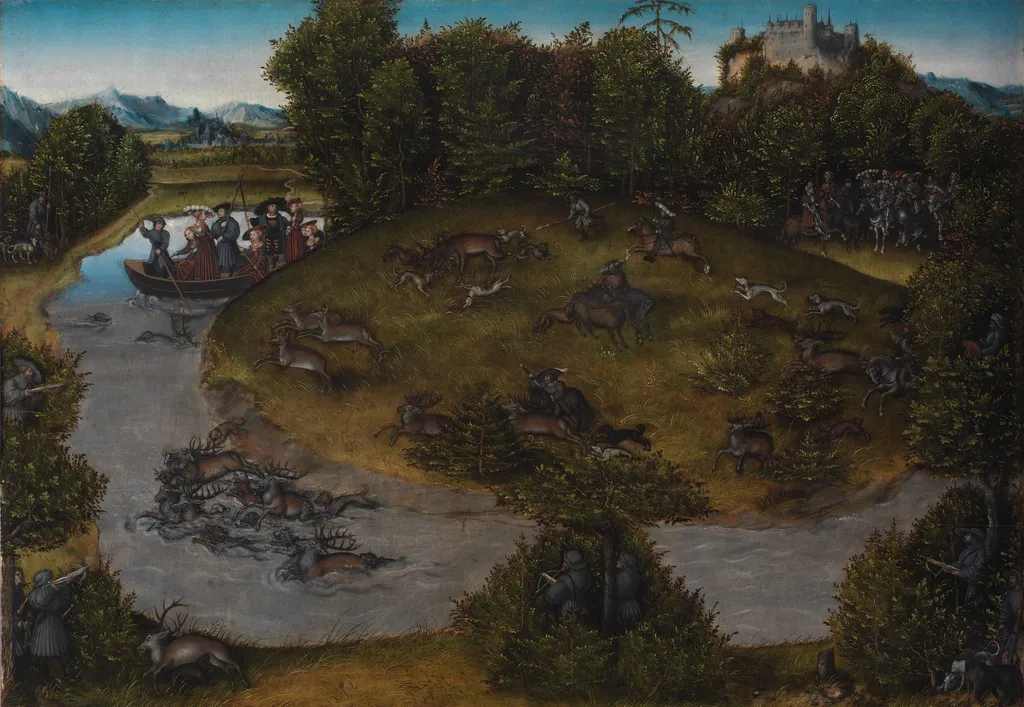
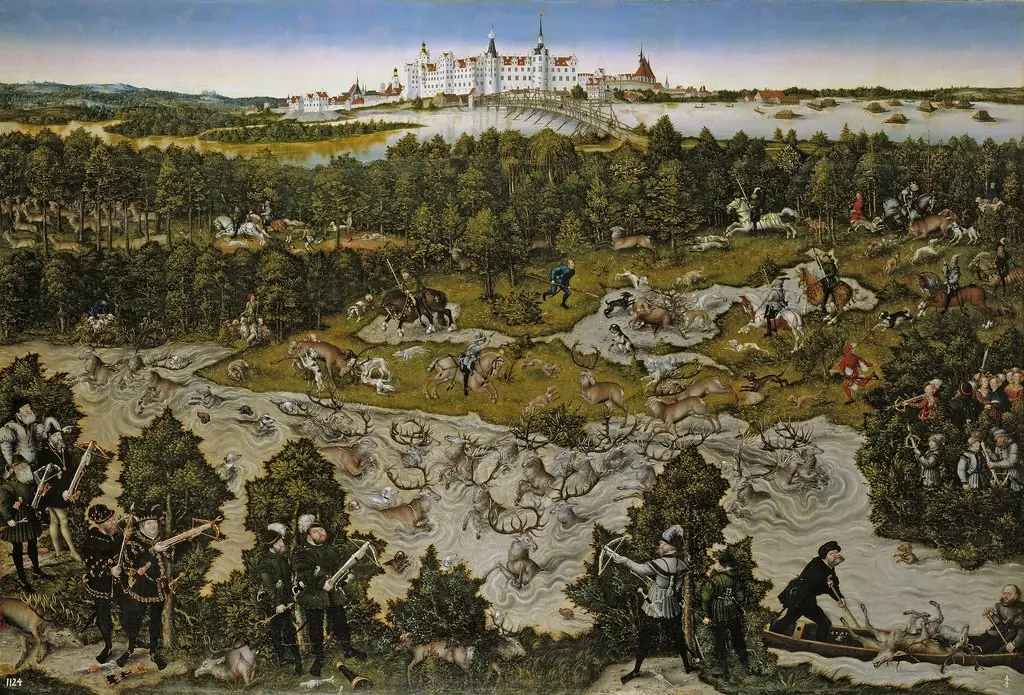
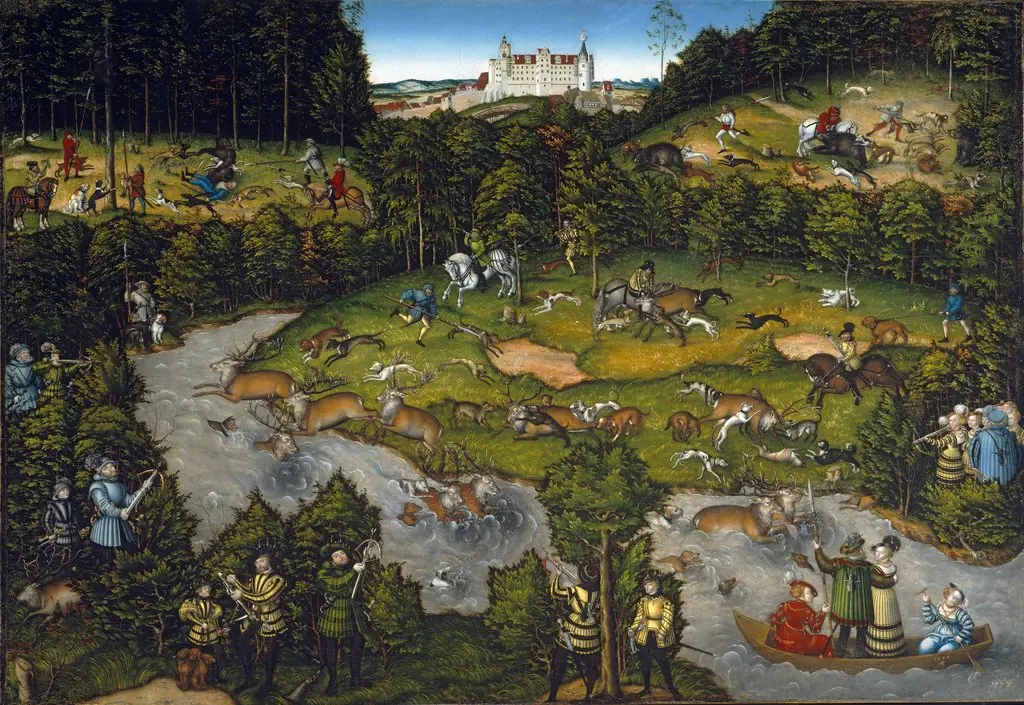
The Stag Hunt of the Elector Frederic the Wise (1463-1525) of Saxony is a photography by Unknown. It dates from 1550 and is held in the collection of the Statens Museum for Kunst. The work titled *The Stag Hunt of the Elector Frederick the Wise* depicts a lively forest chase set in a wooded landscape.
About this work
Overview
The work titled *The Stag Hunt of the Elector Frederick the Wise* depicts a lively forest chase set in a wooded landscape. Mounted riders pursue a stag, accompanied by barking hounds, while onlookers observe from a riverbank and a nearby shore. A distant castle crowns a hill, framing the verdant scenery and emphasizing the event’s grandeur.
Subject & Meaning
The painting records a traditional stag hunt associated with Frederick III, Elector of Saxony (1463‑1525), a notable patron of the arts and a figure linked to the Reformation. By portraying the hunt’s vigor and communal spectatorship, the image reflects the social prestige of aristocratic sport and the ceremonial aspects of courtly life in the early sixteenth century.
Technique & Style
Executed around 1550, the composition balances dynamic movement with detailed landscape elements. The artist employs a muted palette for foliage and sky, contrasting with brighter hues on the hunters’ garments to draw focus. Linear perspective guides the eye toward the castle on the hill, while the crowded foreground conveys immediacy and motion.
History & Provenance
The creator remains unidentified, listed only as a 1599_person in catalogues. The painting entered the collection of the Museum of Ethnography, where it is currently displayed. Documentation suggests it was acquired in the early twentieth century, though precise acquisition details are not recorded.
Context
Stag hunting was a ritualized pastime among German nobility, serving both as training for warfare and as a display of wealth. The scene’s inclusion of spectators in a boat and on the shore hints at the communal nature of such events, where the hunt functioned as public spectacle as well as private sport.
Artist & collection

 Domestic Scene
 Giacomo and Cardinal Marco, investing Andrea, Abbot of San Zeno, with his Benefice
 The Nymph of Fontainebleau
 Portrait of a Woman
 Madonna and Child with Saints in the Enclosed Garden
 Venus and Minerva
 Family Group of Four on Sofa
 Wall painting from Room H of the Villa of P. Fannius Synistor at Boscoreale